

Mastering benefits of strength training for women: a practical guide
When you hear "strength training," what comes to mind? For too long, the image has been a male-dominated weight room, but that stereotype is thankfully fading.
The truth is, lifting weights is one of the most powerful things a woman can do for her health, offering benefits that go far beyond building lean muscle.
From boosting your metabolism and increasing bone density to sharpening your mental well-being, strength training is a cornerstone of long-term health. It’s not about "bulking up"—it's about building a more resilient, capable you.
Why Every Woman Should Start Strength Training
Strength training is for every body. It's an incredibly effective way for women to invest in their physical and mental health. This guide will walk you through the science-backed benefits of picking up those weights.
This simple diagram shows just how interconnected the benefits are, linking a stronger mind to a stronger body and bones.
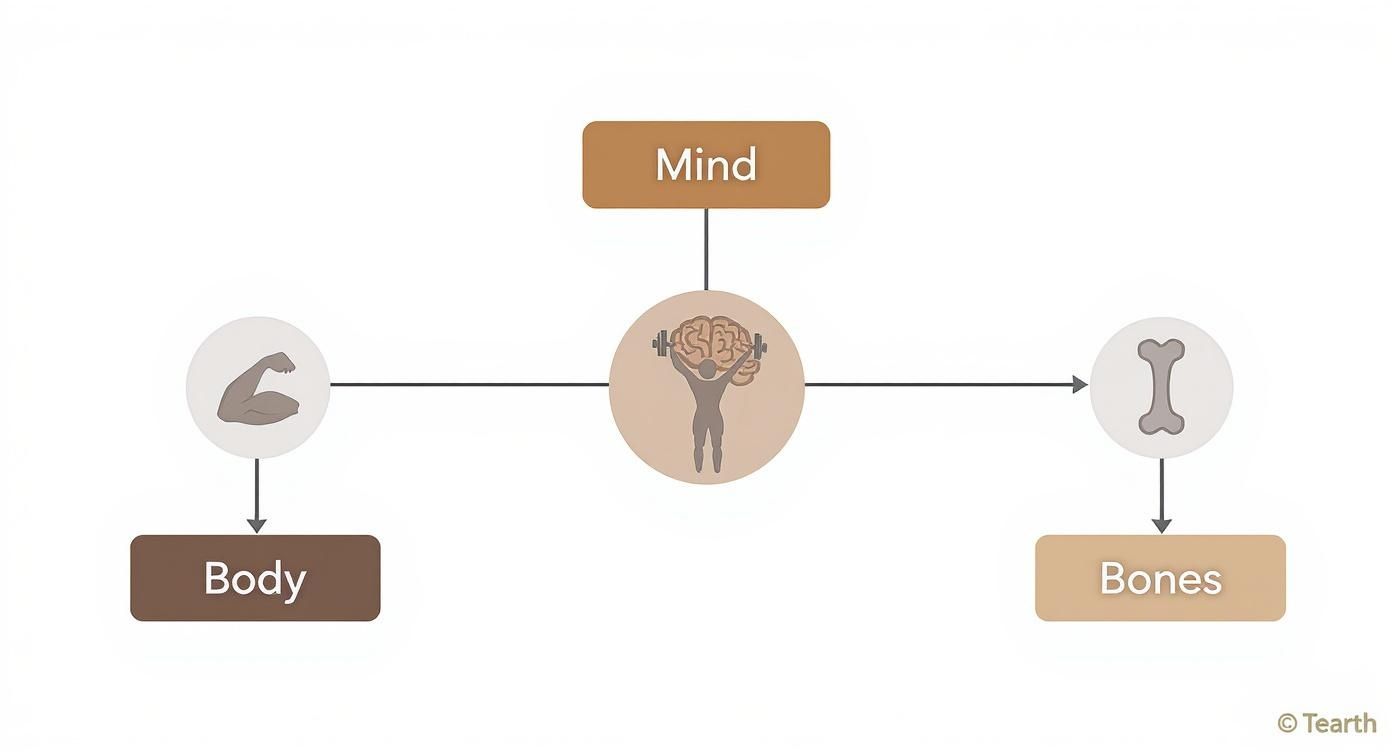
A consistent routine doesn’t just build muscle; it builds a powerful, integrated system of wellness.
Recent studies suggest that women might even see certain health advantages from exercise more quickly than men. For instance, weekly strength training can lower the all-cause mortality risk by 19% in women—nearly double the 11% reduction observed in men.
The impact on cardiovascular-related deaths is even more striking, with a 30% decrease for women. You can read the full research about these findings for a deeper dive.
It's About More Than Just Muscles
The advantages of adding weights to your routine are about so much more than just aesthetics. With every lift, you're laying the foundation for lifelong health.
- A Fired-Up Metabolism: Building more muscle turns your body into a more efficient calorie-burning engine, even when you're just resting on the couch.
- Building 'Bone Armor': Strength training puts just the right amount of stress on your bones, which signals them to grow denser and stronger.
- Sharper Mental Clarity: The focus it takes to complete a tough set and the rush of endorphins that follow can work wonders for reducing stress and elevating your mood.
Embracing strength training isn't about becoming "bulky"; it's about becoming powerful, resilient, and confident in your own skin. It builds you up, inside and out.
Your Quick Reference Guide
To make it even clearer, here’s a quick summary of the key advantages we'll be exploring. This table provides an at-a-glance look at why strength training is so beneficial for women.
Strength Training Benefits for Women at a Glance
| Benefit Area | Key Advantage for Women |
|---|---|
| Muscle & Metabolism | Increases resting metabolic rate, making it easier to manage weight. |
| Bone Health | Directly stimulates bone growth, reducing the risk of osteoporosis. |
| Mental Well-being | Reduces symptoms of anxiety and depression; boosts self-esteem. |
| Functional Fitness | Makes everyday activities like lifting groceries or kids feel effortless. |
| Hormonal Balance | Can help regulate hormones and manage symptoms of PMS and menopause. |
| Disease Prevention | Lowers the risk of chronic conditions like type 2 diabetes and heart disease. |
Think of this table as your cheat sheet—a reminder of all the incredible ways lifting weights supports your health from every angle.
Getting Started Is Easier Than You Think
Ready to begin? You don't need a huge home gym. Starting can be as simple as getting a few key pieces of equipment.
The Adjustable Dumbbell Set from dietexerciseshop.com is an ideal foundation for any woman starting her strength journey. Its versatility is a huge plus; you can progressively increase the challenge as you get stronger, which makes it a smart, long-term investment.
By starting with manageable weights, you can focus on mastering proper form and build a solid base for all your future progress.
Build Lean Muscle and Boost Your Metabolism
When you lift weights, you build lean muscle, and this isn't just about aesthetics. This tissue is metabolically active, meaning it torches calories even when you’re relaxing on the couch.
Think of your muscles as your body's furnace. The more muscle you have, the hotter that furnace burns. This cranks up your resting metabolic rate, turning your body into a more efficient calorie-burning machine 24/7.
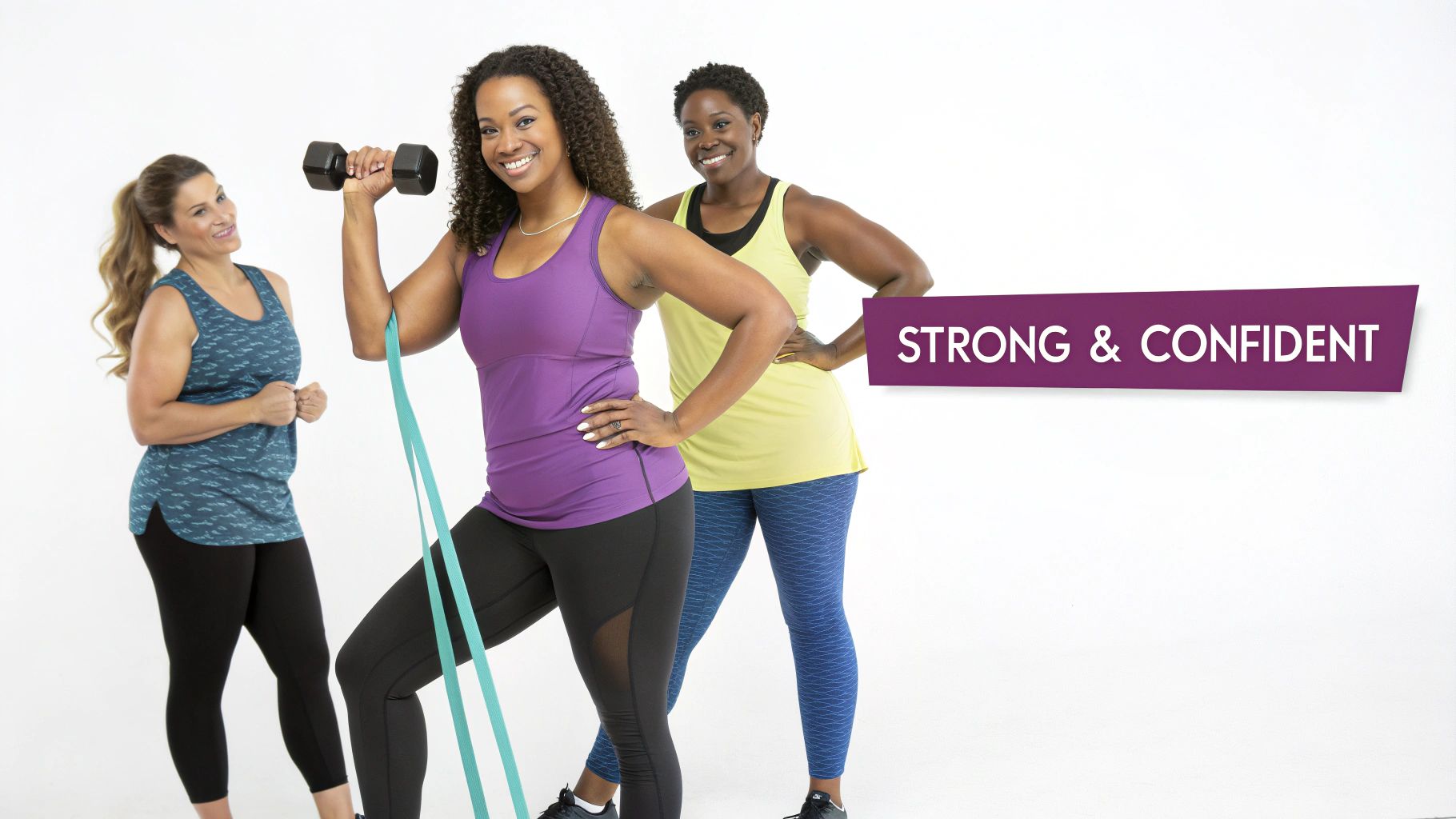
This metabolic advantage is a game-changer for long-term weight management. It completely shifts the conversation from just "losing weight" to building a stronger, healthier body.
Mastering Foundational Movements
So, how do you build this amazing muscle? It starts with focusing on foundational, or "compound," exercises that work multiple muscle groups at once—think squats, deadlifts, and push-ups.
Getting the form right is non-negotiable. It’s the key to getting great results while staying injury-free.
A good squat isn't just bending your knees; it's about keeping your chest proud and your back neutral. To see exactly what that looks like, check out our simple visual guide on the Diet & Exercise YouTube channel that breaks down perfect squat form.
Proper form isn't just about safety; it's about efficiency. When you perform an exercise correctly, you activate the right muscles, leading to faster, more sustainable results.
Fueling Your Muscle Growth
Muscles are built in the kitchen, not just the gym. Lifting weights creates tiny micro-tears in your muscle fibers, which signals your body to rebuild and get stronger.
To do that rebuilding, your body needs protein. The amino acids in protein are the building blocks that repair those micro-tears, making the muscle grow back denser and stronger than before. That's why figuring out how to calculate your protein intake for muscle gain is a critical step in matching your diet to your training goals.
A high-quality protein shake can be a convenient way to kickstart recovery after a workout. The Whey Protein Powder from dietexerciseshop.com is designed to support muscle repair. A quick scoop gives your body a fast-absorbing source of protein exactly when it needs it most.
Develop Stronger Bones and Prevent Injury
Beyond sculpted muscles, strength training gives your body a stronger, more resilient skeleton. As women get older, especially after menopause, bone density can decline. Lifting weights is one of the most effective ways to combat this.
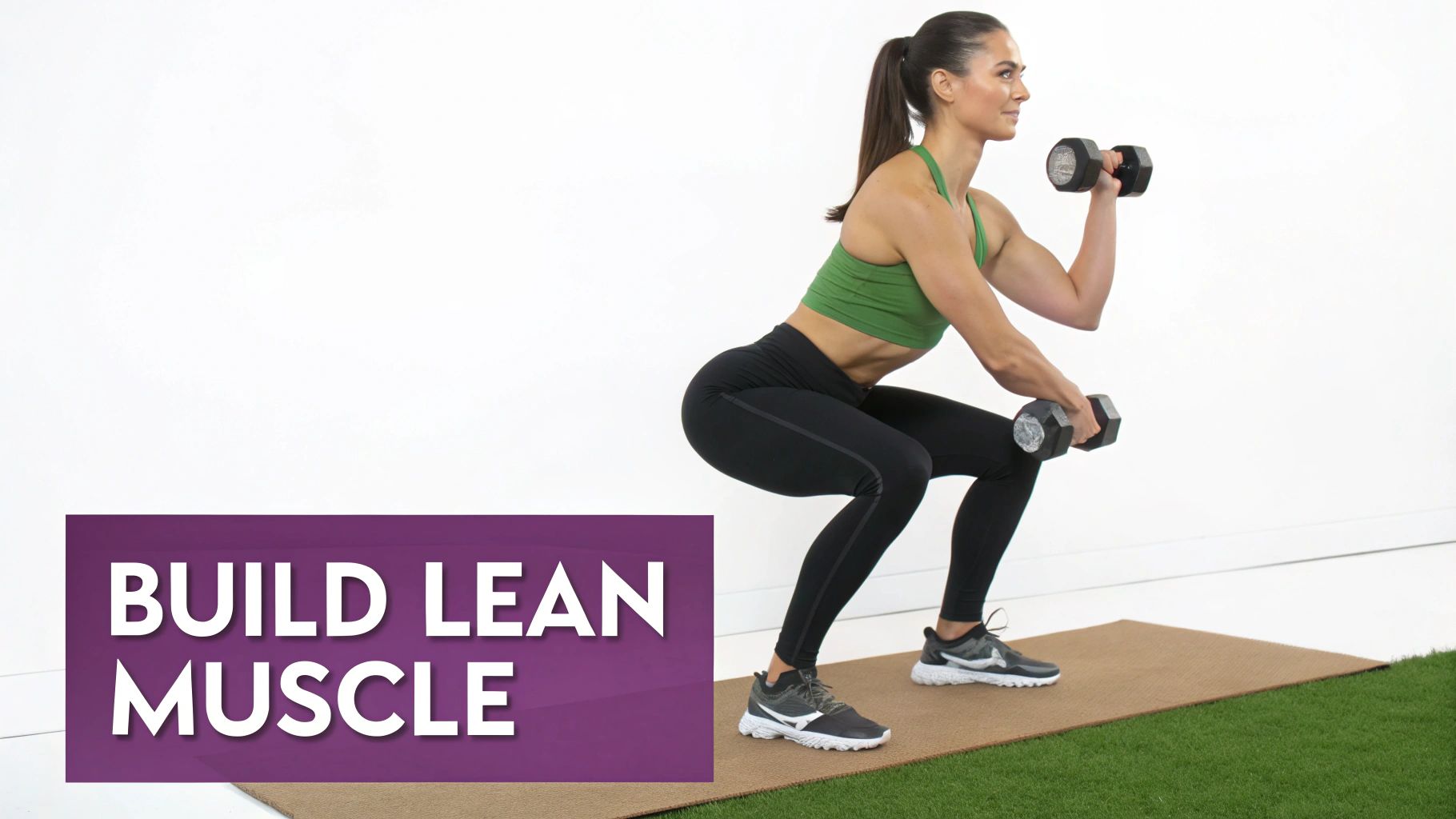
Think of your bones like the frame of a house. Every time you lift a weight, you’re putting a healthy stress on your bones. In response, your body deposits more minerals and builds more bone tissue, making your skeleton denser and less likely to fracture.
How Strength Builds a More Resilient Body
This internal fortitude has a direct impact on your real-world safety. When your muscles and bones are strong, they act as a support system for your joints, protecting you from everyday strains and sprains.
This is functional strength. Carrying groceries, lifting your toddler, or rearranging furniture feels easier and safer. You’re not just stronger in the gym; you're more capable in your life.
Strength training isn't just about what you can lift in the gym. It's about building a body that can confidently and safely handle whatever life throws at it, lowering your risk of injury every single day.
A global study revealed that women who strength trained just two to three times a week saw a 30% lower risk of dying from heart disease. You can discover more insights about these longevity findings and see how this routine supports a healthier heart.
Starting Safely with Joint-Friendly Tools
If you're new to this or have concerns about your joints, you don't have to jump straight to heavy barbells.
For a gentle but challenging way to stimulate bone growth, Adjustable Resistance Bands from dietexerciseshop.com are an ideal starting point. They provide smooth, consistent tension without the jarring impact of heavy weights, making them perfect for building foundational strength.
For more tips on working out safely, check out our guide on how to prevent sports injuries.
Boost Your Mental Health and Build Real Confidence
The power of strength training goes way beyond the physical. It’s one of the most effective tools for building mental resilience. A tough lifting session forces you to be completely present, making the day's worries melt away.
Lifting weights also triggers a release of endorphins, your body's "feel-good" chemicals. This acts as a natural mood booster, and over time can help ease feelings of anxiety and depression.
From Physical Strength to Inner Confidence
The proof of your progress is undeniable. There's a special kind of empowerment that comes from feeling yourself get stronger week after week.
This isn’t just about the number on the dumbbell. It's about those small, personal wins:
- You pick up a weight that felt impossible a month ago.
- You finally nail the form on a tricky exercise.
- You squeeze out one more rep when you want to stop.
Each of these moments builds self-trust. That confidence shows up everywhere—in how you carry yourself at work, tackle challenges at home, and navigate relationships.
Strength training teaches you a fundamental truth: you are more capable than you believe. Every lift reinforces that you can handle hard things and grow stronger because of them.
Dressing the Part for Peak Performance
Feeling strong starts from the inside, but the right gear can amplify that feeling. What you wear to the gym is about comfort, function, and showing up ready to perform.
When you feel good in your workout clothes, it can provide a mental edge to push harder.
For activewear that’s both stylish and built to support every squat and press, check out the Women’s Performance Apparel at dietexerciseshop.com. Their collection, from breathable tops to supportive leggings, is designed to help you feel as powerful as you truly are.
To see some of this gear in action, head over to our Beginner Full Body Workout on the Diet & Exercise YouTube channel.
Your Simple Plan to Start Strength Training
Jumping into a new routine can feel like a huge hurdle. But getting started is way less complicated than you think, and you can build a seriously effective routine right at home.
Despite the science, only about 20% of women lift weights twice a week. This creates a noticeable gender gap, but it also means there's a massive opportunity for women to start claiming these health benefits for themselves.
Building Your Foundational Routine
The secret to success is consistency. Aim for two or three full-body workouts per week. Give your muscles at least one full day of rest in between sessions to recover and grow stronger.
This approach hits all your major muscle groups efficiently. For an accessible starting point, learn how to incorporate resistance bands into your routine.
A simple plan is always the easiest one to stick with. The table below lays out a straightforward weekly schedule you can adapt to fit your life.
Sample Beginner Weekly Workout Schedule
Here is a simple and effective 3-day full-body workout plan designed for women who are new to strength training.
| Day | Focus | Sample Exercises |
|---|---|---|
| Monday | Full Body A | Goblet Squats, Push-Ups (on knees or wall), Dumbbell Rows, Glute Bridges, Plank |
| Tuesday | Rest or Active Recovery | Light walk, stretching, or yoga |
| Wednesday | Full Body B | Lunges, Overhead Press, Bent-Over Rows, Romanian Deadlifts, Leg Raises |
| Thursday | Rest or Active Recovery | Light walk, stretching, or yoga |
| Friday | Full Body A | Repeat Monday's workout, focusing on good form or adding a rep. |
| Saturday & Sunday | Rest or Active Recovery | Focus on rest, hydration, and nutrition. |
This schedule gives you a solid framework to build from. It’s all about creating a habit, not about punishing yourself.
The Secret to Getting Stronger
To keep seeing results, you need to understand progressive overload. The idea is simple: to get stronger, you have to consistently ask your muscles to do a little bit more than they did before.
This doesn't always mean grabbing a heavier dumbbell. You can challenge your body by:
- Adding one more repetition to your set.
- Increasing the weight by a small amount.
- Shortening your rest time between sets.
The goal is to make your muscles work just a little harder than they're used to. This gentle but consistent push is what signals them to adapt and grow stronger.
Having the right gear at home makes this process seamless. The All-in-One Home Gym Starter Kit from dietexerciseshop.com is designed to grow with you, giving you everything you need to apply progressive overload on your own terms.
Common Questions About Strength Training for Women
Starting a new fitness routine always brings up questions. Let's tackle some of the most common myths and concerns women have about lifting weights.
This video from the Diet & Exercise YouTube channel is a fantastic starting point. It shows you foundational movements and helps you see how doable these exercises are.
Will Lifting Weights Make Me Bulky?
This is the number one fear we hear from women. The short answer is a resounding no.
Women simply don't have the same hormonal makeup as men—specifically, the high levels of testosterone needed to easily pack on huge amounts of muscle.
Building a "bodybuilder" physique takes years of specific, high-volume training and a meticulously controlled diet. For the average woman lifting weights two or three times a week, the result is a leaner, stronger, and more sculpted body.
The goal is to build lean muscle and strength, which is what creates that firm, "toned" look. Think athletic and strong, not bulky.
How Often Should I Be Strength Training?
When you're just getting started, aiming for two to three full-body strength sessions per week is a perfect goal.
What's just as important is giving your body time to recover. Make sure you have at least one full rest day between sessions. This downtime is when your muscles actually repair and get stronger.
What Is the Difference Between Strength Training and Cardio?
Both are crucial for overall health, but they serve different purposes.
- Cardio (Aerobic Exercise): Think running or cycling. Cardio elevates your heart rate for an extended period, which is fantastic for your heart and lungs.
- Strength Training (Anaerobic Exercise): This is about using resistance to make your muscles stronger. It’s built around shorter, more powerful bursts of effort.
The best fitness plans include a healthy mix of both. They work together to build a body that's not only strong but also has stamina.
Do I Need a Gym Membership to Start?
Not at all! You can build an effective strength routine right from your living room.
Bodyweight exercises are a powerhouse starting point. Moves like squats, lunges, push-ups, and planks are all you need to begin building a solid foundation.
As you get stronger, you can introduce simple tools like resistance bands or a pair of dumbbells to keep challenging yourself. The most important thing is to just start.
At Diet & Exercise, we're all about making fitness accessible and empowering for everyone. Our collection of apparel, accessories, and home gym essentials at dietexerciseshop.com is here to support you at every stage, helping you build strength and confidence on your own terms.