

Your Guide to the Best Exercise Equipment for Apartments
Living in an apartment doesn't mean you have to give up on your fitness goals. The trick is finding gear that’s compact, multi-functional, and quiet. Think adjustable dumbbells, versatile resistance bands, and cardio machines that fold away. These clever solutions let you get a killer workout without annoying your neighbors or sacrificing your living room.
Your Apartment-Friendly Fitness Journey Starts Now
Ever looked at your small apartment and thought, "There's no way I can fit a home gym in here"? You're not alone, but it's a common misconception.
This guide is all about cutting through that doubt and solving the classic apartment fitness puzzles: not enough space, worries about noise, and sticking to a budget.
We're going to walk through the smartest equipment out there—from dumbbells that pack an entire weight rack into one pair to cardio machines that are surprisingly quiet. The goal is to show you how a great home gym is possible, no matter your floor plan. This is more than a list of products; it’s about taking back control of your fitness without your living space paying the price.
First, A Note on Diet and Exercise
Before we jump into the gear, let's talk about the other half of the equation: food. Great equipment gets you moving, but what you eat provides the fuel and building blocks for real change.
If you're using a stationary bike for weight loss, pairing 30-minute cardio sessions with a small calorie deficit (around 300-500 calories a day) is where the magic happens. This means prioritizing whole foods like lean protein, veggies, and healthy carbs.
If you’re building muscle with a set of adjustable dumbbells, your diet needs to support that growth. A good rule of thumb is aiming for about 0.7 to 1.0 grams of protein per pound of your body weight daily. A simple post-workout protein shake or a meal with chicken or beans can make all the difference.
Think of it this way: Your workouts send the signal for your body to change. Your diet delivers the materials it needs to follow through.
Quick Look at Apartment-Friendly Workout Gear
This table gives you a bird's-eye view of our top equipment categories, rated on the factors that matter most to apartment dwellers. Use it to quickly identify what might fit your space, budget, and fitness style before we dive deeper into each one.
| Equipment Type | Best For | Space Requirement | Noise Level | Budget Range |
|---|---|---|---|---|
| Adjustable Dumbbells | Strength Training, Muscle Toning | Very Low (fits in a closet) | Very Low | $150 - $500 |
| Resistance Bands | Versatility, Full-Body Workouts | Extremely Low (fits in a drawer) | Silent | $20 - $75 |
| Folding Treadmill | Cardiovascular Health, Walking | Medium (stores vertically) | Low to Medium | $300 - $800+ |
| Stationary Bike | Low-Impact Cardio, Endurance | Low (small footprint) | Very Low | $200 - $600 |
| Kettlebells | Functional Strength, HIIT | Very Low (single item) | Low | $30 - $100 |
Now that you have a starting point, let's break down the pros, cons, and best uses for each of these fantastic apartment-friendly tools.
How to Choose Gear That Fits Your Apartment and Lifestyle
Before you get swept up and click 'buy' on that shiny new machine, let's take a minute to plan. Choosing the right exercise equipment for an apartment is about more than just the workout—it's about finding something that actually fits into your home and your life.
Think of it like buying a new couch. You wouldn't just guess if it fits; you'd pull out the tape measure. The same logic applies here. A smart choice becomes a seamless part of your routine, while a poor one just gets in the way.
The first, most crucial step is to get real about your space. Don't just eyeball it—grab a tape measure. You need to know exactly how much room you have for your workout and for storage.
Measure Twice, Buy Once
Your workout area is the active footprint you need to move around safely without knocking over a lamp or stubbing a toe. For something like yoga or resistance bands, a simple mat's worth of space is plenty.
For a folding treadmill or stationary bike, you're going to need a much more dedicated spot.
Just as important is figuring out where the equipment will go when you're done. An under-desk elliptical might slide neatly under a coffee table. A folding treadmill, on the other hand, needs a tall, deep closet spot. Make sure you measure that storage nook before you commit.
A quick reality check: The best equipment is the stuff you'll actually use. If it's a huge pain to set up and put away every day, it’s probably going to end up collecting dust.
This simple decision tree can help you visualize how your fitness goals line up with the right kind of apartment-friendly gear.
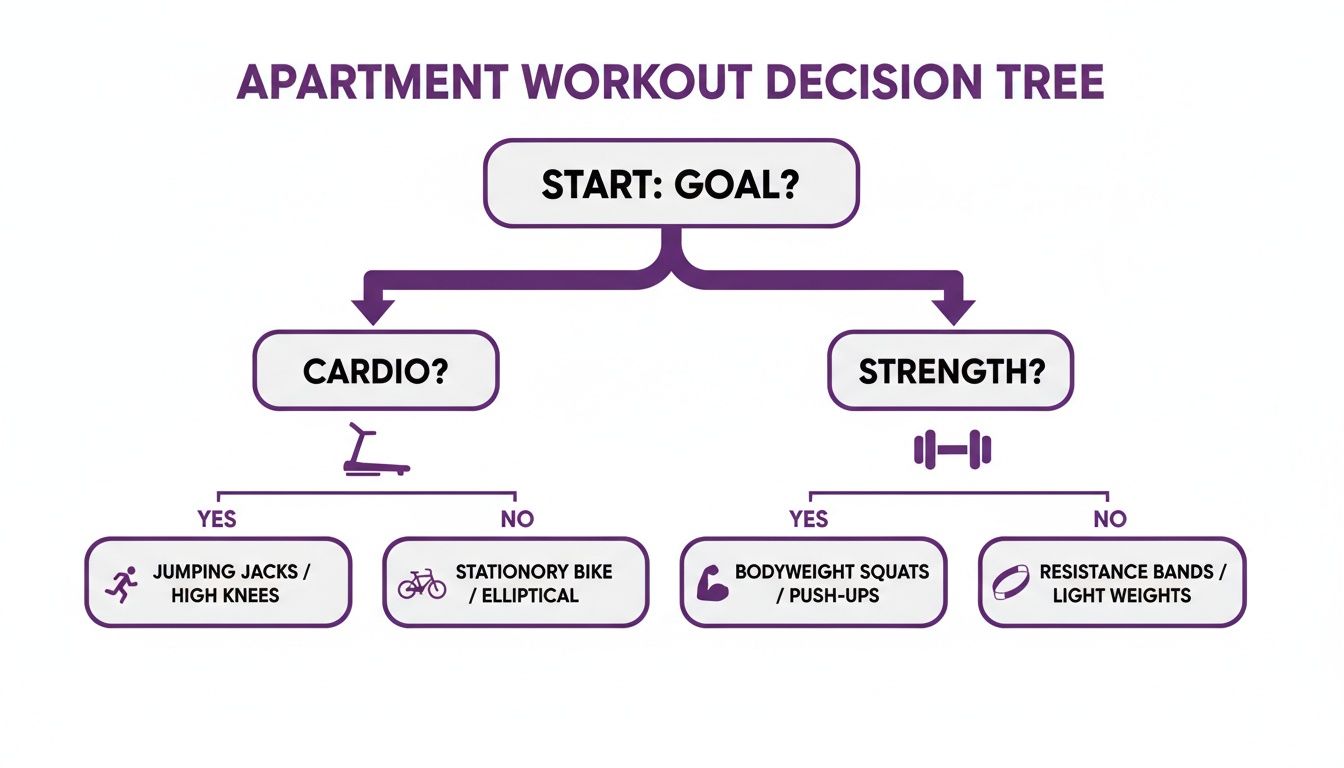
As you can see, your main goal—whether it's cardio or strength—will point you toward specific types of equipment that are known for being compact and quiet.
Check the Rules and Set a Budget
Living in a shared building means playing by a few rules. Before you invest in anything, it's a good idea to take a quick scan of your lease agreement. Some buildings have surprisingly specific clauses about noise or even floor weight limits.
As you figure out what works best, looking into the best home gym equipment for small spaces can give you some great ideas you might not have thought of.
Finally, set a budget you can stick to. Equipment that works well in apartments comes in a huge range of prices. Knowing what you're comfortable spending from the get-go will help you filter your options and avoid that moment of buyer's remorse.
Remember, equipment is only half the equation. To really get the most out of your investment, pair your new routine with smart eating. Combining HIIT workouts with a diet full of lean protein, for instance, is a surefire way to speed up muscle toning and fat loss.
The Best Cardio Machines That Keep Your Neighbors Happy
Getting your heart rate up in an apartment shouldn’t mean getting a noise complaint from downstairs. Cardio is fantastic for your health, but traditional machines are often bulky and loud.
This section is all about finding that perfect piece of cardio equipment that's built for quiet, compact living. We'll compare some of the best cardio options out there, focusing on what really matters to you: how quiet they are and how easily you can tuck them away.
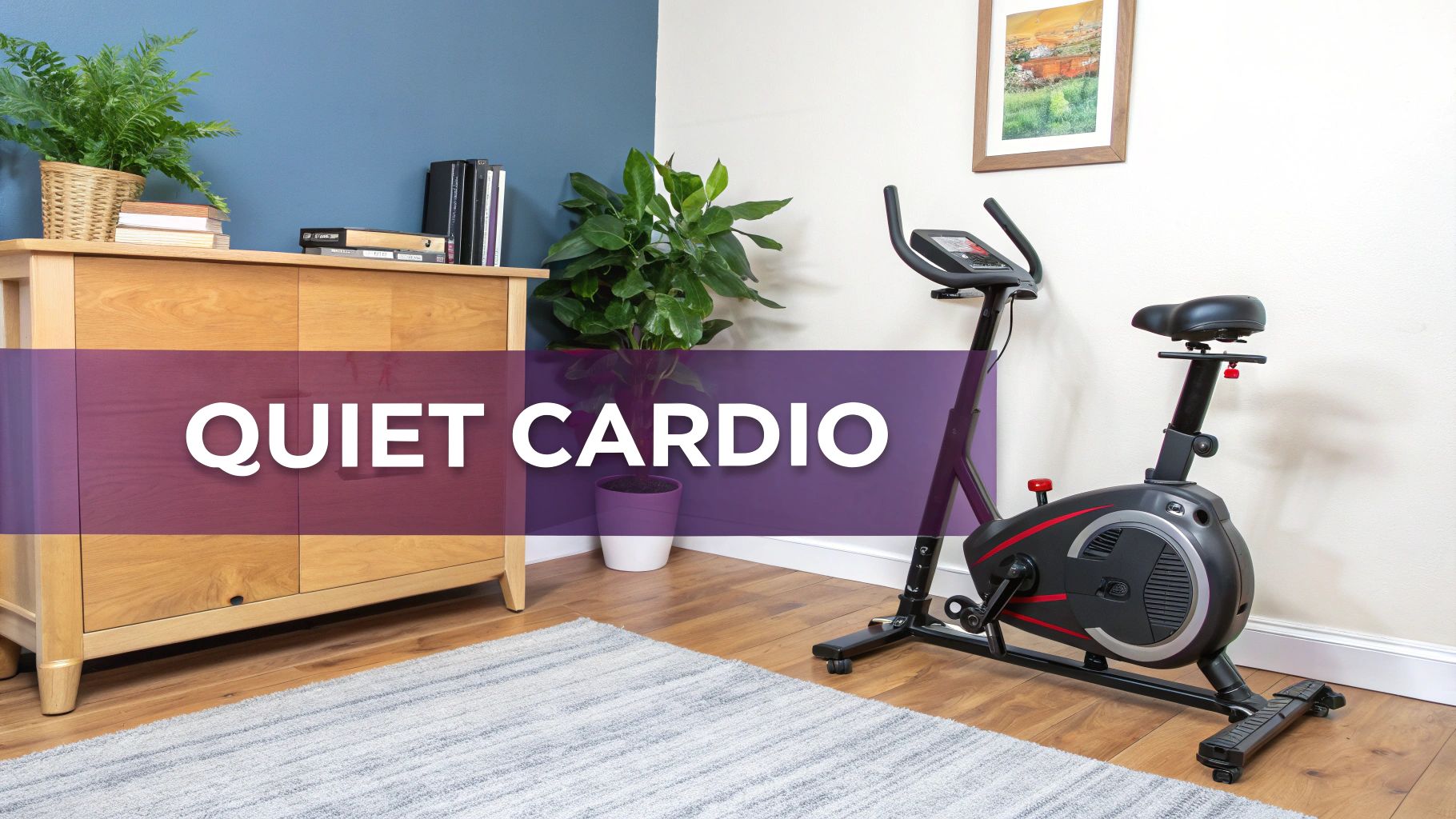
Stationary Bikes: The Silent Champions
For anyone living in an apartment, stationary bikes are often the go-to for cardio. They give you a killer workout with virtually zero impact on your joints, which is great news for your knees and the floorboards.
The real magic for apartment life is that modern bikes primarily use magnetic resistance. Unlike older friction-based bikes that creak and groan, magnetic resistance is whisper-quiet. It works by moving a magnet closer to a flywheel to create tension without ever touching it. No contact means no noise. You can pedal your heart out at 5 AM or midnight without anyone ever knowing.
A great example of this is the Compact Cardio Exercise Bike. It offers that smooth, silent ride and has a tiny footprint, making it easy to stash in a corner. When you're done, it's light enough to wheel into a closet.
A Quick Note on Biking and Diet
To really get the most out of your cycling sessions, it helps to match your diet to your goals.
- For Weight Loss: Try to get in 3-4 sessions of 30-45 minutes a week. Pair this with a healthy, modest calorie deficit. Focus on filling, nutrient-rich foods like grilled chicken, tons of veggies, and complex carbs like quinoa to keep you fueled.
- For Endurance: You'll want to focus on longer rides, maybe 45-60 minutes at a steady pace. Make sure your diet includes plenty of healthy carbs for sustained energy. Think oatmeal or sweet potatoes a couple of hours before you hop on the bike.
Folding Treadmills and Under-Desk Ellipticals
While bikes are fantastic, they aren't your only option. Folding treadmills and under-desk ellipticals also offer some solid cardio solutions.
A good folding treadmill lets you get your steps in, and newer designs come with shock-absorbing decks that dramatically muffle the thump-thump-thump of your feet.
Under-desk ellipticals are the ultimate space-savers. You can literally use them while you work or watch TV, turning sedentary time into a low-key calorie burn. They are incredibly quiet and work your lower body without any impact whatsoever.
The boom in at-home fitness has forced manufacturers to get creative. They’re now designing equipment that strikes a perfect balance between performance and the realities of apartment life.
The demand for these machines is huge. Compact cardio gear, especially folding treadmills and stationary bikes, fueled massive growth in the home fitness market between 2020 and 2025. This isn't just a local trend; it reflects a global shift as people in cities across North America, Europe, and Asia looked for equipment that fit their lives and their homes. You can dig into more of this data on the growth of the home fitness equipment market on Mordor Intelligence.
Low-Impact Cardio Routines
No matter which machine you end up with, the key to a quiet workout is focusing on low-impact movements. High-intensity sprinting on a treadmill will always make more noise than a brisk walk or a steady ride on a bike.
For a great example of a workout that's easy on the joints (and the floors), check out this video from the Diet & Exercise YouTube channel. It shows you how to get your heart pumping without any jumping around. Learn how to do a No Jumping Full Body Cardio Workout that respects your body and your neighbors. It’s the perfect way to make sure your fitness journey is both effective and peaceful.
Building Strength in Small Spaces
Think you need a garage full of clanking iron to build serious muscle? Think again. Strength training is absolutely possible—and incredibly effective—right within the four walls of your apartment.
The secret isn't having more space; it's about choosing smarter, more versatile equipment. We're talking about powerful tools you can easily tuck away in a closet or slide under your bed. This is your guide to getting stronger at home without turning your living room into a full-blown gym.
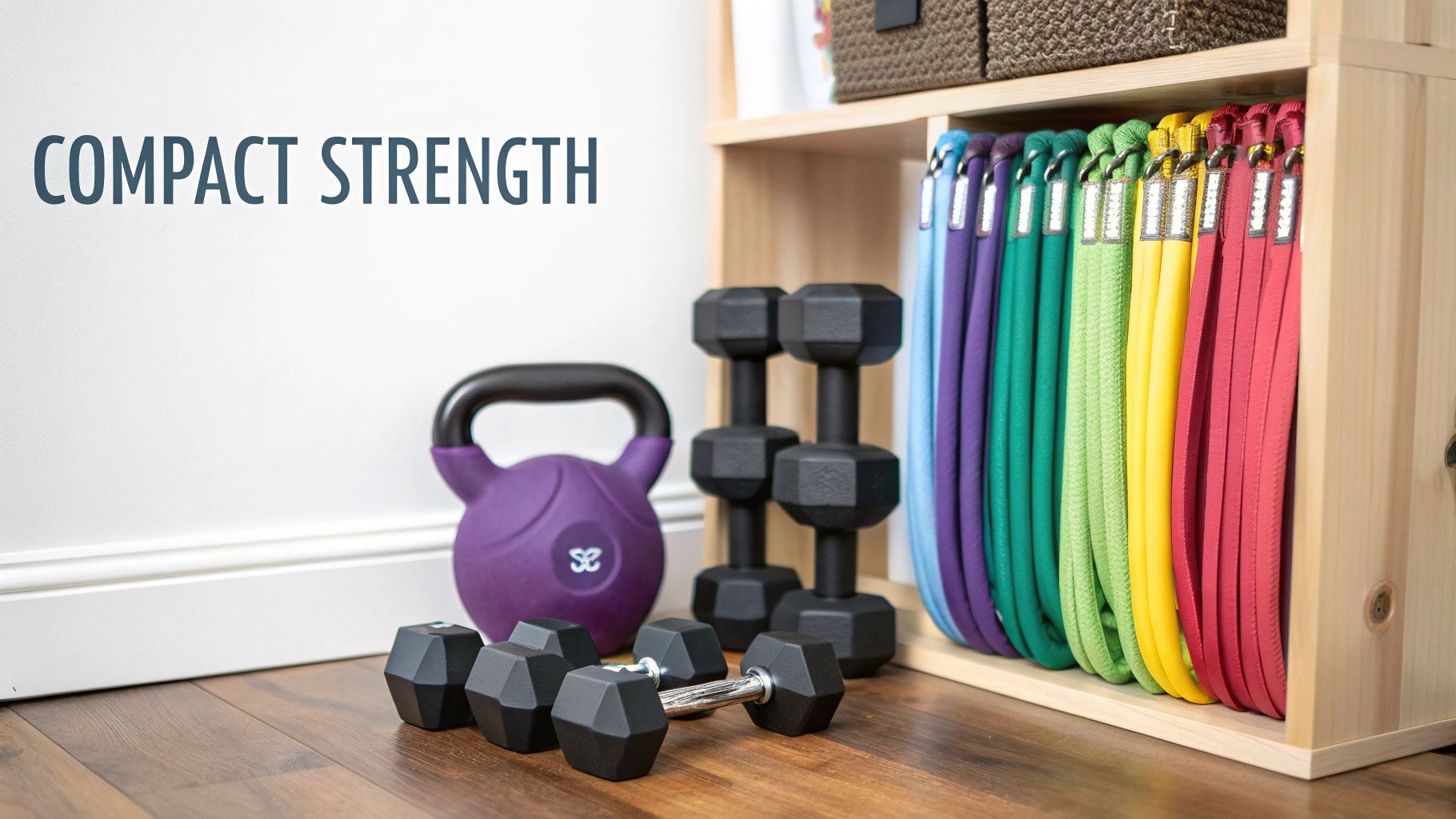
Adjustable Dumbbells: The Ultimate Space Saver
If you could only pick one piece of strength equipment for apartment living, adjustable dumbbells would have to be at the top of the list. Imagine an entire rack of weights condensed into a single, elegant pair.
With a quick twist of a dial or the slide of a pin, you can go from light five-pounders for bicep curls to heavy weights for squats. It’s no exaggeration to say a single set can replace up to 15 pairs of traditional dumbbells.
This doesn't just save a massive amount of floor space; it’s also the perfect tool for progressive overload—the fundamental principle of getting stronger. You can start light and methodically increase the weight as your strength grows, all with one compact set of gear.
To get the full scoop on picking the right set for your needs, you should check out our guide on the best dumbbells for a home gym.
Kettlebells and Resistance Bands: Versatility in a Small Package
While adjustable dumbbells are a game-changer, they're not your only option. Both kettlebells and resistance bands bring their own unique advantages to the table, making them fantastic choices for apartment fitness.
-
Kettlebells: One single kettlebell opens up a world of dynamic, full-body movements. Think kettlebell swings, goblet squats, and Turkish get-ups. These exercises are incredible for building functional strength and torching calories. A kettlebell takes up almost no room at all.
-
Resistance Bands: These are, without a doubt, the most portable and neighbor-friendly strength tool you can own. Resistance bands are lightweight, completely silent, and can be balled up and thrown in a drawer. They create constant tension, which is fantastic for toning muscle in a way that’s easy on your joints.
Building muscle isn't just about lifting heavy weights. It's about creating consistent, challenging tension. Both kettlebells and resistance bands are masters at this, letting you effectively work your muscles without loud, clunky equipment.
The Rise of Compact Strength Tools
It’s really no surprise that apartment dwellers are flocking to these compact fitness solutions. The latest fitness trend reports all point to a major shift toward multifunctional, portable equipment in city homes.
Tools like resistance bands, adjustable dumbbells, and kettlebells are dominating the market because they require less than a square meter of storage. This is a stark contrast to the 2-4 square meters needed for a treadmill or a bulky weight machine. This efficiency is why even landlords and property managers are stocking them in community gyms.
Setting Up Your Perfect Workout Zone
Having the right equipment is one thing, but creating a dedicated space for it is what really turns your fitness goals into a consistent routine. Your workout zone doesn't have to be massive. It just needs to be safe, functional, and a place you actually want to be.
First thing's first: pick your spot. Look for an area where you have enough room to move without knocking over a lamp or stubbing your toe on the coffee table. Even a small patch of floor near a window can be ideal.
Creating a Solid Foundation
Once you've claimed your corner, the single most important thing you can add is a high-quality workout mat. Think of it as the foundation of your entire home gym.
A good mat does more than just protect your floors from sweat and scratches. It absorbs sound and impact, which is a non-negotiable for keeping your downstairs neighbors happy.
A thick, dense mat works perfectly for yoga and bodyweight circuits. If you're using heavier gear like adjustable dumbbells, consider snapping together a few interlocking rubber tiles for extra protection and noise dampening.
Pre-Workout Safety and Maintenance Rituals
Before you start any workout, get into the habit of a quick two-minute check. It’s a simple ritual that prevents accidents and keeps your gear from wearing out prematurely.
- Clear Your Space: Kick any shoes, books, or pet toys out of your immediate workout area.
- Inspect Your Gear: Give your equipment a quick once-over. Look for tears in your resistance bands. Double-check that the pins on your adjustable dumbbells are locked in tight.
- Wipe Down Surfaces: After you’re done, give your mat and equipment a quick wipe-down. This keeps everything fresh for your next session.
Creating a dedicated and organized workout zone does more than just protect your floors; it sends a powerful signal to your brain that it's time to focus on your fitness. This small mental cue can make a huge difference in staying consistent.
Smart Storage and Space Optimization
In a small apartment, storing your equipment is just as important as using it. Keeping your gear organized and out of sight makes your home feel less like a cluttered gym.
A simple storage ottoman can easily hide resistance bands and a yoga mat. A small, sturdy shelf can be the perfect perch for a kettlebell. If you need some inspiration, checking out different small apartment layouts can spark some clever ideas for integrating everything seamlessly.
Good storage also helps your gear last longer. For instance, you should never leave resistance bands stretched out or in direct sunlight, as it can degrade the material and cause it to snap. By putting a little thought into your setup and maintenance, you create a fitness corner that makes working out at home a breeze.
Got Questions? We’ve Got Answers
Setting up a home gym in a small space can bring up a lot of questions. Let's tackle some of the most common ones I hear, so you can get your workout routine sorted out with confidence.
How Can I Do Strength Exercises Without Making Any Noise?
This is a big one for apartment dwellers. The trick to silent strength training is to focus on tension and control, not dropping heavy things.
Your own body is the perfect starting point—push-ups, squats, lunges, and planks are completely silent and build a fantastic strength base.
When you bring in equipment, think smooth movements. Resistance bands are your best friend here; you can do bicep curls, shoulder presses, and rows with constant tension and zero noise. The same principle applies to kettlebell swings or goblet squats. Pair that with a solid, protein-rich diet for muscle growth, and you'll see great results without a single noise complaint.
What Is the Single Most Versatile Piece of Equipment for a Tiny Studio?
If I had to pick just one thing for a truly tiny space, it would be a set of quality resistance bands, hands down. They are incredibly light, can be stuffed into a drawer, and make absolutely no noise.
But don't let their simplicity fool you. You can hit every single muscle group with a good set of bands. We're talking everything from chest presses and seated rows to more complex moves like glute bridges and monster walks.
Think of resistance bands as a complete gym in a bag. They prove that you don't need bulky, expensive machines to get a serious, full-body workout.
How Do I Combine Bodyweight Moves with My New Equipment?
This is where the magic happens. Mixing bodyweight exercises with your new gear is the key to creating workouts that are both effective and interesting. You use your body to build a strong, functional foundation and then use the equipment to dial up the intensity.
Here’s a simple way to structure a circuit:
- Bodyweight Warm-up: Get started with 5 minutes of low-impact jumping jacks and some dynamic stretches.
- Strength Circuit: Go straight from a set of bodyweight squats into a set of dumbbell overhead presses.
- Core Finisher: Wrap things up with a plank followed by Russian twists holding a single kettlebell or dumbbell.
This approach builds all-around fitness—strength, stability, and endurance. For more great ideas on how to put these routines together, you should check out the workout videos on the Diet & Exercise YouTube channel.
Ready to build your perfect apartment gym? At Diet & Exercise, we've hand-picked a selection of compact and effective fitness gear to help you reach your goals right at home.