

Your Ultimate Diet and Workout Routine for Real Results
Creating a diet and workout routine that actually works means building it for your life. A plan that sticks is one that blends sustainable eating with movement you genuinely enjoy.
This guide will walk you through putting all those pieces together, step-by-step.
Building a Plan That Actually Sticks
Most fitness plans don't last. They're often too generic, restrictive, and out of touch with real life.
The secret to success is designing a blueprint that is 100% yours.
This means tossing out the one-size-fits-all mentality. Your nutrition should fuel your workouts, and your exercise should feel like a release, not a chore.
The Core Principles of a Lasting Routine
Before diving into meal plans and workouts, let's look at the big picture. The real pillars of a successful routine are about mindset.
Start with a clear goal, build a structured plan, and then take consistent action.
This simple flow is the key to creating a fitness plan you can follow.
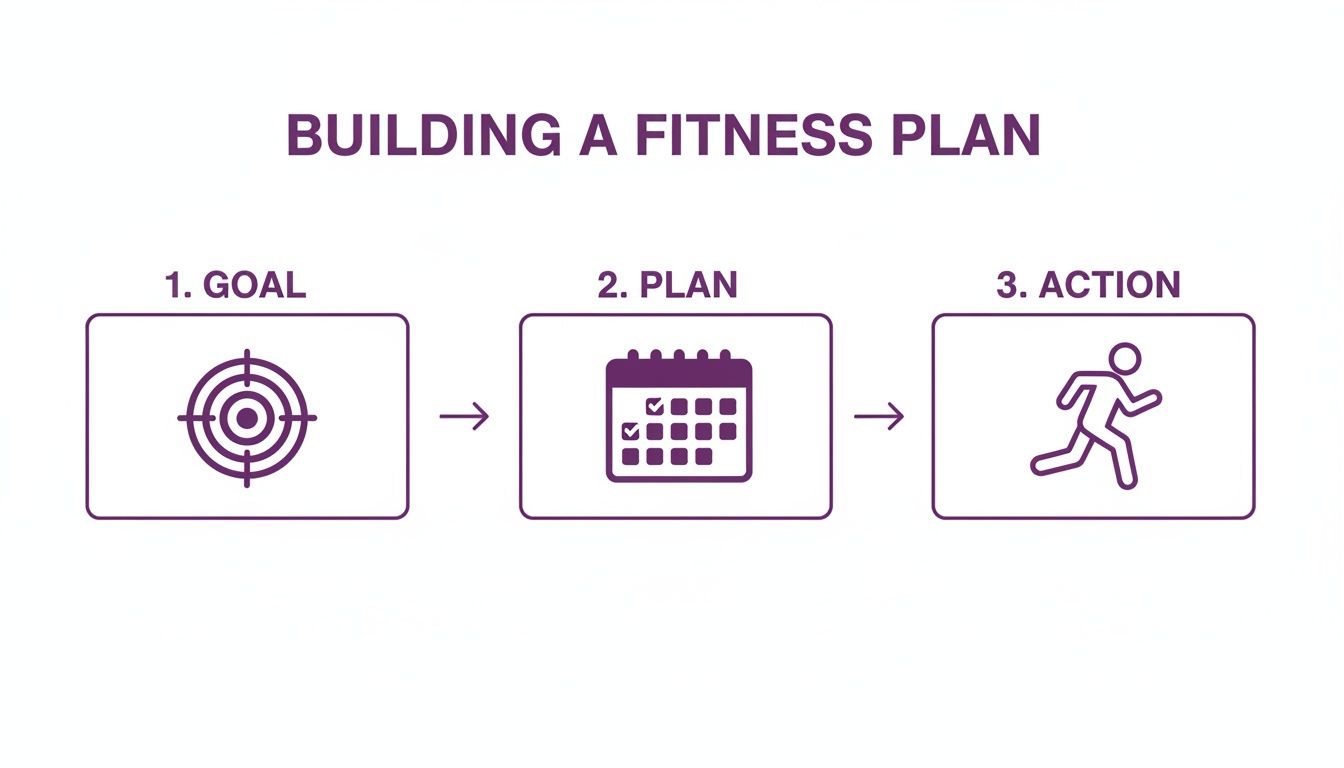
As the image shows, without a goal, your plan has no direction. Without a plan, your actions are inconsistent. Each piece builds on the last.
Here are the essential pillars for any sustainable plan.
Core Components of a Sustainable Fitness Plan
| Pillar | Description | Why It Matters for Success |
|---|---|---|
| Personalization | The routine is designed around your specific goals, preferences, schedule, and fitness level. | A generic plan is easy to quit. A personalized one feels like it's yours, boosting motivation and adherence. |
| Sustainability | Your diet and workouts are realistic and flexible enough to fit into your real life, including social events and off-days. | If the plan is too rigid or demanding, burnout is inevitable. Sustainability ensures longevity over short-term intensity. |
| Consistency | The focus is on showing up regularly, even when you don't feel 100%, rather than chasing perfection. | Consistency compounds over time. Showing up 80% of the time is far more effective than going all-out for two weeks and then stopping. |
| Progression | The plan includes a clear path for gradually increasing the challenge over time (e.g., more weight, more reps, new skills). | Without progression, you'll hit a plateau. A structured plan to advance keeps you challenged and moving toward your goals. |
These four components work together to create a system that lasts a lifetime.
The most powerful diet and workout routine is the one you can stick with on your worst days, not just your best. Consistency will always outperform occasional intensity.
Let’s leave quick fixes behind. We're here to build habits that will serve you for years. First, let's define what success looks like for you.
Defining What Success Looks Like for You
A solid diet and workout routine starts with a powerful question: “What does success actually look like for me?”
Vague goals like “get fit” fizzle out fast because they lack a personal connection.
To build something that sticks, you need a strong 'why.' This is the personal reason that keeps you going when motivation dips.
Moving Beyond Vague Goals
Let's get specific. Instead of saying, "I want to be healthier," what does that actually mean?
- For the busy parent: Maybe it's having the energy to play with your kids after a long day.
- For the office worker: It could be getting through the workday without back pain.
- For the aspiring athlete: Maybe it's shaving 30 seconds off your mile time.
These are tangible outcomes. They give you a clear target and a concrete mission.
Your fitness goal should be so clear that you can picture exactly how it will change your day-to-day life. This vision is what will keep you consistent.
Establishing Your Starting Point
Once you have a vision, figure out where you're starting from. This isn’t about judgment; it’s about gathering data.
Start with your body's basic energy needs, your basal metabolic rate (BMR). This is the calories your body burns at rest. An online BMR calculator can give you a solid estimate.
This number is the foundation for a nutrition plan that matches your goals.
Understanding the Building Blocks of Nutrition
Beyond calories, understand macronutrients: protein, carbs, and fats. Each has a critical job.
- Protein: Builds and repairs muscle. Essential for any workout program.
- Carbohydrates: Your body's main fuel source for energy.
- Fats: Crucial for hormone production and absorbing vitamins.
A basic awareness helps you build balanced meals. For a deeper dive, check out our Beginner's Guide to Nutrition video on the Diet & Exercise channel.
To make planning easier, our Weekly Meal Planner & Fitness Journal is a game-changer. It provides a single place to map out meals and workouts, keeping you organized and committed. A physical planner helps make your goals feel real and tangible.
Let's Build Your Foundational Workout Plan
With your goals locked in, it's time to build your workout plan. An effective diet and workout routine balances strength, cardio, and flexibility.
It's about training efficiently to support your goals and fit into your life.
Strength training builds muscle and boosts metabolism. Cardio strengthens your heart and burns calories. Flexibility work prevents injuries.
Prioritize Movements That Matter: Functional Fitness
The most powerful workouts are built on functional movements—exercises that mimic real-world actions like squatting, pushing, and pulling.
These compound exercises are your secret weapon. They fire up multiple muscle groups at once, giving you a bigger bang for your workout buck.
You're building practical, real-world strength. Make squats, deadlifts, push-ups, and rows the core of your routine.
Your Weekly Workout Blueprint
Consistency will always beat intensity. A simple, repeatable weekly schedule is the secret to long-term success.
Here's how to structure your week based on your fitness goals.
For Fat Loss: Diet and Exercise Synergy
For fat loss, your diet and workouts must work together. The goal is to maximize calorie burn with strength and cardio while maintaining a calorie deficit through nutrition.
- Workout: Follow a full-body strength routine 2-3 times a week, combined with 2-3 sessions of moderate-intensity cardio or HIIT.
- Diet: Focus on a slight calorie deficit. Prioritize protein to preserve muscle and fiber to stay full. A balanced plate with lean protein, veggies, and complex carbs is key.
For Muscle Gain: Fueling Growth
To build muscle, you need to stimulate growth with targeted strength training and fuel your body with enough calories and protein to rebuild.
- Workout: A workout split (like Upper/Lower Body days) 3-5 times per week allows you to hit muscle groups with enough volume to grow.
- Diet: A slight calorie surplus is necessary. Aim for high protein intake distributed throughout the day to support muscle protein synthesis.
If you want a deeper dive, our video on the keys to effective workouts on the Diet & Exercise channel breaks it all down.
Your At-Home Workout Arsenal
You don't need a gym to get in fantastic shape. A few key pieces of gear can turn any space into a personal gym.
An Adjustable Dumbbell Set is the perfect starting point. They are incredibly versatile, allowing you to quickly switch weights for different functional exercises like squats, presses, and rows. You get the benefit of a full rack of weights without taking up a lot of space.
This single purchase removes a major hurdle to working out at home and can support your entire fitness journey.
Creating a Nutrition Strategy You Can Live With
A successful fitness plan is built on fuel, not restriction. The secret is a nutrition strategy you can actually live with.
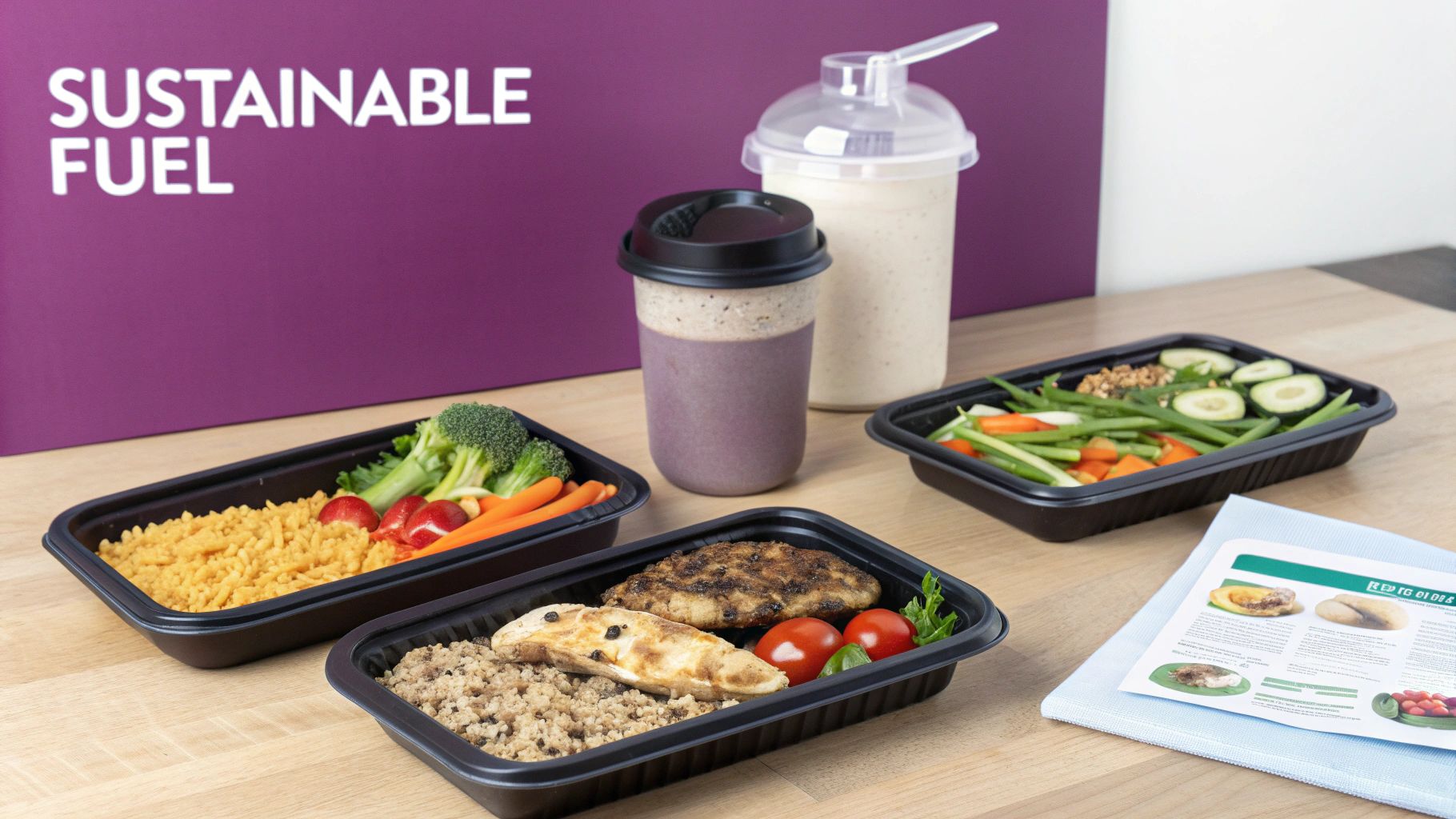
Sustainability comes from balance and simplicity. It’s about creating satisfying meals from whole foods and having smart options for busy days.
The Power of Simple, Balanced Meals
The foundation of a solid nutrition plan is the "plate method." It’s a simple guide:
- Fill half your plate with non-starchy vegetables.
- Fill one-quarter with a lean protein source.
- Fill the final quarter with a complex carbohydrate.
This approach creates balanced meals without obsessive calorie counting. You get the fiber, protein, and energy your body needs to feel full and perform at its best.
The best diet isn't the one with the strictest rules; it's the one you can stick to consistently. Focus on adding nourishing foods to your plate.
Smart Meal Prep and Snacking Strategies
Meal prep can be as simple as cooking a big batch of chicken and quinoa for the week. For inspiration, the Diet & Exercise channel has an excellent Meal Prep for Beginners video.
Smart snacking keeps energy levels steady. Have healthy options ready before hunger strikes.
- For a protein punch: Greek yogurt, almonds, or hard-boiled eggs.
- For fiber-rich fuel: Apple slices with peanut butter or carrots with hummus.
- For quick and easy: A quality protein bar or a piece of fruit.
A little preparation is your best defense against poor food choices.
Navigating Busy Days with Smart Supplements
Some days, a home-cooked meal isn't possible. High-quality supplements can fill nutritional gaps and keep you on track.
Our High-Protein Meal Replacement Shake is the perfect solution for hectic mornings or post-workout fuel. It offers a balanced profile of protein, carbs, and nutrients for a complete meal in minutes.
If you struggle to get enough greens, our Organic Super Greens Powder is an effortless way to boost your intake. One scoop delivers a potent dose of vitamins and minerals. These products from dietexerciseshop.com make it simple to stick to your plan, even on the craziest days.
Of course, a great first step is understanding your body's needs, and you can learn more about how to calculate macros in our detailed guide.
Building Your Sample Meal Plan
Here’s a sample plan to give you an idea. Adjust portion sizes based on your goals and activity level.
- Breakfast (7 AM): Scrambled eggs with spinach and whole-wheat toast.
- Snack (10 AM): Greek yogurt with fresh berries.
- Lunch (1 PM): A big salad with grilled chicken, mixed greens, and light vinaigrette.
- Snack (4 PM): An apple with two tablespoons of almond butter.
- Dinner (7 PM): Baked salmon with roasted broccoli and quinoa.
When you're trying to elevate your physical performance, combining effective training with optimal nutrition is everything. For athletes, this practical guide on how to run faster and longer offers some fantastic insights.
Tracking What Matters and Staying Motivated
Even the best diet and workout routine is useless if you can't stick with it. The secret is building solid habits and tracking progress that truly matters.
Many people get derailed by the number on the scale. It's time to stop letting it dictate your mood and start looking at the bigger picture.
Measuring Progress Beyond the Scale
The scale tells one tiny part of your story. Track the things that reflect real change to keep motivation high.
- Strength Gains: Are you lifting heavier or doing more reps? This is proof you're getting stronger.
- How Your Clothes Fit: Jeans fitting better is a classic sign of body recomposition (losing fat, building muscle).
- Progress Photos: Snap photos every four weeks. Side-by-side pictures don't lie and show slow changes you might miss.
- Energy Levels: How do you feel? Waking up refreshed is a huge "non-scale victory."
Your journey is built on small victories. Acknowledge them all. Celebrating that you can now haul all the groceries inside in one trip is just as valid as celebrating a number.
Using Technology as Your Ally
Technology can be an amazing partner for staying on track. A simple wearable can take the guesswork out of tracking activity, workouts, and sleep.
Our Smart Fitness Watch from dietexerciseshop.com acts as an accountability partner on your wrist. It monitors your heart rate, sleep quality, and daily activity. Seeing the data reinforces good habits.
This isn't a niche trend. Younger generations, in particular, are all-in on fitness tech. Gen Z is leading the charge, with 30% of them planning to spend more on fitness. Their top investment? Wearables. In fact, 63% more Gen Z users invest in these devices than Gen X. You can read more about these fitness trends to see just how intertwined tech and fitness have become. To really dial things in, it's also worth exploring some of the best health tracking apps available to find the tools that click with you.
Pushing Through the Dreaded Plateau
It happens to everyone. You hit a wall where progress stalls. Don't panic! A plateau means your body has adapted. It's time for a new challenge.
- Turn Up the Intensity: Add another set, cut rest time, or try a harder exercise variation.
- Revisit Your Nutrition: Your energy needs change as your body changes. A slight tweak to calories or macros might be needed.
- Focus on Recovery: Overtraining is real. Ensure you're getting quality sleep and taking rest days.
A plateau is a temporary roadblock. By tracking the right metrics and using the right tools, you can keep moving forward.
Evolving Your Routine for Long-Term Progress
Your starting routine has an expiration date.
Your body adapts to challenges. If you don't keep raising the bar, your progress will halt. This is where progressive overload comes in.
The idea is simple: gradually ask more of your body over time. This continuous push forces it to get stronger.
This drive for improvement is a big reason why the global fitness industry is booming, on track to blow past $90 billion by 2025. People want to keep seeing results, which also explains why the fitness equipment market alone is projected to hit $19.2 billion. You can discover more insights on evolving fitness trends to see how the industry is adapting, too.
Smart Adjustments for Continued Growth
Pushing yourself doesn't always mean lifting heavier. There are smarter ways to apply progressive overload.
- More Reps or Sets: If you did 8 reps last week, shoot for 10 this week.
- Less Rest: Cut rest time between sets from 60 to 45 seconds to increase intensity.
- Perfect Your Form: Slowing down a movement to focus on muscle contraction can be a new challenge.
- Introduce New Exercises: Swap an old exercise for a new, more complex one.
Your body is incredibly smart. It will adapt to whatever you consistently ask of it. To keep seeing progress, you must consistently ask it to do a little bit more.
As your workouts get tougher, your nutrition may need a tune-up. You might need more protein or calories. Listen to your body's signals.
Recovery also becomes non-negotiable. Tools like our Advanced Recovery Massage Gun can be a game-changer for muscle soreness. Think of recovery as part of your training.
Have Questions? We Have Answers
Starting a new diet and workout plan can bring up questions. Here are answers to the most common ones.
"How Soon Will I Actually See Results?"
You'll likely feel a change before you see one. Most people notice more energy and better sleep within the first couple of weeks.
Visible physical changes usually take more time, often around the 4 to 8-week mark with consistency. Celebrate non-scale victories along the way.
"What Matters More for Weight Loss: Diet or Exercise?"
Your diet moves the needle on the scale. A calorie deficit, managed through food, is essential for weight loss.
But exercise sculpts your body, builds muscle, and gives you a strong, toned look. For lasting results, you need both working together.
"Can I Really Lose Fat and Build Muscle at the Same Time?"
Absolutely. This is called body recomposition, and it's a great goal, especially for beginners.
The trick is to eat enough protein to build muscle while maintaining a small calorie deficit to burn fat. A consistent strength training program is key.
Ready to gear up for your new routine? The Diet & Exercise shop has apparel and equipment to keep you going. Head over to https://dietexerciseshop.com to find everything you need to get started.