
Diet vs Exercise for Weight Loss: Which Path Delivers Real Results?
When you pit diet vs. exercise for weight loss, there's a clear winner for getting the scale to move quickly: diet. It’s simply easier and faster to create a calorie deficit by tweaking what you eat than it is to burn off those same calories at the gym.
But that's just the beginning of the story. Thinking of it as a competition misses the point entirely. To see lasting results, you need to combine a smart diet with consistent exercise.
The 80/20 Principle of Weight Loss
You’ve probably heard of the 80/20 rule for weight loss. The idea is that your results come 80% from your diet and 20% from exercise. While this isn't some hard-and-fast scientific formula, it’s an incredibly useful way to think about where to focus your energy, especially when you're just starting out.
The logic comes down to simple calorie math. To lose weight, you have to burn more calories than you take in.
Think about it: cutting 500 calories from your daily diet is as simple as swapping a high-calorie coffee drink for black coffee and skipping a bag of chips.
To burn those same 500 calories? You’d be looking at nearly an hour of intense running. One is a quick decision, the other is a major time commitment.
This image really drives home the different, but equally important, jobs that diet and exercise have.
Diet is your tool for managing the "calories in" part of the equation. Exercise supercharges the "calories out" side and builds a stronger, healthier body.
Core Function Showdown Diet vs Exercise
To truly get it, you have to see diet and exercise not as competitors, but as specialists on the same team. They have very different, non-negotiable roles in getting you to your goal. Let's break down what each one brings to the table.
| Factor | Diet (Nutrition Strategy) | Exercise (Physical Activity) |
|---|---|---|
| Primary Role | Directly manages calorie intake to create a deficit. | Increases calorie expenditure and builds metabolically active muscle. |
| Impact on Weight | High and fast. The most direct way to make the number on the scale go down. | Moderate impact on the scale, but a massive impact on body fat percentage and tone. |
| Time Efficiency | Extremely high. A few smart food swaps can save hundreds of calories instantly. | Lower. Burning a meaningful number of calories requires a real-time investment. |
| Metabolic Effect | Can actually slow your metabolism if calories are cut too drastically for too long. | Revs up your metabolism, especially through strength training that builds muscle. |
Research consistently shows that combining a smart, calorie-controlled diet with a mix of strength and cardio training delivers the best, most lasting weight loss results for adults.
In the end, you need both. To achieve your goals, you'll need the right tools and knowledge. Now, let's explore why you simply can't achieve long-term success without a solid plan for both.
The Real Math Behind Weight Loss: Your Calorie Deficit
When you cut through all the noise—the fads, the quick fixes, the magic pills—weight loss comes down to one non-negotiable scientific truth: the calorie deficit.
This isn't a trendy diet plan; it's a fundamental law of human physiology. To lose weight, you simply must burn more energy than you take in.
We often hear this boiled down to "calories in versus calories out." Understanding what goes into that equation is where the power lies.
The "calories out" side of the coin is your Total Daily Energy Expenditure (TDEE), which is just a fancy way of saying how many calories your body burns over a 24-hour period.
Where Do Your Calories Actually Go?
Your daily calorie burn isn't just about hitting the gym. It's a complex mix of different bodily processes that are always running in the background.
- Basal Metabolic Rate (BMR): This is the heavyweight champion of calorie burning. It's the energy your body needs just to keep the lights on—powering your heart, lungs, brain, and other organs. For most people, BMR accounts for a massive 60-70% of their total daily burn.
- Thermic Effect of Food (TEF): Believe it or not, your body uses energy to process the food you eat. Digesting, absorbing, and storing nutrients from your meals makes up about 10% of your daily calorie expenditure.
- Activity Thermogenesis: This is what most people think of as "exercise." It covers every bit of movement, from a grueling workout and a long walk to simply fidgeting at your desk.
To create that all-important deficit, you can either eat less ("calories in") or move more ("calories out"). And this is where the diet vs. exercise debate really heats up.
This simple visual breaks it down perfectly, showing you where your focus should be for the biggest impact.
As you can see, diet controls the lion's share of the equation. It's the most powerful tool you have, especially when you're just starting out.
Let's Look at the Numbers: Diet vs. Exercise
Here’s a practical example. Let's say your goal is to create a 400-calorie deficit today. You've got two main ways to get there.
Path 1: The Dietary Approach
You make a few simple swaps. Maybe you skip the cream and sugar in your coffee or trade your lunchtime bag of chips for an apple. Those small decisions can easily save you 400 calories without breaking a sweat. It’s a quick, efficient edit to your day.
Path 2: The Exercise Approach
To burn that same 400 calories, you’re looking at a serious commitment. You’d need to lace up your sneakers for a brisk 4-mile run or grind through a 45-minute high-intensity interval training (HIIT) class. It’s doable, but it requires a lot more time and physical effort.
Purely from a calorie-counting perspective, adjusting your diet is the path of least resistance. Diet is the most direct and efficient lever you can pull. To get a better handle on this, check out our guide on what is a calorie deficit and how to calculate yours.
Why Exercise Is Your Long-Term Success Partner
If diet is the key that unlocks initial weight loss, exercise is what keeps the door from swinging shut behind you. It's the difference between simply shrinking and truly transforming your body.
Think of exercise as the sculptor that carves out a stronger, leaner, and more resilient physique.
When you lose weight by only cutting calories, you’re taking a gamble. Your body doesn't just burn fat; it also sacrifices precious muscle tissue to meet its energy needs.
That's a huge problem because muscle is your body's metabolic engine. Losing it makes it harder to keep losing weight and, even worse, makes it incredibly easy to gain it all back later.
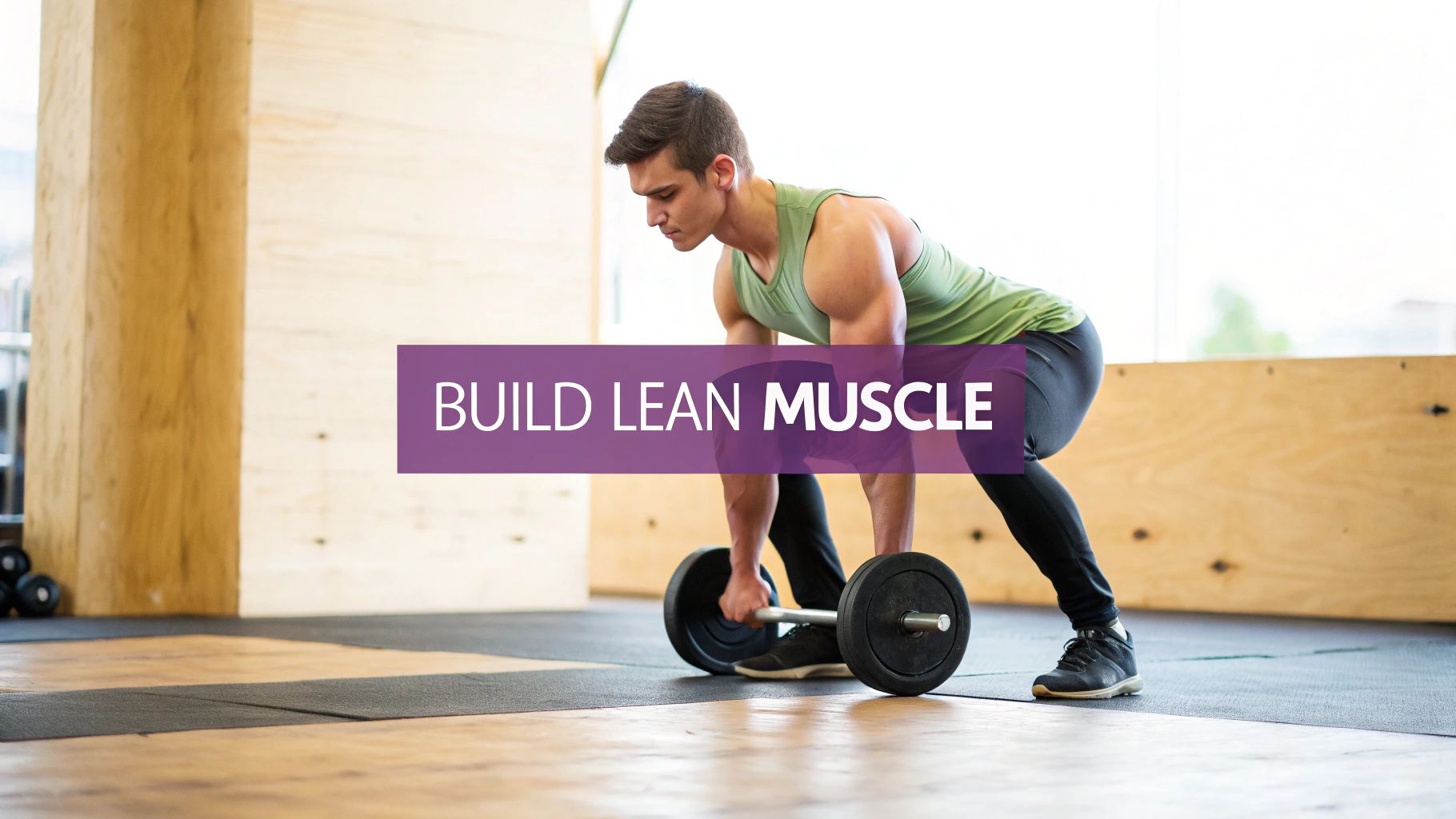
This is precisely why strength training is so vital. It sends a clear signal to your body: "Hey, we need this muscle! Burn the fat for fuel instead." This simple act of preserving lean mass is the secret to sustainable results.
Protecting Your Metabolic Engine
Your Resting Metabolic Rate (RMR) is the amount of energy your body burns just to stay alive. Muscle is far more metabolically active than fat, so the more muscle you have, the more calories you burn around the clock.
By pairing your diet with exercise, you keep that engine running hot.
The research on this is eye-opening. A simulation based on the "Biggest Loser" competition painted a stark picture. A diet-only strategy was projected to result in 34 kg of weight loss, but a shocking 35% of that would be lean muscle. This approach absolutely tanked their RMR, suppressing it by 25%.
On the flip side, an exercise-only plan led to 27 kg of weight loss, with an incredible 102% of that loss coming from fat—meaning they actually built a little muscle in the process. Their metabolism barely budged, dipping by only 1%. Exercise is non-negotiable for metabolic health.
Transforming Your Body Composition
Ultimately, the goal isn't just to see a lower number on the scale. It's to achieve a healthier body composition—less fat, more lean muscle. This is where exercise leaves a diet-only approach in the dust.
Exercise does far more than just burn calories while you're moving. It sets off a chain reaction of positive changes that reshape your body from the inside out.
- Improved Insulin Sensitivity: Working out makes your muscles more receptive to insulin. This helps your body use carbs for fuel and store them in your muscles as glycogen, rather than converting them into fat.
- Targeted Fat Mobilization: High-intensity exercise, in particular, triggers the release of hormones that help unlock fat from stubborn storage areas, making it available to be burned for energy.
- Enhanced Post-Workout Calorie Burn: Often called the "afterburn effect" or EPOC, your body keeps burning calories at a higher rate for hours after you finish your workout as it recovers and repairs muscle tissue.
To make the most of that muscle repair, getting enough protein is essential. Following up your workout with a quality protein source, like our Vegan Protein, helps refuel your muscles and jumpstart recovery. It’s the perfect way to ensure all your hard work in the gym pays off by building a stronger, leaner body. This plant-based option is ideal for anyone looking to build muscle without animal products.
Crafting Your Integrated Fitness Blueprint
Knowing that diet and exercise both matter is the easy part. The real magic happens when you weave them together into a smart, practical plan.
An effective blueprint isn’t about throwing everything at the wall to see what sticks. It’s about aligning your nutrition and training to hit a specific target.
Think of it this way: what you eat fuels your workouts, and how you move determines what your body does with that fuel. They work in tandem.
For instance, timing your protein intake after a workout can make a world of difference in muscle repair. Eating the right carbs beforehand can give you the energy to push harder. It's all about making them work together.
A structured weekly plan helps you see the big picture, making sure your meals support your training every single day.
Blueprint 1: Accelerated Fat Loss
When the main goal is to shed fat efficiently, the strategy is simple: create a consistent calorie deficit while holding onto as much muscle as possible.
This means hitting it from two angles—smart, calorie-burning workouts and a diet that keeps you full and fueled.
Your focus here is a moderate daily calorie deficit, somewhere around 500 calories below what you need to maintain your current weight. The key to not feeling starved is packing your meals with protein and fiber-rich vegetables.
Here’s a great training schedule for this goal:
- 3 Days of Full-Body Strength Training: Stick to the big, compound lifts like squats, deadlifts, and rows. They recruit more muscle, burn more calories, and keep your metabolism fired up.
- 2-3 Days of HIIT: Short, intense sessions of 20-25 minutes are incredibly effective. They torch calories during the workout and keep your metabolism elevated for hours afterward.
- 1 Day of Active Recovery: A long walk or a light bike ride is perfect. It helps with recovery without adding more stress to your body.
Recovery is non-negotiable. A quality protein source is essential for repairing muscle and curbing hunger. For an easy win, our High-Protein Meal Replacement Shake delivers 25g of protein to kickstart the recovery process, making it a perfect fit for a calorie-controlled plan. It's a quick, delicious way to stay on track.
Blueprint 2: Lean Muscle Sculpting
Ready to build a more toned, sculpted physique? The rules change a bit. While you still want to stay lean, building muscle requires energy. This blueprint is about eating enough to fuel growth and following a workout plan built on progressive overload.
Nutritionally, you’ll want to eat at or just slightly above your maintenance calories. Protein is king here; aim for around 1 gram per pound of body weight.
A solid training split for sculpting muscle looks like this:
- 4 Days of Split-Body Resistance Training: This lets you dedicate entire workouts to specific muscle groups (like an "Upper Body Day" and a "Lower Body Day"), hitting them with enough volume to spark growth.
- 2 Days of Low-Intensity Cardio: Think incline walking or steady cycling. This helps manage body fat and boosts heart health without getting in the way of muscle recovery.
To keep making progress, you have to lift heavier over time. That’s where the right gear comes in. Our versatile Adjustable Dumbbell Set is a game-changer for home gyms. It lets you easily increase the weight as you get stronger and supports countless muscle-building exercises, saving space and money.
Watch this video from the Diet & Exercise channel to see how you can use dumbbells to build a stronger, more defined physique.
Blueprint 3: Sustainable Wellness
For most of us, the ultimate goal isn't a photoshoot-ready body but a healthy, energetic life that we can sustain for the long haul. This blueprint is about finding balance, staying consistent, and feeling good in your own skin.
Forget restrictive diets. Instead, embrace the 80/20 rule: focus on eating whole, nutritious foods 80% of the time, and give yourself the flexibility to enjoy your favorite treats with the other 20%.
Your exercise routine should be something you actually enjoy:
- 2-3 Days of Strength Training: Essential for maintaining muscle and strong bones as you age.
- 2-3 Days of Moderate Cardio: Find what you love—brisk walking, swimming, dancing, jogging.
- More Daily Movement: Just move more. Take the stairs, go for a walk on your lunch break, or set a daily step goal.
This balanced approach is the real secret to lifelong health. For a deeper dive, read our complete guide on balancing diet and exercise for a healthy lifestyle.
Your Weekly Fitness Blueprints
To make things even clearer, here are a few sample plans that bring these concepts to life. Think of them as starting points you can adapt to your own schedule and preferences.
| Fitness Goal | Weekly Diet Focus | Weekly Exercise Routine | Featured Product & Link |
|---|---|---|---|
| Accelerated Fat Loss | 500-calorie deficit, high protein & fiber | 3x full-body strength, 2x HIIT, 1x active recovery | High-Protein Meal Replacement Shake for post-workout recovery. |
| Lean Muscle Sculpting | Slight calorie surplus, ~1g protein per lb bodyweight | 4x split-body resistance training, 2x low-intensity cardio | Adjustable Dumbbell Set for progressive overload at home. |
| Sustainable Wellness | 80/20 rule with whole foods, no strict restrictions | 2-3x strength, 2-3x moderate cardio, daily movement | A quality yoga mat to support flexibility and mindful movement. |
These blueprints show how a few key adjustments to your diet and workout routine can completely shift your results based on what you’re trying to achieve.
Finding Your Optimal Exercise Dose for Results
When it comes to the diet vs. exercise debate, one of the first questions people ask is, "So, how much do I really need to work out?"
The answer is pretty straightforward and comes down to a principle called the dose-response relationship. Simply put, the results you get are directly tied to the effort you put in.
While any movement is a step in the right direction, there are specific targets you can aim for to really see the needle move on your weight loss goals.
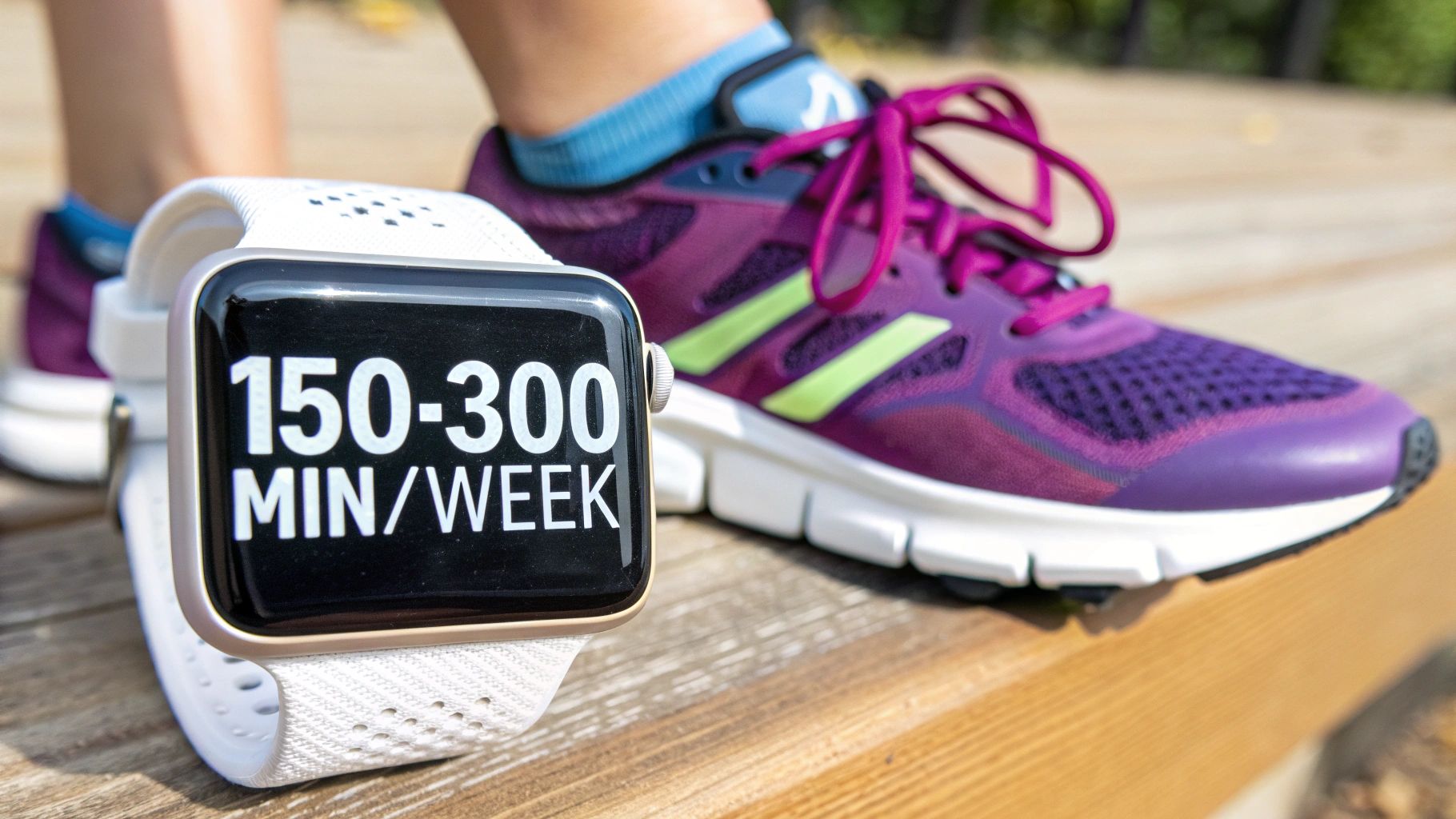
This image highlights the weekly activity goal that has been shown to produce meaningful results in body composition.
Hitting the Sweet Spot for Fat Loss
So, what's the magic number? Major studies point to a clear target: 150-300 minutes of moderate-intensity activity every week.
That breaks down to a manageable 30 to 60 minutes, five days a week. At this level, you start to see clinically significant results that go far beyond what the scale tells you.
The science on aerobic exercise shows a clear dose-dependent effect. One massive review found that for every extra 30 minutes of moderate-to-vigorous activity per week, people saw an average weight reduction of 0.52 kg.
Once they hit that 150 minutes per week mark, they saw a significant 2.08% drop in body fat percentage. The benefits continue to climb all the way to 300 minutes.
Consistency over intensity is key. Hitting your weekly minute goal is far more important for long-term fat loss than killing yourself in one brutal workout and then doing nothing for the rest of the week.
The Power of Progressive Overload
Once you establish a routine, something interesting happens: your body adapts. That 30-minute jog that used to feel like a huge challenge will eventually become your new normal.
This is where a critical fitness concept called progressive overload comes into play. To keep making progress and avoid hitting a plateau, you have to continually increase the demands you place on your muscles.
This doesn't always mean you have to lift heavier weights. Progressive overload can take many forms:
- Increasing Resistance: Adding more weight or using a stronger resistance band.
- Increasing Reps: Pushing for more repetitions with the same weight.
- Increasing Volume: Adding an extra set to your exercises.
- Decreasing Rest Time: Shortening your rest periods between sets to ramp up the intensity.
This is where having versatile tools can make a huge difference, especially if you work out at home. A high-quality Resistance Band Set is a perfect example of how to apply progressive overload. You can start with a lighter band and, as you get stronger, move up to bands with more tension, ensuring your muscles are always being challenged.
Common Questions About Weight Loss, Answered
When it comes to the diet vs. exercise debate, a lot of questions pop up. Let's clear the air and tackle some of the most common ones.
Can I Really Lose Weight Just by Dieting?
Yes, you absolutely can. If you create a calorie deficit by changing what you eat, the number on the scale will go down.
But here’s the catch: that weight loss is often a mix of fat and hard-earned muscle. Losing muscle is a problem because it slows down your metabolism, making it much tougher to keep the weight off for good.
That's why pairing a smart diet with exercise is the winning strategy. It helps you target fat while keeping your metabolic engine humming.
Cardio or Strength Training: Which One Should I Do?
I get this one all the time. People often think it's an either/or situation, but they're on the same team, and each has a specific job to do.
Cardio is a fantastic tool for burning calories efficiently and strengthening your heart. Strength training is your key to building and holding onto muscle.
The best approach is a balanced one. Aim for 2-3 days of strength training and 2-3 days of cardio each week. This combination delivers comprehensive, lasting results.
How Fast Will I Actually See a Difference?
Everyone's body is different, but most people notice the scale move within the first week or two. Keep in mind, this initial drop is mostly water weight.
The more significant changes—less body fat and more muscle definition—typically start showing up after about four to eight weeks of consistent work. A healthy and sustainable pace to aim for is 1-2 pounds per week.
Is It True You Can't Out-Exercise a Bad Diet?
This saying is popular for a reason: it's spot on. Think about it—it takes just a few minutes to eat 500 calories, but it could take you nearly an hour of intense exercise to burn that same amount.
Exercise is absolutely critical for your health and for shaping your body. But trying to manage your weight without a good nutrition plan is an uphill battle you'll likely lose.
Your diet is the foundation. Exercise is the framework you build on top of it. You simply can't have a strong, lasting structure without both parts working together.
At Diet & Exercise, we know that feeling good in your gear can make all the difference. To help you stay comfortable and focused on your goals, take a look at our collection of stylish and functional Activewear, built for every way you move.