

Easy Exercise Routine for Beginners: Your Quick Start Guide
The best easy exercise routine for beginners is built on consistency, not intensity. Start with 20-30 minutes of simple bodyweight movements, like squats and planks, two or three times a week.
On your "off" days, light cardio like walking is a fantastic way to build a sustainable habit that sticks. This approach combines gentle exercise with smart diet choices to help you reach your goals.
Building A Fitness Habit That Actually Lasts
Jumping into a new fitness routine can feel overwhelming. The secret isn't a complicated plan; it's building a habit that feels as natural as brushing your teeth.
The goal is to weave movement into your life, not add another chore. This means avoiding the classic "all-or-nothing" mindset that burns people out.
Instead of aiming for a perfect workout every day, focus on small, achievable wins. A simple 20-minute workout you complete is far more valuable than a grueling hour-long session you only do once. This is how you build momentum and confidence.
Why Simplicity Is Your Superpower
When you're new to exercise, your body and mind are still adapting. A simple, easy exercise routine for beginners is your best friend because it lowers the risk of injury and helps you avoid burnout.
It gives you space to focus on proper form and learn to listen to your body. This is critical for long-term success. You'll quickly learn what feels good and when it's right to push a little harder.
The most effective workout routine is the one you actually do. Consistency will always beat intensity when it comes to building a lasting fitness foundation.
Getting this mindset right changes everything. It's about patiently laying the groundwork for a healthier life, one smart step at a time. To help track your progress, consider using one of the best habit tracking apps.
Small Steps, Big Changes
Pairing your easy exercise routine with mindful eating creates a powerful synergy. This doesn't mean a strict diet—just start by focusing on whole foods that give you real energy.
This combination of diet and exercise is key. While experts recommend 150-300 minutes of weekly activity, only 46.9% of U.S. adults meet the minimum. Simple, consistent movement paired with better food choices makes a massive difference.
To get a clearer picture, here’s a simple table outlining a potential first week.
Your First Week's Fitness Snapshot
This is an achievable first week, blending different types of movement with essential rest.
| Activity Type | Frequency This Week | Session Goal | Focus |
|---|---|---|---|
| Full-Body Routine | 2 times | 20-25 minutes | Learning proper form |
| Light Cardio | 2-3 times | 30 minutes | Building endurance |
| Active Recovery | 1-2 times | 15 minutes | Flexibility & rest |
| Rest Days | 2 days | - | Allowing muscles to repair |
This approach builds a foundation without overwhelming you. For a deeper dive, our guide on how to start a fitness routine is a great next step.
The 5-Minute Warm-Up You Should Never Skip
Think of starting your car on a frosty morning—you let the engine warm up first. Your body needs the same consideration. A proper warm-up is the most important part of any exercise routine.
It gets blood flowing and tells your muscles it's time to move, which is the best way to prevent injury.
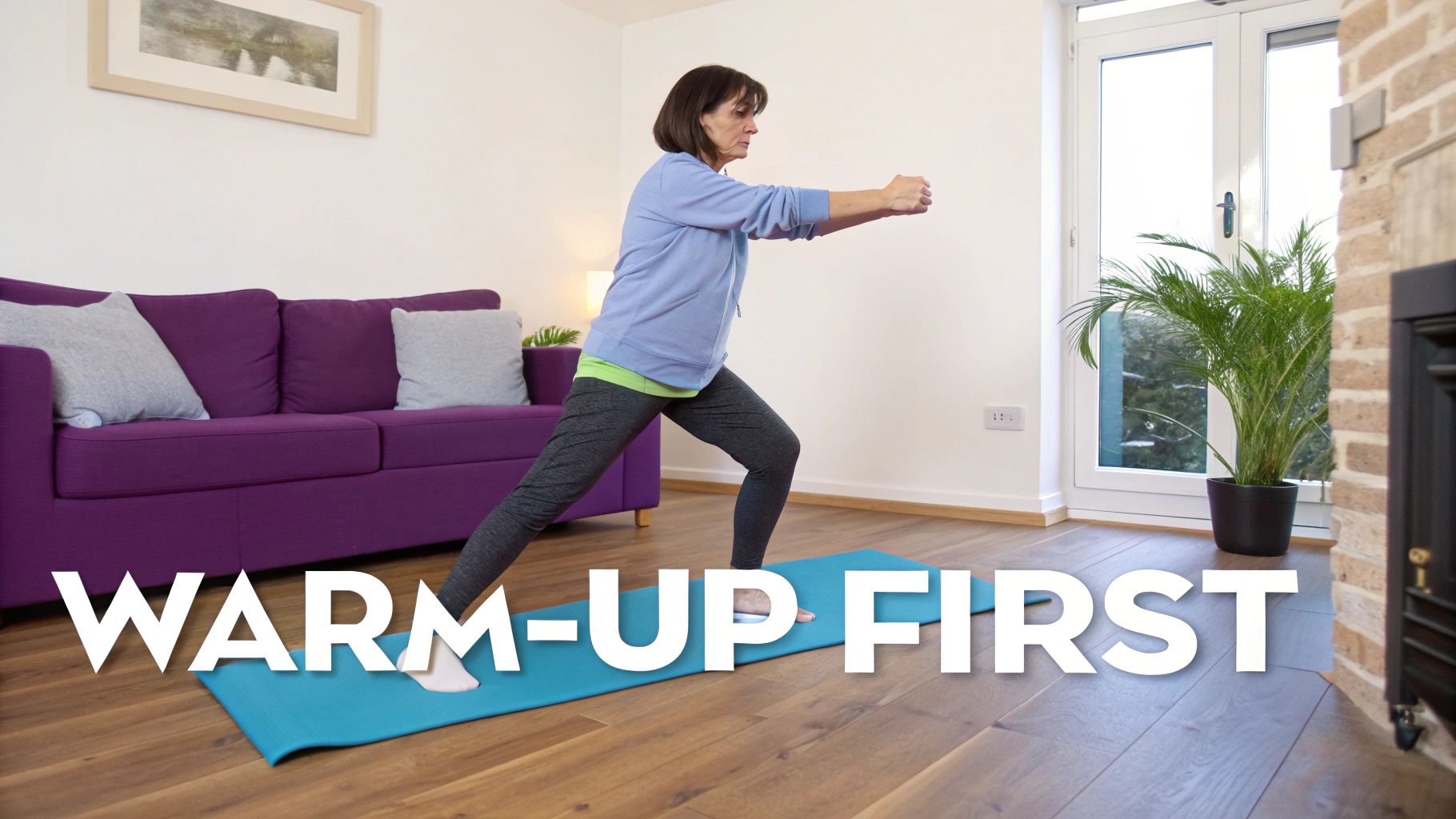
A great warm-up doesn't need to be intense. Just five minutes to gently raise your heart rate and loosen everything up is enough.
This small time investment dramatically reduces your risk of strains and helps you perform each exercise with better, safer form. It also helps you mentally switch gears and focus on your body.
Simple Movements To Get You Started
For a warm-up, focus on dynamic stretches. This means moving your joints and muscles through their full range of motion, rather than holding a static stretch.
Here’s a simple sequence:
- Arm Circles: Stand with feet shoulder-width apart, arms out to your sides. Make 10-15 small circles forward, then reverse for 10-15 circles.
- Leg Swings: Hold a wall or chair for balance. Swing one leg forward and back 10 times smoothly. Repeat with the other leg to open your hips.
- Torso Twists: Stand with feet slightly wider than your shoulders, elbows bent. Gently twist your upper body from side to side for 20-30 seconds.
For a guided warm-up, check out this video on the Diet & Exercise YouTube channel. It takes all the guesswork out of it.
A great warm-up isn't about breaking a sweat—it's about waking up your body. It tells your muscles, "Hey, we're about to move."
Even small efforts have big payoffs. Research shows that just 75 minutes of brisk walking per week can cut the risk of early death by 23%. Learn more about the global impact of physical activity on who.int.
Three Bodyweight Workouts You Can Do Anywhere
The best part about starting a fitness journey is that you don't need a fancy gym. Your own body is an incredible tool.
These three routines can be done anywhere and take less than 20 minutes. We'll start with the fundamentals, then add simple equipment, and finish with a routine to get your heart pumping.
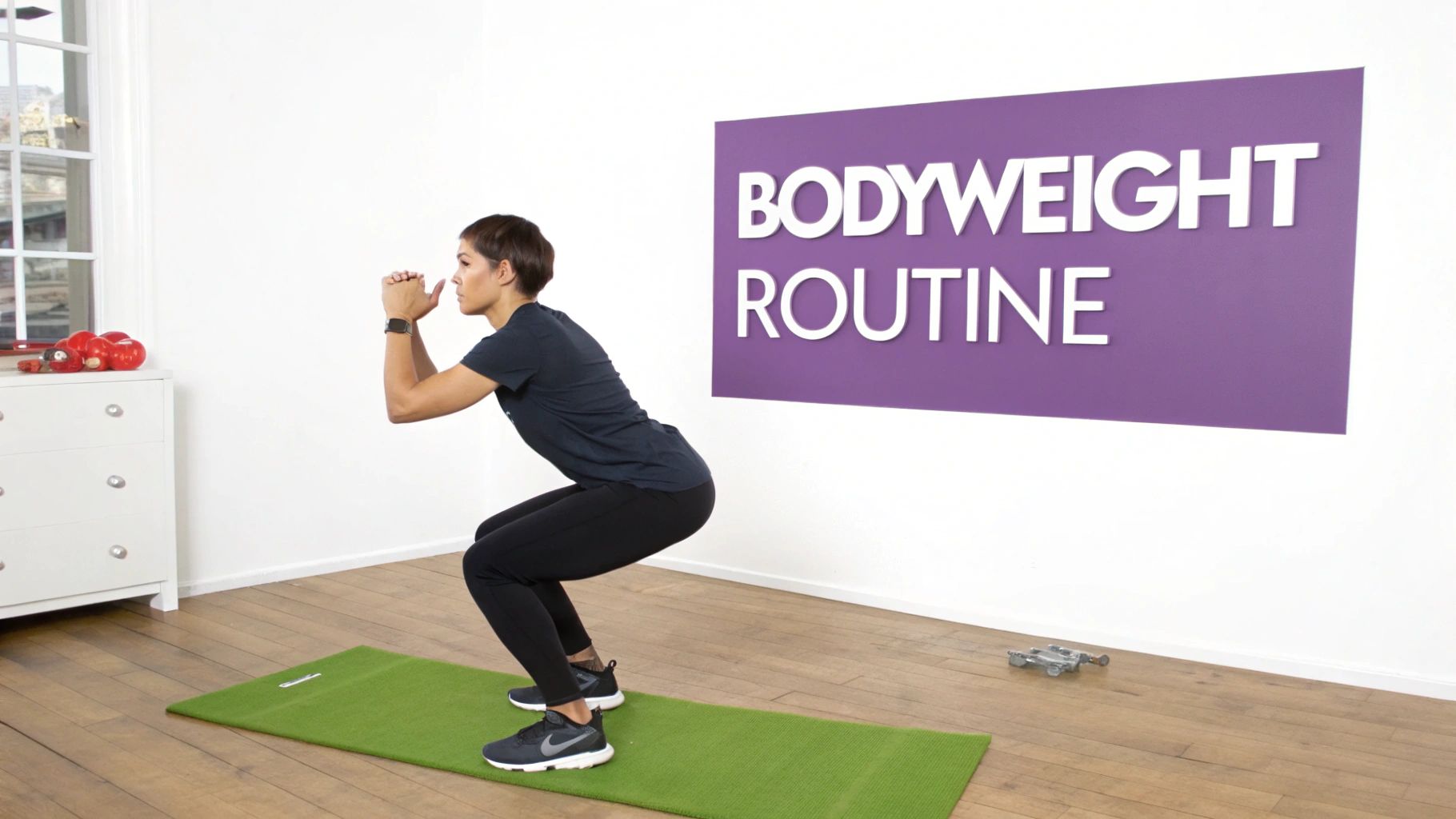
There's a reason home fitness is popular. In 2023, 51% of U.S. exercisers preferred working out at home. This proves you don't need complexity for results, just consistency. You can find more data in this fact sheet from the World Health Organization.
Bodyweight Foundation Routine
This is your starting point. This routine builds a solid base of strength. Forget about speed; the goal is to perfect your form.
Go through this circuit 2-3 times, with a 60-second rest between rounds.
- Bodyweight Squats (10 reps): Stand with feet shoulder-width apart, chest high. Lower down as if sitting in a chair, keeping your knees over your feet.
- Knee Push-Ups (8 reps): Start on your hands and knees. Your body should form a straight line from head to knees. Lower your chest to the floor, then press back up.
- Plank (Hold for 20 seconds): Hold a push-up position (on knees or toes) with a flat back and tight core. Don't let your hips sag.
- Glute Bridges (12 reps): Lie on your back, knees bent, feet flat. Drive through your heels to lift your hips, squeezing your glutes at the top.
Adding some simple equipment to this routine can take your results to the next level. The Diet & Exercise Adjustable Dumbbells are perfect for adding weight to squats and lunges as you get stronger, helping you build muscle without needing a full gym.
Resistance Band Circuit
Once you're confident with the basics, adding resistance is a great next step. A simple tool can make a big difference.
All you need is a good set of resistance bands. The Diet & Exercise Resistance Bands are a fantastic choice because they come with different tension levels, allowing you to progress as you get stronger. They target smaller muscle groups that bodyweight exercises can miss.
Complete this circuit 2-3 times, resting for 60 seconds between rounds.
- Banded Glute Bridges (15 reps): Loop a band around your thighs, just above your knees. As you lift your hips, actively push your knees outward against the band.
- Banded Rows (12 reps): Sit on the floor, legs straight. Wrap a long band around your feet, hold the ends, and pull back toward your torso, squeezing your shoulder blades.
- Bicep Curls (10 reps per arm): Stand on a long band, holding an end in each hand. Keep your elbows at your sides and curl your hands toward your shoulders.
For visual guides, the Diet & Exercise YouTube channel has many clear, follow-along videos perfect for checking your form.
Cardio Burst Session
Ready to get your heart rate up? This routine improves cardiovascular health and burns calories—no running or jumping required.
Do each exercise for 30 seconds, then rest for 15 seconds. After all four moves, rest for one minute, then repeat the circuit 3-4 times.
- Jumping Jacks (or Walking Jacks): A classic. For a low-impact version, step one foot out to the side at a time while raising your arms.
- High Knees: March or jog in place, driving your knees toward your chest. Keep your core tight.
- Butt Kicks: Gently jog in place, trying to kick your heels back toward your glutes.
- Mountain Climbers: Start in a plank. Alternate bringing one knee toward your chest at a time, at a challenging but controlled pace.
Fueling Your Body For Better Results
An easy exercise routine is a fantastic start, but what you eat is the other half of the equation. Food is the fuel that powers your workouts and helps your body rebuild.
You don't need a restrictive diet. The goal is to make small, smart choices for sustained energy.
The synergy between movement and nutrition is critical. Currently, 31% of adults worldwide don't get enough physical activity. Pairing a new routine with better food makes it more likely you'll stick with it.
The Building Blocks Of Energy
Let's simplify nutrition by looking at the three main energy sources, or macronutrients.
- Protein: Crucial for muscle repair. Find it in chicken, fish, beans, lentils, and Greek yogurt.
- Carbohydrates: Your body's go-to energy source. Focus on complex carbs like oatmeal, sweet potatoes, and brown rice for slow, steady energy.
- Fats: Healthy fats from avocados, nuts, seeds, and olive oil are vital for hormone balance and overall health.
For more detail, our guide on what to eat when exercising is a great resource.
Hydration Is Non-Negotiable
Being even slightly dehydrated can make you feel sluggish and weak during a workout. Sip water all day long, not just right before exercise.
Carrying a reusable water bottle is the best reminder. For easy mixing of protein powders or hydration mixes, the Diet & Exercise Shaker Bottle is a must-have. It's simple, effective, and perfect for on-the-go nutrition.
Easy Food Swaps To Boost Your Energy
Making big dietary changes is overwhelming. Instead, focus on small, simple swaps that add up.
| Instead Of This | Try This Healthier Alternative | Why It Works Better |
|---|---|---|
| Sugary Cereal | Oatmeal with Berries | Provides slow-release carbs for sustained energy instead of a sugar crash. |
| White Bread | 100% Whole Wheat Bread | Higher in fiber, which helps you feel full longer and supports digestion. |
| Potato Chips | A Handful of Almonds | Offers healthy fats and protein for lasting fuel, not just empty calories. |
| Soda or Juice | Water with Lemon or Cucumber | Hydrates you without the added sugars that can lead to energy dips. |
| Creamy Salad Dressing | Olive Oil & Vinegar | Delivers healthy fats instead of saturated fats and hidden sugars. |
These small changes make a real difference in how you feel. Some people also find that pre-workout supplements like chewing gum can give them a quick mental boost.
Your First 4-Week Action Plan
A good plan is often the only thing between wanting to get fit and doing it. This 4-week schedule is designed to take the guesswork out of the process.
We'll rotate through the three workouts, weaving in rest days. The secret is gradual progression—each week, you’ll nudge the intensity up a bit.
Weeks 1 and 2: Building Your Foundation
These first two weeks are your orientation. The goal isn't to crush it; it's to show up, learn the movements, and get comfortable.
Focus on good form and listen to your body. If you need more time, repeat Week 1.
| Day | Week 1 Plan | Week 2 Plan |
|---|---|---|
| Monday | Bodyweight Foundation (2 rounds) | Bodyweight Foundation (3 rounds) |
| Tuesday | 30-min Walk or Light Cardio | 30-min Walk or Light Cardio |
| Wednesday | Rest Day | Rest Day |
| Thursday | Resistance Band Circuit (2 rounds) | Resistance Band Circuit (3 rounds) |
| Friday | Rest Day | Rest Day |
| Saturday | Cardio Burst Session (3 rounds) | Cardio Burst Session (4 rounds) |
| Sunday | Active Recovery (Stretching) | Active Recovery (Stretching) |
Weeks 3 and 4: Stepping It Up
Now you have some momentum. For the next two weeks, we'll dial up the challenge slightly by adding more rounds or tougher variations.
Sticking to a plan like this is a big deal. Physical inactivity is a global health issue. You can learn more about the importance of physical activity from who.int.
| Day | Week 3 Plan | Week 4 Plan |
|---|---|---|
| Monday | Bodyweight Foundation (3 rounds) | Resistance Band Circuit (4 rounds) |
| Tuesday | 35-min Walk or Light Cardio | 40-min Walk or Light Cardio |
| Wednesday | Resistance Band Circuit (3 rounds) | Rest Day |
| Thursday | Cardio Burst Session (4 rounds) | Bodyweight Foundation (4 rounds) |
| Friday | Rest Day | Rest Day |
| Saturday | Bodyweight Foundation (4 rounds) | Cardio Burst Session (5 rounds) |
| Sunday | Active Recovery (Stretching) | Active Recovery (Stretching) |
Remember: The goal is progress, not perfection. If you miss a day, just pick back up where you left off.
After this 4-week plan, you’ll have a great foundation. The next step is adding weight. Tools like the Diet & Exercise Adjustable Dumbbells are perfect for this. They let you add resistance to squats and rows, helping you get stronger without needing a lot of equipment. For examples, the Diet & Exercise YouTube channel is a fantastic resource.
Common Questions Every Beginner Asks
Starting a fitness journey comes with questions. It's normal to wonder if you're doing things right. Let's clear up some common concerns.
How Much Soreness Is Too Much?
After your first few workouts, you'll feel it. This mild, achy feeling is Delayed Onset Muscle Soreness (DOMS), and it's a normal sign your body is adapting.
A little stiffness is a good thing. But if you have sharp pain or soreness so intense it's hard to move, you’ve overdone it. Take an extra rest day and pull back the intensity next time.
Why Am I Not Seeing Results?
It's easy to get frustrated when you don't see immediate changes. Real, sustainable progress is a slow burn.
The most important changes happen on the inside first. Your heart is becoming more efficient, and your endurance is building.
Don't focus only on the mirror or scale. Celebrate "non-scale victories." Are you sleeping better? Do you have more energy? Those are the signs of true progress.
Focus on how you feel. Are you less winded? That’s proof you’re on the right track.
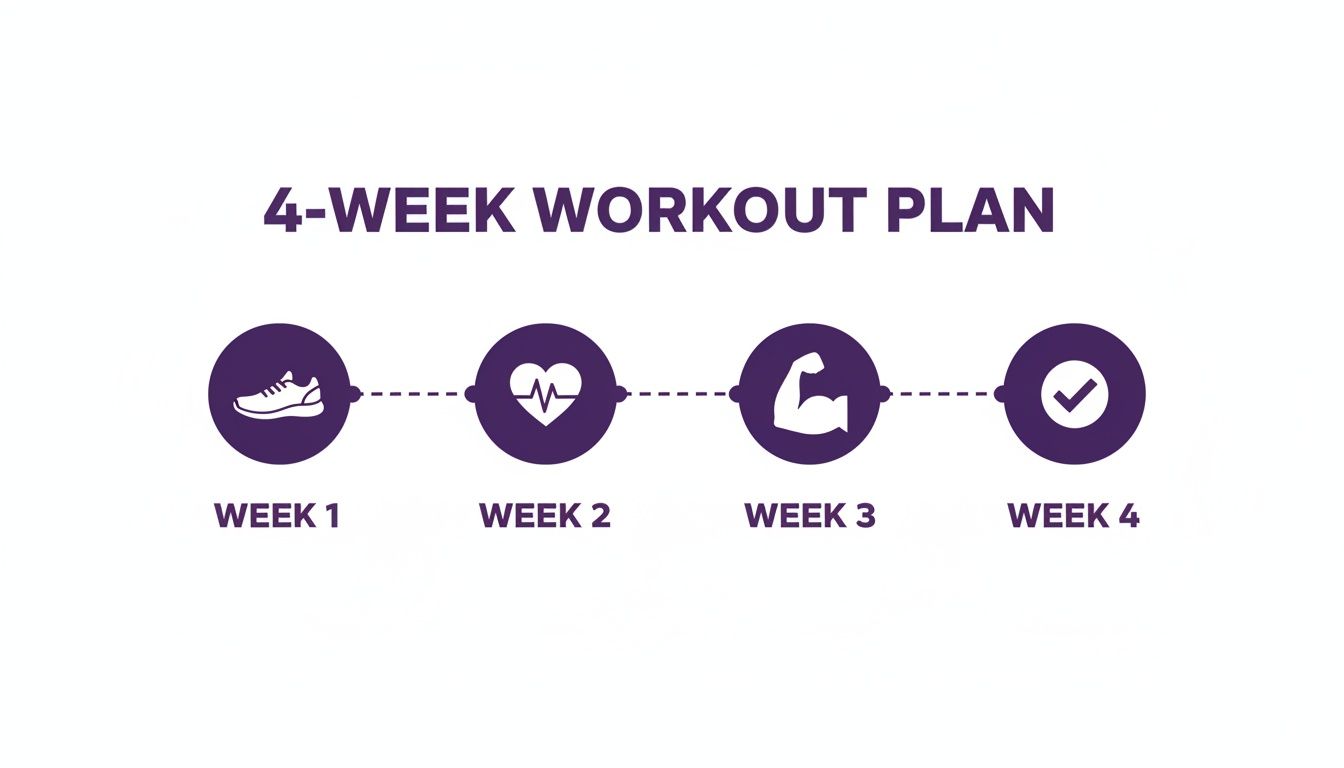
This is what a typical 4-week journey looks like. You build the foundation first, then the visible results follow.
How Do I Stay Motivated?
Motivation comes and goes. The secret to long-term fitness isn't endless motivation; it's building the habit of showing up even when you don't feel like it.
On tough days, lean on your routine, not your feelings. Here are a few tricks:
- The 5-Minute Rule: Just commit to the 5-minute warm-up. Often, once you start, you'll want to finish.
- Schedule It: Treat your workout like an appointment you can't miss.
- Tell Someone: A quick text to a friend adds accountability.
- Reconnect With Your "Why": Remember why you started. Keep that reason front and center.
For an extra push, the videos on the Diet & Exercise YouTube channel are a great resource for staying inspired.
Here at Diet & Exercise, our goal is to make fitness achievable. As you get stronger, you'll want new challenges. Our Diet & Exercise Resistance Bands are the perfect tool to level up your home workouts without bulky equipment.