

The Best Exercise Equipment for Small Spaces
Finding the best exercise equipment for small spaces doesn't have to be complicated. Versatile, compact gear is key. Think adjustable dumbbells, resistance bands, and cardio machines that fold away.
These clever pieces let you get a full-body workout without taking over your living room. They make fitness a reality, even in the coziest apartments.
Turn Any Corner Into Your Personal Gym
Think your small apartment is a barrier to getting fit? That’s a common misconception. You don't need a huge, dedicated space for a killer workout.
With the right gear, you can transform any corner into a personal gym. This is 'fitness minimalism'—getting maximum results with minimal equipment and space.
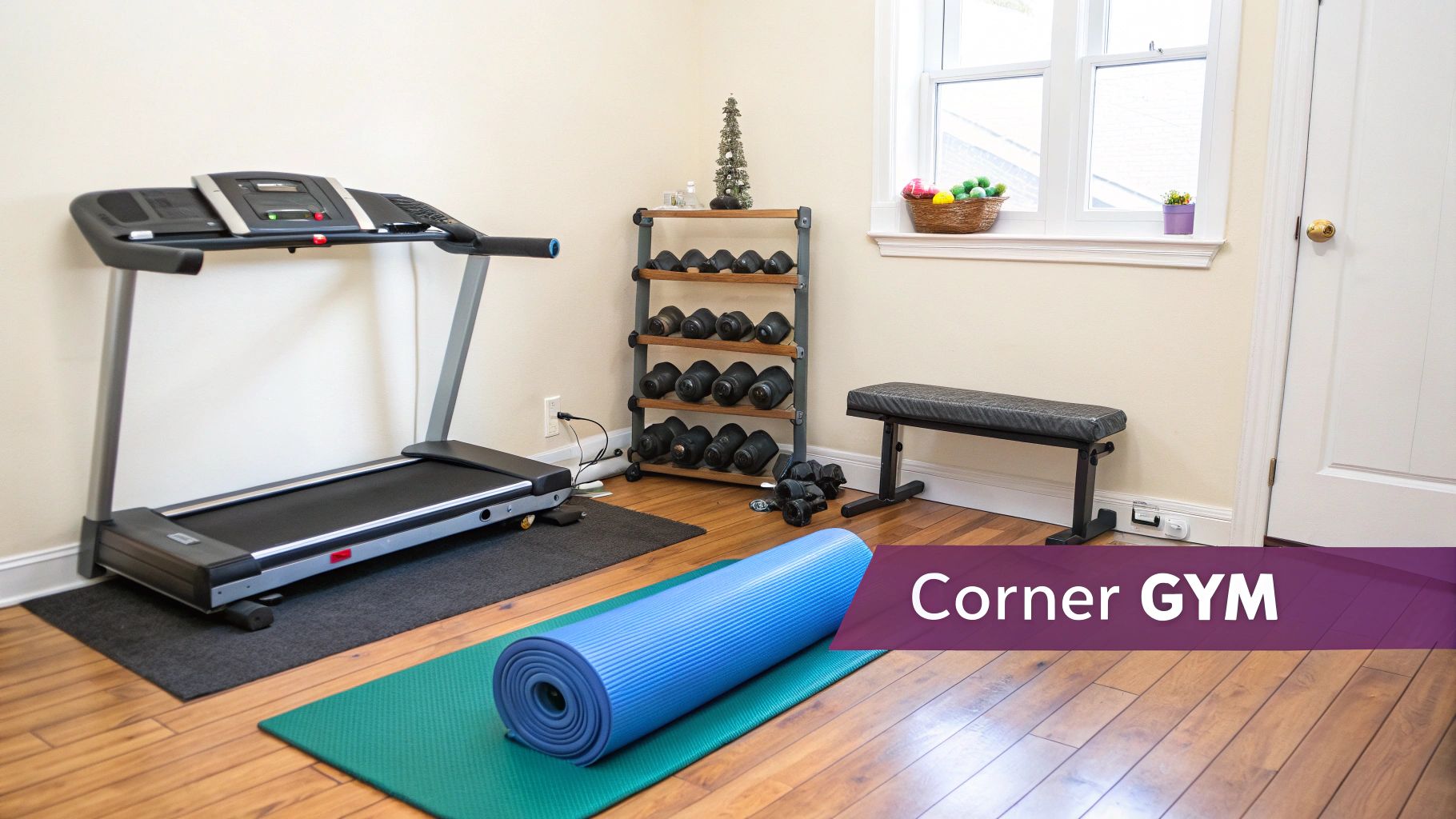
This move toward compact fitness is a real shift in how people approach health. The market for small home exercise equipment is booming, proving people want flexible, space-saving options that fit their busy lives.
Embrace Fitness Minimalism
Instead of seeing a small space as a restriction, think of it as an advantage. It pushes you to be more intentional and efficient with your workouts.
You don't need a dozen clunky machines to build muscle or get your heart rate up. A few well-chosen pieces can give you everything you need for a challenging routine.
This guide will walk you through the best gear that packs a punch without taking up precious real estate.
- Folding Treadmills and Compact Bikes: Get your cardio fix, then tuck it away.
- Adjustable Dumbbells: Imagine an entire rack of weights condensed into one sleek pair.
- Resistance Bands and Suspension Trainers: Incredible strength tools you can literally store in a drawer.
By prioritizing multi-functional and storable equipment, you create a workout space that's always ready when you are. The real goal is to make fitness so convenient that it becomes a seamless part of your daily life.
The Power of Diet and Exercise
Equipment is only one part of the puzzle. Reaching your fitness goals means combining consistent workouts with a smart diet.
For instance, pairing a strength routine with enough protein is essential for building lean muscle. Likewise, fueling cardio sessions with good carbs gives you the energy to push harder.
We'll show how each piece of equipment can support your specific diet and exercise habits. If you're just getting started, our guide on home gym equipment essentials is a great place to learn the basics.
Finding the right gear starts with knowing what you want to achieve. Not sure where to begin? This table breaks down which equipment is best suited for common fitness goals.
Best Compact Equipment for Your Fitness Goals
| Fitness Goal | Recommended Equipment Type | Key Benefit |
|---|---|---|
| Build Muscle & Strength | Adjustable Dumbbells | Replaces an entire weight rack, allowing progressive overload. |
| Cardiovascular Health | Folding Treadmill/Bike | Provides a gym-quality cardio session that can be stored away. |
| Functional Fitness & Toning | Suspension Trainer | Uses bodyweight for a full-body workout, highly portable. |
| Flexibility & Rehab | Resistance Bands | Low-impact resistance perfect for warm-ups, cool-downs, and toning. |
| Versatile Full-Body Workouts | Multi-Use Bench | Supports dozens of exercises and often folds flat for storage. |
Each of these options offers a powerful solution without demanding a lot of space, proving that a great home gym is within reach, no matter how small your home is.
Cardio Machines That Don't Dominate Your Space
Finding space for a great cardio workout at home can feel like a losing game of Tetris. But you don't have to sacrifice your entire living room to get your heart pumping.
The world of exercise equipment for small spaces has exploded with clever designs. These powerful machines practically disappear when you're done.
Folding Treadmills: Your Undercover Cardio Partner
For walkers and runners tight on space, a folding treadmill is a game-changer. Imagine a personal running track that vanishes under the bed or into a closet after your cool-down.
When shopping, the folded dimensions are key. A well-designed model, like our Smart Stride Folding Treadmill, collapses into a slim profile that makes storage a breeze.
A smart fitness plan ties together movement and nutrition. Following a 30-minute walk on your treadmill with a meal full of lean protein and complex carbs is perfect for replenishing energy and helping muscles recover.
Whisper-Quiet Ellipticals and Compact Bikes
Living in an apartment or have housemates? The last thing you want is your workout rattling the whole building. Compact ellipticals and stationary bikes shine here.
They’re famously quiet and offer a low-impact workout, which is much kinder to your joints than pounding the pavement.
Under-desk ellipticals are brilliant if you're a master multitasker. You can easily pedal through work calls or a Netflix binge, burning calories without carving out extra time.
The real secret to getting results with compact equipment is consistency. A 20-minute ride on a stationary bike every day will do more for you than a single hour-long session once a week. It's all about building a habit you can stick with.
Modern upright bikes deliver a tough workout on a tiny footprint—often no bigger than a dining room chair. And don't forget the fuel! These cardio sessions run on carbohydrates. A small, healthy carb snack like a banana 30-60 minutes before you hop on can give you that extra push.
Check out this video from the Diet & Exercise YouTube channel for more pre-workout nutrition tips.
The Ultimate Space-Saver: The Humble Jump Rope
You can't beat a simple jump rope for a cardio tool that's both effective and ridiculously compact. It's a high-intensity workout that will send your heart rate soaring, sharpen your coordination, and torch calories in just a few minutes.
Best of all? It fits in a drawer.
Don't think you'll get bored, either. There are tons of ways to use it. You can explore all kinds of dynamic jump rope exercises that challenge your whole body.
Combine a 15-minute jump rope HIIT session with a diet rich in whole foods. You'll be well on your way to hitting your weight management and endurance goals.
Building Strength Without a Bulky Weight Rack
You don't need a massive, commercial-style weight rack to build serious muscle. The right exercise equipment for small spaces delivers incredible strength gains without all the bulk.
Let's walk through three of the most powerful and practical options for getting strong at home.
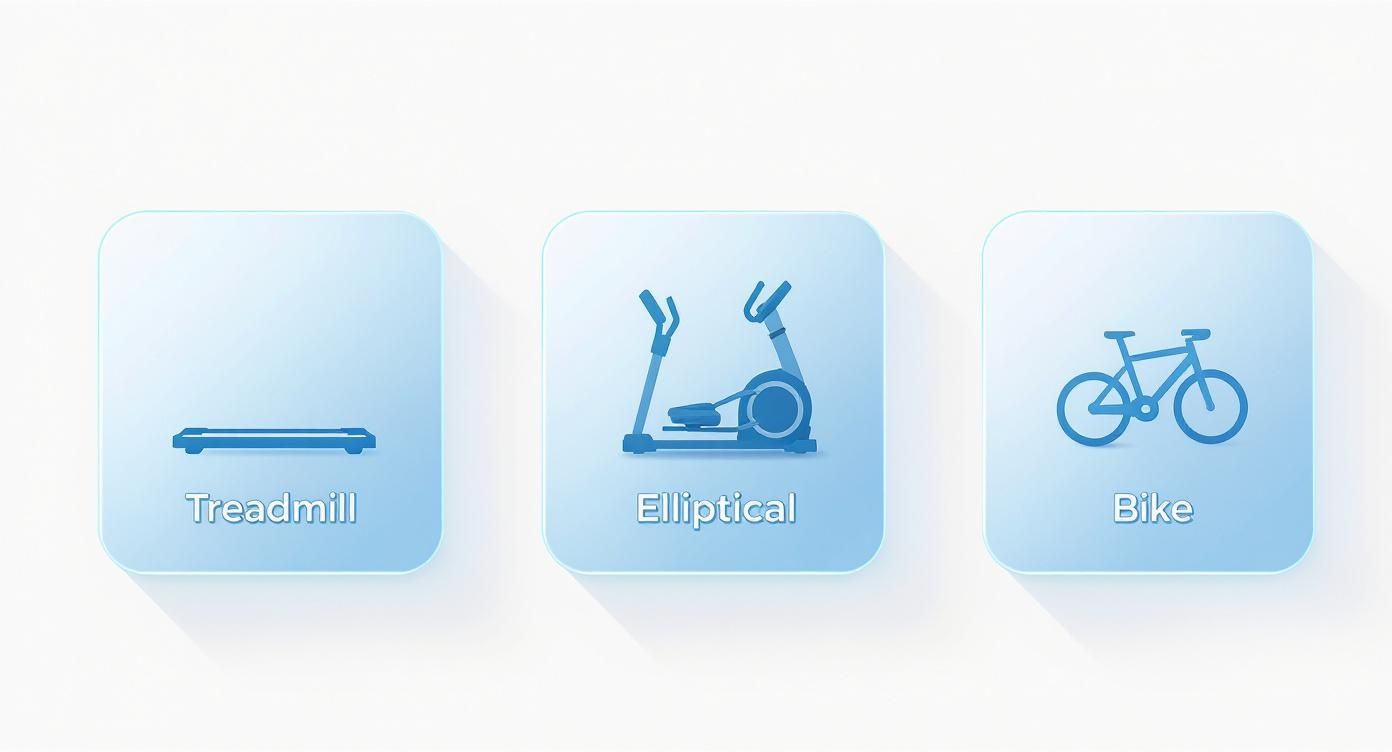
The image above drives the point home: smart design means a treadmill that fits under your bed, an elliptical quiet enough for shared spaces, or a bike that tucks into a corner. The same principle applies to strength training.
Adjustable Dumbbells: The Ultimate Space Saver
Imagine replacing an entire rack of 15 or more pairs of dumbbells with a single, compact set. That's the genius of adjustable dumbbells.
They are the cornerstone of any serious strength routine in a small space. You can go from a light warm-up to a heavy lift with a simple click or turn of a dial. This makes them perfect for progressive overload, the key to building real muscle.
One pair lets you perform everything from bicep curls and tricep extensions to heavy squats and chest presses. To get more out of your dumbbell workouts, check out our guide on choosing the best dumbbells for a home gym.
Resistance Bands: Full-Body Workouts Anywhere
Resistance bands are the most portable and versatile strength tools you can own. These simple elastic bands can target every muscle group in your body.
Their effectiveness comes from the constant tension they provide through every part of an exercise. This is fantastic for both muscle growth and endurance. A good set with multiple resistance levels opens up a world of possibilities.
- Chest Press: Anchor the band to a door and press forward, just like a cable machine.
- Seated Rows: Sit on the floor, loop the band around your feet, and pull back to hit your back muscles.
- Bicep Curls: Stand on the band and curl the handles up for a killer arm pump.
- Glute Kickbacks: Use ankle straps for exercises that specifically target your glutes and hamstrings.
Bands are perfect for circuit training. You can move quickly from one exercise to the next, combining a strength and cardio workout into one efficient session.
Suspension Trainers: Your Bodyweight Is the Gym
Suspension trainers are a brilliant invention that turns your bodyweight into the ultimate resistance tool. They are two adjustable straps with handles that anchor securely to a door or pull-up bar.
The magic is in the angles. By changing your body position, you can make an exercise easier or much harder. This makes suspension trainers perfect for any fitness level.
You can perform hundreds of exercises, from inverted rows and push-ups to challenging pistol squats and core pikes. They are a fantastic way to build a strong, functional physique without traditional weights.
Space-Saving Strength Equipment Comparison
To help you decide which tool might be the best fit, here’s a quick side-by-side comparison.
| Equipment Type | Footprint/Storage | Versatility | Best For | Price Range |
|---|---|---|---|---|
| Adjustable Dumbbells | Very small; replaces a full rack. Stores in a corner or closet. | Excellent for traditional strength training (progressive overload). | Building serious muscle and strength with classic lifting movements. | $150 - $600 |
| Resistance Bands | Minimal; fits in a small drawer or bag. | Extremely high; mimics cable machines, free weights, and bodyweight moves. | All-around fitness, functional strength, and portability/travel. | $25 - $100 |
| Suspension Trainers | Minimal; hangs over a door or packs into a small pouch. | Very high; hundreds of bodyweight exercises for all muscle groups. | Building core strength, stability, and functional, lean muscle. | $50 - $200 |
Ultimately, any of these options can give you a fantastic workout. It really just comes down to your personal preference and how you enjoy training. A combination of dumbbells and bands can give you the best of all worlds.
Designing Your Perfect Workout Nook
Getting the right exercise equipment for small spaces is a huge win. But what really makes a fitness habit stick is creating a space you actually want to use.
A little thought can turn any corner into a personal fitness zone that gets you motivated to move.
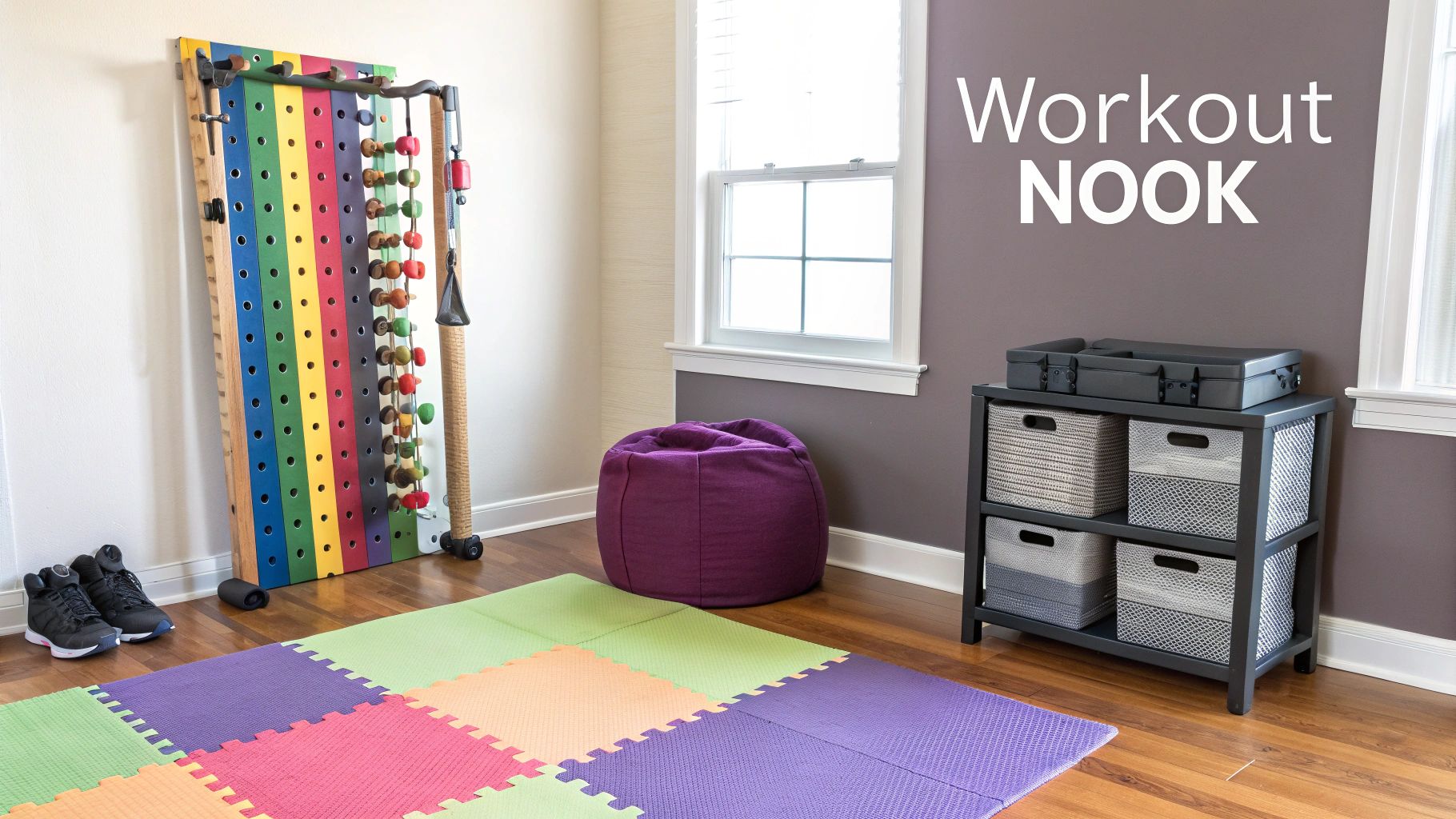
It could be a corner of the living room or a slice of your bedroom. The goal is simple: make the space functional and inviting. A well-designed nook removes excuses, making it easy to slip into your workout.
Laying The Foundation
First, let's protect your home and your joints. Interlocking foam mats are your best friend. They protect your floors from scratches and provide cushioning for your knees and back.
Another big plus? They absorb sound. If you live in an apartment, this is a game-changer. This simple addition immediately defines your space, creating a mental shift from "living room" to "gym time."
Smart Storage Solutions
Clutter kills motivation. A tidy, organized space feels better and makes you want to get started. When short on square footage, thinking vertically is key.
Here are a few brilliant ways to keep your gear in check:
- Vertical Wall Mounts: Get resistance bands, yoga mats, and jump ropes off the floor.
- Multi-Use Furniture: A storage ottoman is the ultimate stealth solution. It can hide dumbbells and give you a place to sit.
- Compact Shelving: A slim shelving unit is perfect for holding your water bottle, a towel, and other accessories.
For more inspiration, check out these smart home gym equipment storage ideas. An organized area boosts the odds you'll use it consistently.
Setting The Mood
The vibe of your workout nook matters. Good lighting and a bit of airflow can make a tiny space feel more energetic and open.
If you're in a dim corner, a bright floor lamp can make a difference. Natural light is even better, so try to set up near a window. A small fan will keep you cool and get the air moving.
Think of your workout nook as your personal sanctuary for health. Small details like good lighting, a mirror to check your form, or even a small plant can transform a bland corner into a place you genuinely enjoy spending time in.
When you combine a solid foundation with smart storage and an inviting atmosphere, you can turn any small area into a powerhouse of a home gym.
Your Home Workout and Nutrition Plan
So, you’ve got your space-saving gear ready to go. To see the results you're after, you need to pair your workouts with smart nutrition.
Think of your exercise as the engine and your food as the high-octane fuel that makes it run. This is your blueprint for putting them both together for the biggest impact.
The shift toward working out at home is a global movement. This trend is driven by a massive demand for compact, do-it-all equipment that fits into real-world homes and apartments. You can get a deeper look at the home gym equipment market and see how your setup is part of this bigger picture.
HIIT Workout With Resistance Bands
When you're short on time and space, High-Intensity Interval Training (HIIT) is your best friend. This 20-minute routine gives you a killer cardio and strength workout with just a set of resistance bands.
The Workout Structure: Go all-out on each exercise for 45 seconds, then take a quick 15-second rest. Run through the full circuit four times.
- Banded Squat Jumps: Loop a band around your thighs. Drop into a squat, then explode into a jump.
- Banded Push-Ups: Drape a long band across your upper back, holding the ends in your hands as you push up.
- Banded Glute Bridges: Lie on your back with the band around your thighs. Drive your hips toward the ceiling.
- Mountain Climbers: Start in a plank and quickly drive your knees toward your chest, one after the other.
Key Takeaway: The whole point of HIIT is to max out your effort during those work intervals. Don't hold back—that 45-second push is what revs up your metabolism and strengthens your heart.
Fueling Your HIIT Session
What you eat before and after your workout can be a total game-changer. Nailing your nutrition timing makes all the difference in your energy and recovery.
- Pre-Workout (30-60 minutes before): You need quick, easily digestible carbs for energy. Think a small banana or a couple of dates.
- Post-Workout (within an hour after): Replenish energy and give your muscles protein to repair. A protein smoothie or Greek yogurt with berries are great options.
For more great ideas, check out this video on pre- and post-workout meals from our Diet & Exercise channel.
Strength Circuit With Adjustable Dumbbells
If you want to build lean muscle, you need to gradually increase the weight you lift. Adjustable dumbbells are perfect for this. This circuit hits all your major muscle groups.
The Workout Structure: Aim for 3 sets of 10-12 reps for each exercise. Rest for 60-90 seconds between sets.
- Goblet Squats: Hold one dumbbell vertically against your chest. Keep your back straight as you sink into a deep squat.
- Dumbbell Bench Press: Lie on a bench or the floor. Press the dumbbells straight up over your chest.
- Bent-Over Rows: Hinge forward at your hips, keeping your back flat. Pull the dumbbells up towards your ribcage.
- Overhead Press: Stand or sit tall. Press the dumbbells straight up overhead.
A routine like this needs the right nutritional backup. Protein is what your body uses to build and repair muscle tissue, so getting enough is non-negotiable.
Aim for 0.7-1.0 grams of protein per pound of your body weight each day. Spread it out across your meals with sources like lean meat, fish, eggs, and quality options like our Power Plant Protein Powder.
Got Questions About Small Space Fitness? We've Got Answers.
Kicking off a home fitness routine is exciting, but it's natural to have a few questions when you're short on space. We've tackled the most common concerns to help you get started with confidence.
What’s The Single Best Piece Of Equipment For A Tiny Apartment?
The honest answer is: it depends entirely on your goals.
For sheer, do-it-all versatility in the smallest package, nothing beats a quality set of resistance bands. You can stuff them in a drawer, they weigh practically nothing, and you can hit every single muscle group.
But if your main goal is building serious muscle, then a set of adjustable dumbbells is an incredibly close second. They pack an entire rack of weights into the footprint of just one pair, making them a powerhouse for strength training.
How Can I Work Out Without My Neighbors Hating Me?
The fear of the "thump-thump-thump" from downstairs is real. The key is low-impact moves and sound-dampening.
A thick exercise mat or interlocking foam tiles will be your new best friend. They are amazing at absorbing the vibrations and impacts that travel through floors.
From there, it's all about choosing your moves wisely:
- Ditch high-impact stuff like jumping jacks directly on the floor. If they're a must, do them on a cushioned mat.
- Embrace "quiet killers." Bodyweight exercises like squats, lunges, and push-ups are great. Routines with resistance bands or suspension trainers are nearly silent but effective.
- Always use an equipment mat. If you have a folding treadmill or compact bike, putting a specialized mat underneath is non-negotiable.
A little mindfulness and the right flooring can make all the difference.
Can I Actually Get A Good Cardio Workout Without A Big Machine?
You absolutely can. You don't need a clunky machine to get your heart pumping. One of the best methods is perfectly suited for small spaces: High-Intensity Interval Training (HIIT).
A killer HIIT circuit can be built with just your body weight. Think high knees, mountain climbers, or shadowboxing. The formula is simple: go all-out for a short burst (30-45 seconds), take a quick breather (15-20 seconds), and repeat.
A simple jump rope is another phenomenal cardio tool. A few minutes of skipping can feel more demanding than a slow jog. For more great ideas, check out the Diet & Exercise YouTube channel for follow-along workouts that use minimal gear.
How Much "Breathing Room" Do I Really Need Around My Equipment?
This is non-negotiable. Safety first. Giving yourself enough clearance keeps you from punching a wall or tripping. The exact space you need comes down to what you're using.
A great rule of thumb is to make sure you have enough room to fully extend your arms and legs in every direction without hitting anything. Always, always measure your space before you buy.
Here are a few specifics to guide you:
- For stationary gear like an exercise bike, aim for at least two feet of clear space on all sides.
- For dynamic machines like a folding treadmill, you need at least two feet on both sides and three to five feet of open space behind it. This is a critical safety zone.
- For free weights and bands, do a quick "wingspan check." Stand where you plan to work out and swing your arms and legs. If you're not hitting furniture, you're good to go.
When in doubt, always read the manufacturer's user manual. They’ll provide specific clearance recommendations for their product.
Here at Diet and Exercise, we're firm believers that a healthy lifestyle fits into any home, no matter the size. To keep you fired up on your journey, we've curated a range of apparel and accessories designed to inspire.
Find your motivation and check out our fitness gear at https://dietexerciseshop.com.