
Top 10 Effective Exercises for Weight Loss in 2026
Welcome to your ultimate guide to effective exercises for weight loss. Getting in shape is about forging sustainable habits that elevate your energy and boost your confidence. This guide gives you a blueprint of specific movements that deliver real, lasting results.
This guide will break down the most impactful exercises, from High-Intensity Interval Training (HIIT) and strength training to swimming and cycling. You will learn not just what to do, but why each exercise is so effective for burning fat and building lean muscle.
This listicle is your go-to resource, providing actionable steps whether you are a beginner or an experienced gym-goer. We will cover ten distinct exercises and show how to integrate them into a balanced weekly routine.
Before you jump in, remember that the right mindset and proper gear can make all the difference. A great workout starts with feeling ready. Consider grabbing one of our inspiring ‘Diet & Exercise’ tees from our shop to serve as a daily reminder of your goals. Let's begin building a stronger, healthier you.
1. High-Intensity Interval Training (HIIT)
High-Intensity Interval Training (HIIT) is a powerhouse workout for weight loss. This method involves short, explosive bursts of effort with brief recovery periods. This cycle pushes your heart rate to its peak, forcing your body to work harder in less time.
The primary benefit of HIIT is its efficiency. The real magic happens after you’ve stopped sweating due to the "afterburn effect." Your body continues to burn calories at an elevated rate for hours as it works to recover. This makes it one of the most effective exercises for weight loss when time is limited.
How to Implement HIIT
You can apply HIIT principles to almost any cardio. A popular method is Tabata: 20 seconds of maximum effort followed by 10 seconds of rest, repeated for eight rounds.
Examples of HIIT Workouts:
- Running: Sprint for 30 seconds, then walk for 60 seconds. Repeat 8-10 times.
- Stationary Bike: Pedal as fast as possible for 20 seconds, then pedal slowly for 40 seconds. Repeat for 15 minutes.
- Bodyweight Circuit: Perform 45 seconds of burpees, rest for 15 seconds, then 45 seconds of jump squats, and rest for 15 seconds.
It is crucial to complement these intense workouts with proper nutrition to fuel your body and support recovery. To dive deeper, you can explore how to balance your diet and exercise for optimal results.
2. Running and Jogging
Running and jogging are classic, accessible, and effective cardiovascular exercises for weight loss. This high-impact activity engages major muscle groups, leading to a significant calorie burn.

The advantage of running is its high energy expenditure. A 155-pound person can burn approximately 372 calories in just 30 minutes. Consistent running improves cardiovascular health and increases your metabolic rate.
How to Implement Running
Getting started with running is straightforward, but a structured approach prevents injury. Beginners can benefit from a gradual progression. The key is consistency and listening to your body.
Examples of Running Workouts:
- Beginner Program (Couch to 5K): This popular plan alternates between walking and running intervals, gradually increasing the running time each week.
- Treadmill Incline Intervals: Warm up for 5 minutes. Run at a moderate pace for 3 minutes at a 2% incline, then walk for 1 minute at a 5% incline. Repeat for 20-25 minutes.
- Steady-State Run: Choose a comfortable pace and maintain it for 30-45 minutes.
To maximize your running performance, fueling your body correctly is non-negotiable. Proper nutrition ensures you have the energy to push through your runs. For more on creating this synergy, you can explore our guide to balancing diet and exercise.
3. Strength Training and Resistance Exercise
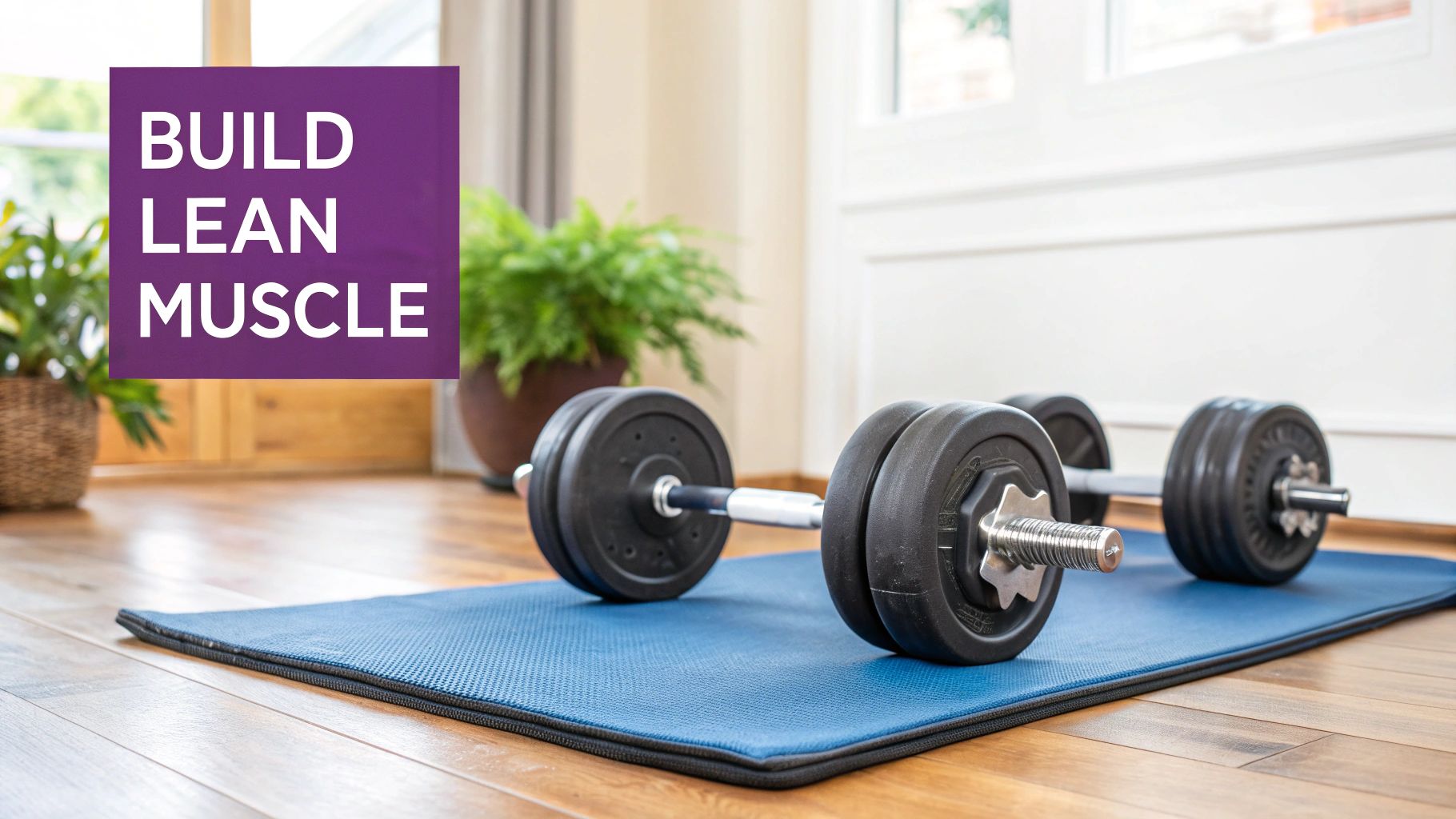
Strength training is a crucial component of any effective weight loss plan. It involves using resistance to challenge your muscles, prompting them to grow stronger. This boosts your metabolism by building lean muscle.
The key benefit of adding muscle is its impact on your Resting Metabolic Rate (RMR). Muscle tissue burns more calories than fat, even at rest. This makes maintaining weight loss significantly easier over time.
How to Implement Strength Training
A structured program is the most effective way to see results. The principle of progressive overload—gradually increasing the weight, reps, or sets—is essential for continuous muscle growth.
Examples of Strength Training Workouts:
- Beginner Full-Body: Perform 3 sets of 8-12 reps of exercises like squats, push-ups (on knees if needed), lunges, and planks.
- Dumbbell Circuit: Complete 4 rounds of 10-15 reps of goblet squats, dumbbell bench presses, bent-over rows, and overhead presses.
- Kettlebell Flow: Combine kettlebell swings, cleans, and presses into a fluid sequence.
For those looking to integrate a structured approach, exploring a modern athletic strength training program can provide a science-backed blueprint. To truly maximize fat loss, it is vital to pair your lifting routine with a smart cardiovascular strategy. You can learn more about how to balance cardio and strength training to create a powerful fitness plan.
4. Cycling and Stationary Biking
Cycling is a fantastic low-impact exercise for weight loss. This activity is gentle on your joints, making it a sustainable choice for people of all fitness levels. It effectively burns calories while building strength in your lower body.
The appeal of cycling is its versatility. You can engage in a high-energy spin class or a leisurely ride. This adaptability helps keep your workout routine fresh and engaging. For those seeking effective cardio with less strain, exploring options like the Top Electric Bikes for Weight Loss After 50 can provide an accessible entry point.
How to Implement Cycling
To get started, a properly fitted bike is crucial. From there, you can tailor your rides to match your fitness goals, mixing steady-state sessions with more intense interval training.
Examples of Cycling Workouts:
- Steady-State Ride: Maintain a consistent, moderate pace for 30-60 minutes.
- Hill Intervals: Find a hill and ride up it with high intensity, then recover on the way down. Repeat 5-10 times.
- Guided Class: Join a live or on-demand class through platforms like Peloton or SoulCycle.
While cycling is a powerful tool for weight loss, remember that what you do in the kitchen is just as important. A balanced diet provides the fuel for your rides and helps create the necessary calorie deficit.
5. Swimming and Water Aerobics
Swimming is a fantastic full-body, low-impact exercise that burns calories without stressing your joints. The natural resistance of water challenges multiple muscle groups simultaneously, making it an exceptional choice for sustainable weight loss.
The key benefit of swimming is its buoyancy. The water supports your body weight, which significantly reduces the impact on your hips, knees, and spine. This makes it ideal for individuals with joint pain or arthritis.
How to Implement Swimming
To maximize the benefits, focus on proper form and consistency. Learning efficient stroke techniques will help you swim for longer periods, burning more calories over time.
Examples of Aquatic Workouts:
- Lap Swimming: Start with a 20-30 minute session, alternating between freestyle and breaststroke.
- Water Aerobics: Join a class that incorporates resistance tools like water dumbbells for a challenging session.
- Aqua Jogging: Mimic the motion of running in the deep end of the pool, often with a flotation belt.
While swimming is one of the most joint-friendly exercises for weight loss, what you do outside the pool is just as important. Pairing your aquatic workouts with a nutrient-dense diet ensures your body has the fuel it needs. To learn more, explore how to balance your diet and exercise for optimal results.
6. Walking and Nordic Walking
Walking is often underestimated, yet it is one of the most accessible and sustainable exercises for weight loss. It requires no special equipment and places minimal stress on the joints, making it ideal for beginners.
The effectiveness of walking is magnified when it becomes a consistent habit. Regular, brisk walking contributes significantly to a daily calorie deficit. Nordic walking, using specialized poles, can increase calorie burn by up to 20% by engaging the upper body.
How to Implement Walking for Weight Loss
The goal is to move from a sedentary lifestyle to an active one. A common benchmark is aiming for 10,000 steps per day, which can be accumulated throughout your day.
Examples of Effective Walking Routines:
- Brisk Power Walking: Walk at a pace where you can still talk but not sing. Aim for 30-60 minutes, 5 days a week.
- Incline Walking: Use a treadmill or find a hilly route to increase intensity and calorie burn.
- Nordic Walking: Use walking poles to push off the ground with each step, engaging your arms and back.
Walking's benefits are maximized when paired with a mindful diet. A healthy eating plan ensures you're creating the necessary calorie deficit for weight loss, while walking increases your energy output.
7. Rowing Machine and Rowing
The rowing machine is a formidable tool for weight loss, offering a unique combination of cardio and strength training. A single rowing stroke engages about 85% of your body's muscles, making it an exceptionally efficient calorie-burning exercise.
The power of rowing lies in its ability to deliver a high-intensity, low-impact workout. Unlike running, rowing places minimal stress on your joints. This dual-action approach torches calories and helps build lean muscle, boosting your resting metabolic rate.
How to Implement Rowing
Proper form is crucial to maximize benefits. The rowing stroke should be a powerful movement driven primarily by your legs. Think of the sequence as "legs, core, arms" on the drive back, and "arms, core, legs" on the recovery.
Examples of Rowing Workouts:
- Steady-State Cardio: Row at a consistent, moderate pace for 20-30 minutes.
- Interval Training: Row hard for 500 meters, then rest or row lightly for 2 minutes. Repeat this cycle 5-6 times.
- CrossFit Style: Incorporate rowing into a circuit. For example, row 250 meters, then perform 15 kettlebell swings.
Rowing is highly effective, but to support the energy demands and facilitate muscle repair, a well-structured nutrition plan is essential. To learn more, explore how to balance your diet and exercise for superior results.
8. Jump Rope and Plyometric Exercises
Jump rope and plyometric exercises are explosive movements that torch calories while improving power and coordination. These exercises, like jump squats and burpees, involve rapid, powerful jumps.
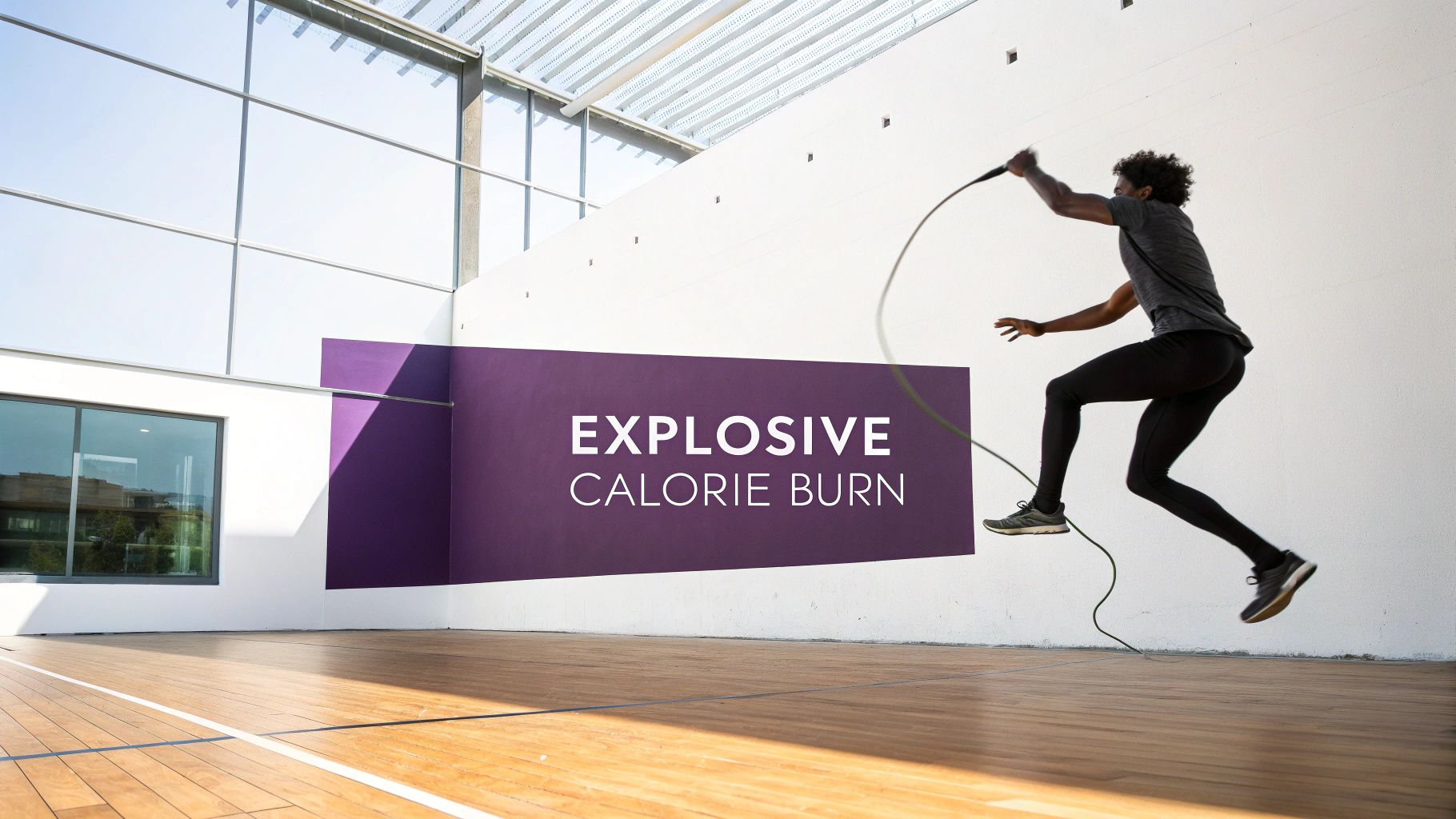
The significant calorie burn comes from the high-intensity nature of the movements. A vigorous jump rope session can burn over 10 calories per minute. Like HIIT, plyometrics also trigger a powerful "afterburn effect" (EPOC). A simple jump rope is all you need for an effective workout.
How to Implement Jump Rope and Plyometrics
To begin, focus on proper form, especially with landings, to protect your joints. Always land softly on the balls of your feet. Limit high-impact training to 2-3 times per week to allow for recovery.
Examples of Jump Rope and Plyometric Workouts:
- Jump Rope Circuit: 60 seconds of basic jumping, followed by 30 seconds of high knees, 30 seconds of butt kicks, and 60 seconds of rest. Repeat 5-8 times.
- Plyometric Challenge: Perform 3 rounds of: 10 box jumps, 15 jump squats, and 20 burpees.
- CrossFit-Style WOD: Complete as many rounds as possible (AMRAP) in 12 minutes of: 50 double-unders and 15 push-ups.
Proper fuel is essential. Ensure you are consuming enough protein and complex carbohydrates to power these explosive sessions. For a convenient way to boost your protein intake, consider adding a scoop of high-quality whey protein to your post-workout routine.
9. Yoga and Pilates for Weight Loss
Yoga and Pilates are surprisingly effective exercises for weight loss. Dynamic styles like Vinyasa Yoga, combined with the core-strengthening of Pilates, create a powerful synergy for burning calories and building lean muscle.
These practices build a strong, metabolically active body. By focusing on controlled movements, you develop lean muscle that burns more calories at rest. The continuous flow in a Vinyasa class can also provide a solid cardiovascular workout.
How to Implement Yoga and Pilates
Consistency is crucial. Aim to practice 3-4 times per week, focusing on styles that keep you moving. Many accessible online platforms offer high-quality classes, making it easy to start at home.
Examples of Yoga and Pilates Workouts:
- Vinyasa Flow: A dynamic practice where you move fluidly from one pose to the next.
- Power Yoga: A more athletic and fitness-based approach to Vinyasa.
- Pilates-Yoga Fusion (Piyo): Programs that combine the muscle-sculpting benefits of Pilates with the flexibility of yoga.
These exercises are most effective when your body is properly fueled. A balanced diet provides the energy for your workouts and the nutrients needed for muscle repair and growth.
10. Elliptical Machine Training
Elliptical training offers a fantastic low-impact cardiovascular workout that is effective for weight loss and gentle on the joints. It simulates running without the jarring impact, making it ideal for those with knee or hip concerns.
The elliptical engages both the upper and lower body simultaneously, leading to a comprehensive, full-body workout and a higher overall calorie burn. The adjustable resistance and incline features allow you to constantly challenge yourself.
How to Implement Elliptical Training
Maximizing your sessions involves proper form and varied intensity. Focus on an upright posture, engage your core, and actively use the handles to work your upper body.
Examples of Elliptical Workouts:
- Steady-State Cardio: Set a moderate resistance and maintain a consistent pace for 30-45 minutes.
- Interval Training: Alternate between 2 minutes of high-intensity effort and 2 minutes of low-intensity recovery for 20-30 minutes.
- Hill Climbs: Gradually increase the incline and resistance to simulate climbing a hill.
While the elliptical provides an excellent workout, remember that sustainable weight loss is achieved by pairing consistent exercise with a balanced diet. For more guidance, you can explore how to balance your diet and exercise for optimal results.
Your Journey Starts Now: Fuel Your Passion for Fitness
You've just navigated a comprehensive toolkit of the most effective exercises for weight loss. The path to a healthier, leaner you is rich with options. The key takeaway is clear: the "best" exercise is the one you will do consistently.
The journey to sustainable weight loss is not about a single, perfect workout. It’s about building a versatile and enjoyable routine that fits your life.
The Real Secret: Consistency Over Intensity
While intensity has its place, the true champion of weight loss is consistency. Showing up for a moderate 30-minute walk five days a week will yield far better long-term results than one grueling session that leaves you too sore to move.
Think of your fitness as a long-term investment. Each workout is a deposit into your health account. It’s the regular, consistent contributions that build substantial wealth over time.
Integrating Diet and Exercise: The Unbeatable Combination
Remember, exercise is only one half of the weight loss equation. You cannot out-train a poor diet. Your workouts must be complemented by a mindful, nutrient-dense eating plan. A balanced diet provides the fuel for your workouts and the building blocks for muscle repair.
True transformation happens when your fork and your fitness work in tandem. A successful weight loss strategy is a lifestyle, not a temporary fix. It's about nourishing your body to power your movements.
To keep your nutrition on track, having the right gear can make all the difference. Our 700ml Protein Shaker Bottle is perfect for mixing a quick, nutritious shake, ensuring you meet your protein goals effortlessly.
Your Actionable Next Steps
Feeling empowered is great, but taking action is what creates change. Here is your go-forward plan:
- Choose Your "Fun" Factor: Review the list of exercises. Which one or two genuinely excite you? Start there.
- Schedule It In: Treat your workouts like non-negotiable appointments. Block out time in your calendar for three to five sessions this week.
- Create Your Environment: Lay out your workout clothes the night before. To truly immerse yourself in your new lifestyle, our 'Eat, Sleep, Train, Repeat' Mug serves as a daily reminder of your commitment.
- Track Your Progress (Not Just Weight): Log your workouts. Note how you feel or how much longer you could go. These non-scale victories are powerful motivators.
Your fitness journey is a personal adventure. Embrace the process, celebrate every small win, and remember that each step is building a stronger you. You have the knowledge and the tools. Now, it’s time to begin.
Ready to elevate your home workouts and make your fitness journey a seamless part of your life? Diet and Exercise provides high-quality, practical fitness gear designed to support your goals. Explore our collection of apparel, accessories, and equipment at Diet and Exercise to find everything you need to build your ideal fitness routine.