

Healthy Diet Plan With Exercise: Burn Fat and Fuel Your Workouts
Combining smart eating with consistent movement gives you steady energy, faster fat loss, and stronger muscles.
It keeps motivation high and helps avoid burnout.
How Diet And Exercise Work Together
A balanced meal plan fuels every workout and speeds recovery.
Think of calories like currency: you need enough to power sessions and repair muscle.
- Protein, carbs, and fats in right ratios rebuild muscles when they’re most receptive.
- Targeted training boosts calorie burn and improves sugar handling.
- Post-workout nutrition cuts soreness and builds resilience for the next session.
Keeping calories just below maintenance nudges fat loss. Pair that with protein-rich foods and resistance training to build lean muscle instead of excuses to skip leg day.
Real Success Stories
A registered nutritionist broke a strength plateau by moving carbs around her lifting schedule and adding protein at breakfast. She hit new personal bests in four weeks.
An IT manager swapped vending-machine candy for homemade grain bowls and added three weekly HIIT workouts. He dropped 15 pounds in eight weeks—without midday slumps.
Tracking Core Metrics
Jot down calories, macro splits, workout intensity, and rest days to stay honest.
Missing the 150 minutes/week target from the World Health Organization strains both fitness and health budgets.
Explore the full WHO Physical Activity Guidelines to see how small tweaks can slash healthcare costs.
Benefits Of Combined Approach Compared To Diet Alone
| Outcome | Diet Only | Diet Plus Exercise |
|---|---|---|
| Energy Levels | Moderate | High and Consistent |
| Fat Loss | Gradual | Accelerated |
| Muscle Strength | Minimal Increase | Significant Growth |
| Metabolic Health | Improved | Optimal |
Consistency in both eating and movement unlocks more gains than focusing on one at a time.
Preview Of Upcoming Steps
- Set realistic fitness and nutrition goals.
- Calculate calories and macros easily.
- Use meal templates timed around workouts.
- Follow a weekly training schedule.
- Adapt plans for parents, athletes, and beginners.
- Track weight changes, energy, and muscle gains.
You’ll also get hands-on resources from Diet and Exercise Shop to make each stage crystal clear.
Setting Goals And Macronutrient Targets
Clear nutrition and fitness milestones give you a roadmap.
Every workout and meal has purpose when you know what you’re aiming for.
Calculating calorie needs relies on age, weight, and activity level.
That baseline lets you split calories into proteins, carbs, and fats with less guesswork.
Calculate Your Daily Calorie Needs
We use the Mifflin-St Jeor formula for proven accuracy.
- Men: multiply BMR by 1.1–1.2 on light days and 1.5 on heavy days.
- Women: use 1.0–1.1 on desk-bound days and 1.4 on active days.
This gives you a daily calorie target that matches your actual burn.
To dive deeper, check out our guide How to Calculate Macros.
Translate Calories Into Macros
Your macro split shifts with your goal:
| Goal | Protein | Carbs | Fats |
|---|---|---|---|
| Fat Loss | 40% | 30% | 30% |
| Muscle Growth | 30% | 40% | 30% |
| Maintenance | 25% | 45% | 30% |
Shift carbs around workouts or bump fats on rest days to find what feels best.
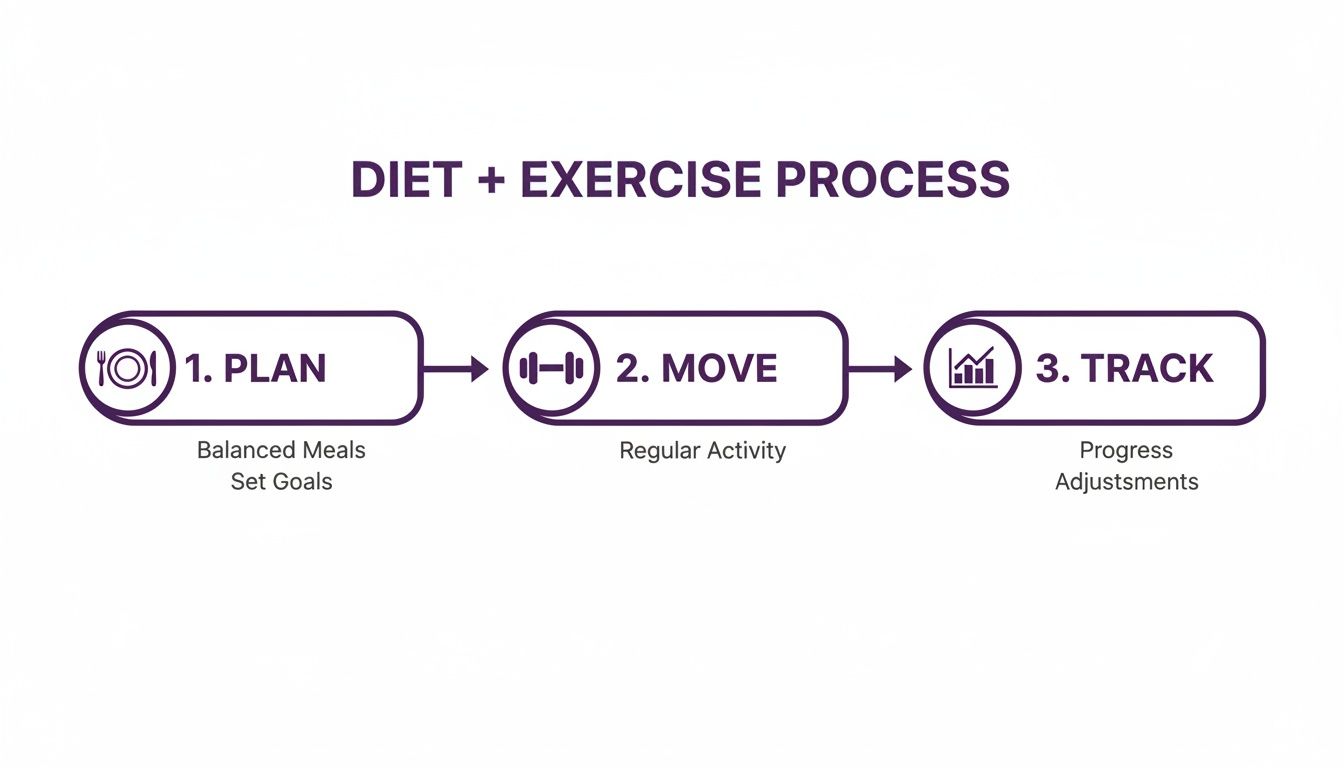
Simple Tracking Strategies
- Photograph meals to capture color, portions, and balance.
- Log workouts and estimated calories burned.
- Do a weekly check-in with a tape measure or scale.
Non-obsessive tracking unlocks consistency and cuts stress around numbers.
Tools To Help You Stay On Target
- Digital Food Scale: Measure portions down to the gram with our Digital Food Scale.
- Macro Journal: Track meals and workouts in our Macro Journal.
- Meal Planner: Visualize weekly eating with our Meal Planner.
Every four weeks, revisit targets based on energy, progress photos, and how clothes fit. Small tweaks—like a 5% carb bump on heavy days—can unlock extra performance.
Designing Balanced Meal Plans
Performance meals boost both body and mind.
Focus on lean proteins, complex carbs, and healthy fats to keep energy steady.
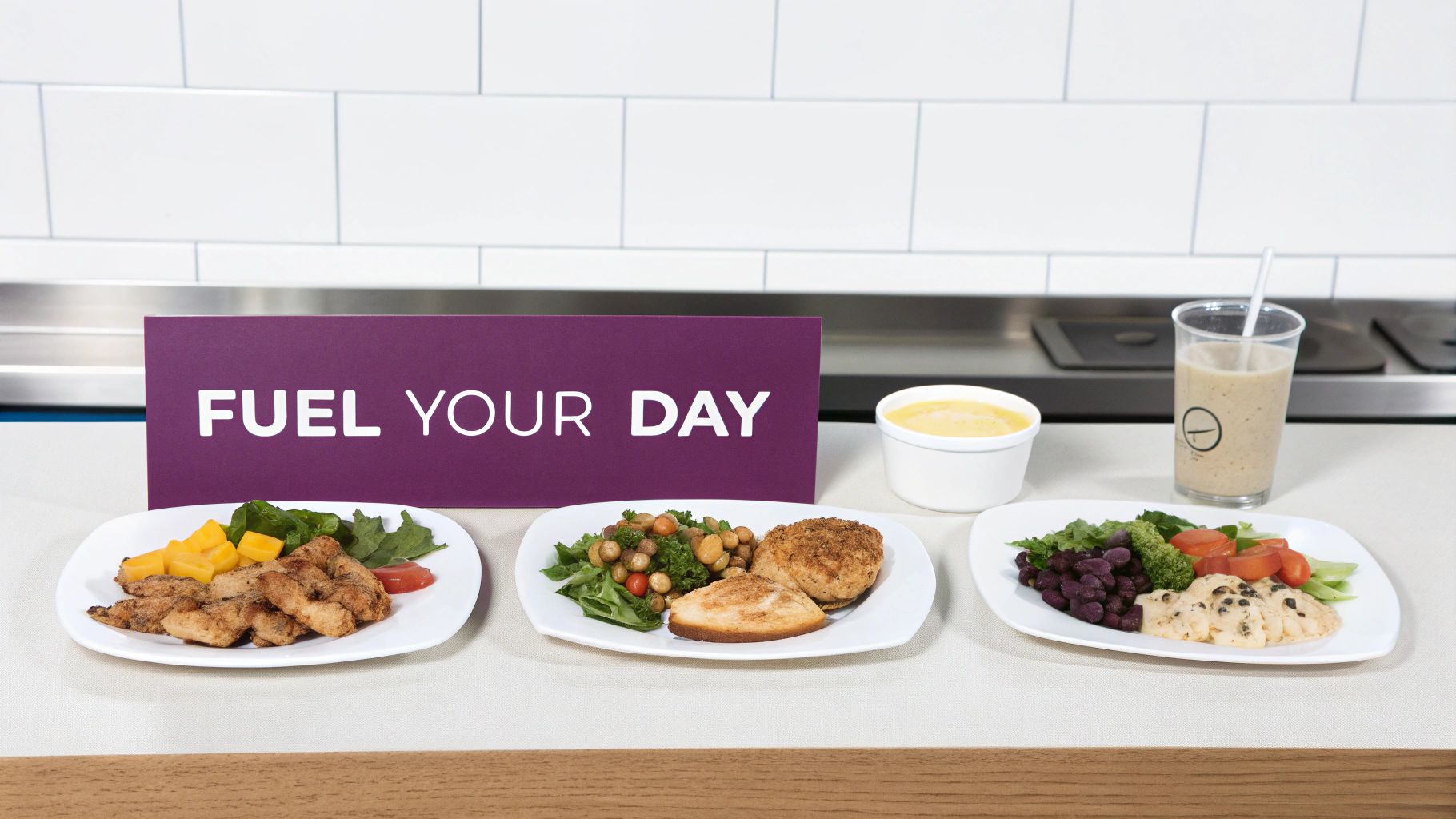
Choosing Nutrient-Dense Ingredients
- Chicken breast: 25g protein per 3 oz.
- Nonfat Greek yogurt: 17g protein plus probiotics.
- Canned tuna: omega-3 fats in a convenient package.
Complex carbs like oats, quinoa, and sweet potatoes fuel you between sessions. Healthy fats—avocado, olives, and nuts—support hormone balance.
Fueling Workouts With Nutrient Timing
- Pre-workout: banana or ½ cup oats with berries.
- Post-workout: 20–30g whey protein blend with spinach.
- Midday refuel: mixed nuts and an apple.
For convenience, try our Whey Protein Blend. Blend smoothies fast in the Compact Blender.
Sample Calorie Tier Meal Templates
Pick the plan that matches your goal: 1,800, 2,200, or 2,600 calories per day.
| Meal | 1,800 Cal | 2,200 Cal | 2,600 Cal |
|---|---|---|---|
| Breakfast | Greek yogurt, oats, fruit | Egg white omelet, toast | Avocado toast, turkey bacon |
| Lunch | Chicken salad, quinoa | Turkey wrap, mixed veggies | Brown rice bowl, salmon |
| Dinner | Beef stir-fry, veggies | Grilled fish, sweet potato | Steak, roasted potatoes |
| Snack | Apple slices, nuts | Protein bar, banana | Recovery bar, smoothie |
Use our Recovery Bars as a quick post-workout boost.
Boosting Recovery And Clarity
Healthy meals sharpen your mind as well as fuel your body.
Surveys link energy and mental clarity to healthy eating.
Learn more about healthy-food trends
Key Meal Prep Strategies
- Batch cook on weekends and freeze portioned meals in our Meal Prep Container Set.
- Use Recovery Bars for snack emergencies.
- Swap full-fat dairy for Greek yogurt to add protein without extra calories.
Balanced meal timing and nutrient density drive consistent performance gains.
Maximizing Time With Smart Tools
- Meal Prep Container Set for organized portions.
- Digital Food Scale for precise counts.
- Macro Journal to track meals and workouts together.
Meal prep tools turn planning into habit and boost adherence.
Seasonal Swaps And Variety
- Summer: use zucchini noodles instead of pasta.
- Fall: roast butternut squash instead of potatoes.
- Winter: add citrus segments to bowls.
- Spring: toss asparagus and peas into dishes.
Variety keeps meals exciting and ensures broad nutrient coverage.
Crafting Weekly Workout Plans
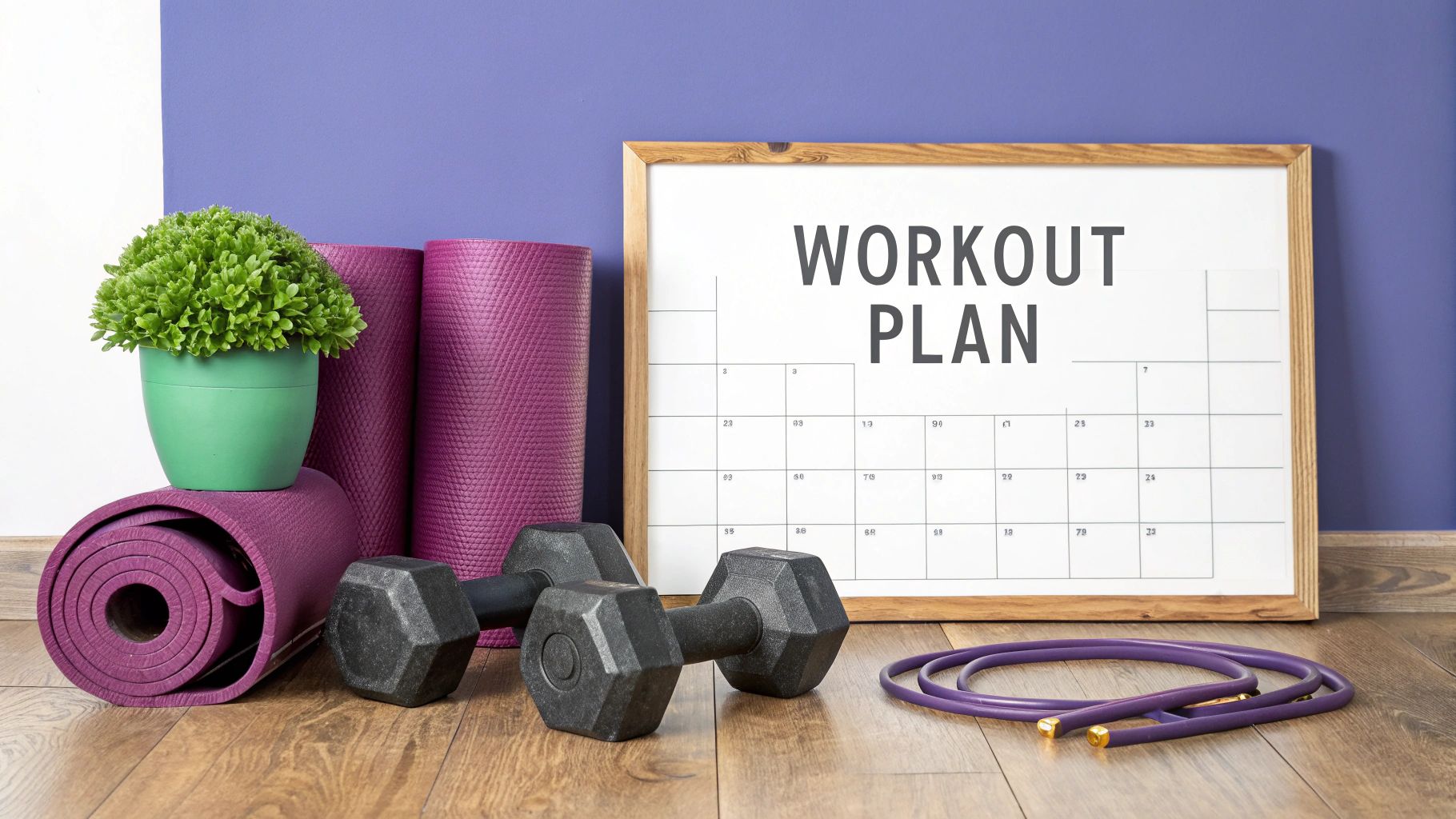
Align your exercise routine with nutrition targets for smoother workouts and faster recovery. Mix cardio, strength, and active recovery to complement your meals.
Sample Weekly Splits
Beginner Routine
- Brisk 20-minute walk (Day 1)
- Bodyweight circuit (Day 2)
- Bike for 20 minutes (Day 3)
Intermediate Routine
- 30-minute run
- Full-body dumbbell session
- HIIT workout
Busy Professional
- 15-minute jog
- Resistance band circuit
- Focused core workout
Tracking workouts with nutrition logs helps you spot trends faster.
Adjusting Training Intensity
| Zone | % of Max Heart Rate | Purpose |
|---|---|---|
| Zone 1 | 50–60% | Active recovery |
| Zone 2 | 60–70% | Steady-state cardio |
| Zone 3 | 70–80% | High-intensity work |
No monitor? Aim for 6–7 exertion on effort days and 3–4 on recovery days.
Strength sessions go well with extra protein. Check out our Resistance Bands.
Integrating Wearable Feedback
Apps and trackers can boost moderate-to-vigorous activity by 30%.
Our favorite insights come from the latest ACSM report.
Record weight and body-fat on a Smart Scale that syncs in seconds.
Fine Tuning Schedule
- Foam roll or do a short yoga flow on rest days.
- Take an easy walk to boost circulation.
- Use bands for gentle stretches to enhance mobility.
This balance of stress and repair ties back to your nutrition—faster inflammation control and better rebuild.
Connecting Workouts With Nutrition
- Add 10g protein on heavy lift days.
- Shift more carbs after long runs to top up glycogen.
See Workout Routines for Beginners at Home for detailed plans.
Key Tools Highlighted
- Resistance Bands for portable strength.
- Smart Scale to track progress in real time.
Pair these with app data to know when to ramp up or dial back.
Maximizing Rest Days
- Prioritize 7–9 hours of sleep for hormone balance.
- Blend gentle stretching with mindfulness.
- Try a light swim or relaxed stroll for active recovery.
Consistency in exercise frequency and meal timing is the secret ingredient.
Adapting Plans For Different Lifestyles
Customize diet and workouts whether you’re a parent, athlete, or beginner. Small changes keep motivation high and time on your side.
Parent Friendly Meal Prep
- Freeze meals in our Meal Prep Container Set.
- Blend smoothies in the Compact Blender while kids get ready.
- Keep Recovery Bars on hand for snack emergencies.
- Follow the 80/20 approach: wholesome meals most nights, wiggle room when life gets hectic.
“Batch cooking on Sundays gives me back two hours on weeknights,” says Maria, mom of three.
Athlete Macro Tweaks
Aim for a 3:1 carb-to-protein mix within 30 minutes of hard efforts.
- Add 10–15g carbs on long-run days.
- Pack extra 15–20g protein after heavy lifts.
- Track with our Macro Journal.
Case Study: Jordan, a marathoner, shifted to 60/20/20 on endurance days and improved pace by 5%.
| Phase | Carb % | Protein % | Fats % |
|---|---|---|---|
| Endurance Week | 60 | 20 | 20 |
| Strength Week | 40 | 35 | 25 |
For home strength, try Adjustable Dumbbells.
Watch demos on the Diet & Exercise YouTube Channel.
Beginner Low Impact Routines
- 20-minute walk or easy bike, three times a week.
- Basic yoga flow on off days.
- Full-body circuits with light resistance bands.
Pair this with a balanced 1,800-calorie meal plan. Trade pasta for veggie stir-fry with tofu to keep fats in check.
“I never thought 15 minutes of band work could feel this effective,” shares Alex, new to fitness.
Tools And Testimonials
- Compact Blender: Smoothies in under a minute, self-clean cycles.
- Adjustable Dumbbells: Quick weight swaps without bulky racks.
- Macro Journal & Meal Prep Containers: Simplify tracking and prep.
“These tools turned habit formation into a natural part of my day,” says blogger Lee.
Watch demos on the Diet & Exercise YouTube Channel.
Tracking Progress And Ensuring Safety
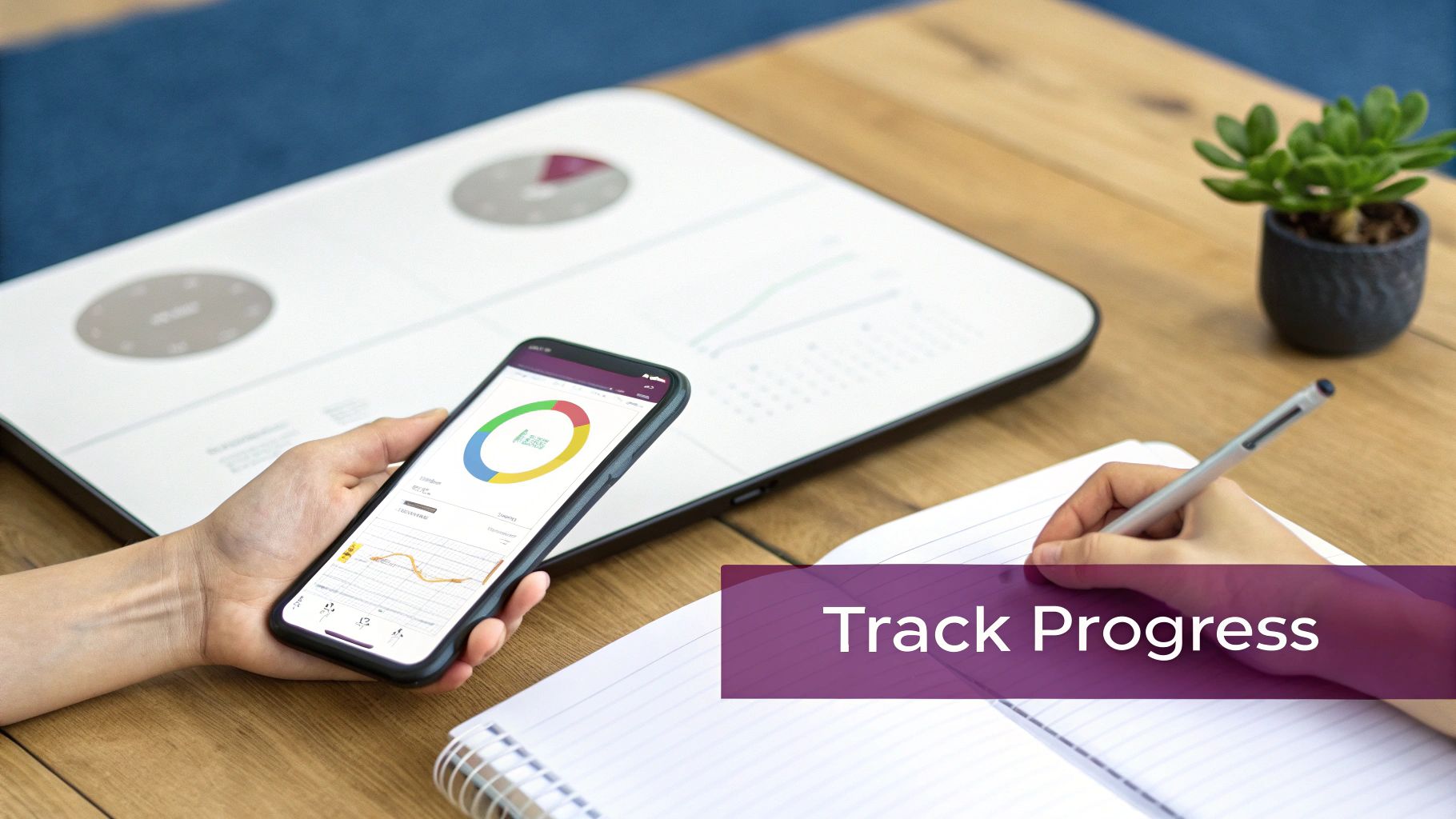
Monitor core numbers to know what’s working and catch setbacks early.
Metrics To Monitor
| Metric | Recommended Range | Tracking Tool |
|---|---|---|
| Body Weight | Varies by goal | Smart Scale from Diet Exercise Shop |
| Body Fat Percentage | 10–20% (men) | Smart Scale app integration |
| Workout Minutes | 150–300 per week | Mobile exercise app |
| Hunger Level (1–5) | 2–3 between meals | Macro Journal from Diet Exercise Shop |
Weekly Check-In Routine
- Sunday morning weigh-in and body-fat record.
- Note workout energy and satisfaction rating.
- Track hunger signals (1–5) between meals.
Consistent photos under same lighting show visual progress.
Safety Checklist
- Watch for persistent fatigue or poor sleep.
- Note performance drops despite steady training.
- Avoid rapid weight loss or nutrient gaps.
- Address irritability or loss of drive.
Dial back intensity by 15% and add 5–10% more calories if needed. A planned deload week can prevent burnout.
Adjusting Workload And Nutrition
- Cut volume or reps by 10–20% for one week to reset.
- Boost calories by 5%, focusing on complex carbs and lean protein.
- Add 5–10g protein on training days.
See demonstration videos on the Diet & Exercise YouTube Channel.
Troubleshooting Plateaus
- Swap two steady-state cardio days for HIIT.
- Add an extra rest day or mobility drills.
- Replace one snack with Whey Protein Blend.
Celebrate small wins with non-food rewards. Consistent tracking and a safety strategy will keep you on track.
Frequently Asked Questions
Fine-tuning macros around high-intensity days can feel like juggling. Aim for a 3:1 carb-to-protein balance within 30 minutes post-workout—about 30g carbs with 10g protein.
Common questions:
- Pre-interval boost? Fruit-and-nut mix 20 minutes before.
- Late-night training? Focus on protein at dinner, ease off extra carbs.
Post Workout Snack Ideas
- Apple slices + almond butter.
- Greek yogurt, berries & honey.
- Rice cake with cottage cheese.
Switching one steady cardio day for a strength circuit can reignite drive. Track meals and workouts side by side to spot patterns and adjust macros as needed.
Ready to take control of your meals and movements with must-have tools? Check out Diet and Exercise