

How to cool down after workout: Quick Steps for Optimal Recovery
You just crushed a tough workout. The endorphins are pumping, and you feel on top of the world. But before you race off to the shower, what you do in the next 5 to 10 minutes is what really cements your progress.
The secret isn't in stopping cold. It's in gradually bringing your body back down from that high-exertion state with some light cardio and stretching.
This small step is a game-changer. It helps your heart rate return to normal safely and fires the starting gun on your muscle recovery process.
Why a Cool Down Is Your Most Important Finisher
Skipping the cool down might seem like a smart time-saver, but you’re missing out on some serious recovery benefits. This isn't just about a few half-hearted stretches; it's a non-negotiable part of any solid fitness plan.
Think of it as the crucial bridge between your workout and your recovery. One that sets you up for better flexibility, fewer injuries, and consistent, long-term gains.
Gradual Transition Is Key
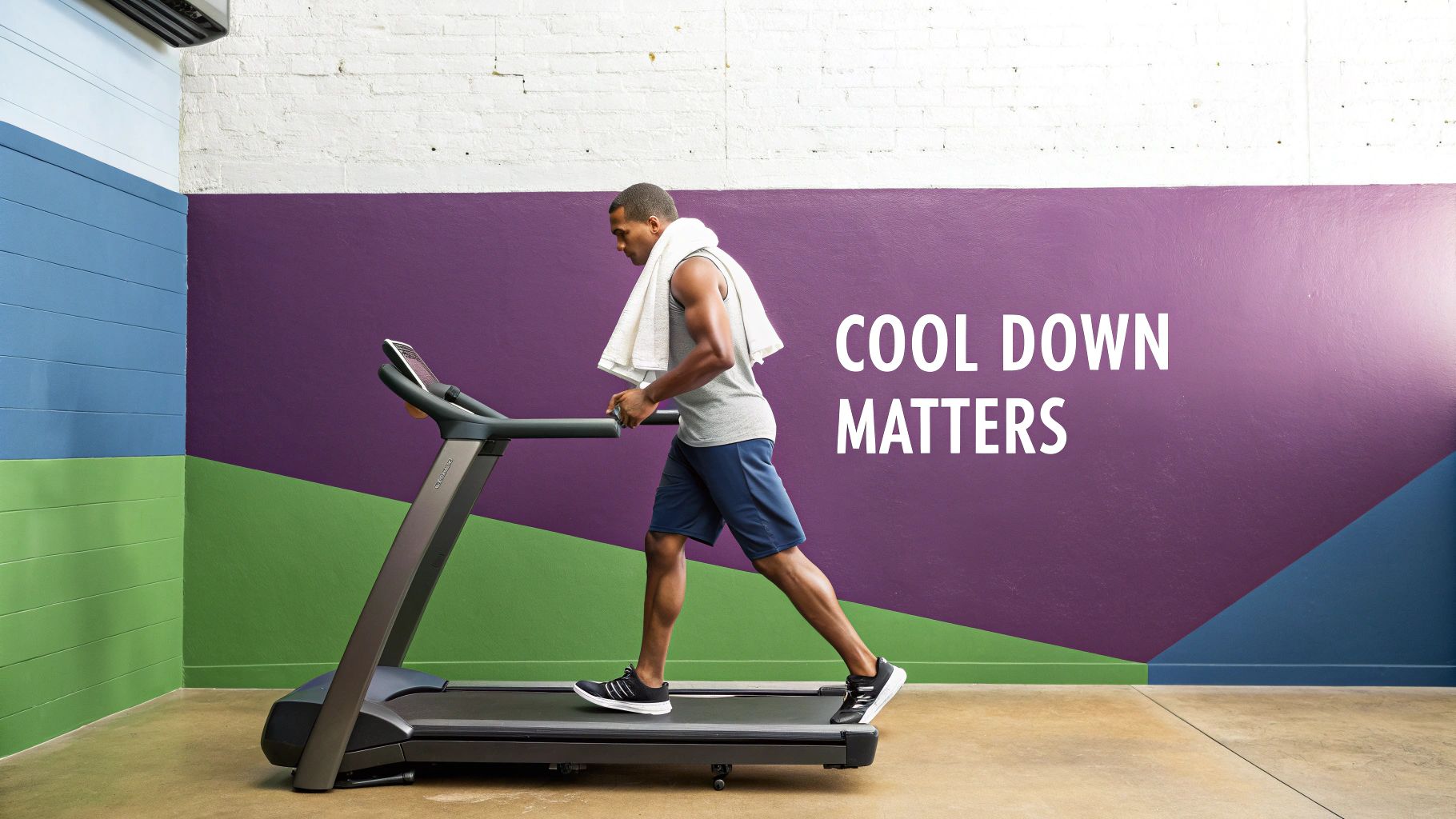
When you’re going all out, your heart is pounding, your blood vessels are wide open, and your body is basically in "fight-or-flight" mode. If you just slam on the brakes, you can get a sudden drop in blood pressure that leaves you feeling dizzy or lightheaded as blood pools in your legs.
An active cool down—like a slow walk or some easy cycling—keeps this from happening. It gives your heart rate and blood pressure a chance to come down gently and safely.
Most of us just need about 5 to 10 minutes. If you've just finished a really intense session, pushing that to 15 minutes is a great idea to help your cardiovascular system transition smoothly.
A cool down isn't the last step of this workout. It's the first step to your next great one. It’s a direct investment in your future performance and how good you feel tomorrow.
Clearing Out Metabolic Waste
Intense exercise creates metabolic byproducts in your muscles. An active cool down is incredibly effective at boosting circulation.
This improved blood flow is what matters. It rushes fresh oxygen and nutrients to your tired muscles while helping clear out other waste products.
The result? You're less likely to feel that deep muscle soreness and stiffness, often called DOMS (delayed onset muscle soreness), a day or two later.
For an even deeper dive into recovery strategies, check out our guide on how to recover faster from workouts.
Your Blueprint for an Effective Cool-Down Routine
Let's walk through how to build a practical cool-down you can stick with after any session. A great routine doesn't need to be complicated or take forever; it just needs to be consistent.
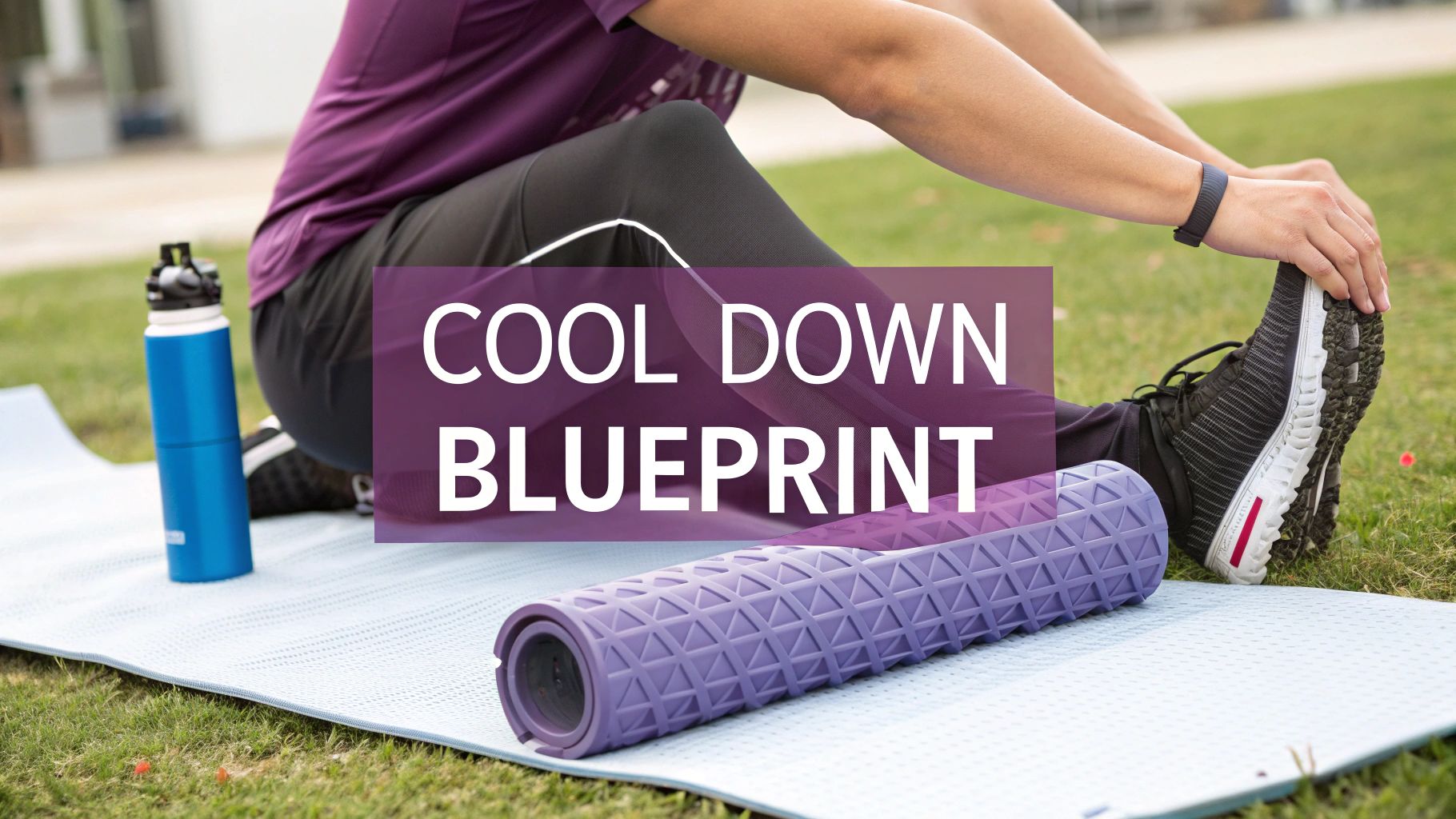
Think of this blueprint as a simple three-part system designed to gradually lower your heart rate, improve your flexibility, and kickstart the muscle repair process. We’ll cover light cardio, static stretching, and some targeted muscle release.
Start with Active Recovery
Whatever you do, don't just stop cold. Right after you finish the main part of your workout, dedicate 5 to 10 minutes to some light aerobic activity.
This simple step helps your heart rate and breathing return to normal gradually, which can prevent that dizzy feeling you sometimes get from a sudden stop. It also keeps blood circulating to your hardworking muscles.
- After a run or HIIT session: Slow to a jog, then a brisk walk.
- Following a strength workout: Hop on a stationary bike at a super low resistance.
- If you just finished on a rower: Keep rowing, but at a gentle, easy pace.
The key here is movement, not intensity. You should be able to hold a full conversation without gasping for air.
Move into Static Stretching
Once your heart rate has settled down, it's time for static stretching. This classic "hold-a-stretch" method is fantastic for releasing muscle tension and improving your long-term flexibility.
Hold each stretch for at least 30 seconds per side. Remember to breathe deeply and try to relax into the stretch—never push to the point of sharp pain.
One quick tip: don't bounce. Bouncing while you stretch, known as ballistic stretching, can actually cause tiny tears in the muscle. A steady, gentle hold is not only safer but far more effective.
Here are a few essential stretches:
- Hamstring Stretch: Sit on the floor with one leg straight. Gently lean forward over the straight leg until you feel that stretch down the back of it.
- Quad Stretch: Stand up and hold onto a wall for balance. Grab your ankle and gently pull your heel toward your glute.
- Chest Stretch: Find a doorway and place your forearms on the frame. Step forward with one foot to feel a nice, opening stretch across your chest.
Target Tight Spots with a Foam Roller
The final piece of your cool-down is self-myofascial release, most often done with a foam roller. This technique is a game-changer for breaking up knots in your muscles, which can seriously reduce soreness and improve your mobility.
Foam rolling is especially useful for areas that get tight, like your calves, glutes, and upper back. The trick is to move slowly over the muscle, pausing on any tender spots.
Our Contour Pro Foam Roller has a textured surface designed to mimic a massage therapist's hands. Its high-density foam provides the firm support you need for effective muscle recovery.
For a full breakdown of how to properly use a foam roller, check out this helpful video on our Diet & Exercise YouTube channel.
Fueling Your Recovery After You Cool Down
Your recovery isn't over when you step off the mat—it follows you right into the kitchen. What you eat and drink after a tough workout is just as important as the cool-down itself.
Getting quality fuel into your body, ideally within an hour of finishing, can make a huge difference in how quickly you bounce back. This is often called the "anabolic window," a time when your muscles are primed to soak up nutrients.
Why Post-Workout Nutrition Matters
When you push yourself, you burn through glycogen—your body’s stored carbohydrates—for energy. You also create tiny micro-tears in your muscle fibers. That’s how you get stronger.
To repair that damage and restock your energy, you need the right building blocks.
That’s where a combination of carbohydrates and protein comes in. Carbs replenish your energy stores, and protein delivers the amino acids your body needs to patch up those muscle fibers.
Sports scientists recommend getting 0.3–0.4 g/kg of protein within 30–60 minutes after exercise. For best results, pair it with carbs in a 3:1 or 4:1 ratio (carbs to protein).
Simple and Smart Recovery Fuel
You don’t need a gourmet meal to refuel properly. The real goal is to hit that ideal carb-to-protein ratio with simple, whole foods.
Here are a few go-to options:
- Greek yogurt with berries: High-quality protein from the yogurt and fast-acting carbs from the fruit.
- A smoothie with banana and protein powder: Your body can absorb the nutrients almost immediately.
- Chocolate milk: It has a near-perfect carb-to-protein ratio that's hard to beat for recovery.
If you’re looking for more ideas, check out our guide on the best post-workout recovery foods.
For those days when you're short on time, our Rapid Recovery Protein Blend is a lifesaver. It is designed to give your body that ideal balance of nutrients it’s craving after a tough session, making your post-workout routine totally effortless.
Don't Forget to Rehydrate
We talk a lot about food, but water is just as critical. You lose a ton of fluid through sweat. If you don't replace it, you’re setting yourself up for fatigue and muscle cramps.
Here's a pro tip: Weigh yourself before and after a hard workout. For every pound you lose, you should aim to drink about 16-24 ounces of water to get fully rehydrated.
Beyond the cool-down, understanding all the available strategies to speed up muscle recovery is what separates good results from great ones.
Taking Recovery to the Next Level with Cold Water Therapy
Once you've nailed the basics of a good cool-down, you might start looking for that extra edge. This is where advanced techniques like cold water immersion (CWI), or ice baths, come in.
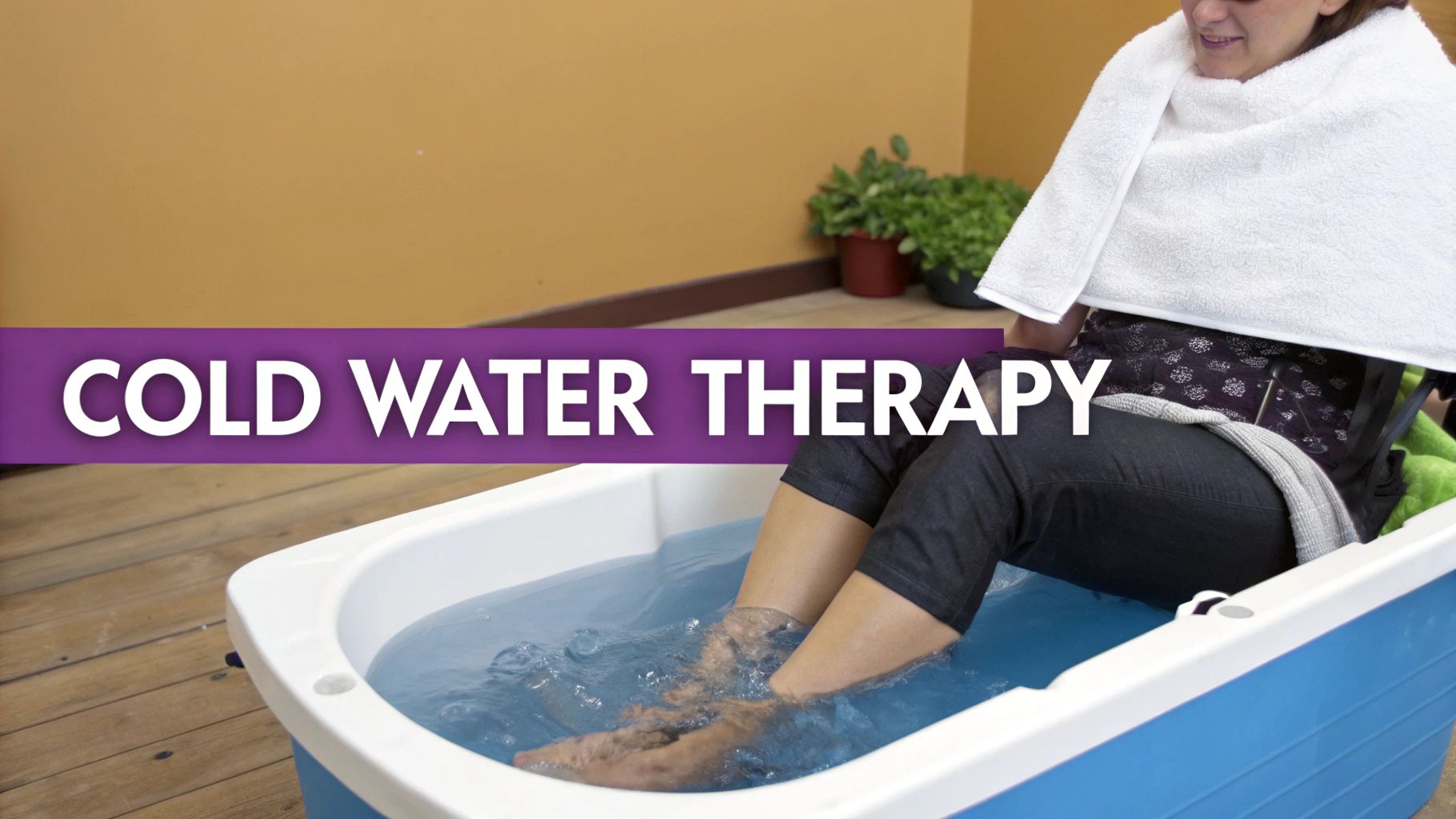
So, what’s actually happening when you take that chilly plunge? The cold temperature makes your blood vessels narrow, a process called vasoconstriction. This helps reduce inflammation and swelling.
When you get out and warm up, your blood vessels open back up. Fresh, oxygen-rich blood floods your muscles, flushing out waste and delivering nutrients needed for repair.
How to Safely Try an Ice Bath
If you’re ready to give CWI a shot, the key is to approach it with a plan. This isn't about seeing how long you can last.
A water temperature between 50-59°F (10-15°C) is the ideal range. Aim to stay in for about 10 to 15 minutes. Any longer won't necessarily give you better results.
Cold water immersion is a powerful tool, but it's not for everyone. Always listen to your body and start with shorter durations to see how you respond.
This practice is incredibly effective for reducing day-after muscle soreness (DOMS). Its effectiveness is a big reason the fitness recovery services market is booming. If you're interested, you can discover insights into the fitness recovery market to learn more.
Making Cold Plunges Easy and Accessible
You don’t need a fancy spa to get started. Your own bathtub, cold water, and a few bags of ice will do the trick.
But if you want to do it regularly, a dedicated setup makes all the difference. Products like the ArcticFlow Portable Ice Bath solve this exact problem.
It makes cold water therapy simple and convenient, letting you set up your recovery station anywhere without the mess. It keeps the water at a steady temperature, so you can just focus on your recovery. For any serious athlete, that kind of reliability is a game-changer.
Common Cool Down Mistakes You Might Be Making
It’s surprisingly easy to mess up your cool-down and sabotage your hard work. Knowing how to cool down properly is about avoiding common pitfalls.
The biggest mistake? Jumping straight into deep, static stretches the second your workout ends. Your muscles are still fired up and tight. This is a recipe for a strain or pull.
Always ease into it. A gentle 5-10 minutes of light cardio, like walking, keeps the blood flowing and tells your muscles it's time to safely transition to recovery.
Another classic mistake is rushing the stretches themselves. To improve flexibility, you have to give your muscle fibers time to relax. Aim to hold each stretch for at least 30 seconds.
Fine-Tuning Your Foam Rolling and Hydration
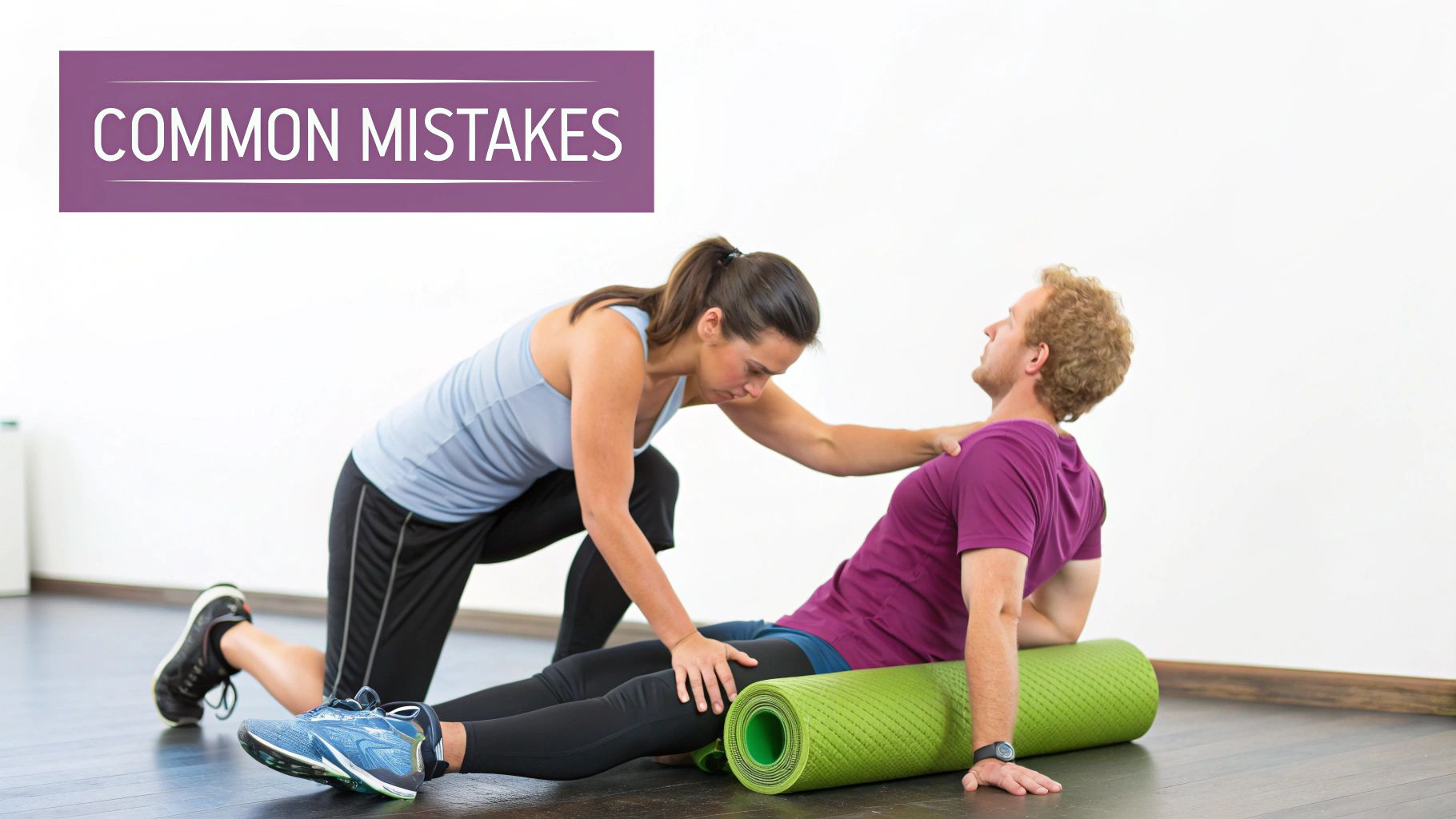
Foam rolling can be a recovery game-changer, but there’s a right way and a wrong way. Rolling way too fast or applying painful pressure can backfire, causing more inflammation.
You need the right tool for the job. The Contour Pro Foam Roller has a textured surface designed for steady, targeted pressure. Its high-density core holds its shape, letting you work out knots without mashing the muscle.
A proper cool down helps shift your nervous system from its "fight-or-flight" state back into a "rest-and-digest" mode. Rushing or making mistakes keeps your body in a stressed state, slowing down recovery.
If you’re not sure about your form, check out our video guide on the Diet & Exercise YouTube channel. We show you exactly how to use a foam roller to get maximum release.
Post-Workout Fueling Blunders
Let's talk about what you drink. It's tempting to reach for a sugary sports drink, but that's usually a mistake. For most workouts, those drinks just load you up with unnecessary sugar.
What your body is really craving is plain old water.
Water is what you need to rehydrate and help shuttle nutrients to your recovering muscles. Focus on replenishing your fluids first. Then, follow up with a balanced, protein-rich snack.
Your Cool Down Questions, Answered
A lot of questions pop up about how to cool down properly. I'm here to clear up the confusion and give you some quick, practical answers.
Does a Cool Down Change for Cardio vs. Strength Training?
Absolutely. The focus shifts depending on what you’ve just done.
After a cardio session, your main job is to gradually bring your heart rate back down. Think of it as a smooth transition: go from a run to a jog, then to a brisk walk over 5-10 minutes.
After strength training, the priority is different. Your muscles have been contracting hard, and now it's time to help them lengthen back out. A few minutes of light cardio is still great, but the real star is static stretching.
Is It Ever Okay to Skip My Cool Down?
I get it, life happens. But honestly, you should try to avoid skipping it whenever you can. Think of your cool down as an insurance policy for your next workout.
It’s the very first step in recovery, helping to minimize muscle soreness (hello, DOMS) and preventing that head-rush feeling from stopping too abruptly.
If you're completely crunched for time, something is always better than nothing. Even two to three minutes of walking and a couple of quick, targeted stretches makes a world of difference.
A proper cool down helps shift your body out of the high-alert "fight-or-flight" mode and into a calmer "rest-and-digest" state. That switch is absolutely crucial for kicking off deep recovery.
How Long Should a Cool Down Really Last?
The sweet spot for a good cool down is usually somewhere between 5 and 15 minutes.
For most everyday workouts, 5-10 minutes is plenty of time to lower your heart rate safely and get in some quality stretching.
If you’ve just finished a particularly brutal session, you’ll want to lean toward the longer end of that range. Giving yourself up to 15 minutes provides your body with that extra time it needs to truly begin recovery.
At Diet & Exercise, we know that every part of your fitness journey matters. Make sure you have the gear that supports your hard work. Check out our collection of high-quality fitness apparel and equipment at dietexerciseshop.com.