

How to Increase Testosterone Naturally
If you feel like you're constantly running on empty, struggling to see results in the gym, or just don't have the drive you used to, you're not alone. It's a common story.
The good news is that you can learn how to increase testosterone naturally by making smart, sustainable tweaks to your diet, training, and daily habits. It’s all about addressing the core pillars of your hormonal health to get your vitality back.
Why Bother With Natural Testosterone Optimization?
That feeling of being perpetually drained or losing motivation for workouts is incredibly frustrating. These aren't just signs of a demanding job. For millions of men, they're the real-world symptoms of declining testosterone.
Before even thinking about drastic measures, the smartest move is to first get your body's own production running on all cylinders.

This isn't about chasing a quick fix. It's about building a solid foundation for your long-term health.
When you focus on natural methods, you’re not just targeting one hormone; you're supporting your entire endocrine system. The payoff is more sustainable energy, a better physique, and sharper mental clarity.
Just How Common Is This?
This is far from an isolated issue. Low testosterone is becoming a significant health concern worldwide.
In fact, studies show the prevalence of low T in men over 45 is around 39%. That's nearly four out of every ten men in that age group who could be feeling the effects.
Looking ahead, researchers estimate that by 2025, close to 6.5 million men between the ages of 30 and 70 will have a symptomatic deficiency. These numbers make it crystal clear why understanding natural solutions is so important. You can explore the full research on these statistics here.
For context, the typical testosterone range for healthy men aged 19-39 falls between 264–916 ng/dL. When your levels drop below this baseline, you feel it everywhere.
Your Roadmap to a Natural Boost
To really move the needle on your testosterone levels, we have to look at the whole system. Think of your body as a high-performance engine: it needs the right fuel, the right kind of work, and enough downtime to run at its peak.
For a quick reference, this table breaks down the core strategies we'll be diving into.
| Strategy Area | Key Action | Primary Benefit |
|---|---|---|
| Strategic Nutrition | Prioritize healthy fats, quality protein, and essential micronutrients. | Provides the raw materials needed for hormone production. |
| Effective Training | Focus on heavy, compound resistance exercises. | Signals the body to increase anabolic hormone output. |
| Restorative Habits | Achieve 7-9 hours of quality sleep and actively manage stress. | Prevents cortisol from suppressing testosterone synthesis. |
This table is just the starting point. Let's get into the specifics of how to put these principles into action.
We'll unpack each of these core strategies in detail:
- Strategic Nutrition: We'll dig into the specific foods, macronutrients, and micronutrients that act as the building blocks for healthy hormone synthesis.
- Effective Training: You’ll learn exactly why some workouts, especially heavy lifting, are such a powerful trigger for your body to ramp up testosterone production.
- Restorative Habits: We're going to cover the two most underrated—but absolutely critical—factors for hormonal health: deep, quality sleep and practical stress management.
By systematically applying these principles, you'll create an environment where your body can finally get back to its best. Consider this your actionable roadmap to restoring your natural baseline and reclaiming your edge.
Fuel Your Body, Fuel Your Hormones
Think of your body like a high-performance engine. You can't expect it to run on low-grade fuel and still perform at its peak. The same is true for hormone production.
Your endocrine system needs very specific nutritional building blocks to function correctly, and optimizing testosterone really does start on your plate. Forget the latest diet fads. This is about giving your body what it actually needs.

The foundation of a hormone-friendly diet is getting your macronutrients—protein, fats, and carbohydrates—in the right balance. Each one has a critical job to do. Nailing this balance is the single most important step you can take.
Don't Fear the Fat: It’s Non-Negotiable
For years, we were all told to avoid fat. We now know just how wrong that was.
Dietary fat, specifically cholesterol, is the direct raw material your body uses to create testosterone. If you cut your fat intake too low, you’re basically shutting down the assembly line.
Of course, this isn't a free pass to eat junk food. The type of fat matters. Your body works best with monounsaturated and saturated fats from whole-food sources.
- Avocados: Loaded with healthy monounsaturated fats that your body loves.
- Olive Oil: A true superstar, extra virgin olive oil is packed with beneficial fats and antioxidants.
- Nuts and Seeds: Think almonds, cashews, and walnuts for a powerful hit of fats and essential minerals.
- Egg Yolks: Please, don't throw out the yolk! It’s a goldmine of the dietary cholesterol needed for T production.
Making these foods a regular part of your meals gives your body a steady supply of the materials it needs.
The Power of Quality Protein and Smart Carbs
Protein is essential for building muscle, and more muscle mass is strongly linked to higher testosterone levels. You need a steady supply of high-quality protein to help your muscles repair and grow after a workout.
Lean meats, fish, poultry, and eggs are your best friends here. They give you a complete amino acid profile along with other key nutrients like zinc.
Carbohydrates are your body's main energy source. They fuel your workouts and, just as importantly, help manage the stress hormone cortisol.
Cortisol is the arch-nemesis of testosterone; when it goes up, testosterone often goes down. Stick to slow-digesting carbs like sweet potatoes, oats, and brown rice to keep your energy steady and cortisol in check.
The Micronutrients That Move the Needle
Beyond the big three macros, certain vitamins and minerals are like the spark plugs for your hormonal engine. Two of the most important are Zinc and Vitamin D.
Zinc deficiency is directly tied to low testosterone. The mineral is a critical part of the enzymatic reactions that produce the hormone. Oysters are the most famous source, but you can also get plenty from beef, spinach, and pumpkin seeds.
Vitamin D actually functions more like a hormone itself. Study after study has shown a clear link between healthy Vitamin D levels and higher testosterone. Fatty fish like salmon and fortified dairy are good places to start.
If you want to dive deeper into how these all work together, you can learn more about the difference between macronutrients and micronutrients in our detailed guide.
Bridging the Gaps with Targeted Support
Let's be real—eating a perfect diet every single day is tough. Life, work, and stress get in the way. It’s easy to end up with nutritional gaps, and that’s where smart, targeted support can make a huge difference.
To make sure your body is never running on empty, our Testosterone Support Complex was formulated to work with a good diet, not replace it. It’s a blend of natural ingredients designed to fill in any nutritional holes and support your body’s own hormone production process.
Key Ingredients and How They Work
The strength of the Testosterone Support Complex comes from its carefully selected ingredients. This isn't just a random mix of herbs; it's a strategic formula where each component has a specific job.
Here’s a look at two of the heavy hitters:
- Ashwagandha: This ancient herb is an adaptogen, meaning it helps your body adapt to and manage stress. It works by helping to lower elevated cortisol levels. Since cortisol and testosterone have an inverse relationship, keeping cortisol down creates a much better environment for testosterone to thrive.
- Fenugreek: This plant has been studied extensively for its ability to support free testosterone levels. It contains compounds called furostanolic saponins, which are believed to help increase natural testosterone production while also supporting libido and energy.
These ingredients don’t replace a solid nutritional foundation—they amplify it. When you combine the power of whole foods with the targeted support from our complex, you create a potent one-two punch for unlocking your natural potential.
Build Muscle to Spike Your Testosterone
There's a raw, undeniable connection between lifting heavy iron, packing on muscle, and keeping your testosterone levels in a healthy, optimal range. Most guys know exercise is good for their hormones, but not all training is the same.
To really move the needle, you have to get specific. It’s about sending a powerful signal to your body to ramp up production.
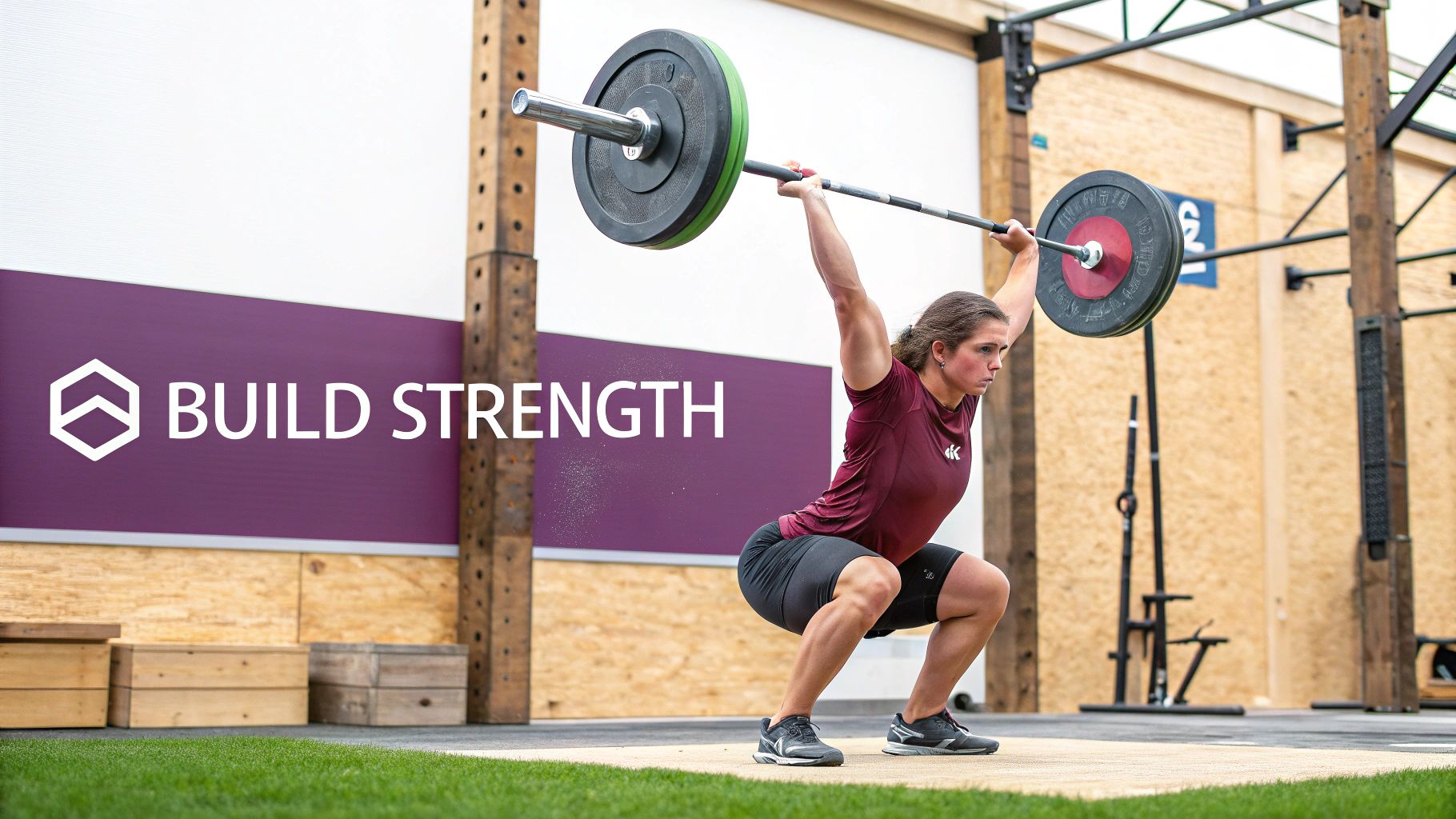
The secret lies in intensity and recruiting as many muscle fibers as humanly possible. This is exactly why a training program built around heavy, multi-joint compound lifts blows isolation exercises out of the water for boosting T.
When you put your body under that kind of serious demand, it responds by cranking up anabolic hormones to help you recover, adapt, and get stronger.
Why Compound Movements Are King
If you’re serious about naturally raising your testosterone, the big, classic lifts are your best friends. We're talking about squats, deadlifts, bench presses, and overhead presses.
These movements are hormonal powerhouses for one simple reason: they create a massive metabolic stress across your entire system. Pushing heavy weight with these exercises triggers a powerful hormonal cascade, including that sought-after acute spike in testosterone.
It's your body's primal response to intense stress, telling it to build bigger, more resilient muscle. Doing bicep curls and calf raises just doesn't create anywhere near the same systemic demand.
The evidence is solid: getting stronger and building muscle is one of the most direct ways to naturally elevate your testosterone. Research consistently shows a significant link between lean muscle mass and higher serum testosterone. While T levels do decline with age—dropping from an average of 6.24 ng/mL in men 20-39 to 4.61 ng/mL in men over 60—a solid resistance training habit can keep your production humming along much better throughout your life.
You Have to Force Progress with Progressive Overload
Just going through the motions won't get you anywhere. Showing up and lifting the same weights for the same reps week after week is a recipe for stagnation.
The core principle for real, continuous gains is progressive overload. It simply means you must consistently find ways to make your workouts harder over time.
You can apply this principle in a few key ways:
- Add More Weight: The most obvious one. Once you can hit your target reps cleanly, slap a little more weight on the bar.
- Do More Reps: If you can't jump up in weight yet, aim for one or two more reps with the same weight.
- Add Another Set: Increasing your total training volume by adding an extra set to your main lifts is a great way to trigger more growth.
- Shorten Your Rest: Cut your rest time between sets. This makes the workout more metabolically challenging and dense.
By systematically pushing your limits, you prevent your body from ever getting comfortable. This keeps the hormonal signals for growth and testosterone production firing on all cylinders.
For a deeper dive into these strategies, check out our complete guide on how to build muscle mass effectively.
Smart Cardio for Hormonal Balance
The whole cardio-and-testosterone debate can be confusing. The type and amount of cardio you do are what really count.
Endless, long-duration cardio can crank up your stress hormone, cortisol, which in turn can suppress testosterone. But short, intense bursts of activity can do the exact opposite.
High-Intensity Interval Training (HIIT) is a fantastic tool for hormonal health. A HIIT session might involve all-out sprints for 30 seconds, followed by 60 seconds of easy recovery, repeated several times.
A Sample T-Boosting Training Split
So, what does this look like in practice? A solid workout week should be built around strength, intensity, and recovery. Here’s a sample framework to get you started.
| Day | Focus | Key Exercises | Cardio |
|---|---|---|---|
| Monday | Upper Body (Push) | Bench Press, Overhead Press, Incline Dumbbell Press | None |
| Tuesday | Lower Body | Barbell Squats, Romanian Deadlifts, Leg Press | 15-min HIIT |
| Wednesday | Rest | Active Recovery (e.g., light walk) | None |
| Thursday | Upper Body (Pull) | Deadlifts, Pull-Ups, Barbell Rows | None |
| Friday | Full Body | Power Cleans, Dumbbell Lunges, Dips | 15-min HIIT |
| Weekend | Rest | Active Recovery | None |
This schedule ensures you're hitting all your major muscle groups with heavy compound lifts while giving yourself enough downtime. Remember, recovery is where the magic happens.
Fueling the Fire for Performance and Recovery
To squeeze every last drop of benefit from these intense workouts, you need to nail your pre- and post-workout nutrition. The right supplements can help you attack the weights with more intensity and then kickstart recovery.
Before you even touch a weight, our Pre-Workout Ignition is formulated to give you the raw energy and sharp focus to dominate every set. Key ingredients like caffeine and beta-alanine can help you push more weight for more reps, maximizing the growth stimulus from your session.
Once the last rep is done, recovery becomes the top priority. Heavy training breaks down muscle tissue. Your body needs protein to repair that damage and rebuild it bigger and stronger. Our Whey Protein Isolate delivers a super-fast-digesting source of high-quality protein to get that process started immediately, slashing soreness and supporting growth.
Mastering Your Lifestyle for Real Hormonal Results
You can have the perfect diet and a killer workout plan, but if your lifestyle habits aren't in check, you're just spinning your wheels.
Poor sleep and chronic stress can quietly undo all your hard work in the gym and kitchen.
Think of it this way: diet and exercise build the engine, but sleep and stress management are the high-quality fuel and oil that make it run.
Get Serious About Your Sleep
Sleep isn't a luxury; it's the most powerful performance and recovery tool you have. Period.
This is when your body gets down to business—repairing muscle, locking in memories, and, most importantly for us, cranking out anabolic hormones. The vast majority of your daily testosterone is released while you’re asleep.
The impact is immediate. Just one week of sleeping only five hours a night can crush daytime testosterone levels by 10% to 15%. You absolutely have to aim for 7 to 9 hours of solid, quality sleep every single night. It’s non-negotiable.
Keep Cortisol from Killing Your Gains
Chronic stress is the arch-nemesis of healthy testosterone. When you're constantly on edge, your body floods your system with the stress hormone cortisol.
Here's the problem: cortisol and testosterone have an inverse relationship. When cortisol goes up, testosterone almost always goes down. It's an ancient survival mechanism that's horribly mismatched for the modern world.
High cortisol levels throw your body into a catabolic (breakdown) state, which directly interferes with testosterone production. Getting a handle on your stress is a physiological necessity for keeping your hormones balanced.
The research is crystal clear that things like stress and sleep quality are critical for maintaining healthy testosterone levels.
So, what can you actually do about it?
- Practice Mindful Breathing: Take five minutes for deep, belly breathing to immediately lower cortisol.
- Get Outside: Spending time in nature, even a city park, is scientifically proven to lower stress.
- Log Off: Create a hard stop for work emails and social media in the evening to give your brain a break.
A Natural Edge Against Modern Stress
Let's be real—even with the best habits, life throws curveballs. That's where a smart supplement can give you a real advantage.
Adaptogens are a class of herbs that help your body become more resilient to stress, whether it's physical or mental.
Our Ashwagandha Extract is a classic, time-tested adaptogen that helps your body manage stress more effectively. Its primary job is to help regulate cortisol, stopping it from running wild and wreaking havoc on your hormones.
Think of our Ashwagandha Extract as a buffer against the daily grind. It helps protect your hormonal system from the constant barrage of modern stressors, ensuring that all your hard work actually pays off.
Watch What You Drink and What Surrounds You
Finally, a quick word on a few other things that matter. Excessive alcohol is a direct hit to your testosterone.
Heavy drinking can damage the very cells in the testes (the Leydig cells) that produce testosterone, and it can also ramp up the conversion of testosterone into estrogen. Moderation is a must.
It's also worth paying attention to environmental estrogens, like Bisphenol-A (BPA). This chemical is found in many plastics and has been shown to disrupt your endocrine system. Simple swaps—like using glass or stainless steel containers for your food—can make a big difference.
Putting It All Together: Your Daily Testosterone-Boosting Plan
Knowing what to do is half the battle. The other half—the one that actually gets you results—is building those actions into a consistent daily routine.
It’s not about a single perfect day; it’s about stringing together good days, week after week. Let's walk through what a day geared towards optimizing your hormones could look like.
A Day Built for Hormonal Health
Morning (7:00 AM - 9:00 AM)
First thing's first: hydrate. Before you even think about coffee, drink a large glass of water to kickstart your system.
Your breakfast sets the tone for the entire day. The goal here is protein and healthy fats. A classic choice is three scrambled eggs cooked in olive oil with a side of avocado.
This is also a great time to supplement. Our Testosterone Support Complex, with its blend of Ashwagandha and Fenugreek, can help keep morning cortisol in check and support your body’s natural production cycle.
Mid-Day (12:00 PM - 1:00 PM)
Lunch is all about clean fuel. You need energy for the afternoon without the crash that comes from simple carbs or sugar.
A grilled chicken breast over a big spinach salad with a scoop of quinoa is a perfect example. Spinach is loaded with magnesium, a mineral that plays a huge role in maintaining healthy testosterone levels.
Afternoon Workout (4:00 PM - 5:00 PM)
This is your window to send a powerful signal to your body to build and strengthen. Focus your training session on big, heavy compound lifts like squats, deadlifts, and bench presses.
To get the most out of your session, a serving of our Pre-Workout Ignition beforehand can give you the clean energy and sharp focus required to really push your limits.
As soon as you're done, the clock starts on recovery. A quick shake with our Whey Protein Isolate provides your muscles with the fast-absorbing protein they're screaming for.
Master Your Evening for Optimal Recovery
Evening (7:00 PM - 10:00 PM)
What you do at night is just as important as what you do during the day. The evening is all about shifting your body out of "fight or flight" mode and into "rest and repair."
Aim to finish your last meal—something balanced with lean protein and veggies—at least a couple of hours before you plan to sleep.
The infographic below really nails down the three pillars of a solid evening routine.
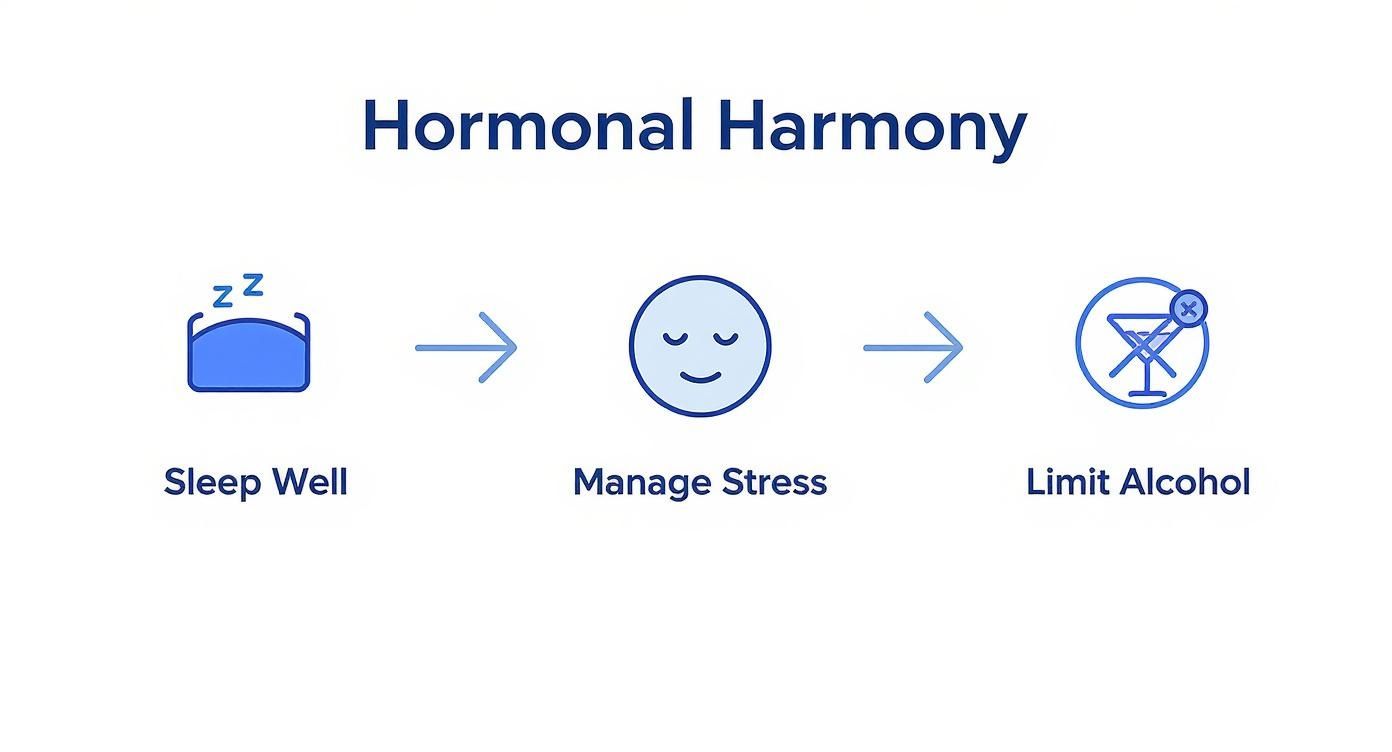
As you can see, winding down isn't just about sleep. It's about actively managing stress and avoiding things that disrupt your hormonal rhythm, like alcohol.
Make it a habit to power down all screens an hour before bed. The blue light is a known disruptor of melatonin, the sleep hormone.
To further calm your system, consider adding our Ashwagandha Extract to your nightly routine. It's fantastic for promoting the kind of deep, restorative sleep where your body does its most important hormonal work.
For more practical tips and workout ideas, the Diet & Exercise youtube channel is an excellent resource.
Your Questions, Answered
Let's be real, when you start digging into hormonal health, a ton of questions pop up. It's totally normal. Here are some of the most common ones I hear from guys, with straight-up answers to help you navigate your journey.
How Quickly Can I Actually See a Difference?
This is always the first question, and the honest-to-God answer is: it varies. We're talking about making real, sustainable changes to your body's internal chemistry, and that’s a long game.
You might start feeling a bump in your energy, mood, and even libido within a few weeks of being consistent. But for the big stuff—like seeing real changes in the mirror or on the squat rack—you’ll likely need a few solid months of dedication.
Remember, consistency beats short-term intensity every single time.
Do I Really Need to Take Supplements?
Think of it this way: supplements can't build the house, but they can definitely be the high-quality power tools that get the job done faster and better. They are not a substitute for the hard work of eating right, training hard, and sleeping deep.
However, let’s face it, getting optimal levels of certain nutrients from food alone is tough. Zinc and Vitamin D are perfect examples.
Using a targeted supplement like our Testosterone Support Complex takes the guesswork out of it. It ensures you're hitting those critical nutrient levels daily, giving your body the raw materials it needs.
Supplements are there to support a healthy lifestyle, not replace it. They act as an amplifier, making all your other good efforts count for more.
Can I Get Away with Just Focusing on Diet or Exercise?
You can, but you'll be leaving massive results on the table. Your body is a single, interconnected system—you can't isolate one part and expect the whole thing to change.
Imagine this: your diet provides the raw materials—the high-quality bricks and mortar like healthy fats, proteins, and vitamins.
But resistance training is the work crew that actually signals the body to build a stronger, more powerful structure.
One without the other is just an unfinished project. If you want the best possible results, you absolutely have to dial in both your Diet and Exercise habits. They work together, period.
To get everything you need for this journey, from workout gear to the right supplements, check out the full shop at https://dietexerciseshop.com.