

How to Make Exercise a Habit: Simple Steps That Stick
Making exercise a lasting habit isn't about white-knuckling it with willpower. It's about building a smart system.
The secret? You have to start ridiculously small, connect the new behavior to an existing routine, and give yourself an immediate reward. This creates a positive feedback loop that your brain actually wants to repeat.
Why Does Sticking With Exercise Feel So Hard?
We’ve all been there. That first wave of motivation is a powerful thing. You get the new workout clothes, you plan your sessions, and you feel like you can conquer the world.
But then, a few weeks later, the couch calls your name louder than the gym. If this sounds familiar, you're not alone. The problem isn't a lack of desire—it's that you're working against your brain's deep-seated wiring.
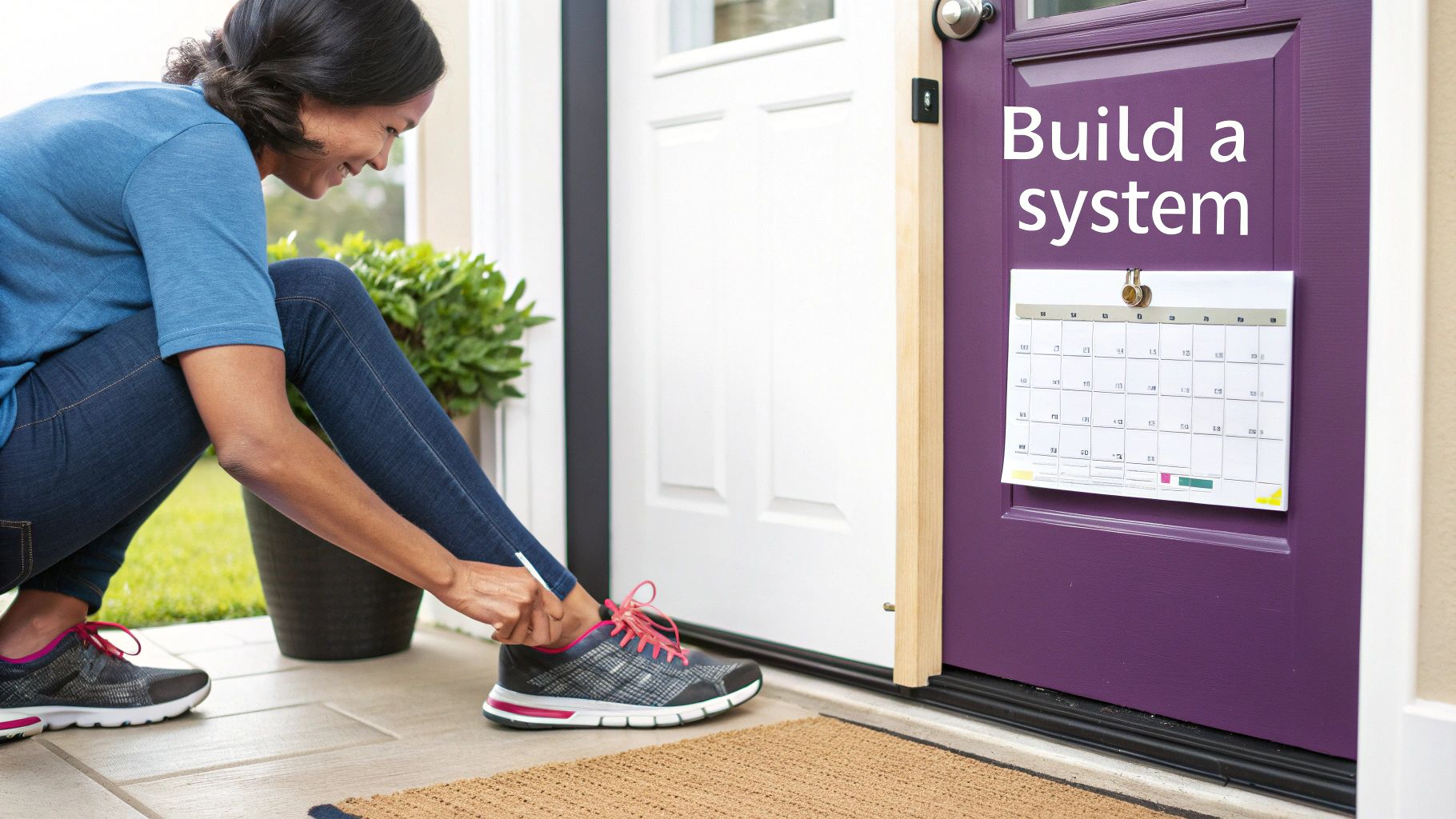
This is a worldwide struggle. The World Health Organization (WHO) reported that in 2022, nearly a third (31%) of adults globally were not active enough. That's about 1.8 billion people.
This trend is actually getting worse, with inactivity rising by five percentage points since 2010. You can dig into the full physical activity fact sheet to see the bigger picture.
The Science of Habit: Understanding the "Habit Loop"
Every habit you have follows a simple neurological pattern called the habit loop. Once you understand this three-part process, you can use it to your advantage to make exercise feel automatic.
Here’s how the loop breaks down:
- The Cue: This is the trigger that kicks your brain into autopilot. It could be a specific time, a place, or an emotion.
- The Routine: This is the actual behavior—the exercise itself.
- The Reward: This is the prize that tells your brain, "Hey, this was good! Let's remember to do it again."
When you start a new fitness routine, the ultimate reward—like losing weight—is weeks or months away. Your brain wants a payoff right now. This delay is why motivation fizzles out. The loop isn't strong enough.
The trick to making exercise stick isn't about pushing through painful workouts. It's about consciously designing a habit loop with a satisfying, immediate reward that your brain can grab onto.
By shifting your focus, you can stop blaming yourself for a lack of willpower and start building a system that makes showing up feel easy. This guide will walk you through exactly how to build that system for yourself.
Start with Workouts Too Easy to Skip
We’ve all been there. Fired up with motivation, we dive headfirst into an intense, hour-long workout plan. A week later? We’re burnt out, sore, and back on the couch.
The "go big or go home" mindset is the single biggest reason new fitness habits fail. The secret isn’t to push yourself to the limit. It’s to start so small that skipping feels sillier than just doing it.
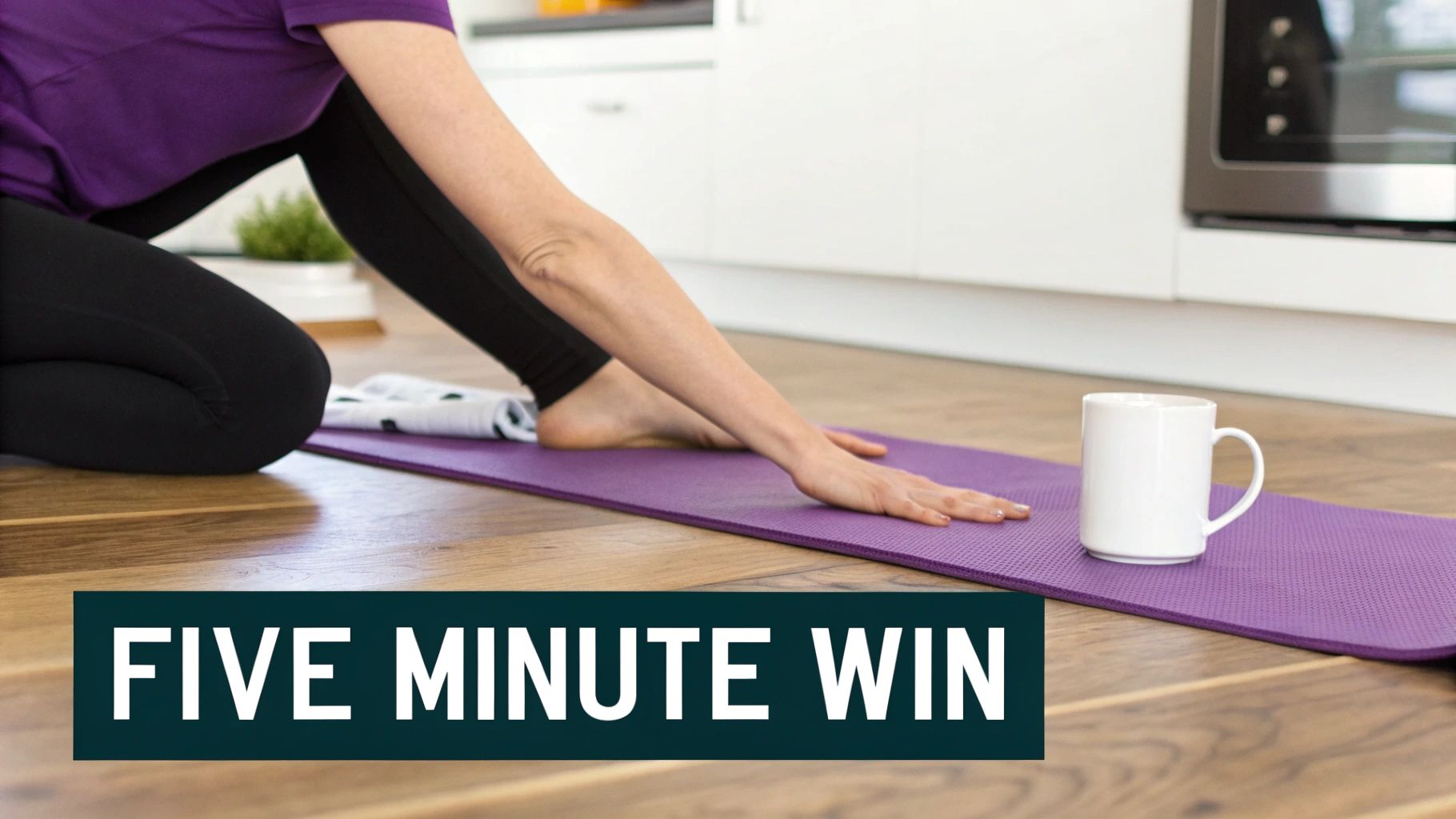
For the first few weeks, your only goal is to build an unbreakable chain of showing up. Forget calories burned or muscles built. Right now, it's all about consistency over intensity. Every time you complete your tiny workout, you’re casting a vote for your new identity as someone who exercises.
The Power of Habit Stacking
So, how do you actually squeeze this into your day? The most effective trick is habit stacking. You simply link your new micro-workout to something you already do on autopilot every single day. The old habit becomes the trigger for the new one.
Your new rule could be: "After I put my toothbrush down in the morning, I will immediately do two minutes of stretching." No willpower required—the cue is already part of your routine.
If you’re a coffee lover, this is a golden opportunity. While it brews, grab a comfortable mat, like our Comfort-Fit Yoga Mat. Doing a few simple stretches in your kitchen turns waiting time into a small win for your health.
This mat provides excellent cushioning and a non-slip surface, making it perfect for quick sessions on any floor. It’s a small investment that makes your new habit more comfortable and inviting from day one.
Micro-Workouts You Can Start Today
Your initial routine should be laughably easy—something you can finish in under five minutes. The goal is to make it so simple you have no excuse to say no.
Here are a few ideas to get you started:
- The Coffee Squat: While your coffee is brewing, do 10 bodyweight squats.
- The Commercial Plank: During the first commercial break of your favorite show, hold a plank for 30 seconds.
- The Post-Lunch Loop: Right after finishing your lunch, take one quick walk around the block.
- The Driveway Dumbbell: Keep a light dumbbell by the door and do 10 bicep curls on each arm the moment you walk in from work.
The goal is not the workout itself but the victory of having done it. Small, consistent wins build momentum that high-intensity, infrequent workouts never can.
By focusing on these tiny actions, you're doing more than just exercising; you're fundamentally rewiring your brain. For more inspiration on quick at-home movements, check out the videos on the Diet & Exercise YouTube channel for great ideas.
Design Your Space for Automatic Success
Let's be honest: willpower runs out. If you're relying on sheer grit to get yourself to work out every day, you're setting yourself up for a struggle.
A much smarter way is to design your environment so exercise becomes the path of least resistance. This boils down to one word: friction.
Friction is any little barrier that gets in your way. By systematically getting rid of these small hurdles, you can put your new habit on autopilot.
Think of it as setting up a line of dominoes. You do the work once, and then the action happens almost on its own. When the right choice becomes the easy choice, you’ve discovered how to make exercise a habit that sticks.
Prime Your Physical Environment
Your home is packed with silent cues that guide your actions. You can turn this to your advantage by placing workout triggers in plain sight. Your living space becomes a subtle coach, constantly nudging you to get moving.
Lay out your workout clothes the night before. Don't just fold them in a drawer; put them somewhere impossible to ignore. When you see them first thing in the morning, the decision is practically made for you.
Here are a few other clever ways to prime your space:
- Pair a dumbbell with the TV remote. It makes it easy to squeeze in a few curls during a commercial break.
- Keep your yoga mat unrolled. Leave it in a corner of the living room, inviting you to do a few quick stretches.
- Pack your gym bag the night before. Have it sitting by the front door, ready to go.
The less you have to think in the moment, the better. Your goal is to shrink the gap between the intention to exercise and the action of exercising until it practically disappears.
Create a Dedicated Workout Nook
You don't need a spare room to build a home gym. Just claiming a small, dedicated corner for fitness sends a powerful signal to your brain.
Your workout spot could be a corner with a yoga mat and a versatile set of resistance bands. These bands are a complete gym in a bag, perfect for building strength without bulky equipment. They offer various resistance levels, making them ideal for beginners and seasoned athletes alike.
Having the right gear within arm's reach is a masterclass in friction removal. If you're not sure what you need, our guide to home gym equipment essentials can help. By making your workout space visible and inviting, you’re making it that much easier to show up for yourself every single day.
Find Your Motivation and Reward Your Wins
Discipline is a great starting point, but it’s not what keeps you showing up a year from now. The real secret is finding a way to move that you actually enjoy.
When the workout itself becomes the reward, the whole game changes. It stops being a chore and starts being something you look forward to. This is what experts call intrinsic motivation.
It turns out, a lot of us are searching for that spark. A 2021 IPSOS global survey found that a whopping 58% of people wish they were more active. The desire is there!
Discover Your "Why" and Your "What"
To find an activity you’ll love, think outside the traditional gym. What did you enjoy as a kid? Biking, climbing, dancing? Those joyful movements still count.
Ask yourself a few honest questions to narrow it down:
- Do you prefer group energy or sacred alone time?
- Are you an outdoor enthusiast or a climate-controlled studio person?
- Does competition fire you up, or do you focus on personal progress?
- Do you crave high-intensity action or something more mindful?
Your answers are your roadmap. They can point you toward anything from a local hiking club to an on-demand dance workout at home.
Create a Smart Reward System
While making the activity itself the reward is the goal, external motivation helps. Choose rewards that reinforce your new identity as an active person.
First, set up your environment for an easy win.
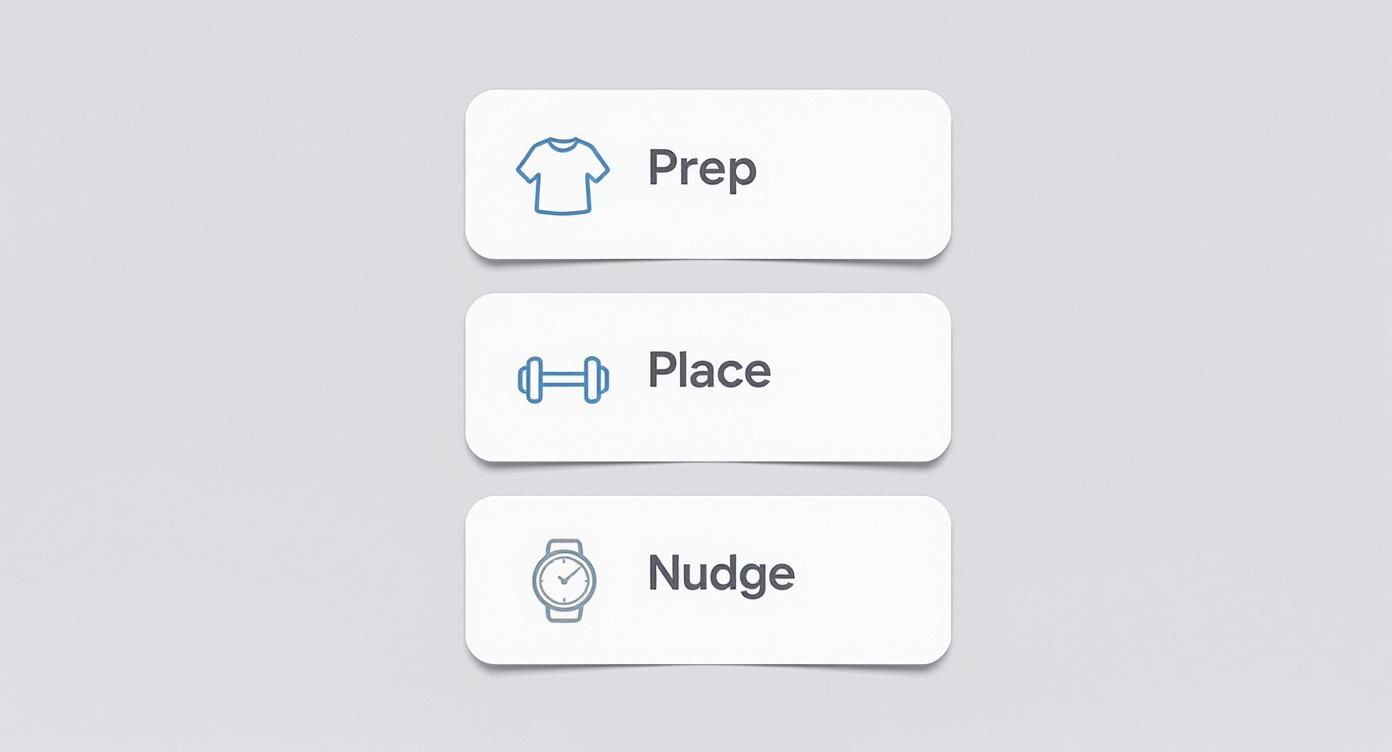
When it comes to rewards, ditch the "I'll earn a pizza" mentality. Instead, celebrate your consistency with things that support your new lifestyle. After hitting a goal, treat yourself to new gear, like a fitness tracker.
This tracker monitors your heart rate, steps, and sleep, turning your progress into tangible data. Seeing your improvements reinforces your commitment and makes the journey even more rewarding. It’s the perfect way to celebrate a milestone.
Finding Your Perfect Exercise Habit
This table helps you match common fitness goals with enjoyable activities and the simple gear needed to start, making it easier to build a sustainable habit.
| Your Goal | Enjoyable Activity Ideas | Suggested Starter Product |
|---|---|---|
| Build Strength | Bodyweight exercises, kettlebell flows, rock climbing | A versatile set of resistance bands for home workouts. |
| Improve Cardio | Brisk walking, cycling, dance classes, swimming | A reliable fitness tracker to monitor heart rate and progress. |
| Increase Flexibility | Yoga, Pilates, dynamic stretching routines | A comfortable, non-slip yoga mat. |
| Stress Relief | Tai Chi, hiking in nature, mindful walking | A quality pair of headphones for podcasts or music on the go. |
| Social Connection | Team sports (volleyball, soccer), group fitness classes | Supportive athletic shoes suited for your chosen activity. |
Finding the right fit is about experimenting. Don’t be afraid to try a few different things before one clicks. The goal is progress, not immediate perfection.
The ultimate aim is to build positive associations with exercise. By linking your efforts to both internal enjoyment and supportive external rewards, you create a powerful feedback loop that makes you look forward to your next session.
Sync Your Nutrition with Your New Routine
You can't build a solid exercise habit on an empty tank. The food you eat is the fuel for every workout and the raw material for your recovery. When you get your nutrition and movement working together, results come faster and the habit feels great.
This isn’t about a restrictive diet. It’s about making smart tweaks that support your active lifestyle. Think of it as giving your body the right tools for the job. The easiest place to start is hydration. Being even slightly dehydrated can tank your energy.
Fueling Your Fitness Goals
Timing your meals around your workouts can make a night-and-day difference in your energy and recovery.
-
Pre-Workout Fuel: About an hour before you move, grab a small, carb-rich snack like a banana or a small bowl of oatmeal. This tops off your energy stores.
-
Post-Workout Recovery: After you've finished, your body needs nutrients. A combination of protein (to repair muscle) and carbs (to restock energy) is ideal.
Having an All-In-One Shaker Bottle ready to go is a game-changer. It features separate compartments for powder and supplements, so you can mix a fresh recovery shake the moment you're done. Just add water, shake, and give your body what it craves to get stronger.
Smart Prep for Consistent Success
Just like laying out your gym clothes, prepping food ahead of time wipes out decision fatigue. It makes the healthy choice the easy choice.
Start small. Maybe you grill a big batch of chicken for the week, or chop up all your veggies. Using tools like Portion Control Meal Prep Containers helps you build balanced, grab-and-go meals.
These containers make it simple to manage your intake and ensure your meals align with your fitness goals. They take the guesswork out of eating right, helping you stay consistent with both your diet and exercise.
Aligning your nutrition with your exercise isn't about perfection; it’s about providing consistent support for your body. Good food makes you feel more energetic, which in turn makes you more likely to stick with your workout routine.
For more specifics, read our guide on what to eat when you’re exercising. For serious muscle building, meal prep bodybuilding services can deliver perfectly dialed-in nutrition right to you.
How to Navigate Setbacks and Stay Consistent
Let's be real: life happens. A chaotic week, a sick kid, or just a day where you feel drained—these things are part of the deal.
The secret to making exercise stick isn't achieving a perfect streak. It’s about building a resilient routine that can bend without breaking.
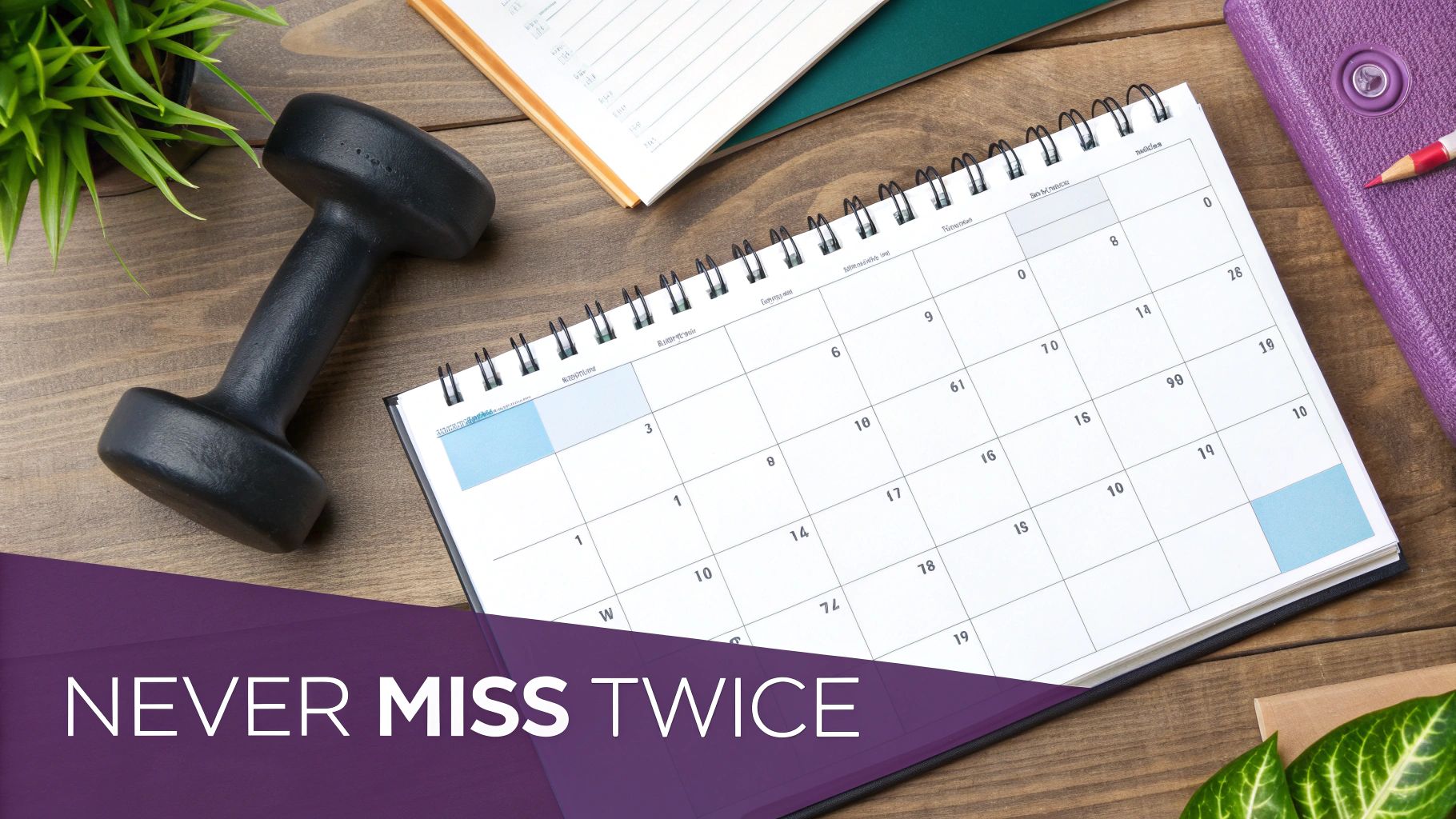
Missing one workout is just an event, not a trend. What separates a lasting habit from a failed attempt is what you do the very next day.
Adopt the Never Miss Twice Rule
This single mindset shift can save your habit from derailing. The rule is exactly what it sounds like: you can miss a planned workout, but you are not allowed to miss two in a row.
Had to skip Tuesday’s workout? That’s fine. But you must do something on Wednesday. Even a 10-minute walk counts. This keeps the momentum alive and stops one off-day from becoming an off-week.
The goal isn't perfection; it's consistency. The 'never miss twice' rule allows for real-life interruptions without letting you fall off the wagon entirely. It's a compassionate approach to building a tough habit.
Leveraging Modern Flexibility
The way we exercise has changed, giving us more tools than ever to stay on track. A remarkable 44% of active consumers now work out 12 or more times per month, an 18% jump from 2021.
This surge was fueled by the flexibility of at-home and outdoor fitness. A consistent habit doesn’t require a rigid gym schedule. You can dive deeper into these evolving fitness trends and what they mean for you.
This is where having the right gear at home really pays off. Simple, versatile equipment can turn any corner of your house into a workout zone. A quality Resistance Bands Set, for example, is basically a full gym that fits in a drawer—perfect for those days you just can't get out the door.
Troubleshooting Common Hurdles
Even with the best intentions, you’ll run into challenges. Here’s a quick guide for tackling the most common ones:
-
Low Energy: Make a "10-minute deal" with yourself. If you still feel drained after 10 minutes of light activity, you can stop. More often than not, you'll feel better and finish the workout.
-
Boredom: Routine is the bedrock of habit, but monotony is a killer. Have a few go-to workout options. If you're bored, switch it up! Try a fun workout video from our Diet & Exercise channel on YouTube.
-
Chaotic Schedule: When time is tight, don't scrap the workout—shrink it. A 15-minute, high-intensity session is far better than doing nothing at all. The goal is to maintain the habit.
Answering Your Top Questions About Building an Exercise Habit
It's completely normal to have a ton of questions when you're trying to make exercise stick. Let's tackle some of the most common ones.
How Long Does It Really Take to Form a Habit?
You’ve probably heard "21 days," but research shows it can take anywhere from 18 to 254 days for a new behavior to feel automatic.
Instead of fixating on a number, focus on daily consistency. A five-minute walk every day does more for habit formation than one heroic, hour-long workout once a week.
Should I Focus on Intensity or Consistency?
When you’re just starting out, consistency wins. Every single time. The initial goal isn't about hitting a personal record; it's about making the act of exercising a non-negotiable part of your day.
First, master the habit of getting out the door. Once that feels automatic, then you can layer in more intensity.
The most important workout for a new habit isn't your best one. It's the one you do on the day you least feel like it. That's where you truly strengthen your commitment.
What If I Get Bored with My Routine?
Boredom is a habit-killer. Plan for it by not locking yourself into just one type of exercise.
Have a small "menu" of activities you enjoy. Maybe that includes a brisk walk, a fun at-home workout video, or a quick bike ride. This way, you can pick an activity that fits your mood and energy level. For fresh ideas, check out the routines on the Diet & Exercise YouTube channel.
As you build your new active lifestyle, having gear you love can make a huge difference. Find comfortable, motivational apparel at Diet and Exercise that makes you feel good about showing up. Shop for your new favorite workout shirt.