
Your Ultimate Mediterranean Diet Shopping List
A successful Mediterranean diet shopping list doesn't start in the produce aisle. The real secret? It begins at home, with a well-stocked pantry.
When you have essentials like good olive oil, whole grains, and beans ready, throwing together a healthy, delicious meal becomes second nature.
This approach makes healthy eating a simple part of your routine. It's about combining smart food choices with consistent exercise to reach your fitness goals.
Building Your Mediterranean Pantry Foundation
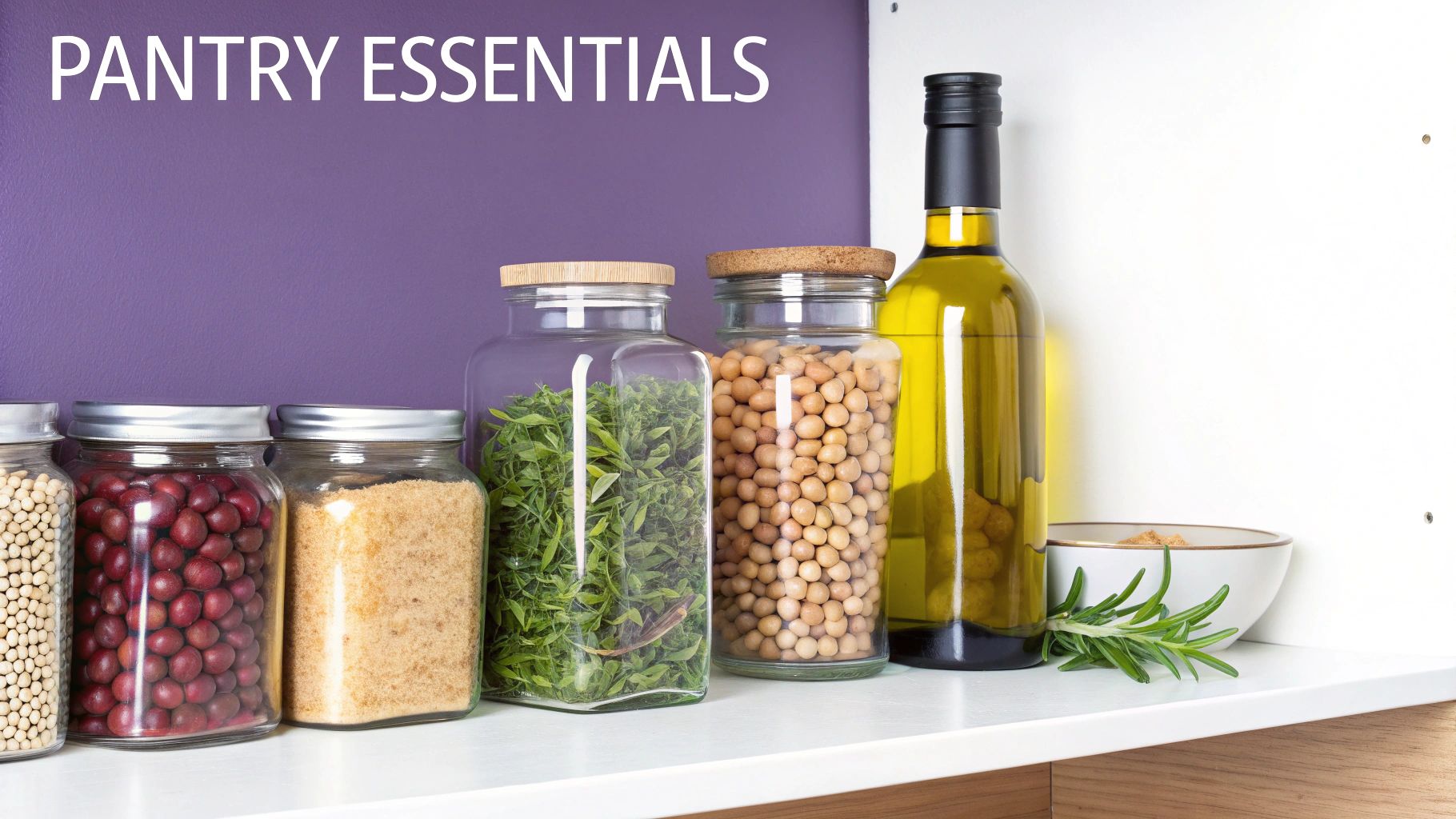
The trick to sticking with any healthy eating plan is making it easy on yourself. A smart pantry is your first step.
Before you even think about your weekly grocery run, creating a solid base of shelf-stable ingredients is key. This sets you up for success, ensuring you can always pull a nutritious meal together.
The Mediterranean diet is built around flavorful and beneficial foods. With its focus on plant-based foods and heart-healthy fats, it's a way of eating that you can truly stick with for the long haul.
The Cornerstone: Healthy Fats
A high-quality extra virgin olive oil (EVOO) is a non-negotiable in a Mediterranean pantry. It's more than a cooking oil; it’s a finishing touch that adds incredible flavor.
Olive oil is the star, but it needs a supporting cast:
- Nuts: Keep unsalted almonds, walnuts, and pistachios on hand for a quick snack or to add crunch to salads.
- Seeds: Flaxseeds, chia seeds, and sunflower seeds are powerhouses of fiber and omega-3s.
- Olives: A jar of Kalamata or Castelvetrano olives instantly adds a burst of savory flavor.
Whole Grains and Legumes
A true Mediterranean pantry is filled with robust, fiber-packed whole grains that keep you full and energized. These are the versatile base for incredible meals.
A well-stocked pantry transforms cooking from a chore into a creative process. When you have foundational ingredients ready, you're free to focus on fresh, seasonal additions, making every meal a simple success.
Here’s what to keep in your kitchen:
- Whole Grains: Quinoa, farro, barley, and whole-wheat couscous are excellent choices.
- Legumes: Canned or dried chickpeas, lentils, and cannellini beans are must-haves. They're cheap, packed with protein, and versatile.
- Whole-Wheat Bread: Find a good quality 100% whole-wheat loaf or pita bread for sandwiches and dipping.
Many of these staples are cornerstones of other healthy lifestyles. Our guide to a plant-based diet shopping list has great complementary ideas for keeping your pantry full.
Your Weekly Fresh Foods Grocery List
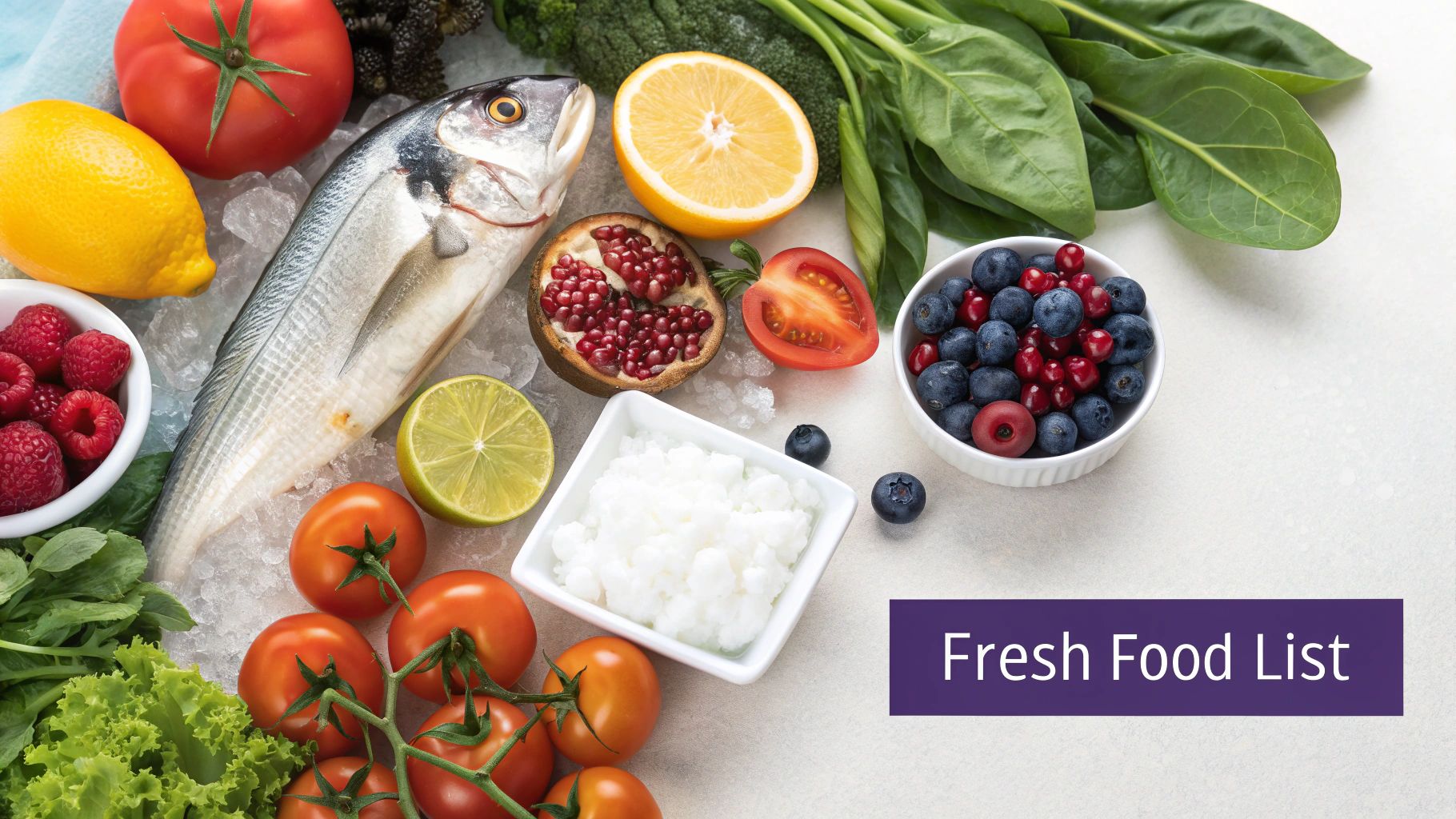
Once your pantry is stocked, your weekly grocery runs get a lot simpler. Now, you’re just on a mission for the fresh, vibrant stuff that brings your meals to life.
A great strategy is to stick to the perimeter of the grocery store. This is where you’ll find whole, unprocessed foods and can naturally sidestep aisles of processed items.
Vibrant Vegetables And Fruits
The produce section is your playground. A good rule is to "shop the rainbow." The more colors in your cart, the wider the variety of vitamins and antioxidants you're getting.
Here’s a quick look at what to grab each week:
- Leafy Greens: Spinach, kale, or arugula for quick salads or to wilt into a warm pasta dish.
- Cruciferous Veggies: Broccoli or cauliflower are perfect when roasted with olive oil and garlic.
- The Foundation: Onions, garlic, and tomatoes are the flavor base for so many Mediterranean recipes.
- Seasonal Fruits: Always check what’s in season, like berries in summer and citrus in winter.
Fresh herbs are a game-changer, adding flavor without salt or calories. If you use a lot of basil, it's easy to keep a plant on your windowsill. You can learn how to grow your own basil.
Lean Proteins From Land And Sea
Next, visit the seafood and poultry counters. Fish is a huge part of this lifestyle, especially those rich in omega-3s. Aim for at least two servings per week.
A key principle of this diet is prioritizing fish and poultry over red meat. This simple switch in your weekly protein choices can have a significant positive impact on your heart health over time.
Look for fresh or frozen salmon, tuna, mackerel, or sardines. For poultry, opt for skinless chicken or turkey breasts. Eggs are another fantastic, budget-friendly protein.
Dairy And Fermented Foods
The dairy aisle is a quick stop. The focus here is on quality, especially fermented foods that are great for gut health.
These are the go-to items:
- Greek Yogurt: Always plain, full-fat. It’s incredibly versatile for breakfast bowls, marinades, or sauces.
- Cheese: A block of feta or a small wedge of Parmesan adds a perfect savory kick to salads and pastas.
- Milk: If you drink milk, a low-fat option is a good choice.
With these fresh items and your well-stocked pantry, you have everything you need for a week of incredible Mediterranean meals.
Printable Weekly Mediterranean Shopping Checklist
This simple checklist covers the fresh items you'll want to pick up weekly. Customize it based on what's in season.
| Category | Essential Items | Notes (e.g., 'Seasonal Options') |
|---|---|---|
| Vegetables | Leafy greens (spinach, kale), onions, garlic, tomatoes, bell peppers | Seasonal: Asparagus (spring), zucchini (summer), squash (fall) |
| Fruits | Lemons, seasonal fruits (berries, stone fruit, citrus) | Look for what's on sale to get the best flavor and value. |
| Proteins | Fresh or frozen fish (salmon, cod), skinless poultry, eggs | Aim for fish at least 2x per week. |
| Dairy | Plain Greek yogurt, feta cheese, Parmesan cheese | Opt for full-fat yogurt and use cheese as a flavor accent. |
| Fresh Herbs | Basil, parsley, mint, oregano | A small bunch adds a huge amount of flavor. |
Using a list like this keeps you focused, helps you avoid impulse buys, and ensures your kitchen is always ready for healthy cooking.
The Science Behind This Way of Eating
Your Mediterranean diet shopping list is more than a way to organize your grocery trip. It's a prescription for long-term health, backed by decades of solid scientific evidence.
The magic is in how these incredible foods work together to protect your body. The combination of healthy fats, fiber, and antioxidants helps your body fight oxidative stress.
Heart and Brain Protection
The scientific community has thrown its weight behind this diet for heart health. The PREDIMED study showed a 30% reduction in major cardiovascular events for people following the diet. You can read more about these powerful health findings on news.harvard.edu.
The same nutrients that keep your arteries clear also protect your brain. Healthy fats from fish and olive oil are critical for keeping your mind sharp.
The Synergistic Effect of Food and Fitness
Pairing this diet with regular physical activity creates even more profound results. The combination of nutrient-dense food and consistent exercise is a proven strategy for managing weight and building lean muscle.
Imagine finishing a workout and refueling with grilled salmon and quinoa. You’re giving your body the exact protein and carbs it needs for muscle repair. This smart combination helps you nail your fitness goals.
This lifestyle isn't about restriction; it's about abundance. You're adding more flavor, more nutrients, and more years to your life by focusing on whole, delicious foods and consistent movement.
Knowing what goes into your body also means paying attention to how you cook it. Learn about the best healthy cooking pans to get all the benefits from your ingredients.
Your mediterranean diet shopping list is your roadmap to a more vibrant and energetic life.
Smart Shopping and Meal Prep Strategies
You've made it home with a car full of amazing food. Now, the real transformation happens when you pair those ingredients with planning and exercise.
Mastering a few simple habits can make all the difference. This is about working smarter to create delicious, healthy meals that fuel your body and your workouts.
Mastering Meal Prep and Mindful Shopping
Dedicating a little time to meal prep is a game-changer. It can be as simple as making a big pot of quinoa or roasting a sheet pan of veggies for the week.
With these basics ready, throwing together a quick grain bowl on a hectic Tuesday night becomes a breeze.
Another key habit is to become a label detective at the grocery store. Stick to short ingredient lists with words you can pronounce. This helps you dodge processed additives.
Planning your meals and prepping a few key ingredients isn't just a time-saver. You're consciously deciding to give your body the right fuel after a workout, which is absolutely essential for muscle recovery and keeping your energy levels high.
Adopting this lifestyle brings incredible benefits, from boosting heart and brain health to supporting a longer, more vibrant life.
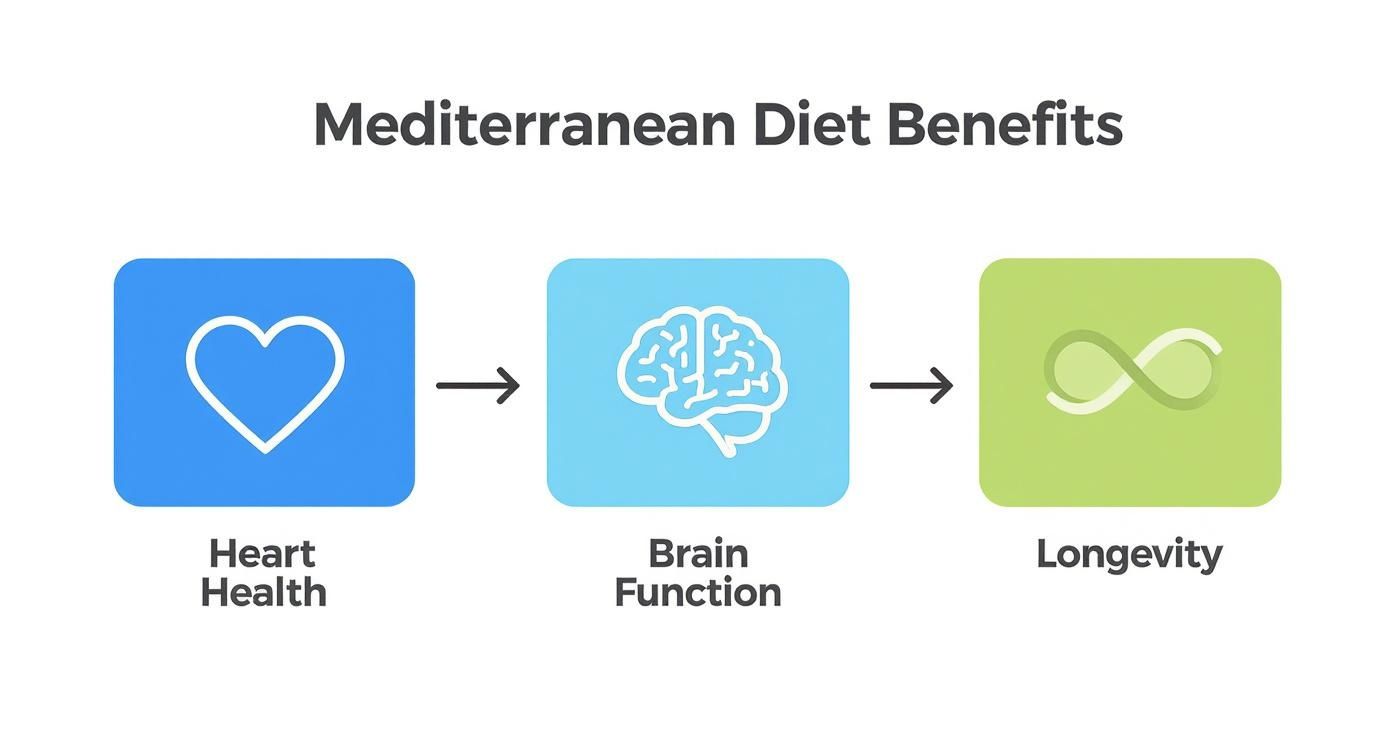
You can see how the core parts of this diet work together to improve your overall well-being.
Budget-Friendly Tips and a Sample Plan
Healthy eating does not have to drain your bank account. A top tip is to buy produce that's in season. It's almost always cheaper and tastes better.
Don't sleep on the freezer aisle! Frozen fruits and veggies are just as nutritious as fresh but often cost way less.
Here’s a simple 3-day meal plan using your shopping list:
-
Day 1:
- Breakfast: Greek yogurt topped with walnuts and fresh berries.
- Lunch: A big salad with spinach, veggies, chickpeas, and a lemon-tahini dressing.
- Dinner: Baked salmon with roasted asparagus and a side of quinoa.
-
Day 2:
- Breakfast: Scrambled eggs with sautéed spinach and whole-wheat toast.
- Lunch: Leftover salmon and quinoa.
- Dinner: Whole-wheat pasta with tomato sauce, lentils, and fresh basil.
-
Day 3:
- Breakfast: Oatmeal with sliced banana and a sprinkle of chia seeds.
- Lunch: Leftover lentil pasta.
- Dinner: Chicken and vegetable skewers served with whole-wheat pita and hummus.
Want to dive deeper into making healthy eating more affordable? Check out our guide on how to meal plan on a budget. Combining smart kitchen strategies with a regular exercise routine builds a healthy lifestyle that truly lasts.
How to Adapt the Diet for Your Lifestyle
One of the best things about the Mediterranean diet is its flexibility. It's a framework you can shape to fit your family, budget, and tastes.
You don't need to do a complete kitchen overhaul overnight. Small, simple swaps add up and make a huge difference.
Making It Work for the Whole Family
Getting kids excited about healthy food can be a challenge. Try giving family favorites a Mediterranean twist, like whole-wheat pita pizzas with veggies.
Getting them involved is another great strategy. Let them help wash veggies or build their own grain bowls. When kids help make the food, they're more likely to try it.
Here are a few kid-approved snack ideas:
- Hummus and Dippers: Hummus with whole-wheat pita, cucumber coins, and baby carrots.
- Fruit and Yogurt Parfaits: Layers of plain Greek yogurt, fresh berries, and a sprinkle of nuts.
- "Ants on a Log": Celery sticks with natural nut butter and raisins.
The goal isn't dietary perfection; it's about building healthy habits together. Celebrate the small wins, like when your child tries a new vegetable or reaches for fruit instead of cookies. That positive reinforcement is what builds a happy, healthy relationship with food.
Plant-Based and Dietary Modifications
The Mediterranean diet is already plant-forward, making it easy to adapt for vegan or vegetarian lifestyles. Fruits, vegetables, whole grains, nuts, and legumes are the stars.
If you're avoiding animal products, make these smart swaps:
- Protein: Lean into lentils, chickpeas, and beans. Tofu and tempeh also fit beautifully.
- Dairy: Unsweetened almond or soy milk work great.
- Healthy Fats: Keep the focus on extra virgin olive oil, avocados, nuts, and seeds.
This built-in flexibility is a huge reason for its worldwide popularity. The global Mediterranean diet market was valued at USD 11 billion and is projected to hit USD 20 billion by 2032. You can dive deeper into this growing market trend on futuredatastats.com.
This way of eating is a commitment to a healthier, more vibrant you. When you feel good, you have more energy. To go with your healthy habits, grab some fitness gear that keeps you motivated. Our "Sore Today Strong Tomorrow" shirt is the perfect reminder that your hard work is paying off.
Common Questions About Mediterranean Shopping
It's normal to have questions when starting a new way of eating. Let's tackle some common ones so you can feel confident heading to the store.
Can I Follow The Mediterranean Diet On A Tight Budget?
Yes, absolutely. Build your meals around inexpensive powerhouses like beans, lentils, whole grains, and seasonal vegetables.
Buying produce in season ensures the best price and flavor. The freezer aisle is also a great resource for nutritious, cost-effective fruits and veggies.
What Are The Best Snacks On This Diet?
Snacking the Mediterranean way is about simple, satisfying whole foods. A handful of almonds, an apple with nut butter, or Greek yogurt with berries are great go-to's.
For a savory craving, try hummus with veggie sticks or a small bowl of olives. These options give you a mix of fiber, protein, and healthy fats.
The best snacks are the ones you can grab right from your core shopping list. They're simple, unprocessed, and keep you on track. This way, you don't even need a separate "snack" category.
How Much Red Meat Can I Eat?
The Mediterranean diet shifts the focus away from red meat. Prioritize fish, seafood, and some poultry instead. Think of red meat as something to enjoy just a few times a month.
When you do have it, choose leaner cuts and keep portions small. It should be an accent to a vibrant, plant-packed meal, not the star.
Is Wine A Necessary Part Of The Diet?
While red wine with dinner is part of the culture in many Mediterranean regions, it's definitely not a requirement. You can get all the amazing health benefits without any alcohol.
The magic of this diet is in the overall pattern of eating. If you don't drink, don't worry about it. Focus on all the other incredible, wholesome foods.
At Diet and Exercise, we know that pairing a smart diet with a consistent fitness routine is the key to success. Fuel your body with the right foods and celebrate your progress with our motivating apparel. Check out our collection to find gear that inspires you every step of the way.