
Postpartum Exercise After C Section: A Realistic Recovery Guide
Getting back to exercise after a C-section isn't a typical fitness journey. It’s a whole different ball game.
This isn't about "bouncing back." It's a careful process of rebuilding your strength from the inside out after major abdominal surgery. Patience and self-compassion are your best friends here.
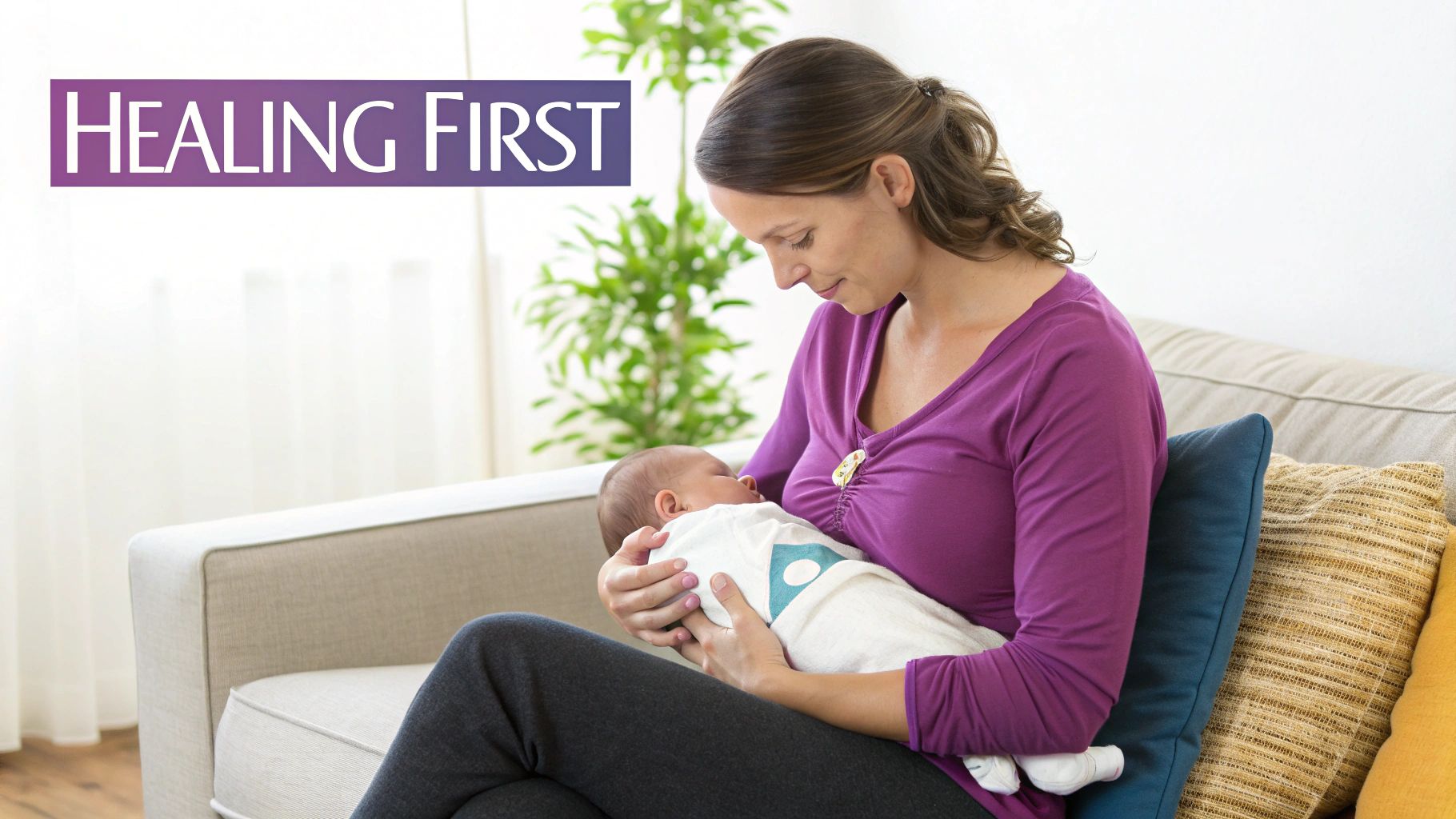
Your C-Section Recovery: A Healing-First Approach
When you’ve had a cesarean, your body's number one job is to heal. Pushing yourself back into a fitness routine too soon can cause serious setbacks and mess with the healing of multiple layers of tissue.
Adopting a healing-first mindset is the most valuable thing you can do for yourself.
A C-section involves incisions through your skin, fat, fascia, and your uterus. Each layer needs dedicated time to repair. A smart, gradual return to movement will support that healing.
This timeline gives you a bird's-eye view of the recovery phases, from the initial rest period to gentle movements, and finally, to rebuilding your strength.
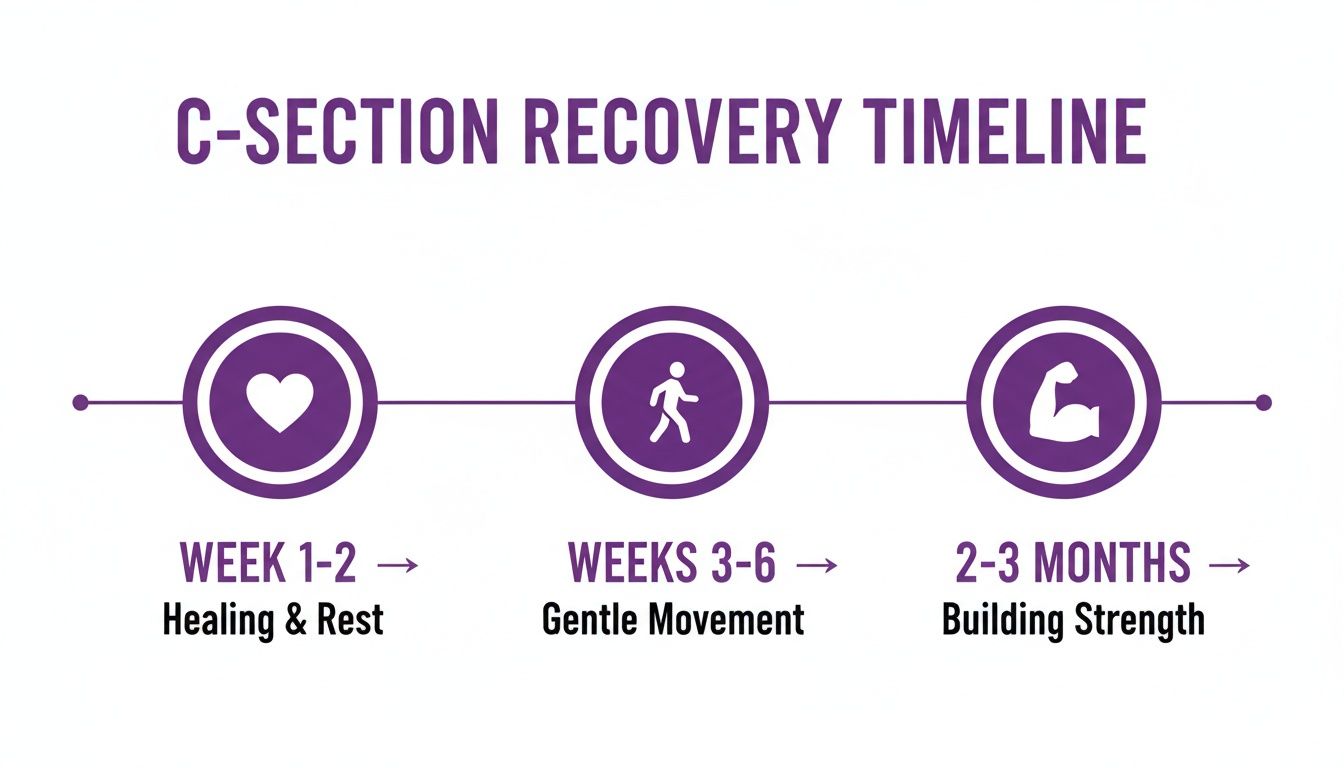
As you can see, each stage builds on the last. This progressive approach is key to getting back to fitness safely and effectively.
Why A Gentle Start Is Non-Negotiable
Ignoring your body's need for a slow start can lead to complications like pain, incision irritation, or a hernia.
The first few weeks are for resting, bonding with your baby, and letting your body heal. This quiet period lays the foundation for all future activity.
When you start moving, the goal is to reconnect with your body. Gentle movements can boost your mood, give you energy, and rebuild core strength for daily mom life.
Many new moms feel unstable in their midsection. That's normal. A Postpartum Recovery Belly Band provides gentle compression. It can make those first short walks feel more secure and comfortable.
Setting Realistic Goals
Feeling hesitant to start exercising is common. Research shows only about 19.5% of postpartum women get back to physical exercise. For C-section moms, this is an even bigger deal, since surgical recovery means exercise isn't usually recommended until at least 6 weeks postpartum.
Your journey is uniquely yours. Comparing yourself to anyone else is a recipe for frustration. The real goal is slow, steady, and gentle progress. Having an essential postpartum recovery toolkit can make a huge difference.
The best postpartum exercise plan respects your body's timeline. Listening to its signals—discomfort, pain, exhaustion—is more important than any rigid schedule.
To give you a clearer picture, here's a general roadmap.
C-Section Recovery Timeline At A Glance
This table breaks down recovery phases, offering a guide to what you should focus on and which activities are generally safe.
| Recovery Phase | Typical Timeline | Focus | Safe Activities |
|---|---|---|---|
| Phase 1: Initial Healing | Weeks 0-6 | Rest, incision care, bonding, gentle breathing exercises. | Short, slow walks (starting with 5-10 mins), diaphragmatic breathing, pelvic floor contractions (Kegels). |
| Phase 2: Reconnection | Weeks 6-12 | Re-establishing core connection, improving posture, light activity. | Longer walks, bodyweight exercises (glute bridges, clamshells), gentle core work (heel slides, pelvic tilts). |
| Phase 3: Rebuilding Strength | Weeks 12+ | Progressive strengthening, low-impact cardio, increasing intensity. | Light jogging (with clearance), modified strength training, swimming, low-impact fitness classes. |
Remember, this is a general guide. Always get clearance from your doctor or a pelvic floor physical therapist before moving to the next phase.
When you combine a nutrient-rich diet with restorative movement, you set yourself up for a successful return to fitness. Proper nutrition supports tissue repair, while gentle exercise improves circulation and helps you reconnect with your core.
The First Six Weeks: Building Your Healing Foundation
Forget "fitness" for these first six weeks. This is a sacred window for rest, bonding, and laying the groundwork for recovery.
Pushing too hard now is a recipe for setbacks. The focus shifts to gentle, restorative movements that heal you from the inside out.
Embrace The Power Of Breath
If there’s one "exercise" to master now, it’s diaphragmatic breathing (belly breathing). After abdominal surgery, it's easy to fall into shallow chest breathing, which adds tension.
Proper breathing is your first step to reactivating deep core muscles. It calms your nervous system and gently mobilizes scar tissue.
Lie comfortably with knees bent. Place one hand on your chest, the other on your belly. Inhale slowly through your nose, feeling your belly expand while your chest stays still. Exhale slowly and feel your belly fall. That's the work.
For a great visual guide, channels like Diet & Exercise on YouTube have fantastic tutorials.
Seeing someone demonstrate proper breathing can make all the difference. You can find helpful videos at the Diet & Exercise YouTube channel.
Gentle Pelvic Floor Activations
Your pelvic floor has been under immense pressure. It needs TLC. Simple pelvic floor activations (Kegels) are key to rebuilding that internal support system.
The trick is to be gentle. Think of a delicate "lift and squeeze."
- How to Do It: Inhale and let your pelvic floor relax. As you exhale, gently contract and lift those muscles.
- Hold and Release: Hold for 3-5 seconds, then fully release. The release is just as important!
- Repetitions: Aim for 10 repetitions a few times a day.
- Sync with Your Breath: Exhale on the lift, inhale on the release.
These small movements are powerful. They boost blood flow and re-establish the mind-muscle connection to your deep core.
Key Takeaway: The goal in these early weeks is awareness, not intensity. You're re-learning how to talk to your core.
Protect Your Incision With Smart Movements
How you move day-to-day matters. Your abdominal wall is healing, so avoid strain.
Learn the log-roll. Getting out of bed by sitting straight up is like a crunch—the last thing your core needs. Instead, roll onto your side, then use your arms to push yourself to a sitting position.
When you're ready to celebrate your fitness journey, the Diet & Exercise Swag Collection offers motivational apparel and accessories. A comfy shirt or a new mug can be a great way to honor your progress.
Finally, embrace gentle walking. Start with 5-10 minutes a day. The goal is to promote circulation, prevent blood clots, and boost your mental health. Never push through pain.
Reconnecting with Your Core After Your Six-Week Checkup
Hitting your six-week checkup is a huge milestone. Once your doctor gives you the all-clear, you can shift to mindfully rebuilding your core strength.
This isn't about jumping into intense ab work. It's an intentional process of reconnecting with your deepest abdominal muscles.
First, gently assess your abdominal wall for diastasis recti. This common condition is where the "six-pack" muscles separate. Understanding if you have it helps you choose exercises that heal, not harm.
C-Section Safe Core Rebuilding Exercises
Your focus should be on activating the transverse abdominis (TVA). This deep muscle is your body's natural corset, providing stability. These first exercises are subtle but powerful.
Heel Slides
This is a fantastic starting point for syncing breath with deep core activation without strain.
- Starting Position: Lie on your back, knees bent, feet flat.
- The Movement: Inhale. As you exhale, draw your belly button toward your spine and slowly slide one heel away until the leg is straight.
- Return: Inhale as you slowly slide the heel back. Keep your pelvis steady.
Glute Bridges
Glute bridges strengthen your glutes and hamstrings, which support your pelvis, and gently engage your core.
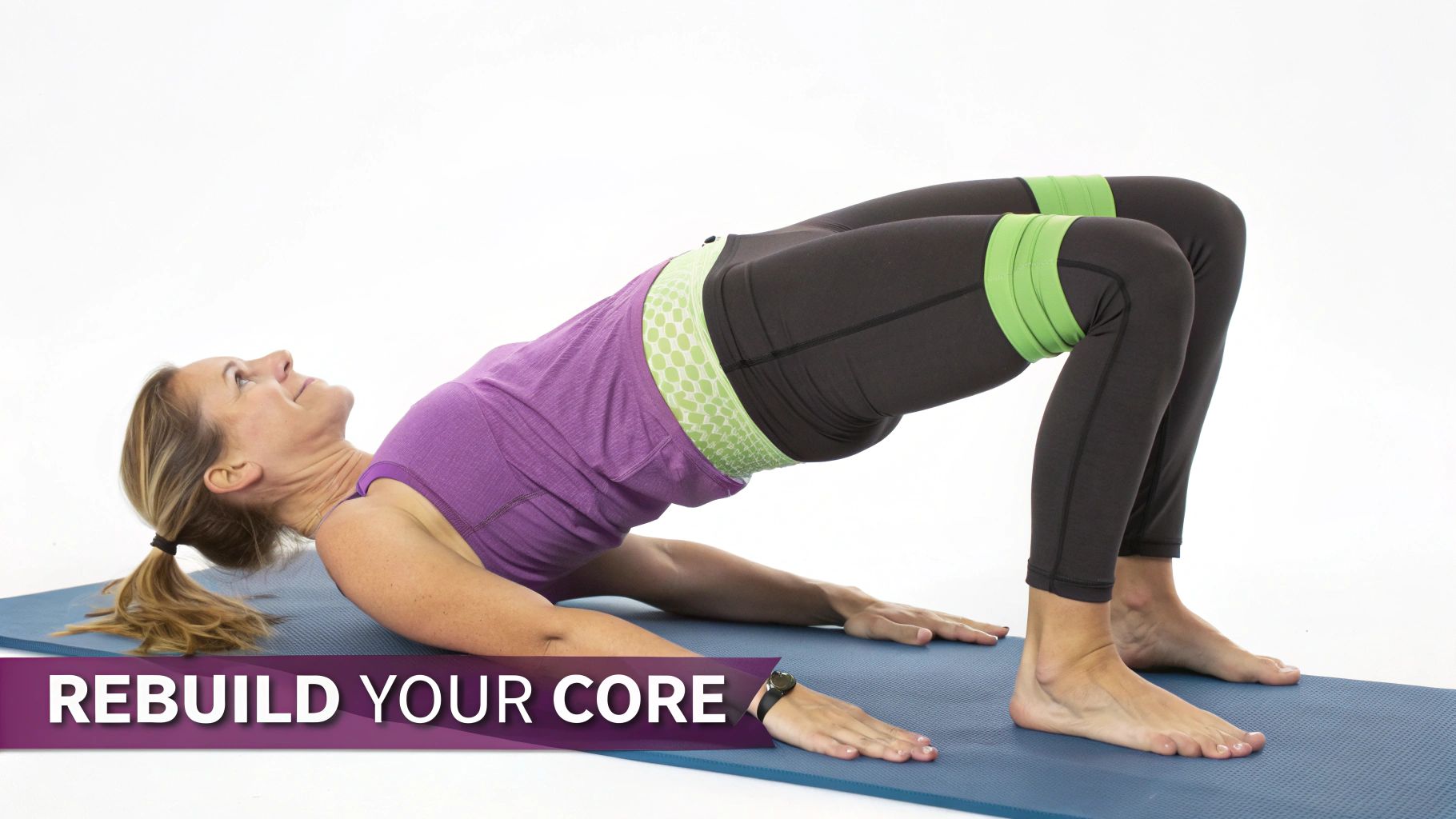
Adding a resistance band can change the game. Our Core Sculpt Resistance Bands are perfect for this. Placing a band above your knees forces your side glutes to engage, improving pelvic stability.
Bird-Dog Variations
This exercise challenges your balance and teaches your core to stabilize your spine while limbs are moving.
- Starting Position: Start on all fours, hands under shoulders, knees under hips.
- The Movement: Engage your core. Exhale and slowly extend one arm forward and the opposite leg back.
- Hold and Return: Pause for a breath, keeping your back flat. Inhale as you return to the start.
The Role of Prenatal Fitness in C-Section Recovery
Your fitness journey before birth can impact your postpartum experience. Staying active during pregnancy can influence your delivery type.
Research shows prenatal exercise can slash the odds of needing a C-section by up to 38%. This directly impacts recovery, as healing from surgery requires at least six weeks before starting a structured regimen. You can read the full research on prenatal exercise and C-section rates.
By focusing on these foundational core exercises, you're building a stronger, more resilient foundation for everything next.
Ready for More? Building Full-Body Strength and Stamina
Once you feel that deep core connection, you may be ready to move in more familiar ways. Now is the time to weave in more traditional, full-body exercises.
We have to be smart about it. The goal is to build strength and stamina step-by-step, always listening to your body.
This phase is about reconditioning your entire body. We'll pair gentle, low-impact cardio with modified strength moves to safely rebuild muscle.
Start With Low-Impact Cardio
High-impact workouts like running are still on the back burner. Your pelvic floor and abdominal wall aren't ready.
Instead, lean into low-impact cardio. These activities get your heart rate up without jarring your body.
- Brisk Walking: Simple, effective, and you can do it with your baby.
- Stationary Biking: A zero-impact cardio option that's gentle on your joints.
- Swimming: Once your incision is 100% healed and you have doctor clearance, swimming is a dream.
Quick Tip: Use the "talk test." You should be able to hold a conversation. If you're gasping for air, ease up.
Consistency beats intensity. Aim for 20-30 minutes of low-impact cardio 3-4 times per week.
Layering in Modified Strength Training
After consistently doing your core exercises, it's time for gentle strength work. The focus is on strengthening the big muscle groups you use every day. Starting with bodyweight is safest.
Here's a table to help you visualize a safe progression.
Safe Exercise Progression Post C-Section
| Exercise Type | Recommended (Start Here) | Use With Caution (Progress To) | Avoid Initially (High-Risk) |
|---|---|---|---|
| Cardio | Walking, Swimming, Stationary Bike | Elliptical, Light Jogging (12+ weeks, with clearance) | Running, HIIT, Jumping Jacks |
| Lower Body | Bodyweight Squats, Glute Bridges | Goblet Squats (light weight), Lunges | Weighted Deep Squats, Plyometrics |
| Upper Body | Wall Push-ups, Bird-Dog | Kneeling Push-ups, Incline Push-ups | Standard Push-ups, Overhead Press |
| Core | Pelvic Tilts, Heel Slides | Modified Planks (from knees), Dead Bugs | Crunches, Sit-ups, Russian Twists |
Master the "Start Here" column with perfect form before moving on. This careful approach to postpartum exercise after c section is key to building strength without setbacks.
A simple home circuit could include supported squats, wall push-ups, glute bridges, and bent-over rows with bands.
The Perfect Companion for Your Home Workouts
As you get stronger, bodyweight exercises become easier. That means you're ready for resistance.
The Ultimate Home Workout Set is made for this phase. It includes adjustable dumbbells and resistance bands, giving you everything you need to progress safely. You can start with light bands and move to light dumbbells for squats. It’s a smart way to equip yourself for your entire fitness journey.
Fueling Your Recovery with Smart Nutrition
Getting back to exercise after a C-section isn't just about movement—what you eat is critical. Your body is healing from major surgery while you're caring for a newborn. The right nutrition is the fuel that makes it possible.
Think of food as the essential material for your body's repair work. Good food helps you feel stronger and more energetic.
The Nutrients That Matter Most
During this healing phase, a few key nutrients are powerhouses.
- Protein: Non-negotiable for tissue repair and muscle rebuilding. Include lean meats, fish, eggs, or beans at every meal.
- Iron: You lose blood during a C-section, which can cause fatigue. Focus on iron-rich foods like red meat and spinach.
- Vitamin C: A hero for scar healing, it helps produce collagen. Find it in citrus fruits, berries, and broccoli.
And please, hydrate! Guzzling water all day is a must, especially if you're breastfeeding.
Quick and Easy Meals for New Moms
You're not going to be whipping up gourmet meals. The goal is simple, nourishing, and fast.
Your recovery diet should be about ease, not effort. Think one-handed snacks and simple plates.
Here are a few ideas:
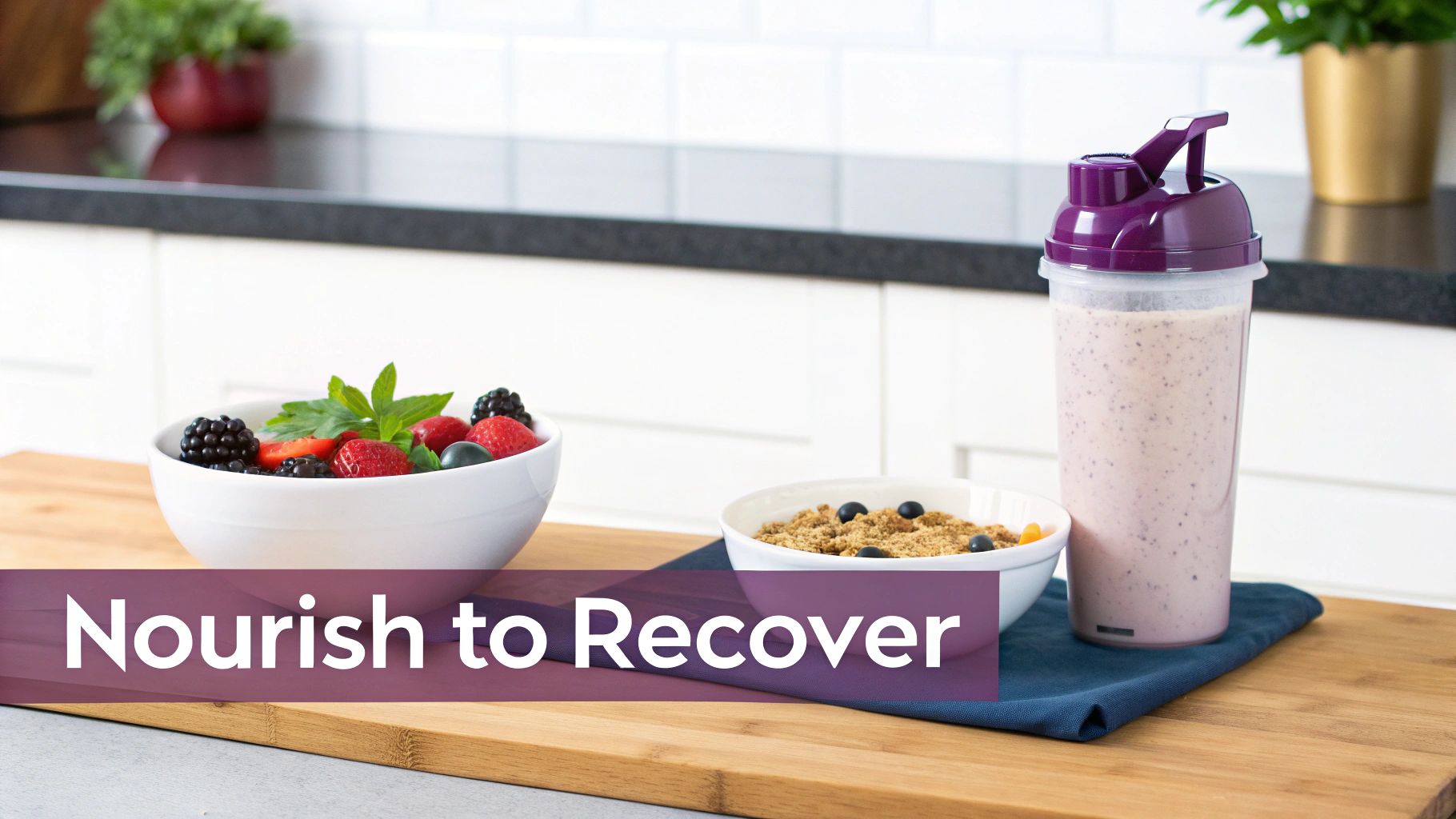
- A smoothie with spinach, berries, Greek yogurt, and protein powder.
- Oatmeal topped with nuts, seeds, and fruit.
- Scrambled eggs with whole-wheat toast and avocado.
For days when even that is too much, a quality Postnatal Nutrition Shake is a lifesaver. It’s a convenient way to get a blast of protein, vitamins, and minerals. When you pair smart nutrition with exercise, you create a powerful combination. To learn more, check out our guide on what to eat when exercising.
Your Post-C-Section Exercise Questions, Answered
It's normal to have questions as you think about exercise after a C-section. Let's walk through common concerns to help you feel confident and safe.
When Can I Start Running After a C-Section?
Patience is essential here. Most pelvic floor physical therapists recommend waiting until at least 12-16 weeks postpartum before considering a run. Your body needs time to rebuild the deep core and pelvic floor strength to handle high-impact movement.
Jumping back in too soon increases your risk for issues like pelvic organ prolapse or incontinence. Ease into it with a gradual walk-to-run program, and listen to your body.
Is It Normal to Feel a Pulling Sensation at My Scar?
Yes, a gentle pulling or stretching feeling around your scar is often a normal part of healing. As internal scar tissue remodels, you'll feel new sensations.
However, sharp pain, redness, or swelling are red flags. Stop and check in with your doctor.
After your incision has fully closed (around 6-8 weeks), you can start gentle scar massage. This can improve tissue mobility and ease that tight, pulling feeling.
Think of a mild stretch as a sign of healing, but sharp pain as a stop sign.
How Do I Know If I Have Diastasis Recti?
Diastasis recti is very common. You can do a quick self-check.
Lie on your back with knees bent. Place fingers just above your belly button and gently lift your head. A gap of two or more finger-widths suggests a separation.
Avoid exercises that cause your stomach to "cone," like crunches. Focus on deep core reconnection exercises. For an official diagnosis, see a pelvic floor PT. Sometimes, other conditions can affect your workouts. Knowing which are safe exercises to do with hemorrhoids can help you modify your routine.
Can I Get Rid of the C-Section Pouch with Exercise?
The "C-section pouch" is usually a mix of weakened muscle, stretched skin, body fat, and scar tissue. Exercise alone isn't a magic bullet.
A holistic approach works best. Combine consistent, safe postpartum exercise after c section with a nutrient-rich diet, hydration, and scar massage.
Above all, be kind to yourself. Your body did something amazing. Healing is a journey, not a sprint.
At Diet & Exercise, we support your entire wellness journey. For fun and motivational apparel and accessories to celebrate your hard work, check out our collections at https://dietexerciseshop.com.