

A Weight Loss Workout Plan That Actually Works
A good weight loss plan isn't built on random exercises. It’s built on a solid foundation.
It starts with figuring out exactly where you are right now and getting crystal clear on where you want to go.
This is the part everyone wants to skip. But trust me, it’s the difference between spinning your wheels for months and seeing real, lasting results.
Laying the Foundation for Real Results
Jumping into a hardcore workout routine without a plan is a recipe for frustration and burnout.
The most important work happens before you even break a sweat. It's about taking an honest look at your current fitness level.
This initial step is about engineering your own success. When you know your starting point, you can map out a route that’s challenging enough to change you but realistic enough to stick with.
Assess Your Current Fitness Level
First things first, we need a baseline. This isn’t a test you can fail; it’s just about collecting some data on your body’s current capabilities.
Try these simple checks:
- Cardiovascular Endurance: How long does it take you to walk one mile at a brisk pace? Jot down the time and how you felt afterward.
- Muscular Strength: In one minute, how many push-ups can you do (on toes or knees)? How many bodyweight squats can you complete with good form?
- Flexibility: Sit on the floor with your legs straight. How far can you reach toward your toes without bouncing?
These quick tests give you a tangible starting line. They help you build a plan that is right for you.
Set Specific and Motivating Goals
"I want to lose weight" is not a goal; it's a wish. Vague goals lead to vague efforts and vague results. We need to get specific.
Instead of "get in shape," try this: "Lose 10 pounds and be able to jog for 20 minutes without stopping in the next 12 weeks."
Now you have a clear finish line and a timeline to work with.
Your goals should also light a fire in you. They need to be personally meaningful. For a little extra spark to get you started, check out this motivational video on the Diet & Exercise YouTube channel.
Track Metrics That Matter
The bathroom scale can be a liar. Your weight can jump around daily and tells you nothing about what you’re actually losing or gaining.
Is it fat? Is it muscle? The scale doesn't know. To see the real story of your body's transformation, we need to look deeper.
The Smart Body Fat Scale from dietexerciseshop.com is a game-changer. It gives you insight into what’s actually happening with your body composition.
What a smart scale really shows you:
- Body Fat Percentage: The most direct measure of fat loss.
- Muscle Mass: Building muscle torches calories. This number going up is a huge win.
- Body Water: Hydration is key for performance and fat metabolism.
- Visceral Fat: The unhealthy fat around your organs. Reducing it is great for your health.
When you track these metrics, you get a much richer, more accurate picture of your progress. It’s proof that your weight loss workout plan is truly working.
Designing Your Weekly Workout Schedule
A workout plan that looks perfect on paper is useless if you can't actually stick with it.
The real secret to success is building a weekly schedule that fits into your life. This turns exercise from a chore into a lasting habit.
The goal here is to find a rhythm that keeps you moving forward without burning you out.
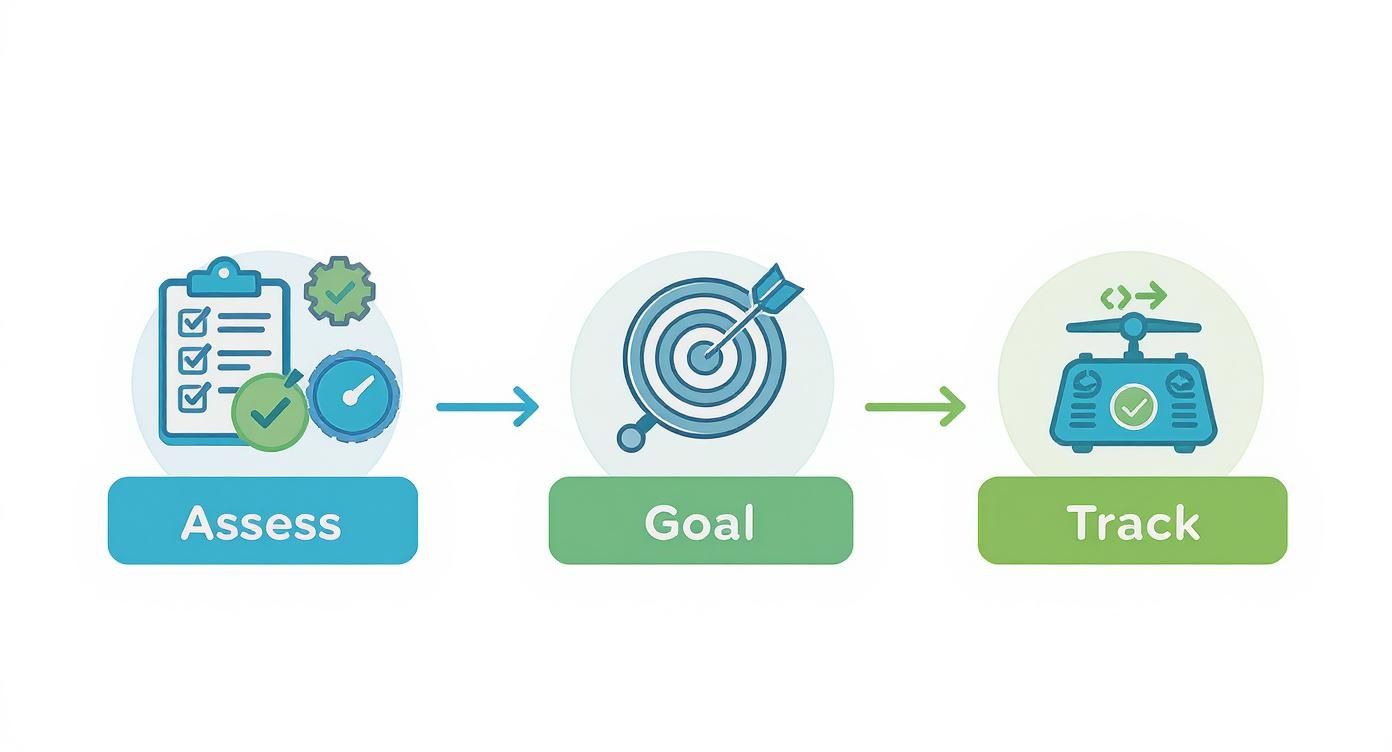
A solid plan always starts with an honest assessment, a clear goal, and consistent tracking.
Balancing Cardio And Strength Training
One of the most common mistakes is focusing only on cardio. While cardio is fantastic for your heart, strength training builds your long-term metabolic engine.
Building lean muscle increases your basal metabolic rate. That means you burn more calories around the clock, even at rest.
A great schedule alternates between cardio-focused and strength-focused days. This allows muscles to recover while you stay active.
Sample Weekly Workout Schedule
Your starting point will shape your schedule. A beginner’s week should look very different from an advanced athlete's.
This schedule provides a balanced template for structuring your workouts.
| Day | Beginner Focus | Intermediate Focus | Advanced Focus |
|---|---|---|---|
| Monday | Strength (Full Body) | Strength (Upper Body) | Strength (Push Day - Chest, Shoulders, Triceps) |
| Tuesday | Cardio (30 min light jog/brisk walk) | HIIT Cardio (20 min) | HIIT Cardio & Core (30 min) |
| Wednesday | Active Recovery (Stretching, gentle walk) | Strength (Lower Body) | Strength (Pull Day - Back, Biceps) |
| Thursday | Cardio (30 min cycling or swimming) | Steady-State Cardio (45 min) | Active Recovery or Steady-State Cardio (45-60 min) |
| Friday | Strength (Full Body) | Strength (Full Body) | Strength (Leg Day - Squats, Deadlifts) |
| Saturday | Active Fun (Hike, dance class) | Active Recovery (Yoga, long walk) | High-Intensity Metcon (Metabolic Conditioning) |
| Sunday | Rest Day | Rest Day | Rest Day |
This table is a starting point. Adapt it to your preferences, but remember that rest days are non-negotiable.
The Critical Role Of Rest And Recovery
You don't get stronger during your workout. You get stronger afterward, during recovery.
Rest days give your body the time it needs to repair muscle fibers, making them bigger and stronger than before.
Proper recovery is also crucial for:
- Preventing Overuse Injuries: Constantly hammering the same muscles without a break is a fast track to getting sidelined.
- Replenishing Glycogen Stores: Your muscles run on stored energy (glycogen). Rest allows you to refuel.
- Maintaining Motivation: Pushing yourself to the limit every day leads to fatigue, making it harder to stick with your plan.
Embrace your rest days. They are a sign of smart, strategic training.
Mastering Cardio and Strength Training
To melt fat and keep it off, you need both cardio and strength training. They are the ultimate tag team for fat loss.
Cardio burns calories right now, while strength training rebuilds your body so it torches more calories around the clock.
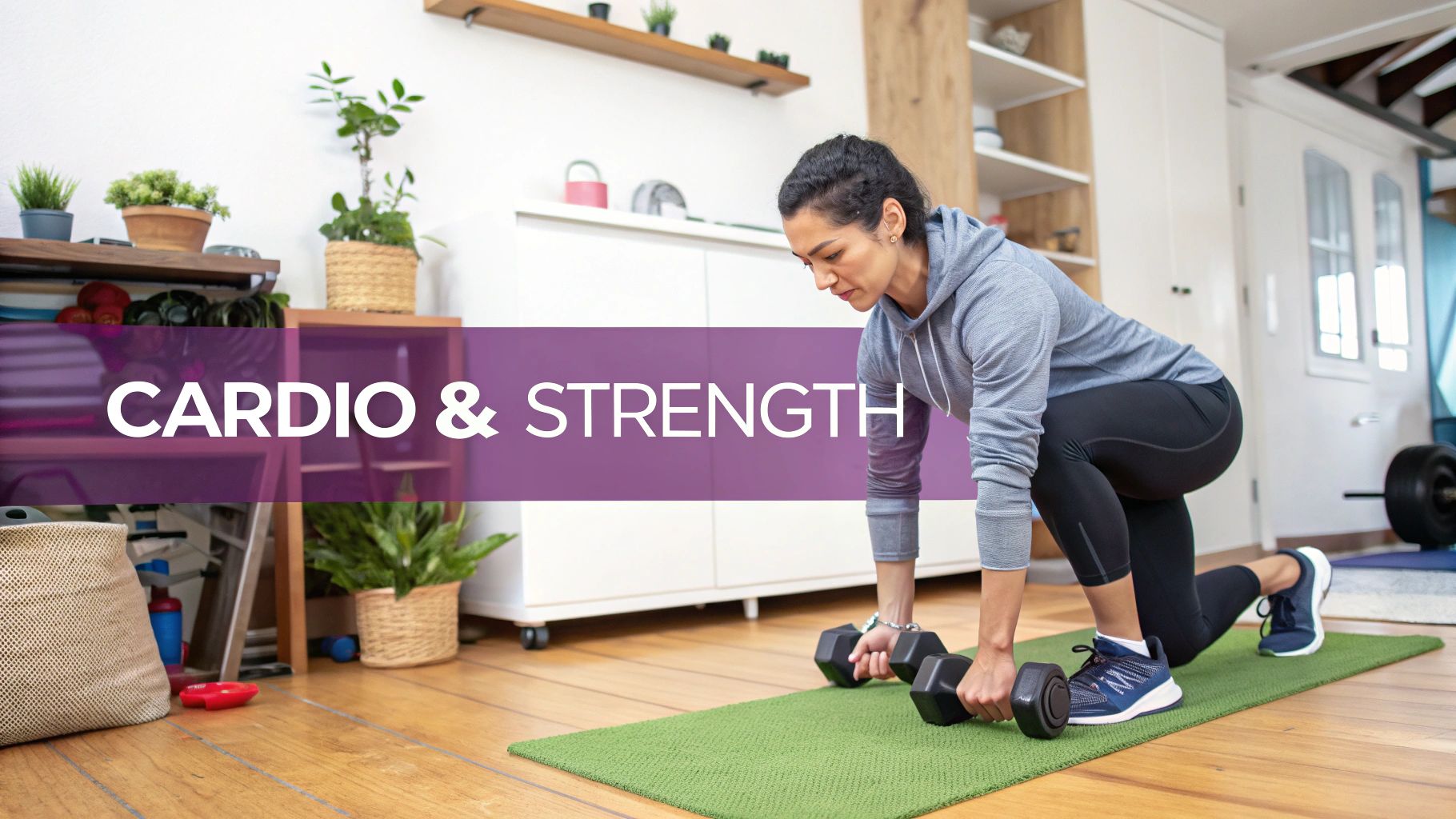
Lasting results come when you combine effective cardio with a solid strength routine.
Let’s dig into how you can master both.
The Power of Smart Cardio
Cardio is anything that gets your heart pumping. The two most effective approaches are High-Intensity Interval Training (HIIT) and steady-state cardio.
HIIT involves short, explosive bursts of effort followed by brief recovery periods. It's incredibly efficient and keeps your metabolism fired up for hours.
Steady-state cardio means maintaining a moderate pace for a longer time, like a 45-minute bike ride. This is great for building endurance.
A great cardio plan uses both. For a powerful routine, check out this "Fat Burning HIIT Cardio Workout" on the Diet & Exercise YouTube channel.
Why Strength Training Is Your Secret Weapon
For long-term weight loss, strength training is more important than cardio. Why? Because it builds muscle.
The more lean muscle you have, the higher your basal metabolic rate (BMR) becomes. Your BMR is the number of calories your body burns just to stay alive.
Gaining muscle forces your body to burn more calories 24/7. It's like upgrading your body’s engine.
To get this mix right, read our guide on how to balance cardio and strength training.
Mastering Foundational Compound Movements
Focus on compound movements to get the most from your workout. These big exercises work multiple muscle groups at once.
Here are three you absolutely need to master:
- Squats: The king of lower-body exercises. They hit your quads, hamstrings, glutes, and core.
- Deadlifts: A total-body powerhouse that strengthens your back, glutes, hamstrings, and core.
- Push-Ups: A classic for building your chest, shoulders, triceps, and core.
Perfect your form before adding weight. Proper form is non-negotiable for safety and results.
Your Best Investment for At-Home Workouts
You don’t need a gym membership to get strong and lean. One of the most practical pieces of equipment is an adjustable dumbbell set.
They are key to progressive overload—gradually increasing the weight to force your muscles to grow stronger.
The Adjustable Dumbbell Set from dietexerciseshop.com is a fantastic tool for your at-home workout plan.
This single set replaces an entire rack of weights, saving space and money. As you get stronger, just turn a dial to add more resistance. This ensures you never stop making progress. It's a tool that truly grows with you.
Fueling Your Body for Fat Loss
You can't out-train a bad diet. Exercise is one half of the weight loss equation, but what you eat is the other, equally important half.
This isn’t about starving yourself. It’s about giving your body the right fuel to burn fat and build lean muscle.
The key is a calorie deficit: you need to burn more calories than you consume.
But you need a smart deficit. Slashing calories too drastically can slow your metabolism and leave you exhausted. To get this balance right, you can dig deeper into our guide on what is a calorie deficit.
Your Macronutrient Blueprint
Look beyond calories and focus on what you're eating: protein, carbs, and fats.
- Protein is for Repair: Protein helps repair muscles after a workout and keeps you feeling full. Think lean chicken, fish, tofu, and beans.
- Carbs are for Energy: Carbs are your body's number one fuel source. Choose complex carbs like oats, brown rice, and sweet potatoes for sustained energy.
- Fats are for Function: Healthy fats are essential for hormone production and nutrient absorption. Get them from avocados, nuts, and olive oil.
Your food is your fuel—choose the premium stuff.
Making It Stick: Practical Tips
Consistency is the real challenge. Meal prepping can be a total game-changer here.
Taking an hour on a Sunday to prep healthy meals means you'll never be caught hungry and reaching for the wrong thing.
Also, don't forget to hydrate! Water is crucial for your metabolism. Keep a water bottle with you all day.
Fueling On the Go
The window right after your workout is when your body is primed to soak up nutrients for recovery. A quick, easy shake can make all the difference.
For those on the move, a Portable Blender from dietexerciseshop.com is a lifesaver.
You can throw in protein powder, fruit, and spinach for a recovery shake in seconds. This ensures your muscles get what they need, wherever you are. This blender simplifies post-workout nutrition, helping you stay consistent with your weight loss workout plan.
Tracking Progress and Staying Motivated
The magic lies in what you do between workouts—how you track your journey and stay motivated.
This is how you turn a temporary effort into a permanent lifestyle change.
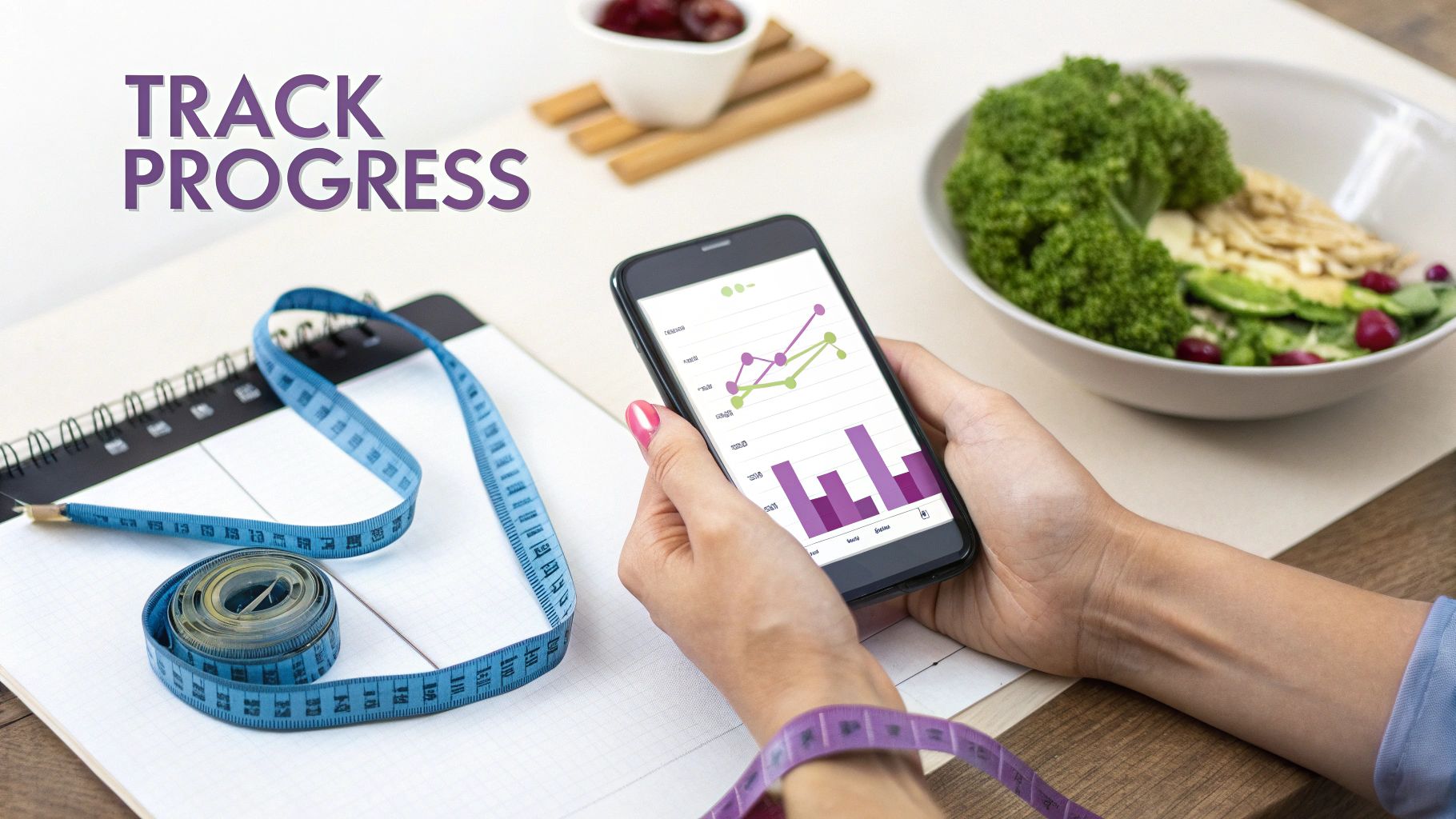
It's time to look beyond the scale. Let's dive into the metrics that truly show success.
Measuring What Truly Matters
The scale can be a liar. To get a real picture of your progress, you need to look at how your body composition is changing.
Here are more meaningful ways to see your transformation:
- Progress Photos: Snap photos every four weeks. You'll be amazed at the changes you see.
- Body Measurements: Track your waist, hips, and thighs. Losing inches is a clear sign of fat loss.
- Performance Gains: Are you lifting heavier? Running longer? This is hard proof you’re getting fitter.
A Smart Body Fat Scale from dietexerciseshop.com provides detailed metrics like body fat percentage and muscle mass. This data is far more insightful than just weight, helping you see the real results of your hard work and keeping you motivated.
Effective Progress Tracking Methods
This table breaks down the best ways to measure your fitness journey.
| Tracking Method | What It Measures | Best Frequency |
|---|---|---|
| Scale Weight | Overall body mass (fat, muscle, water, bone) | 1-2 times per week, same day/time |
| Progress Photos | Visual changes in body shape and composition | Every 4 weeks |
| Body Measurements | Changes in circumference (inches/cm) of key areas | Every 4 weeks |
| Performance Metrics | Strength, endurance, and speed improvements | Every workout/week (log your lifts/times) |
| How Clothes Fit | Changes in body size and shape | Monthly (try on a specific "goal" outfit) |
Using a combination of these methods will give you the most accurate and motivating feedback.
The Critical Role of Smart Recovery
You don’t get stronger during your workout. You get stronger while you recover. Skipping this step is the fastest way to hit a wall.
Sleep is your number one recovery tool. Aim for a solid 7-9 hours of quality sleep each night.
On your rest days, try some active recovery. A light walk or gentle stretching can boost blood flow and speed up repair. For guidance, this "Full Body Stretch" video on the Diet & Exercise YouTube channel is a fantastic resource.
Soothing Sore Muscles and Enhancing Recovery
Muscle soreness is part of the game. It’s a sign that your body is adapting. But you don't have to suffer through it.
A high-quality massage gun can be an absolute game-changer. It gets deep into muscle tissue to break up knots and ease tightness.
The Massage Gun from dietexerciseshop.com gives you deep-tissue relief at home.
Spending just a few minutes on sore spots after a workout can cut down on muscle soreness and improve flexibility. Think of it as an investment in your ability to show up and give 100%, day after day.
Your Top Weight Loss Workout Questions Answered
It's natural to have questions when you start a new workout plan. Let's clear up some of the most common ones.
How Much Cardio Do I Really Need?
A solid baseline is 150 minutes of moderate cardio each week. Think of it as five brisk 30-minute walks.
For significant fat loss, you might need to ramp that up to 200-300 minutes per week.
What Do I Do When the Scale Stops Moving?
The dreaded plateau. It's a sign your body has adapted to your routine. It's time to mix things up.
Try lifting heavier weights with your Adjustable Dumbbell Set, switch your cardio routine, or add an extra workout day.
How Sore Is Too Sore?
A little muscle soreness is a good thing. But you shouldn't be in so much pain that you're dreading your next move.
Listen to your body. Prioritize rest and active recovery, like light stretching. A Massage Gun can also provide targeted relief. For a guided stretch, check out this "Full Body Stretch" on the Diet & Exercise YouTube channel.
Diet or Exercise: Which Is More Important?
They're a team. Both are equally crucial for real, lasting results.
The best workout plan won't get you far without a supportive diet. Using a Portable Blender for post-workout shakes is an easy way to ensure your body gets the nutrients it needs to recover and build muscle.
A balanced approach is key. It shows a massive shift towards integrating smart workouts with mindful eating.
At Diet and Exercise, we're all about making your fitness journey as smooth and effective as possible. To help you recover faster and stay on track, take a look at our collection of high-quality fitness gear at https://dietexerciseshop.com.