

What Is The Glycemic Index and How Does It Affect You
Let's cut through the noise and talk about the glycemic index in a way that actually makes sense. Forget the complicated science for a moment. Just think of the glycemic index (GI) as a ranking system for your food, specifically for carbs.
It’s a simple 0-to-100 scale that tells you how quickly a particular food will cause your blood sugar to rise after you eat it.
Getting a handle on this one concept can be a game-changer for controlling your energy, keeping hunger at bay, and making food choices that genuinely support your health.
Your Guide To The Glycemic Index
Ever had a big lunch and felt a crazy burst of energy, only to find yourself wanting a nap an hour later? That classic "crash" is directly tied to your blood sugar, and it's exactly what the glycemic index helps explain.
It’s the key to understanding why some foods provide a slow, steady burn of fuel while others send you on a rollercoaster of highs and lows.
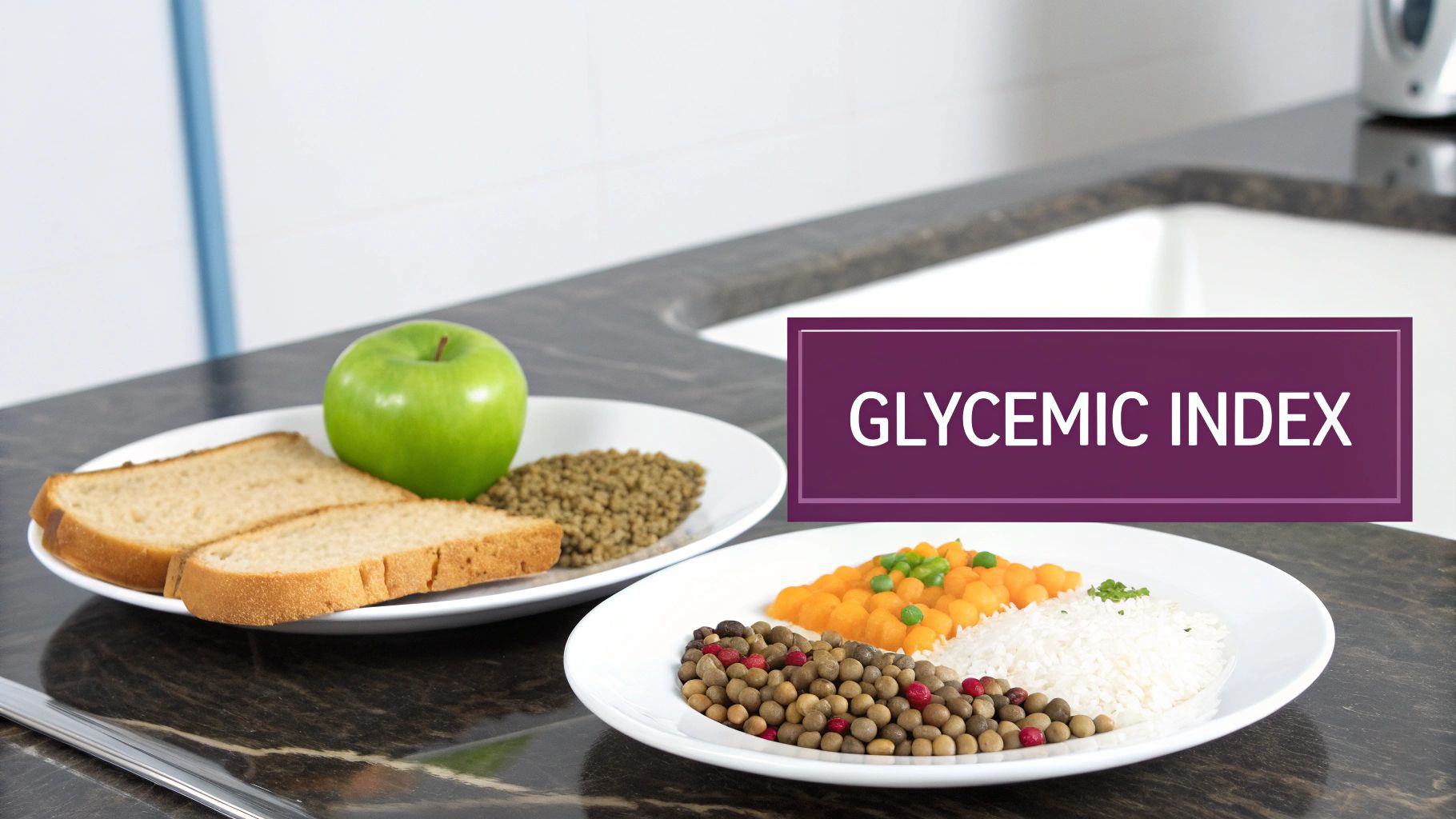
Here’s a helpful analogy: think of your body’s energy like a campfire. High-GI foods are like tossing dry leaves and twigs onto the flame. You get a big, immediate flare-up, but it burns out almost instantly. This is that familiar sugar rush you get from things like white bread, candy, or a sugary soda.
Low-GI foods, on the other hand, are the solid logs you put on the fire. They catch slowly and provide a steady, consistent heat that lasts for hours. This is the kind of sustained energy you get from foods like rolled oats, beans, and most vegetables.
Where Did The Glycemic Index Come From?
This isn't some new-age diet fad; the GI is rooted in solid scientific research. The concept was first introduced back in 1981 by Dr. David J. Jenkins and his research team. They were looking for a better way to classify carbohydrates for people with diabetes.
They developed a standardized scale from 0 to 100, using pure glucose as the benchmark at 100. This allowed them to measure and compare how different carb-containing foods affected blood sugar over a two-hour window. If you're curious about the specifics, you can dig into the history of the glycemic index.
This scale gave us a powerful framework for understanding how food impacts our bodies. It’s an incredibly useful tool, whether you're an athlete fine-tuning performance, someone trying to manage their weight, or just looking to feel better day-to-day.
By leaning towards lower-GI foods, you gain better control over your blood sugar, which is a fundamental part of combining diet and exercise for real results.
At its core, the GI is a measure of carbohydrate quality. It’s a sneak peek into how your body is going to respond, helping you predict your energy levels and stay ahead of hunger pangs.
Making smarter choices doesn't require a total diet overhaul. It often just comes down to a few simple swaps and a better feel for how your body uses fuel. For those committed to an active lifestyle, a bit of motivation helps. The Original Diet & Exercise Shirt is a great reminder of that commitment, comfortable enough for the gym or just everyday life.
How The Glycemic Index Scale Works
So, how exactly does a carrot get a GI score of 35 and a slice of white bread get a 75? It's not magic, but a carefully controlled scientific process that gives us a fascinating window into how our bodies handle carbohydrates.
Think of it like a standardized test for food. Researchers gather a group of people and give them a portion of a specific food containing exactly 50 grams of usable carbs. Everything is measured against a benchmark: pure glucose, which is assigned the highest possible score of 100.
Measuring The Blood Sugar Response
Once the test food is eaten, the real work begins. Over the next two hours, scientists track what happens to the participants' blood sugar levels. They take blood samples at set intervals to map out exactly how high and how fast the blood sugar rises, and then how it falls.
This data creates a curve. Does the curve look like a steep mountain, shooting up quickly and then crashing down? Or is it more like a gentle, rolling hill? A food that breaks down fast floods the bloodstream with sugar, creating that sharp peak.
That visual says it all. The high-GI food gives you that notorious sugar rush and the inevitable crash that follows. On the other hand, the low-GI food provides a much more stable, sustained release of energy.
Calculating The Final GI Score
To get the final number, the blood sugar response curve from the test food is compared to the curve from pure glucose. The result is surprisingly simple.
The GI score is basically a percentage. If a food has a GI of 60, it means it raises your blood sugar 60% as much as pure glucose does over that same two-hour window.
This single number gives us a powerful snapshot of how a food will impact our energy levels. It’s a crucial reminder that not all carbs are created equal. To get the full picture of how different nutrients work, you can explore our guide on what macronutrients and micronutrients are and their roles in your body.
When you understand these concepts, you can build meals that fuel you properly. For a little daily motivation, our Diet & Exercise Mug is the perfect companion for a healthy breakfast or pre-workout drink. It's a great reminder of your goals every time you take a sip. This whole approach is about empowering you to make choices that lead to stable energy, better appetite control, and long-term health.
Navigating High, Low, and Medium GI Foods
Knowing the theory behind the glycemic index is a great start, but the real power comes from applying it to the food on your plate. Foods are typically sorted into three buckets based on their GI score, which helps you predict how they'll affect your blood sugar.
Picking from the right bucket can make a world of difference in how you feel all day long. The scale itself is pretty simple: Low GI foods score 55 or less, Medium GI foods are in the 56-69 range, and High GI foods clock in at 70 or higher.
This system helps you build meals that deliver steady, sustained energy instead of a jarring blood sugar rollercoaster. This graph shows that difference perfectly—a sharp, quick spike from high-GI foods versus a gentle, rolling hill from low-GI ones.
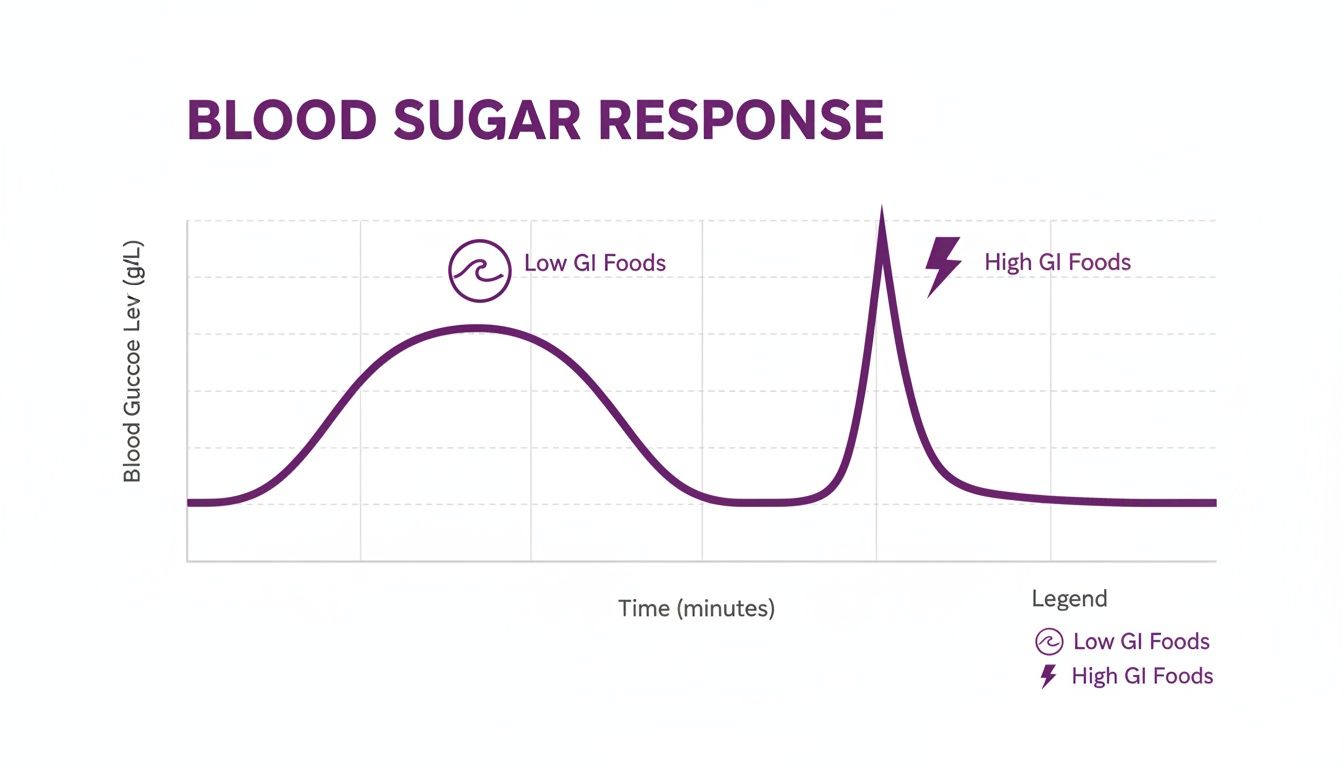
As you can see, sticking with foods that create that gentle curve is key to avoiding the dreaded energy crash that often follows a high-GI meal. It’s a powerful visual reminder of how your food choices directly manage your body’s energy.
Your Quick Glycemic Index Food Guide
To help you get a feel for these categories, here’s a simple reference guide to common foods and their GI ratings. Think of it as a cheat sheet for making smarter, more balanced choices on the fly.
| Low GI (55 or less) | Medium GI (56-69) | High GI (70 or more) |
|---|---|---|
| Rolled Oats | Whole-wheat Bread | White Bread |
| Lentils & Chickpeas | Brown Rice | White Rice |
| Apples & Berries | Sweet Potatoes | Baked Russet Potato |
| Carrots | Popcorn | Rice Cakes |
| Whole-wheat Pasta | Honey | Most Breakfast Cereals |
| Greek Yogurt | Couscous | Doughnuts & Pastries |
Seeing these foods side-by-side makes it easy to spot simple swaps. For a deeper dive into how these foods are categorized, especially the carbs, it’s worth spending some time understanding complex carbohydrates and how they work in your body.
What Makes a Food High or Low GI?
So, why does an apple have a lower GI than a baked potato? It’s not random. Several key factors determine where a food lands on the scale.
- Fiber: Foods high in fiber slow everything down. This leads to a much slower, more gradual release of sugar.
- Protein and Fat: When you eat carbs alongside protein or healthy fats, it slows the rate at which your stomach empties.
- Starch Structure: Some starches are naturally more resistant to digestion, like the starch in pasta.
- Cooking Method: Pasta cooked al dente (still firm) has a lower GI than pasta cooked until it’s soft and mushy.
Keeping these factors in mind lets you look at your plate with a new perspective—not just counting calories, but considering the quality of your energy. It’s not about fearing carbs; it’s about choosing smarter ones and pairing them intelligently to fuel your body and your workouts.
Why The Glycemic Index Is Key For Your Health Goals
Connecting the glycemic index to your health goals is where the real power lies. Shifting to a lower-GI way of eating is a huge step toward better metabolic health and stable blood sugar.
Choosing foods that cause a slow, gentle rise in blood glucose helps avoid dramatic spikes that tax your body’s insulin response. The result? More stable energy and a healthier system overall.
Taming Cravings and Managing Weight
The glycemic index is an incredible tool for managing weight. High-GI foods can set off a nasty cycle: a quick energy surge followed by a dramatic crash. That crash often leaves you feeling drained and craving more sugar, which can easily lead to overeating.
Low-GI meals deliver a steady stream of energy. This helps you feel fuller for much longer, which is key to reining in intense cravings. When your energy is stable, you’re in a much better position to make smart choices.
The steady energy from low-GI foods doesn't just support your body; it also boosts your mental clarity and mood all day long. It's all about creating a balanced internal environment where you feel more in control.
Pairing a low-GI diet with regular exercise creates a powerful one-two punch for hitting your fitness goals. The stable energy from your food provides the fuel you need for great workouts, and the exercise itself makes your body more sensitive to insulin.
The Impact on Long-Term Metabolic Health
Making small, consistent swaps to lower the glycemic impact of your meals can add up to major long-term wins for your metabolic health. This isn't about a single perfect meal; it’s about the cumulative effect of a smarter eating pattern.
Studies show that low-GI diets can improve key markers of long-term blood sugar control, fasting glucose, and LDL cholesterol. These benefits highlight how the GI can be a practical guide for building a healthier life.
The principles are refreshingly simple:
- Prioritize whole foods: Build your meals around vegetables, fruits, legumes, and intact whole grains.
- Balance your plate: Always pair carbohydrates with protein and healthy fats to slow down sugar absorption.
- Watch your portions: Remember, even low-GI foods will raise your blood sugar if you eat too much.
Ultimately, understanding the glycemic index gives you a practical framework for improving metabolic health and managing diabetes. Think of it not as a restrictive diet, but as a flexible set of guidelines to help you build a sustainable, healthy relationship with food.
Practical Ways to Start a Low-GI Lifestyle
Putting the glycemic index into practice is much easier than it sounds. Embracing a low-GI lifestyle is about making smarter choices, simple swaps, and learning how to build a better plate of food.
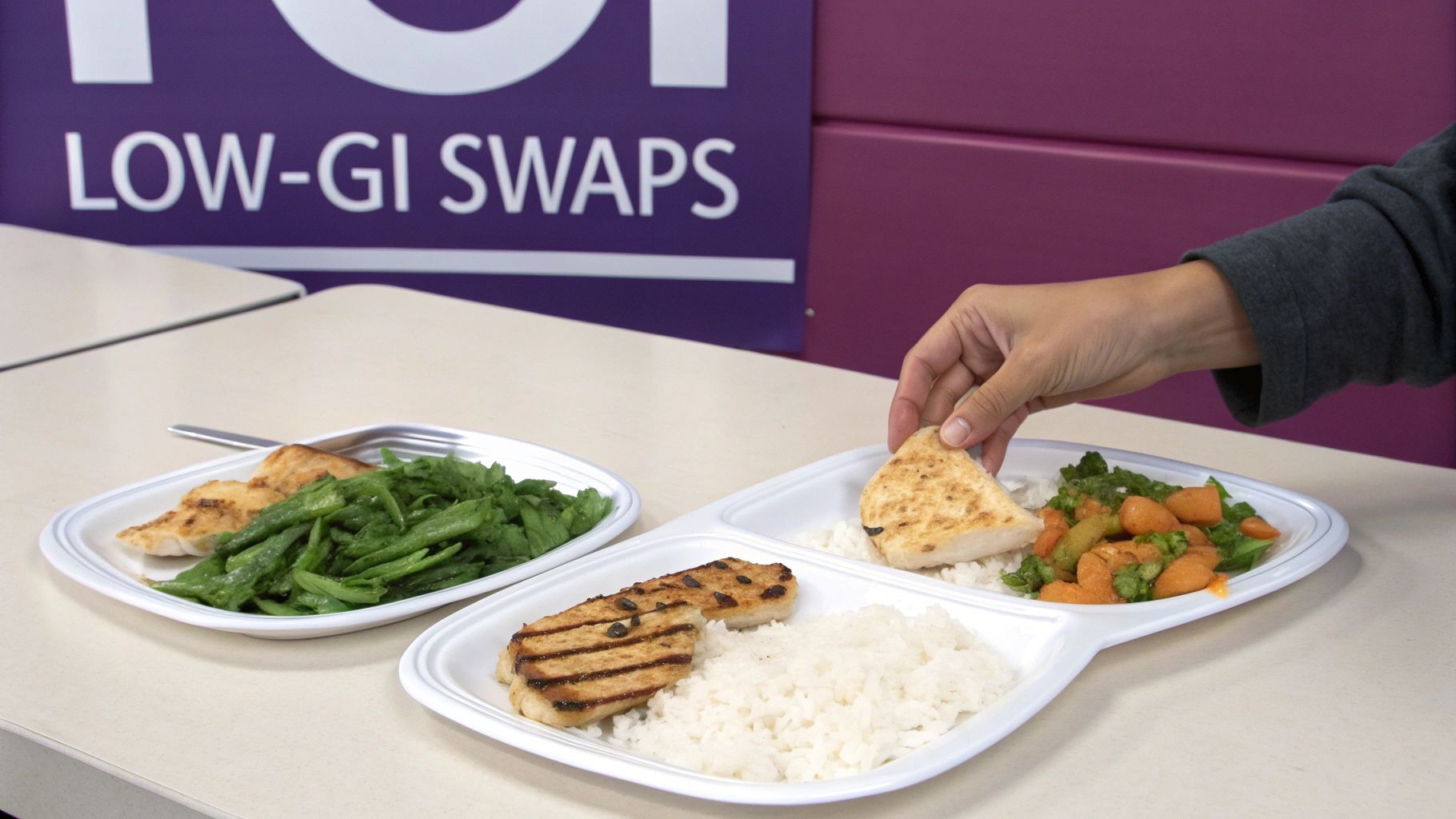
The idea is to gently shift the balance of your meals toward foods that give you steady, sustained energy. This approach helps keep your blood sugar in check, leaves you feeling fuller for longer, and supports your fitness goals.
Making Simple, Effective Food Swaps
One of the easiest entry points is simply swapping out a high-GI food for a lower-GI one. You don't have to give up your favorite food groups; you just choose a smarter version.
Here are a few common swaps to get you started:
- Instead of white rice, try basmati or brown rice.
- Instead of a baked russet potato, go for a sweet potato or boiled new potatoes.
- Instead of cornflakes for breakfast, make the switch to steel-cut or rolled oats.
- Instead of white bread, choose a hearty whole-grain or sourdough loaf.
These swaps work because the lower-GI options almost always have more fiber. That fiber acts like a speed bump for digestion, slowing down how quickly sugar hits your bloodstream.
The Power of Food Combinations
It’s not just which carb you eat, but what you eat it with. You can dramatically lower the glycemic impact of a meal by being strategic with your food pairings. Think of protein, healthy fats, and fiber as the "brakes" for your carbohydrates.
When you add these to a meal, they slow down how quickly your stomach empties. That means the sugar from the carbs gets released much more gradually, preventing those nasty energy spikes and crashes.
For instance, a plain rice cake (high GI) on its own will send your blood sugar soaring. But top that same rice cake with a smear of avocado (healthy fat and fiber) or a slice of turkey (protein), and you've suddenly created a balanced snack with a much gentler glycemic effect.
The key takeaway is that we rarely eat carbs all by themselves. By building balanced meals, you can enjoy a wider variety of foods while keeping your blood sugar stable and your energy levels consistent.
Building a Balanced, Low-GI Plate
So, how does this look in your day-to-day life? Think about building your plate in a way that naturally balances out the GI. This is especially critical for anyone serious about their fitness, particularly when it comes to pre- and post-workout meals.
Let's take your post-workout recovery snack as a perfect example. After a tough session, your body is screaming for carbs to replenish its energy stores and protein to repair muscle. A banana is a great choice for quick carbs, but its higher GI can lead to that all-too-familiar sugar rush and subsequent crash.
This is where a smart combination changes everything. Pairing that banana with a scoop of high-quality protein powder completely alters its effect. The protein provides the essential amino acids your muscles need to repair and grow, and it also puts the brakes on how fast the banana's sugar is absorbed.
The result is an ideal recovery fuel that restores your energy without the crash. It's a fantastic illustration of how a little knowledge of the glycemic index can supercharge your diet and exercise results.
To take this a step further, getting comfortable with food labels is a game-changer. Our detailed guide on how to read nutrition labels can help you make even more informed choices at the grocery store. This knowledge empowers you to build meals that perfectly align with your health and fitness goals.
Answering Your Questions About The Glycemic Index
As you start to get the hang of using the glycemic index, it's totally normal for questions to bubble up. This last section is all about tackling those common queries and clearing up any lingering confusion.
My goal here is to give you simple, direct answers so you can sidestep common pitfalls and put these ideas to work. By the end, you’ll have a much clearer picture of how the glycemic index fits into a healthy, balanced lifestyle.
Does Glycemic Index Mean The Same Thing As Glycemic Load?
No, they're different but related. Think of it like this: if the Glycemic Index (GI) is the speed of a car, the Glycemic Load (GL) is the total distance it travels.
The GI just tells you how fast a particular carb-containing food makes your blood sugar rise. The GL, on the other hand, gives you the full story by factoring in both the speed (GI) and the actual amount of carbs in a normal serving size.
Watermelon is the classic example here. It has a high GI of around 72, which sounds bad on the surface. But a typical slice of watermelon is mostly water and actually has very few carbs. Because of this, its Glycemic Load is super low. The GL gives you a much more realistic, real-world idea of how a food will actually impact your blood sugar.
Is A Low-GI Diet The Best Choice For Everyone?
Not necessarily. While eating low-GI foods is a fantastic strategy for most people—especially if you're trying to manage blood sugar, sustain your energy, or control your weight—it's not a universal rule for every single situation. Context is everything.
An endurance athlete, for example, might intentionally grab high-GI foods. After a long race or a brutal workout, they need those quick-acting carbs to rapidly restock their muscle glycogen. In that scenario, a high-GI snack isn't a mistake; it's a strategic recovery tool.
The Glycemic Index is best used as a flexible guide, not a rigid set of dietary laws. It's one powerful tool among many for building a balanced plate that aligns with your specific health needs and fitness objectives.
On top of that, some incredibly healthy foods, like certain root vegetables or tropical fruits, just naturally have a medium-to-high GI. The key isn't to cut them out entirely. It's about being smart and pairing them with protein, healthy fats, and fiber to soften their effect on your blood sugar.
How Does Cooking Or Ripeness Change A Food's GI?
The GI number you see in a chart is really just an average. In the real world, how you prepare a food—and even how ripe it is—can dramatically change its score.
Here are a few things that can move the needle:
- Cooking Time: Pasta cooked al dente (still firm) has a lower GI than pasta that's been boiled until it's soft and mushy. The longer cooking process breaks down the starches, making them way easier for your body to digest quickly.
- Ripeness: Think about a banana. A slightly green, under-ripe banana is full of resistant starch and has a much lower GI. As it ripens and turns bright yellow, those starches convert into simple sugars, causing its GI to climb.
- Physical Form: The more processed a food is, the higher its GI usually is. A whole baked potato has a lower GI than mashed potatoes because the mashing process smashes the potato's cellular structure, making the starches instantly available. The same goes for whole fruit versus fruit juice.
Can I Still Eat High-GI Foods?
Absolutely! A healthy, sustainable diet is built on balance and inclusion, not strict elimination. You can definitely enjoy high-GI foods as part of a well-rounded diet—the trick is how you eat them.
The single best strategy is to combine high-GI foods with low-GI foods, lean protein, and healthy fats. This simple combination is the secret to blunting a big blood sugar spike.
For instance, if you're having a slice of white bread (high GI), don't eat it by itself. Slather it with avocado for healthy fat and fiber, or top it with some grilled chicken or a hard-boiled egg for protein. These additions dramatically slow down digestion and the absorption of sugar from the bread, leading to a much more stable blood sugar response. To see this in action, check out this video on meal prep ideas from the Diet & Exercise channel, which does a great job of showing how to build these kinds of balanced meals.
It’s never about demonizing foods. It's about being smarter with your food combinations to support your energy and health goals.
At Diet & Exercise, we believe that knowledge is the first step toward a healthier lifestyle. The right gear can also keep you motivated on your journey. Check out our collection of comfortable and inspiring apparel and accessories, like our classic Diet & Exercise Mug, perfect for starting your day right.