

What to Eat When Working Out: The Ultimate Fueling Guide
To get the most out of your workouts, what you eat—and when you eat it—matters. A lot. The secret isn't complicated: think easily digestible carbs before you train for fuel, stay hydrated while you're moving, and then follow up with a mix of protein and carbs to repair and refuel your body.
That’s the core strategy. Nail this timing, and you're setting yourself up for better performance and faster results.
Your Quick Guide to Workout Nutrition
Figuring out what to eat around your workouts can feel complex, but the best way to think about it is as targeted fuel. The food you eat beforehand is all about preparing your body for the stress to come. What you consume after is purely for recovery and rebuilding.
Timing is the other half of the equation. Eating the right things at the right time gives your muscles the immediate energy they need to push hard and the essential building blocks they need to repair and grow stronger. This simple approach helps you make every rep, step, and set count.
Let’s break it down into three simple phases: before, during, and after your workout.
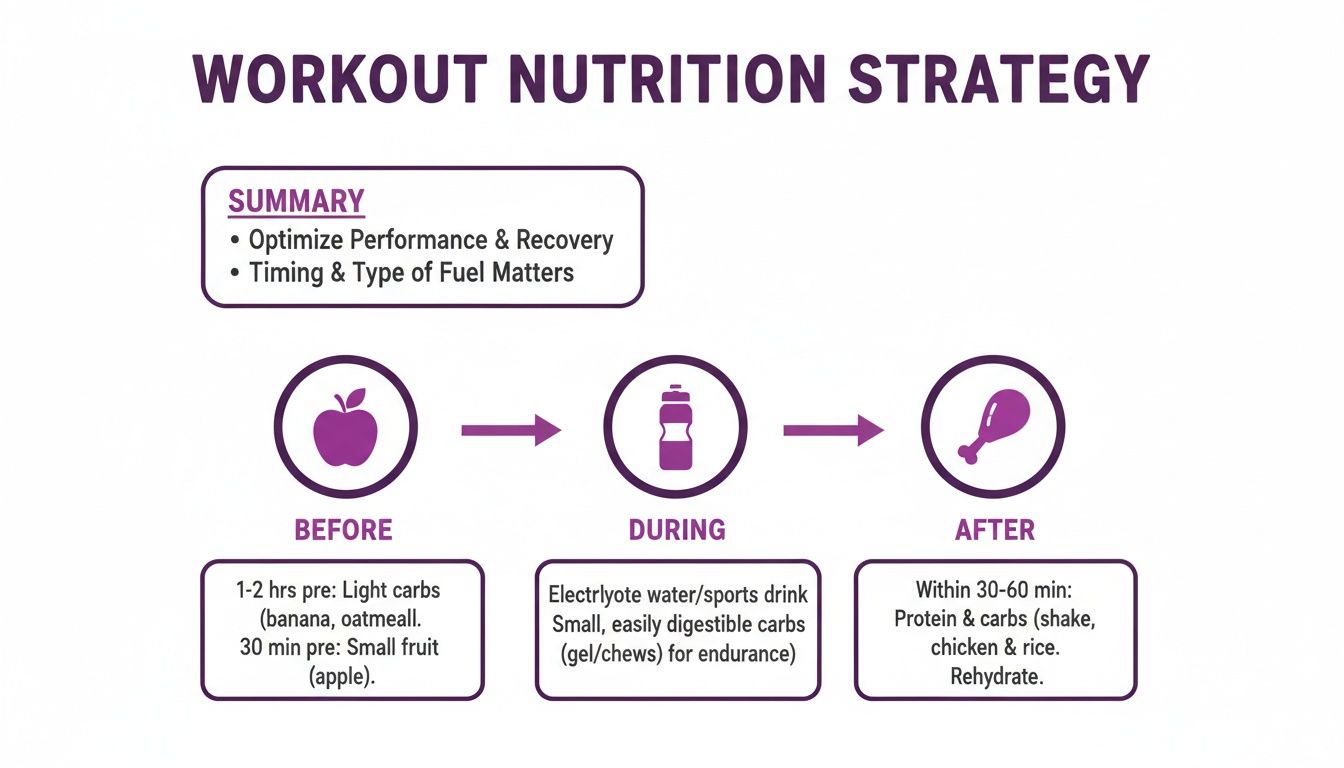
This flowchart gives you a great visual for how to approach your nutrition strategy. It’s all about carbs for energy before, hydration during, and a protein-carb combo for recovery after. For those pushing their limits in endurance sports, this comprehensive triathlon nutrition guide dives even deeper into fueling for extreme performance.
Workout Nutrition Timing What to Eat and When
To make this crystal clear, let's map out the "what," "when," and "why" for each workout phase. This framework will help you build a solid nutritional foundation that truly supports your goals, whether you're trying to build muscle, lose fat, or just go the distance.
The table below is your go-to cheat sheet for workout nutrition.
| Phase | When to Eat | What to Eat (Examples) | Why It's Important |
|---|---|---|---|
| Before Workout | 30-60 minutes before | Banana, oatmeal, small piece of fruit | Tops off your energy (glycogen) stores so you can perform your best from the start. |
| During Workout | For sessions over 60 minutes | Water, electrolyte drink, sports gel | Keeps you hydrated and provides a quick shot of energy to prevent hitting a wall. |
| After Workout | Within 30-60 minutes | Protein shake, Greek yogurt, chicken & rice | Kicks off muscle repair and replenishes the energy you just burned through. |
Remember, consistency is everything. One perfect meal won't change your body overnight, but applying these principles day in and day out will. Over time, making these smart choices around your training will become second nature.
Understanding Your Body's Fuel System
Let's think of your body as a high-performance engine. Just like a finely tuned car needs the right kind of fuel to run at its peak, your body needs specific nutrients to power through a workout and recover properly. The big three you need to know are the macronutrients: carbohydrates, proteins, and fats.
Figuring out what to eat when you’re working out really starts with understanding how these three key players work together. Each one has a critical job to do before, during, and after you train. Nailing this balance is the bedrock of any successful fitness plan.

Carbohydrates: The High-Octane Fuel
Carbohydrates are your body’s go-to, most efficient energy source. When you eat them, your body converts them into glucose, which then gets stored in your muscles and liver as glycogen. This glycogen is the high-octane fuel your muscles immediately pull from during exercise, especially when you’re going hard.
Imagine trying to start a race with an empty tank—you wouldn't get very far. It's the exact same principle for your body. Eating carbs before a workout ensures your glycogen stores are full, giving you the energy to push harder and last longer.
"Post-exercise fuel that contains carbohydrates can stabilize blood sugars and restock liver and muscle glycogen for the next workout. This is especially critical if you’re doing two workouts in one day."
This is precisely why you see marathon runners and other athletes loading up on carbs before a big event. It’s a tried-and-true strategy to maximize available energy and keep fatigue at bay. Skimp on carbs, and you'll likely feel sluggish, weak, and unable to perform your best.
Protein: The Expert Repair Crew
If carbs are the fuel, think of protein as the expert repair crew. When you exercise, especially with weights, you create tiny micro-tears in your muscle fibers. Don't worry, this is a good thing! It’s the signal your body needs to rebuild those muscles even stronger.
To do that rebuilding, your body needs amino acids, which are the fundamental building blocks of protein. Eating enough protein after a workout gives your body the raw materials it needs to repair that muscle damage, ease soreness, and kickstart new muscle growth. This entire process is known as muscle protein synthesis.
Without enough protein in your corner, your body’s ability to recover and adapt is seriously handicapped. This can stall your progress and even put you at a higher risk for injury. A quality protein source after your workout isn't just a good idea—it's non-negotiable. Our Rapid Recovery Whey Protein is designed for exactly this purpose, delivering high-quality protein to kickstart repair.
Fats: The Long-Range Fuel Tank
Fats often get a bad rap, but they’re an incredibly important part of a healthy diet and a surprisingly powerful energy source. Think of fats as your body’s long-range fuel tank. While carbs provide that quick burst of energy, fats offer a slow-burning, sustained fuel that’s perfect for lower-intensity and endurance activities.
Your body starts tapping into fat for energy during longer sessions, like a long, steady run or bike ride, once it’s burned through a good chunk of your glycogen stores. But healthy fats do so much more than that, from hormone production to nutrient absorption.
Getting a handle on these three macronutrients is the first step toward building a nutrition plan that truly works for you. To see the whole picture, check out our guide on what macronutrients and micronutrients are. It’s also important to support your body's internal systems, and learning about natural probiotics for optimal health can show you how a healthy gut leads to a much more efficient fuel system.
How to Fuel Up for Peak Performance
What you eat before you train can make or break your workout. Think of it like this: you wouldn't start a road trip on an empty tank of gas, right? The same logic applies to your body. Nailing your pre-workout nutrition gives you the energy to push harder, lift heavier, and go the distance.
Fueling up beforehand isn't just about staving off hunger pangs. It’s a strategic play to top off your energy reserves, protect your muscle from breaking down, and get your head in the game for the session ahead. A smart pre-workout meal is often the secret ingredient separating a killer workout from a mediocre one.
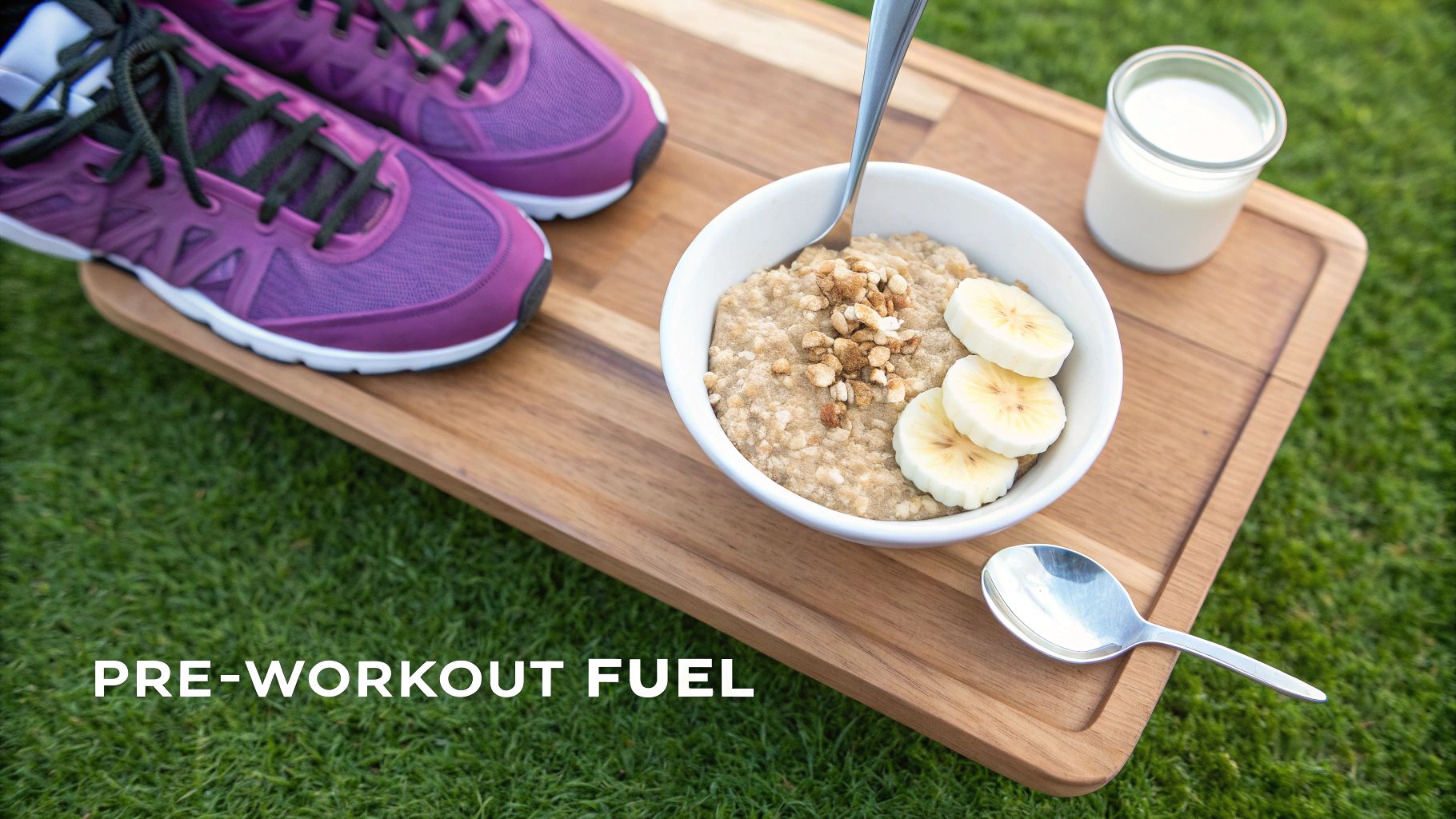
Timing and Macronutrients for Pre-Workout Success
When it comes to pre-workout fuel, two nutrients are king: carbohydrates and protein. Carbs are your body's go-to energy source, breaking down into the glycogen your muscles need to fire on all cylinders. A bit of protein before you start helps shield those muscles from wear and tear during your workout.
Just as important as what you eat is when you eat it. The goal is simple: give your body enough time to digest everything so the energy is ready to use, but not so long that you're running on fumes. You definitely don't want to feel full and sluggish when you're trying to hit a personal best.
As a rule of thumb, have a complete meal 2-3 hours before you work out. If you're pressed for time, a smaller, easy-to-digest snack 30-60 minutes beforehand works perfectly.
This window gives your body the chance to absorb the nutrients and maximize its glycogen stores. One quick tip: keep fats and fiber low in this pre-workout window. While they're great for your overall diet, they slow digestion and can cause stomach cramps mid-session.
The Ultimate Convenience with Our Pre-Workout Mix
Life gets busy. For those days you're racing from the office to the gym or just want a surefire way to boost your performance, a pre-workout supplement is a game-changer. It takes out all the guesswork.
Our Energy Boosting Pre-Workout Mix was developed to give you that exact edge. It’s a scientifically backed blend of fast-acting carbs for that initial energy kick, plus key ingredients to sharpen your focus and build endurance, all without feeling heavy like a full meal.
This mix is for anyone serious about getting the most out of their training. It’s designed to deliver sustained energy without the post-workout crash, helping you push your limits and see results faster. Just mix it with water about 30 minutes before your session for a powerful and incredibly convenient start.
Refueling During Intense or Long Workouts
For a typical gym session that clocks in under an hour, plain old water is usually all you need to worry about. But what happens when you start pushing past that 60-minute mark? Or when the intensity really ramps up? That's when you need to refuel.
During long, tough exercise, you start to torch through your stored muscle glycogen. To keep from hitting that dreaded "wall" where your energy completely craters, you need to give your body a steady drip of easy-to-use fuel.
Why Mid-Workout Fueling Matters
Picture yourself deep into a marathon or a grueling leg day. Your body is firing on all cylinders, and to keep performing at your peak, you have to keep the energy coming. This is where intra-workout nutrition becomes a game-changer for maintaining performance and staving off fatigue.
Refueling mid-session isn't about sitting down for a meal. It’s about strategically giving your body quick, simple energy. The entire goal is to get nutrients that absorb fast without causing any digestive drama, making sure your muscles get what they need without pulling resources away to your stomach.
What to Eat During Your Workout
The best fuel sources during a workout are simple, easily digestible carbohydrates. Think of them as your fast-acting energy shots that get into your bloodstream quickly to power your moving muscles. You'll want to steer clear of protein, fat, and fiber during this window.
The science is pretty clear: timing your carbs during exercise really matters. For endurance activities lasting longer than 90 minutes, taking in 30–60 grams of carbohydrates per hour can seriously boost performance and delay exhaustion. The global sports nutrition market continues to grow as more athletes catch on.
For a great way to stay energized, check out our Diet & Exercise YouTube video on how to make a simple and effective DIY electrolyte sports drink—it’s the perfect recipe to fuel your longest, toughest sessions.
Mastering Post-Workout Recovery and Growth
Your workout doesn’t really end with that final rep. In many ways, what you do after you train is just as crucial as the workout itself. This is the all-important recovery phase, where your body gets to work repairing the muscle damage you just created and building you back stronger.
Smart post-workout nutrition is how you dispatch the expert crew and the high-quality supplies needed to get the job done right.
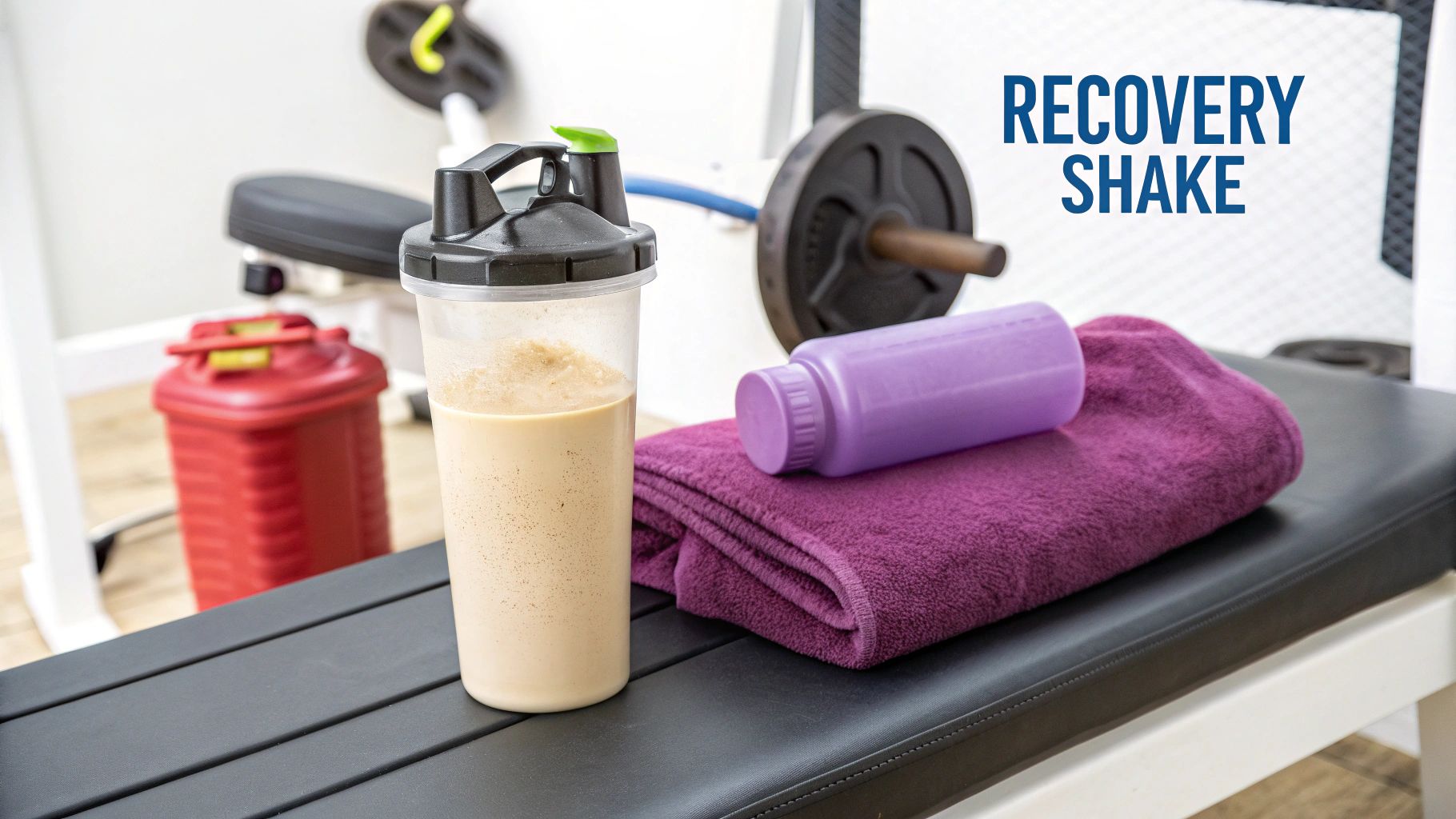
The Critical Window for Recovery
Right after you exercise, your muscles are incredibly receptive to nutrients. This period, often called the “anabolic window,” is prime time for refueling. Your body is practically begging for carbohydrates to restock its energy stores and protein to kickstart the muscle repair process.
Eating a smart mix of protein and carbs within an hour or two post-workout helps your body flip the switch from a state of muscle breakdown to one of rebuilding.
This immediate refueling doesn’t just help you build muscle and get stronger. It also helps dial down muscle soreness, getting you back in the gym and ready for your next session that much sooner. For a deeper dive into food choices, check out our guide on the best post-workout recovery foods.
Your Ultimate Post-Workout Solution
For pure convenience and powerful results, it’s hard to beat a quality whey protein shake. Our Rapid Recovery Whey Protein is specifically formulated to meet your body's post-workout demands, delivering a potent dose of fast-absorbing protein and essential amino acids right when your muscles are crying out for them.
This isn’t just another protein powder. We designed it to speed up recovery, reduce next-day soreness, and support real, lean muscle growth. Because it's absorbed so quickly, it gets crucial nutrients to your muscles faster than whole foods can. It’s the perfect tool for that critical recovery window.
Mixing a scoop of our Rapid Recovery Whey Protein with water or milk is the easiest and most effective way to refuel. But if you want to take it a step further, blend it into a delicious recovery shake for an even bigger nutritional impact.
Don't Forget to Drink: Hydration's Huge Role in Your Performance
We talk a lot about food, but proper nutrition is more than just what you chew. Hydration is the unsung hero of any good fitness plan. Think of your body as a finely tuned engine—water is the coolant. It regulates your temperature, shuttles nutrients to your muscles, and keeps your joints moving smoothly.
Even a little bit of dehydration can tank your workout. Your strength, your stamina, even your focus can plummet when your fluid levels are off. It's one of the most common—and thankfully, most fixable—reasons for a bad day at the gym.
The trick is to stay ahead of your thirst. By the time you feel thirsty, you're already playing catch-up. A proactive approach to hydration means your body is running optimally from the first rep to the last stretch.
How to Spot Dehydration Before It Hits You
Long before you feel like you’re crawling through a desert, your body sends out subtle signals that it needs more water. Learning to read these signs is a game-changer for anyone who’s active, letting you top up your tank before your performance truly suffers.
Keep an eye out for these early warnings:
- Obvious Thirst: If you're thirsty, your body is already telling you it’s behind.
- Dry Mouth: That sticky, cotton-mouth feeling is a classic sign you need to grab your water bottle.
- Feeling Off: If you suddenly feel tired, dizzy, or can't seem to focus, dehydration could be the culprit.
- The Pee Test: A quick glance at the toilet bowl tells you a lot. Your urine should be a pale, lemonade-like yellow. If it's dark, it's time to drink up.
The science is clear on this. Losing even 2% of your body weight through sweat can lead to a noticeable drop in both endurance and cognitive function. It’s why nailing your hydration is a fundamental part of figuring out what to eat when working out. This simple factor has a massive impact on the entire global sports nutrition market.
Supercharge Your Water with Electrolytes
When you sweat, you lose more than just water. You’re also losing crucial minerals called electrolytes, like sodium and potassium. These little guys are vital for keeping your nerves firing and your muscles contracting properly. For long workouts (over an hour) or training in the heat, plain water sometimes isn't enough.
That’s where our Hydro-Charge Electrolyte Tablets come in handy. They’re designed to dissolve right in your water bottle, giving you a quick and easy way to replace the essential minerals you sweat out. This simple addition can help you fight off muscle cramps, stay energized, and maintain your peak performance.
Just drop a tablet into your water to instantly upgrade your hydration. It’s a no-brainer for making sure your body has everything it needs to crush your workout, every single time.
Your Top Workout Nutrition Questions Answered
When you get serious about training, the questions start popping up. It's one thing to have a general plan, but what about those little details? Should you eat before that 5 AM alarm? Is a protein shake really the magic bullet everyone claims it is?
Let's cut through the noise. Getting these details dialed in is what turns good effort into great results. Here are the straight-up answers to some of the most common questions we hear.

Do I Really Need to Eat Before a Morning Workout?
Ah, the age-old dilemma for the early bird. The honest answer? It depends entirely on what you’re about to do.
If you’re heading out for a light walk or a gentle yoga session, you’ll probably feel just fine working out on an empty stomach. Your body has enough in the tank to handle that kind of low-intensity effort.
But if you’ve got a tough cardio session or a heavy lifting day planned, a small snack is a game-changer. Grabbing something simple like a banana 30-60 minutes beforehand gives your system a quick hit of easily accessible energy. For ultimate convenience, our Energy Boosting Pre-Workout Mix provides a perfectly balanced fuel source without the need for meal prep.
Is a Protein Shake Better Than Real Food Post-Workout?
Not necessarily "better," but definitely faster. After a tough workout, the name of the game is speed—getting protein and carbs to your muscles quickly to start the recovery process. A high-quality protein shake, like our Rapid Recovery Whey Protein, is designed for rapid absorption, making it an incredibly efficient choice.
That said, a whole-food meal like grilled chicken with rice or a bowl of Greek yogurt and berries does the exact same job. The real secret weapon here isn't the shake or the food; it's consistency. Pick the option you know you can stick with every single time, because that’s what builds results in the long run.
How Much Water Should I Actually Drink During Exercise?
A solid rule of thumb is to aim for 7-10 ounces of fluid every 10-20 minutes while you're training. But remember, this is just a starting point. Your personal needs can change a lot depending on the intensity of your workout, how hot it is, and your individual sweat rate. The best advice is to listen to your body.
When your workout pushes past an hour or you're training in the heat, you're losing more than just water—you're sweating out vital minerals. This is when adding electrolytes to your water becomes a smart move.
This little tweak helps you avoid cramps and keeps your muscles firing on all cylinders. Popping in a simple electrolyte tablet can make a huge difference in your endurance, especially during those long, grueling sessions.
At Diet and Exercise, we create the tools you need to fuel your ambition. Our Hydro-Charge Electrolyte Tablets are the perfect way to make sure you stay hydrated and energized, helping you power through even the toughest workouts.