
Why Is It So Hard to Lose Weight: A Practical Guide
Struggling with weight loss and feeling like you're in a battle you can't win? You're not alone. The real reason why it's so hard to lose weight isn't a lack of willpower. It's a complex fight against your biology, habits, and the modern world.
Your body is a survival machine, and it often works against your weight loss goals.
The Real Reason the Scale Won't Budge
Have you ever stuck to a diet and exercise plan, only for the scale to barely move? It’s frustrating. Your body interprets a sudden calorie drop as a threat, like a famine.
When this happens, your body enters survival mode. It triggers powerful defenses to hold onto every pound.
This biological resistance is called homeostasis. Think of it as your body's internal thermostat, comfortable at a certain "set point" weight. When you try to lower that setting, alarms go off.
Your Body's Built-in Defense System
This isn't just a feeling; it's a series of real physiological changes. Your metabolism can slow down to conserve energy. At the same time, hunger hormones get thrown out of whack.
This creates a brutal cycle. You feel hungrier while your body burns fewer calories, making it tough to keep weight off.
The journey to a healthier weight is about understanding the complex systems you're working with. Success comes from learning to work with your body, not just against it.
Once you understand the "why," you can build a strategy that works. Instead of blaming yourself, you can address the real obstacles.
The number on the scale is just one piece of the puzzle. To see your real progress, it helps to understand what body composition is and why it's a better health indicator than total weight.
Key Challenges in Your Weight Loss Journey
Here’s a quick overview of the main reasons weight loss can feel like an uphill battle.
| Factor | How It Makes Weight Loss Hard |
|---|---|
| Biology | Your metabolism slows down, while hunger hormones like ghrelin increase, making you feel hungrier. |
| Psychology | Stress, emotional eating, and an "all-or-nothing" mindset can derail your efforts. |
| Environment | We are constantly surrounded by calorie-dense, highly palatable foods that are difficult to resist. |
| Habits | Ingrained routines, from poor sleep to mindless snacking, can sabotage progress without you realizing it. |
You're not just fighting pizza cravings; you're navigating a complex system designed for survival.
How Your Body Fights Back Against Weight Loss
If losing weight feels like swimming against the current, it's because you are. Your body has a sophisticated survival toolkit that doesn't understand your goal of fitting into last year's jeans. It's about biology, not willpower.
Your body has a preferred weight range, or 'set point.' When you cut calories and increase activity, your body senses a potential famine and hits the brakes. It launches a defense to conserve energy and return to its starting weight.
This tug-of-war involves your biology, daily habits, and the world around you, as this concept map shows.
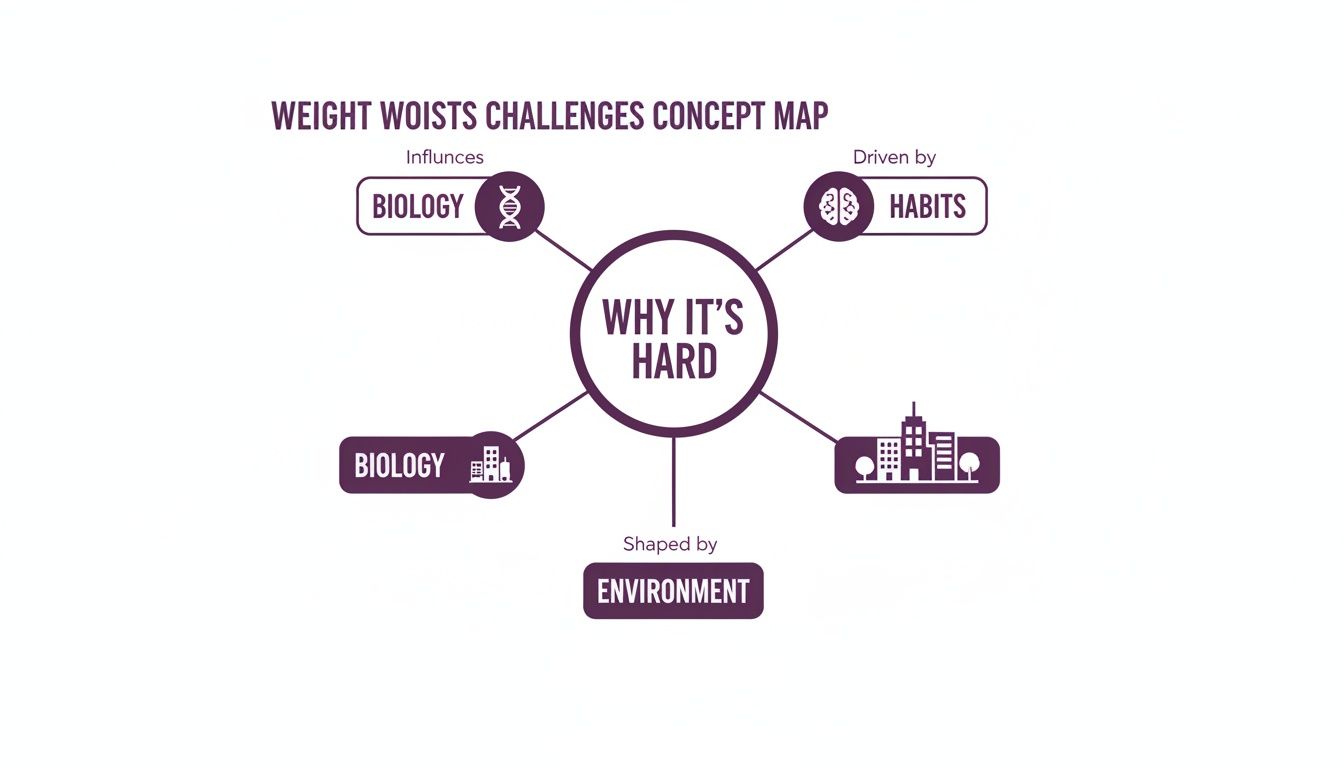
Sustainable weight management isn't about tackling just one thing. It's about understanding how your body's internal programming interacts with your lifestyle.
The Metabolism Slowdown Effect
One frustrating response is metabolic adaptation. As you lose weight, your metabolism—the engine that burns calories—runs more efficiently. It learns to get by on less fuel, so you burn fewer calories at rest.
This is a classic survival move. The diet that helped you lose the first ten pounds won't be enough for the next ten. You have to adjust your intake further.
It's a significant drop. After losing just 10% of your body weight, your energy expenditure can dip by an extra 15–25%. Check out the full research about these findings to learn more.
Your Hunger Hormones Take Over
While your metabolism slows, your hormones stage a rebellion to make you eat more. Ghrelin and leptin create a perfect storm of hunger.
- Ghrelin: The "hunger hormone" screams "I'm hungry!" at your brain. When you're in a calorie deficit, ghrelin levels spike.
- Leptin: The "satiety hormone" tells your brain, "Okay, we're full." As you lose fat, leptin levels plummet, so you feel less satisfied after meals.
The result is a double-whammy: you’re hungrier all the time and meals don't fill you up like they used to.
"Weight loss isn’t just about willpower. Your body has built-in mechanisms to prevent starvation, which is why so many people struggle with plateaus or regain weight after dieting."
These hormonal changes can last for months or even years. This is a huge reason why maintaining a new weight is often the real challenge.
Preserving Muscle and Strength with Diet & Exercise
So, how do you work with your biology? The key is combining smart nutrition with exercise, particularly strength training. This helps you hold onto muscle, which burns more calories at rest and counteracts metabolic slowdown.
To send a clear signal to your body to "burn fat, but keep the muscle," a few simple tools and habits can make all the difference. Combining diet and exercise is crucial.
- Fuel with Protein: Eating more protein helps you feel fuller, combating the rise in ghrelin. It also provides building blocks to repair and maintain muscle.
- Focus on Resistance Training: Using Resistance Bands from dietexerciseshop.com helps preserve and build lean muscle. A stronger body is more metabolically active.
- Stay Consistent: Consistency is key. Showing up for workouts and sticking to your nutrition plan helps gradually nudge your body's 'set point' to a healthier normal. For inspiration, try expert-led routines on the Diet & Exercise YouTube channel.
Understanding your body's resistance is empowering. It lets you build a smarter, more effective strategy for the long haul.
Winning the Mental Game of Weight Management
The battle for a healthier weight is also won between your ears. Mental and emotional hurdles are often the biggest reasons why it’s so hard to lose weight.
Many fall into the "all-or-nothing" trap. You eat one cookie, and the day feels like a write-off. This perfectionist thinking is unsustainable.
This cycle of strict rules followed by overindulgence kills motivation and builds a stressful relationship with food. It’s crucial to see progress as a winding road.
How Stress Sabotages Your Progress
Chronic stress is a powerful enemy. When you're constantly on edge, your body produces cortisol. High levels of cortisol over time can wreak havoc on your goals.
Cortisol signals your body to store fat, especially around your midsection. It also cranks up cravings for high-sugar, high-fat "comfort" foods.
"Managing stress is just as important as diet and exercise when it comes to weight loss. High stress equals high cortisol, which can lead to more belly fat retention."
To fight back, find healthy ways to blow off steam. Go for a walk, listen to music, or try a hobby. The goal is to break the connection between stress and reaching for food. For instance, a Yoga Mat from dietexerciseshop.com can provide a dedicated space for stress-relieving stretches and mindfulness.
Dealing with intense cravings is another hurdle. Learning effective strategies to stop sugar cravings can make a huge difference.
Rebuilding Your Relationship with Food
Emotional eating—using food to soothe or celebrate—is a common habit. The first step to breaking free is awareness. Before you eat, ask: Am I physically hungry, or just bored, sad, or stressed?
Once you know your triggers, build new coping mechanisms. Instead of food, try calling a friend, going for a walk, or practicing mindfulness.
Celebrating Every Victory
The scale can be a fickle friend. It doesn't tell the whole story of muscle gain, water retention, or hormonal shifts.
Instead, start celebrating non-scale victories. These are the real-world signs your hard work is paying off.
Examples of Non-Scale Victories to Track:
- Your clothes fit more loosely. Our branded apparel at dietexerciseshop.com can be a great way to gauge this!
- You have more energy throughout the day.
- You can lift heavier weights or walk longer.
- You feel more confident in your skin.
- Your sleep quality has improved.
Shifting your focus to these positive changes reframes what success looks like and builds a resilient mindset.
Navigating a World That's Designed for Weight Gain
Beyond biology and psychology, the modern world itself makes losing weight difficult. Our environment is engineered to make us overeat and under-move.
We’re constantly surrounded by hyper-palatable, calorie-dense foods. These products are scientifically formulated to light up our brain's pleasure centers and keep us coming back for more.
The Modern Food Landscape
Since 1975, global obesity has nearly tripled. A huge part of the problem is a global food system that pumps out cheap, ultra-processed foods, which can account for over 50% of daily calories. You can learn more about how these global food trends are shaping our health.
This is a key reason it's so hard to lose weight. You're fighting a system built for overconsumption.
This image captures the daily choice we face. The goal is to consistently choose the cart on the left.
Create Your Own Supportive "Food Bubble"
You can control your immediate surroundings. Create a personal "food bubble"—a home and work environment that supports your goals.
It starts in your kitchen. If your pantry is stocked with chips and cookies, that’s what you’ll reach for. The most powerful step is simple: don't bring those foods into your house. A branded mug from dietexerciseshop.com filled with green tea can be a healthier choice when cravings strike.
By curating your environment, you rely less on willpower and more on smart, sustainable habits. Make your home a sanctuary where your health goals can thrive.
This one change eliminates dozens of tempting decisions every day.
Smart Strategies for the Real World
You need a game plan for navigating restaurants, parties, and grocery stores.
1. Master the Grocery Store
- Shop with a list: A plan is your best defense against impulse buys.
- Patrol the perimeter: Fresh produce and lean meats are usually on the outer edges.
- Read the labels: Know what you’re really buying.
2. Win at Dining Out
- Scout the menu online: Decide what you’ll order before you get there.
- Control your portions: Ask for a to-go box and pack up half for another meal.
- Make simple requests: Ask for dressings on the side. Opt for grilled or baked over fried.
3. Navigate Social Gatherings
- Have a healthy snack beforehand: A small, protein-rich snack can curb hunger.
- Bring a healthy dish to share: This guarantees a nutritious option.
- Focus on the people, not the food: Position yourself away from the buffet table.
These strategies build a powerful buffer against a world that pushes you toward weight gain.
Building Your Sustainable Weight Loss Toolkit
Now you understand why it’s tough to lose weight. The next step is to arm yourself with the right tools from dietexerciseshop.com to build a healthy lifestyle that sticks.
Success comes when healthy choices feel natural. Your environment and tools play a massive role.
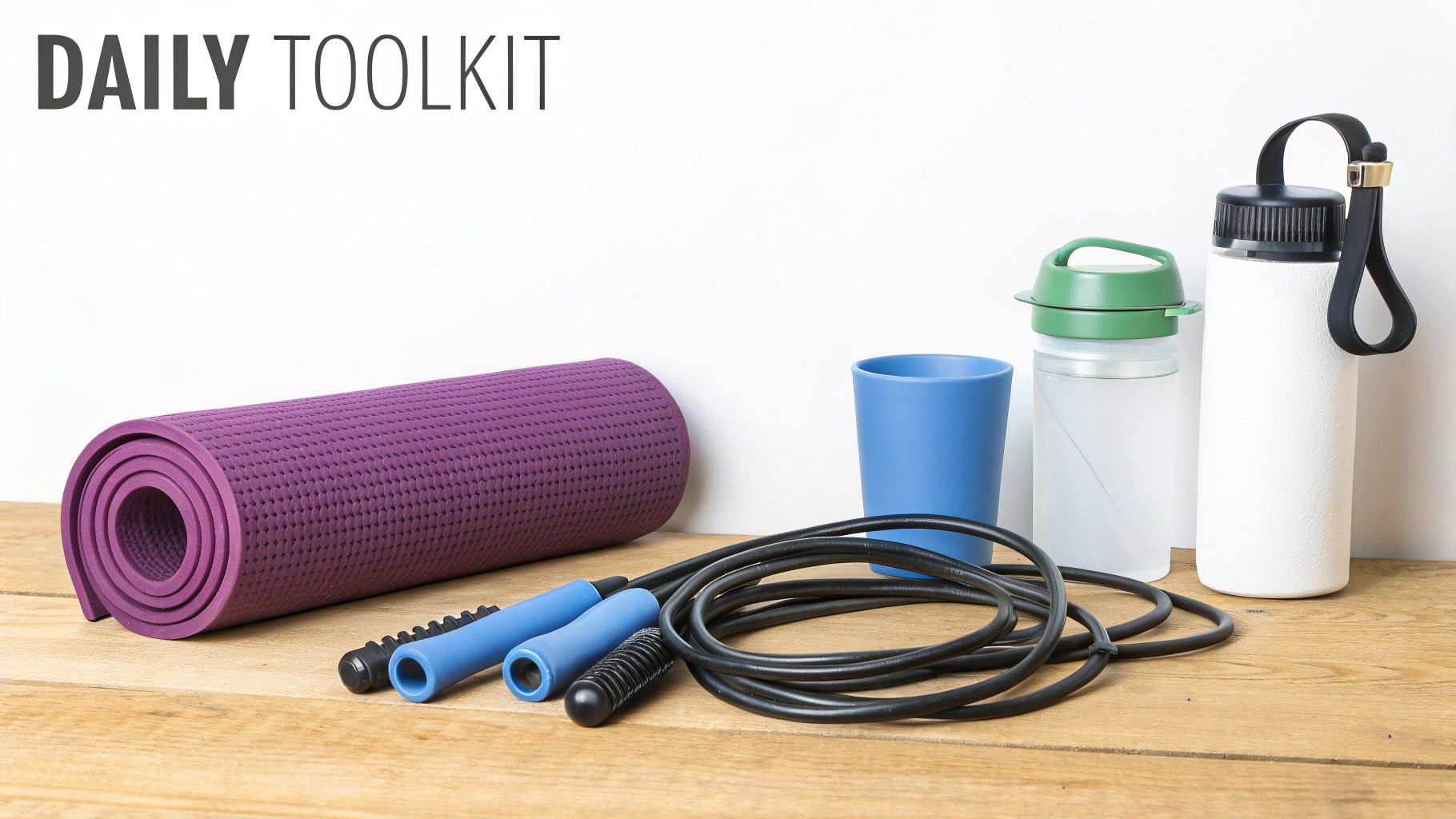
This toolkit isn't about adding more to your plate; it's about integrating simple solutions. We’ll focus on essential tools that make the whole process achievable and enjoyable.
The Power of Consistent, Accessible Fitness
You don’t need a pricey gym. The secret to long-term success is consistency. And consistency is easier when fitness is at your fingertips.
Home workout equipment gets rid of excuses. Simple, effective tools like our Resistance Bands and Jump Ropes deliver a killer workout in your living room.
A 20-minute workout you do at home is better than the hour-long gym session you keep skipping.
Equipping Yourself for Success
The right gear builds the right mindset. When you invest in quality tools from dietexerciseshop.com, you're investing in yourself.
- Resistance Bands: Perfect for strength training, which is crucial for building calorie-burning muscle and fighting metabolic slowdown.
- Jump Ropes: An efficient and fun way to get your heart pumping, torching calories and boosting cardiovascular health.
- Yoga Mats: A dedicated space for your workout, stretch, or mindfulness signals your brain it's time to focus on you.
A mental shift happens when you stop thinking "all-or-nothing" and start focusing on consistent home workouts. Exercise stops being a chore and becomes part of your day.
As you plan your meals, our guide on https://dietexerciseshop.com/blogs/news/what-is-calorie-deficit can help you get the nutrition part right.
The Mental Shift of Getting Dressed for a Workout
Never underestimate "dressing the part." Changing into workout clothes is a potent psychological trigger. Slipping on our dedicated 'Diet & Exercise' Apparel creates a clear mental boundary.
This small ritual helps separate "rest mode" from "active mode," making it easier to find motivation.
Simple Tools for Essential Habits
Weight management is built on small, supportive habits. Staying hydrated is vital for your metabolism and managing hunger.
Keeping one of our Branded Mugs on your desk is a constant visual nudge to drink up. Simple tools make it almost effortless to build habits that create massive results. You can also supplement your diet with the top protein bars for weight loss.
Your DietExerciseShop.com Fitness Starter Pack
Pairing fitness habits with the right gear builds a sustainable routine. Here's how our products support your journey.
| Healthy Habit | Supportive Product | How It Helps |
|---|---|---|
| Consistent Strength Training | Resistance Bands | Builds calorie-burning muscle anywhere, preventing metabolic slowdown. |
| Cardio for Heart Health | Jump Rope | Provides an efficient, high-energy workout to burn calories at home. |
| Mindful Movement & Recovery | Yoga Mat | Creates a dedicated space for exercise and stretching, promoting consistency. |
| Psychological Motivation | Branded Apparel | Acts as a mental trigger to focus on fitness and reinforces your active identity. |
| Daily Healthy Habits | Branded Mugs | Serves as a constant visual cue to stay hydrated for metabolism and hunger management. |
By building this toolkit, you’re engineering an environment for success. You’re systematically removing obstacles and replacing them with supportive tools that help you build a lifestyle that lasts.
Common Weight Loss Questions Answered
Even with the best plans, the weight loss journey is full of questions. This section tackles common hurdles to help you push through.
Why Am I Not Losing Weight When I Eat Healthy and Exercise?
This is the most maddening question. The culprit is often one of a few key factors.
First, "hidden" calories in cooking oils, salad dressings, and coffee creamers can add up. Keep a food journal for a few days to see.
Your body could also be in metabolic adaptation. To shake things up, vary your workouts. Introduce strength training with Resistance Bands or HIIT.
Finally, don't underestimate sleep. Skimping on sleep messes with hormones that control hunger and fat storage.
How Can I Stay Motivated When I Hit a Weight Loss Plateau?
Hitting a plateau isn't failure—it's proof your body has adapted. Stop obsessing over the scale.
Instead, celebrate non-scale victories. Do you have more energy? Are your clothes fitting looser? Recognizing these is key to staying positive.
To get things moving again, introduce a new stimulus.
- Tweak your daily calorie target.
- Up the intensity of your workouts.
- Try a new exercise from the Diet & Exercise YouTube channel.
- Focus on quality sleep.
What Are the Best Exercises to Break a Weight Loss Stall?
The most powerful combination is strength training and high-intensity interval training (HIIT).
Strength training builds lean muscle. The more muscle you have, the more calories your body burns 24/7. HIIT torches calories in a short time.
You don't need a gym. With versatile tools like our Resistance Bands from dietexerciseshop.com, you can get a killer strength workout at home.
Should I Focus More on Diet or Exercise for Weight Loss?
You absolutely need both. They're a team.
Diet creates the calorie deficit—the non-negotiable for weight loss. Exercise protects your muscle, boosts your metabolism, and reshapes your body.
It’s easier to not eat 500 calories than to burn 500 calories. But if you only focus on diet, you'll lose precious muscle, which slows your metabolism.
For lasting results, bring them together. A smart diet and consistent exercise build a stronger, healthier you.
At Diet & Exercise, we're about making a healthy lifestyle stick. Our apparel and home fitness gear are designed to support you. Ready to build your toolkit for success?
Shop our full collection of fitness essentials at dietexerciseshop.com today!