
Your Ultimate Workout and Healthy Eating Plan Guide
A solid workout plan and a smart eating strategy are two halves of the same whole. When they work together, you create a powerful combination where food fuels your workouts, and exercise makes the most of that nutrition.
This one-two punch is what delivers real, lasting results.
Laying the Groundwork for Your Fitness Journey
Starting a new fitness routine can feel overwhelming, but the core idea is simple. You can't out-train a bad diet, and you can't eat your way to a stronger body without the physical work. A well-built plan is about giving your body what it needs to thrive.
Think of your body as a high-performance engine. Exercise is how you use it, but food is the fuel that makes it run. Without the right fuel, you won't get far.
People everywhere are catching on. The global fitness industry has soared past $90 billion as of 2025. This isn't just a trend; it's a major shift in how we view health. In 2024 alone, health club memberships hit 77 million—a 6% jump from the previous year. Explore more on the rising global fitness trends to see how big this movement is.
Set Clear, Motivating Goals
Before your first workout or meal, you need to know what you're aiming for. A vague goal like "get fit" is a recipe for failure because it's not measurable. It's time to get specific.
SMART goals are the answer: Specific, Measurable, Achievable, Relevant, and Time-bound.
This clarity gives you a roadmap. It turns a wish into a concrete plan and lets you see your progress, which is a huge motivator. To learn more, check out the benefits of exercise and healthy eating.
Here’s how to turn goals into actionable steps:
- For Weight Loss: Aim to lose 1-2 pounds per week. Create a small calorie deficit by combining smarter food choices with regular movement.
- For Muscle Gain: Focus on a progressive strength training program. You'll also need to eat enough protein for muscle repair and growth.
- For More Energy: Prioritize consistency. Get enough sleep, eat nutrient-dense foods, and do regular cardio to build stamina.
Assess Your Starting Point
Once you have a destination, you need to know where you're starting from. A self-assessment gives you a clear picture of your current fitness level and habits. This isn't about judgment; it's about collecting honest information for a realistic plan.
Your starting point doesn't define your potential. It's simply the 'You Are Here' marker on your fitness map. Acknowledging it is the first step toward progress.
Take a moment to think about your life. How active are you? What do you typically eat? How are your sleep patterns? Do you have any injuries or limitations?
This baseline helps you create a plan you can stick with. Consistency is what gets results, not a crazy workout or a crash diet you'll quit in a week.
Crafting Your Personalized Healthy Eating Plan
Your nutrition is the engine that powers your fitness journey. A great eating plan isn't about restrictive dieting. It's about fueling your body with high-quality food matched to your goals.
Start by understanding your body's energy needs. For weight loss, you need a slight calorie deficit. To build muscle, you need a small surplus. Online calculators are a good starting point, but listening to your body is key.
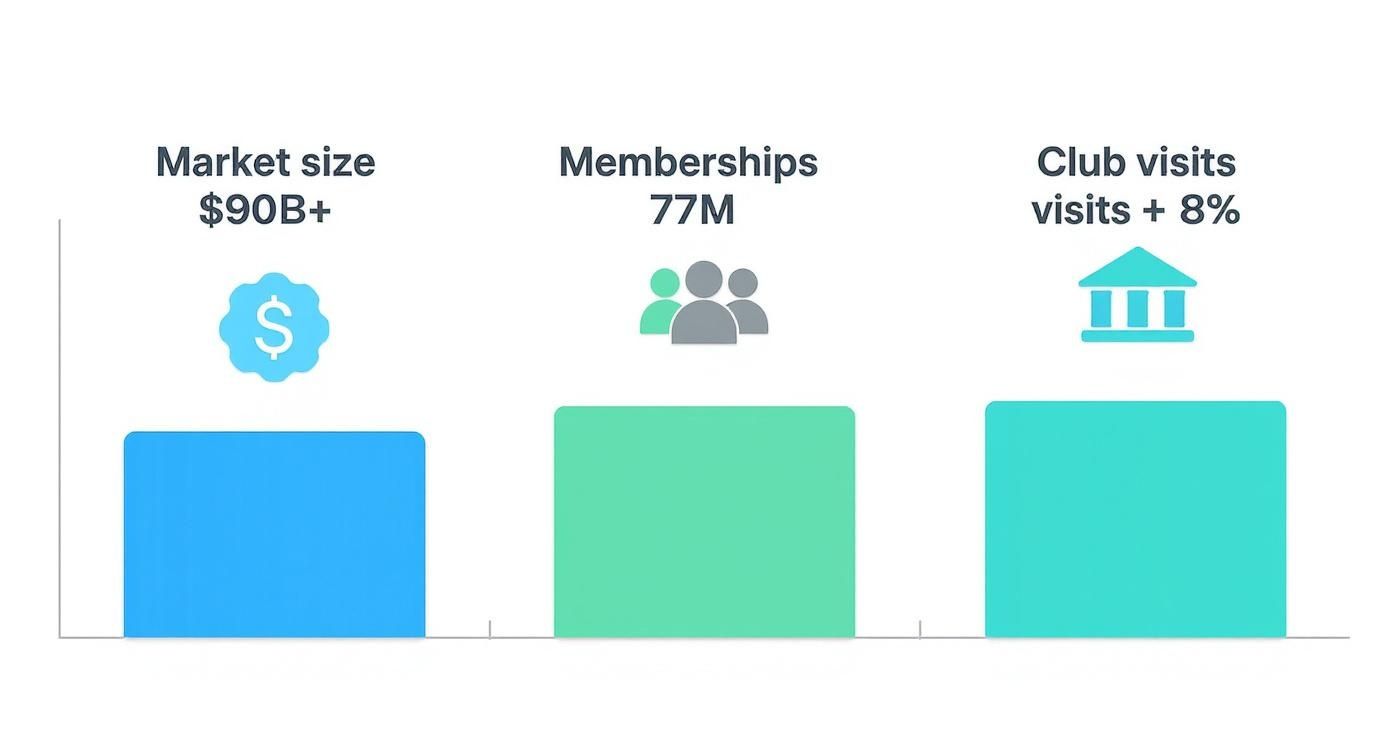
As the data shows, millions of people are investing in their health through gym memberships and club visits, making fitness a huge part of modern life.
The Roles of Your Macronutrients
Calories are just one part of the equation. To dial things in, you need to understand macronutrients, or "macros": protein, carbohydrates, and fats. Each has a critical job.
- Protein is for repair. It helps rebuild muscles after a workout. Good sources include chicken, fish, eggs, and legumes.
- Carbohydrates are for energy. They are your body's main fuel source. Find them in oats, sweet potatoes, brown rice, and fruit.
- Fats are for overall health. Healthy fats are vital for hormones and brain function. Load up on avocado, nuts, seeds, and olive oil.
The right macro balance depends on your goal. Someone building muscle needs more protein than an endurance athlete, who needs more carbs.
Macronutrient Guide for Different Fitness Goals
This table offers a simple starting point based on common fitness goals.
| Fitness Goal | Protein (% of daily calories) | Carbohydrates (% of daily calories) | Fats (% of daily calories) | Example Foods |
|---|---|---|---|---|
| Weight Loss | 30-40% | 30-40% | 20-30% | Lean meats, leafy greens, berries, avocado |
| Muscle Gain | 30-35% | 45-55% | 15-25% | Chicken breast, brown rice, sweet potatoes, nuts |
| Maintenance | 25-30% | 40-50% | 25-35% | A balanced mix of whole foods from all groups |
Use this as a foundation and adjust based on how you feel and the results you see.
Fueling for Your Specific Workouts
What you eat—and when—can make a massive difference in your performance and recovery.
Heading out for a run or HIIT class? A banana or toast 30-60 minutes before is perfect for quick energy. Lifting weights? A balanced meal with protein and carbs about one to three hours beforehand will set you up for success.
After your workout, your body is like a sponge, ready to soak up nutrients. This post-exercise window is the prime time to refuel with a mix of protein and carbs to kickstart muscle repair.
A protein shake is a fantastic, no-fuss option. It’s quick and gets nutrients into your system right when you need them. Our high-quality Protein Shakers mix a perfectly smooth shake every time, so you never miss that crucial recovery window.
Making Healthy Eating Practical
A perfect plan is useless if you can't stick with it. Meal prepping is a game-changer. A few hours one day a week can set you up for success, making healthy choices easy.
Having the right gear helps. Our durable Meal Prep Containers make it easy to portion out balanced meals. No more caving to unhealthy choices when you're busy.
Don't forget hydration. Water is vital for muscle function and energy. Sip it all day, not just when you're sweating.
Digital tools are also on the rise. Fitness app downloads are set to hit 5 billion by 2025, driven by a desire for personalization. You can read the full research about these fitness industry shifts.
Designing a Workout Routine That Actually Works
Once your nutrition is dialed in, it's time to build your workout routine. An effective plan is a structured approach that fits your goals, schedule, and what you enjoy.
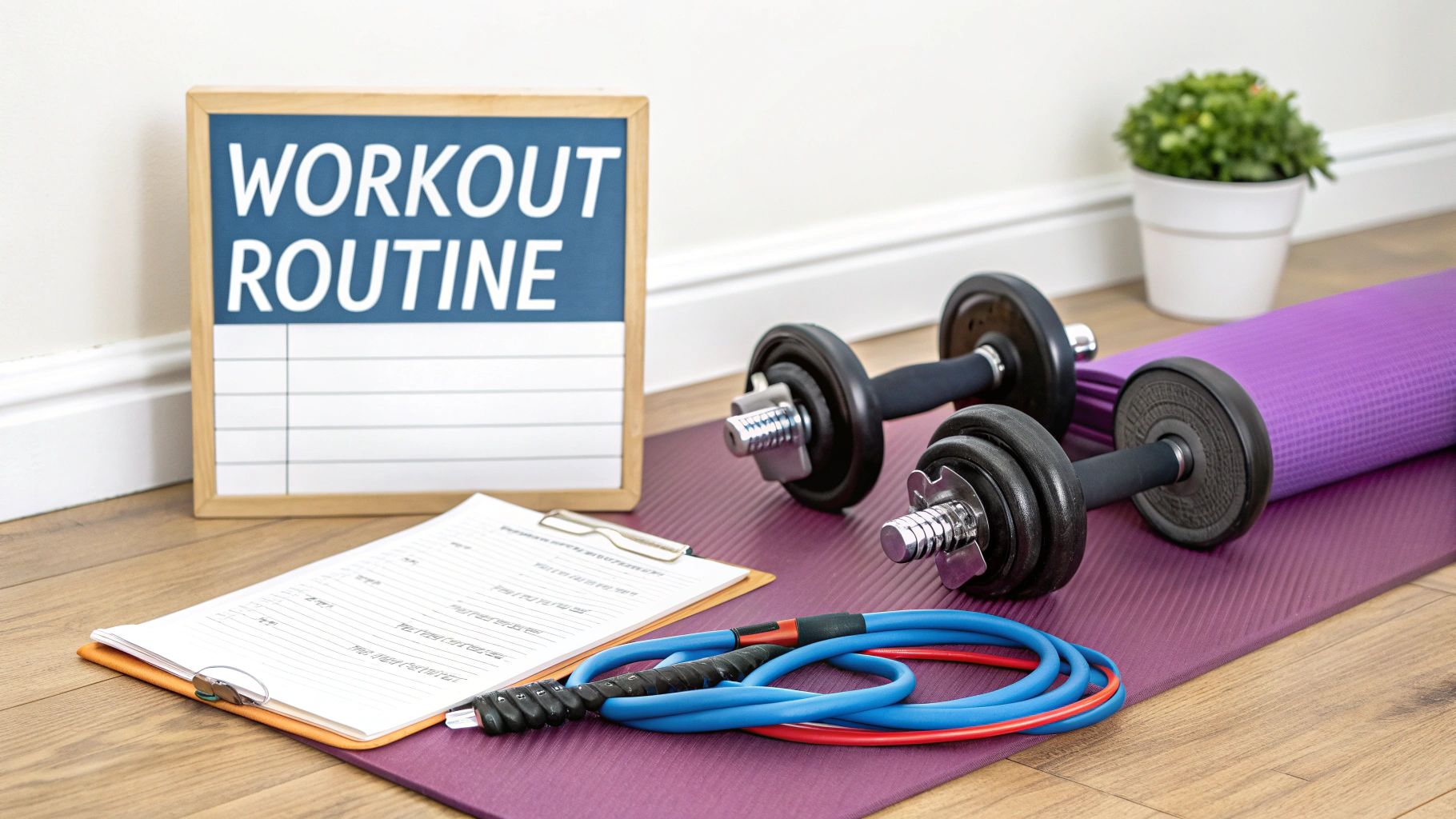
A well-rounded program is built on three pillars: cardiovascular exercise, strength training, and flexibility. Together, they create a synergy that delivers real, lasting results.
The Three Pillars of a Balanced Workout
Each component is crucial for a stable, effective routine.
- Cardiovascular Exercise: This gets your heart pumping. Think running, cycling, or brisk walking. It torches calories and strengthens your heart.
- Strength Training: Lifting weights or using bodyweight exercises builds lean muscle, which fires up your metabolism.
- Flexibility and Mobility: Stretching and yoga help prevent injuries and improve posture, allowing for a better range of motion in other exercises.
How to Structure Your Weekly Workout Split
Your "split" is how you organize workouts during the week. The best split is one you can stick to consistently.
For beginners, a full-body routine 2-3 times per week is a great start. It works all major muscle groups efficiently.
As you advance, you might try an "upper/lower" split or a "push/pull/legs" schedule to increase intensity and focus on specific muscle groups.
The secret to long-term progress isn't a single, brutal workout. It's the cumulative effect of consistently showing up, week after week.
Here’s a simple, effective three-day split:
| Day | Focus | Sample Exercises |
|---|---|---|
| Monday | Full Body Strength | Squats, Push-ups, Rows, Overhead Press |
| Wednesday | Cardio & Core | 30-min Jog, Planks, Leg Raises |
| Friday | Full Body Strength | Deadlifts, Lunges, Pull-ups, Dumbbell Bench Press |
The Power of Progressive Overload
If your progress stalls, it's often because your body has adapted. The solution is progressive overload: consistently making your workouts a little harder.
You can do this by:
- Adding more weight.
- Doing more reps.
- Adding another set.
- Shortening your rest time.
- Perfecting your form.
Having the right gear makes a huge difference for home workouts. Our adjustable dumbbells are a smart investment that grows with you.
If you're just starting, our guide on workout routines for beginners at home is a great resource. Fitness is for everyone, at any age. Discover more insights on global fitness demographics to see how the industry is adapting to meet everyone's needs.
Making It All Stick: Integrating Your Plan for the Long Haul
The real challenge is weaving your plan into everyday life. Success is about building habits that can survive a busy schedule, a bad mood, or a motivation crash.
This is where you make your plan a part of who you are.
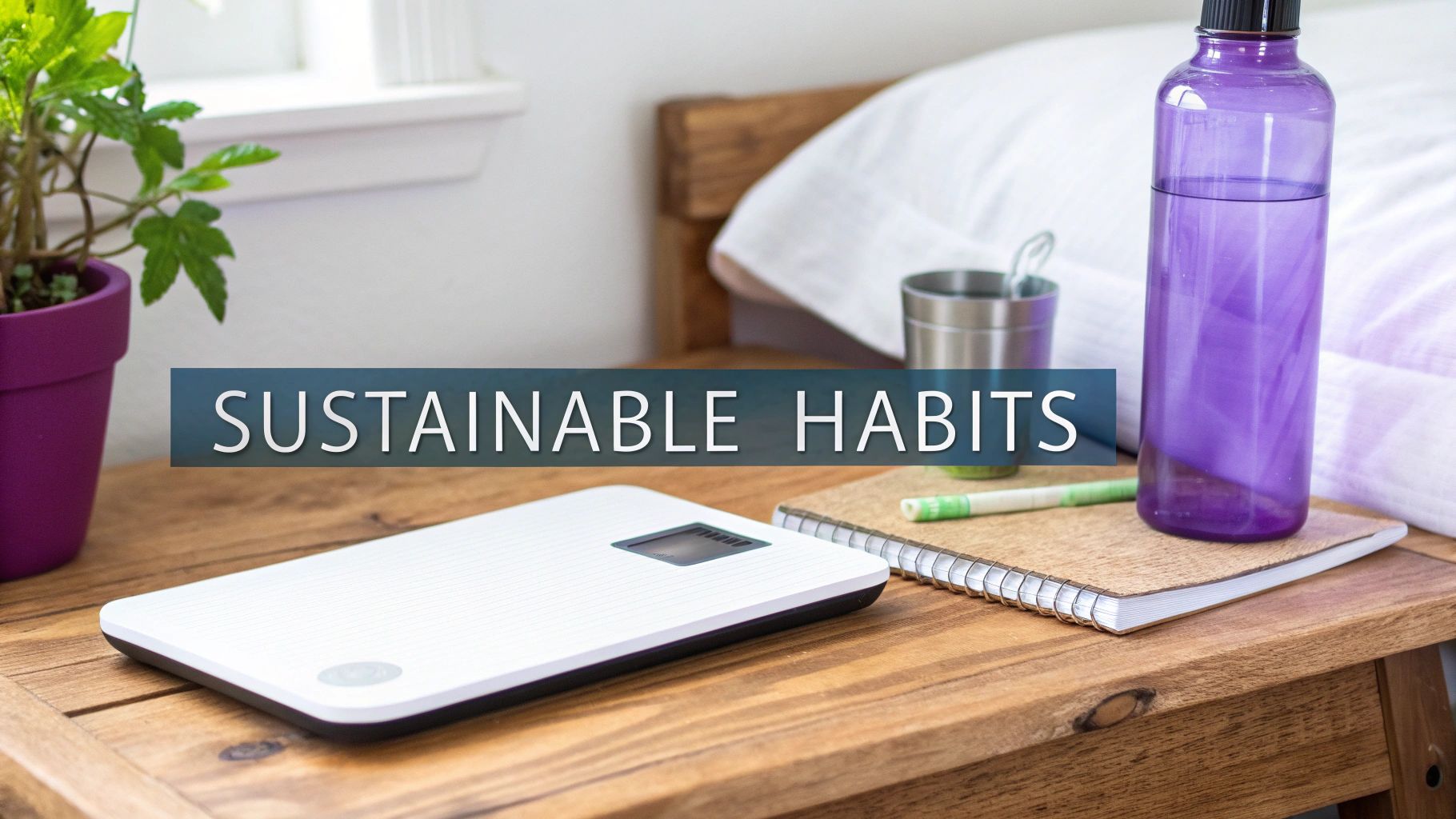
True integration starts with tiny changes. Try "habit stacking." Lay out your gym clothes the night before. This small act makes the healthy choice the easiest choice.
Build a Mindset That Bends, Not Breaks
Your mindset is your most important tool. There will be days you don't want to work out. The trick is to have a game plan for those moments. Ditch the "all-or-nothing" trap.
Practice self-compassion. If you miss a workout, nail the next one. If you eat something off-plan, enjoy it and get back on track with your next meal. Flexibility turns a temporary diet into a lifestyle.
This focus on long-term thinking is reshaping the fitness world. You can read more about these evolving fitness industry trends to see how this mindset is changing everything.
How to Track Your Progress (It's Not Just the Scale)
Stop letting the scale be your only measure of success. That number is just one piece of data. True progress is so much more than what you weigh.
Track different metrics to get a complete picture.
Pay attention to non-scale victories:
- The Fit of Your Clothes: Are your jeans feeling looser?
- Progress Photos: Snap pictures every 4-6 weeks to see visual changes.
- Strength Gains: Are you lifting heavier or doing more reps?
- Skyrocketing Energy: Do you feel less sluggish in the afternoon?
Progress isn't a straight line. It's a collection of small, consistent steps forward. Celebrate every single win, no matter how small.
A smart scale can be a fantastic tool. Our Smart Body Fat Scale gives insights into body fat percentage, muscle mass, and more, proving your hard work is paying off.
Don't Forget to Rest: The Critical Role of Recovery
You get stronger while you rest, not in the gym.
Grinding it out daily without proper recovery leads to injury and burnout. Your body needs time to repair and rebuild muscle.
Aim for 7-9 hours of quality sleep each night. This is when your body repairs tissue and balances hormones.
Schedule active recovery days with light walks or gentle stretching. This boosts blood flow and eases soreness. For guidance, the Diet & Exercise channel has a great Full Body Stretching Routine.
How to Adapt Your Plan as You Progress
Your fitness journey is a living process. The plan that gets you started won't be the one that gets you to the finish line. As you get stronger, your strategy must evolve.
Listen to your body. If progress stalls, workouts feel too easy, or you're bored, it's time for a change.
Breaking Through Workout Plateaus
A plateau means your body has mastered a challenge. To keep seeing results, you need a new one. Small tweaks are often all it takes.
Try these ways to shake things up:
- Increase the Intensity: Add more weight, cut rest times, or push for more reps.
- Change Your Exercises: Swap barbell squats for front squats to challenge muscles from a new angle.
- Vary Your Rep Ranges: Switch from the 8-12 rep range to a lower (4-6) or higher (15-20) range.
A plateau isn't a sign of failure; it's a sign of success. It means you've become stronger. Now, it's time to give your body a new problem to solve.
The U.S. fitness industry is huge, projected to generate around $45–$46 billion by 2025. This massive market offers tons of variety to keep your routine fresh. Discover more insights about the U.S. fitness market trends.
Adjusting Your Nutrition as Goals Shift
Your nutrition plan must also evolve. The calories and macros for weight loss differ from those for muscle gain or maintenance.
Once you hit your target weight, you can't stay in a calorie deficit. You'll slowly increase calories back to a maintenance level.
If your goal is building muscle, you'll need a slight calorie surplus and high protein intake to fuel new growth.
Keeping Your Fitness Journey Exciting
Consistency is key, and the best way to stay consistent is to enjoy what you're doing.
Don't be afraid to experiment. Try a new fitness class, go for a hike, or build a small home gym. Our resistance bands and yoga mats can open up a world of possibilities.
For a great routine, check out this Full Body Workout with Dumbbells from the Diet & Exercise channel. This is your journey—make it one you look forward to.
Common Questions Answered
Starting a new fitness journey brings up a lot of questions. Getting clear answers is key to building confidence and staying on course.
How Soon Until I See Results?
It depends. Everyone's body is different. But you'll feel the changes before you see them.
Within 2-4 weeks, most people notice more energy and better sleep. Visible results, like weight loss or muscle tone, usually show up around the 8-12 week mark. Trust the process; the results will follow.
Is It Okay to Have a Cheat Meal?
Yes! But think of them as "flexibility meals," not cheat meals. A healthy lifestyle isn't about being perfect 100% of the time.
A good rule of thumb is the 80/20 principle. Follow your plan 80% of the time, leaving 20% for meals out with friends or your favorite pizza. One enjoyable meal won't sabotage your progress.
What's the Best Exercise for Losing Weight?
It’s not one exercise, but a combination: strength training and cardio.
- Strength training builds lean muscle, turning your body into a calorie-burning machine.
- Cardio torches calories during your workout and is essential for a healthy heart.
Combining them is where the magic happens for any effective workout and healthy eating plan. For ideas, the Diet & Exercise YouTube channel is a fantastic resource.
Do I Need Supplements?
Think of your diet as the main character and supplements as the supporting cast. They can help, but they can't save a bad plot. The foundation must be solid, whole foods.
That said, some supplements are useful. Protein powder is a convenient way to ensure you get enough protein for muscle repair, especially after a workout. Just remember: food first, always.
Ready to show off your hard work? At Diet & Exercise, we believe your commitment to health is something to be proud of. We've created a unique collection of apparel, accessories, and fun fitness-themed gear that lets you wear your passion.
Our T-shirts and hoodies are perfect for showcasing your dedication, while our fitness-themed phone cases and mugs bring a touch of motivation to your daily life. Every item is designed for those who live and breathe the fitness lifestyle.
Check out the full collection and grab something new at dietexerciseshop.com.