

Adjustable Dumbbells vs Fixed: Which to Buy for Your Home Gym
For most home gym setups, a pair of adjustable dumbbells is the smarter starting point. They cover a wide weight range in a fraction of the floor space, and Dietexerciseshop carries options that make the decision even easier. That said, if your training revolves around drop sets, heavy compound work, or you share a gym with multiple people who need different weights simultaneously, a set of fixed dumbbells will serve you better.
Here is the short version:
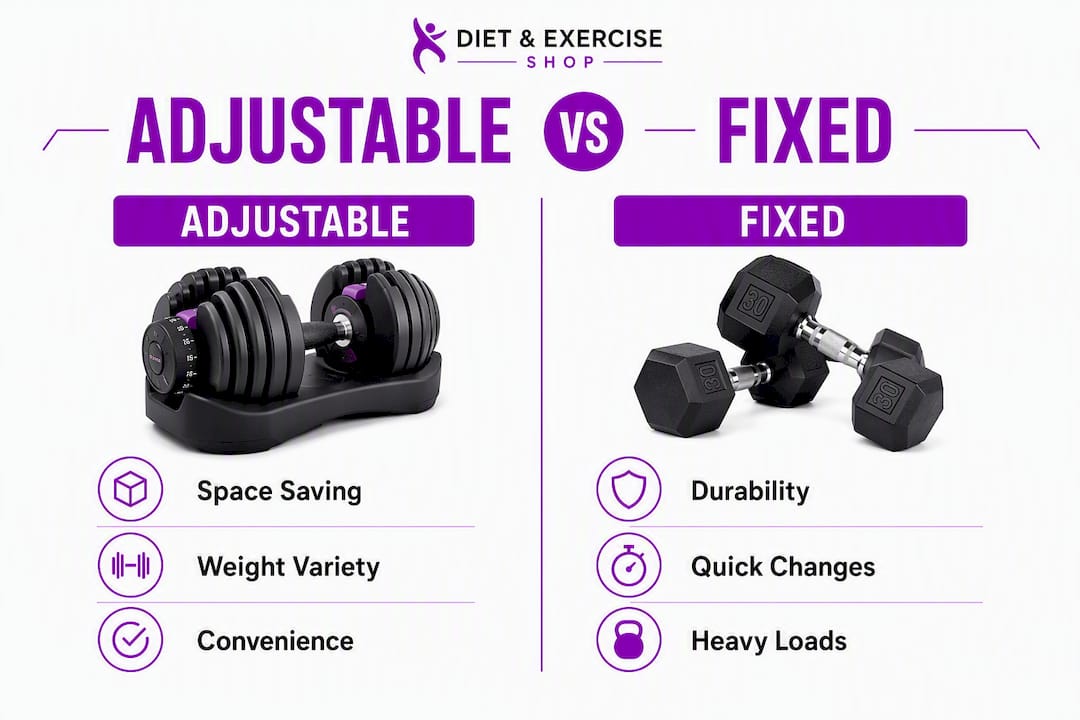
- Adjustable dumbbells win on space, upfront cost for wide weight ranges, and versatility for general training.
- Fixed dumbbells win on durability, instant weight transitions, and ergonomics for specific exercises.
- A pair of adjustable dumbbells occupies roughly 95% less floor area than a full fixed rack covering a comparable weight range.
- The mixed approach—one adjustable pair plus one or two fixed pairs—is what many experienced home gym builders land on.
Table of Contents
- What are adjustable dumbbells and how do the different systems work?
- The real benefits of adjustable dumbbells for home training
- The downsides of adjustable dumbbells you should know before buying
- What are fixed dumbbells and how are they typically sold?
- When fixed dumbbells actually win
- Head-to-head: how adjustable and fixed dumbbells compare across what actually matters
- Which option fits your situation? Scenario-based recommendations
- How to choose before you buy: a practical checklist
- The space savings are real, and the tempo penalty is too
- Key Takeaways
- The case for starting simple and building from there
- Dietexerciseshop has the gear to match your training style
- Further reading and sources used for this comparison
- FAQ
What are adjustable dumbbells and how do the different systems work?
An adjustable dumbbell is a single handle that accepts multiple weight configurations, replacing what would otherwise be a full rack of individual pairs. The appeal for home gym buyers is obvious: one compact unit covers 5 lb through 50 lb or more, depending on the system.
The three main mechanical types work very differently:
- Selectorized/dial systems use a dial or pin to select weight from a stacked tray. Weight changes take roughly 2–3 seconds per dumbbell. These are the most popular for home use because of speed and convenience.
- Pin/plate-loaded systems use a central bar with weight plates secured by collars or a pin. They can reach higher maximum loads but adjustments take longer and the handle gets physically longer as you add plates.
- Spinlock systems use threaded collars you spin on and off. They are the slowest to adjust (30–60 seconds per change) and the least convenient for mid-workout transitions.
Weight increments matter more than most buyers realize. Selectorized systems typically jump in 2.5 lb or 5 lb steps. For upper-body isolation work like lateral raises or curls, a 5 lb jump can be too large to progress cleanly, especially for beginners. Plate-loaded systems let you customize increments more freely but at the cost of adjustment time.
The real benefits of adjustable dumbbells for home training
The case for adjustables is strong, particularly if you are working with limited space or a limited budget.
- Space efficiency. One pair on a small tray replaces 10–15 individual pairs. For apartment gyms or shared living spaces, this is often the deciding factor. Check out Dietexerciseshop’s guide to best home workout equipment for small spaces for more on fitting a full workout into a tight footprint.
- Cost efficiency for wide weight ranges. Buying fixed pairs from 5 lb to 50 lb means purchasing 10 individual pairs plus a rack. A single adjustable set covering the same range typically costs significantly less in total.
- Progressive overload support. One set grows with you. You do not need to buy new weights as you get stronger.
- Portability. Selectorized sets travel reasonably well between rooms or locations. They fit in a closet, under a bed, or in a corner.
- Versatility. A single adjustable pair handles curls, rows, presses, lunges, and lateral raises without changing equipment.
Pro Tip: When shopping adjustable systems, prioritize selector precision and warranty clarity over the lowest price. A cheap selector mechanism that jams after six months costs more to replace than the money you saved upfront.
The downsides of adjustable dumbbells you should know before buying
Adjustables have real limitations, and glossing over them leads to buyer’s remorse.
- Drop intolerance. Most manufacturers explicitly exclude drop damage from warranties and caution against dropping selectorized models. If your training includes any intentional dropping or heavy overhead work, this is a serious concern.
- Awkward length. Selectorized models are physically longer than fixed dumbbells at the same weight because the selector mechanism or stacked plates take up horizontal space. Independent reviewers consistently flag this as an ergonomic issue for chest presses, front raises, and certain unilateral movements.
- Adjustment time disrupts training tempo. Even a 2–3 second change per dumbbell adds up across a circuit. Spinlock systems are far worse at 30–60 seconds per adjustment. Drop sets become nearly impossible.
- Increment granularity. Many selectorized systems jump in 5 lb increments. For small-muscle isolation work, that gap can stall progress faster than a 2.5 lb increment would.
- Common failure modes. Plates misaligning in the base tray, selector dials jamming, and worn locking collars are the most frequently reported issues. Always test tray alignment and rack engagement before a heavy lift. A misaligned plate means the dumbbell is not fully locked, which is a real safety hazard.
What are fixed dumbbells and how are they typically sold?
A fixed dumbbell is a single, permanently weighted unit. No moving parts, no mechanisms, no adjustment. The weight is cast or molded into the head and it stays there.
The three most common constructions you will encounter:
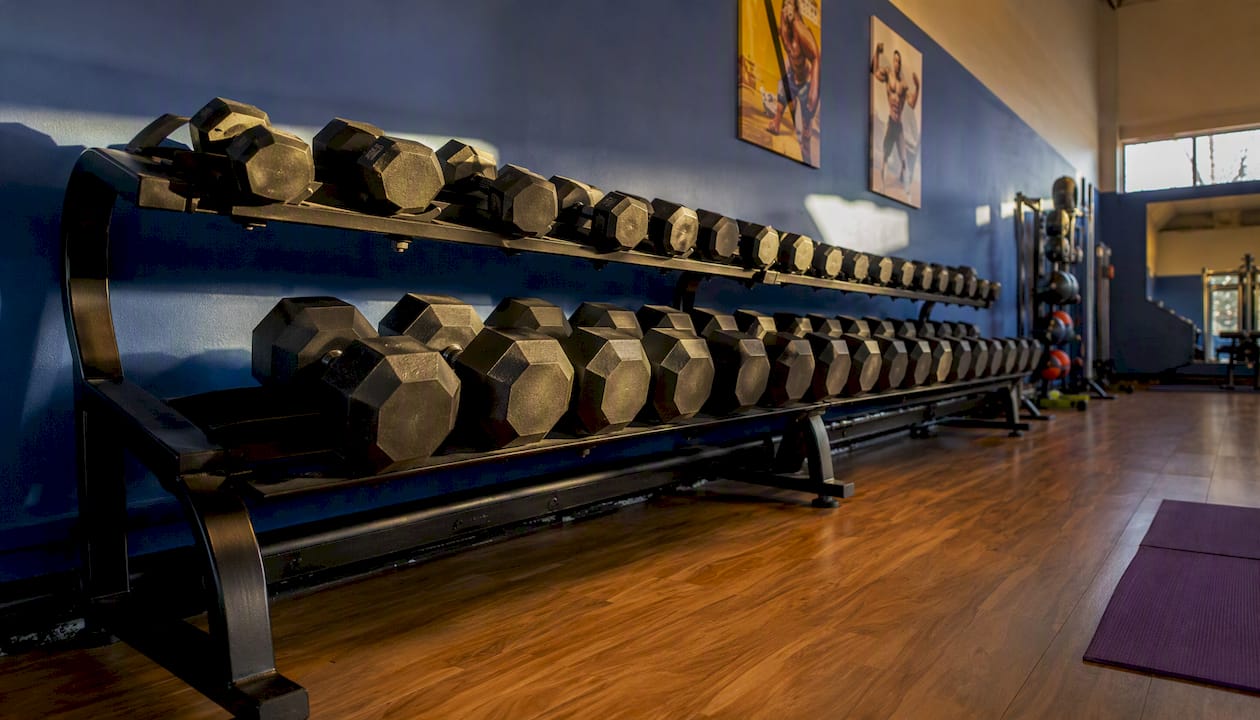
- Rubber hex dumbbells. Six-sided heads prevent rolling, and the rubber coating protects floors and absorbs impact. The most common choice for home gyms and commercial facilities alike.
- Urethane dumbbells. A step up in durability and finish quality. Urethane resists cuts, abrasions, and odor better than rubber. Common in higher-end commercial gyms.
- Round-head (chrome or cast iron) dumbbells. Classic design, often seen in older gyms. They roll, which is a minor hazard on uneven floors, and the chrome finish can chip over time.
Fixed dumbbells are sold as individual pairs, in incremental range sets (e.g., 5–50 lb in 5 lb steps), or as complete rack packages. A full set from 5 lb to 50 lb means 10 pairs. Add a rack, and you are looking at a significant floor footprint and a substantial upfront investment. For beginners building a home gym, buying a few targeted fixed pairs (say, 15 lb, 25 lb, and 35 lb) is a practical middle ground before committing to a full rack.
When fixed dumbbells actually win
Fixed dumbbells are not the outdated option. For specific training styles and goals, they are simply better.
- Instant weight transitions. Pick up the next pair and keep moving. No dial, no tray, no pause. For supersets, drop sets, and circuit training where rest periods are intentional and short, this is a genuine performance advantage.
- Drop tolerance. Rubber hex and urethane fixed pairs are built to be dropped. No warranty exclusions, no internal mechanisms to crack. This matters for Olympic-style lifts, heavy rows, and any training style where controlled drops are part of the movement.
- Ergonomics. Fixed dumbbells are compact and balanced. A 30 lb hex dumbbell is shorter and more natural in the hand than a 30 lb selectorized model with its extended tray. Chest presses, Arnold presses, and front raises all feel cleaner.
- Higher maximum weights. Fixed pairs are available well beyond the 50–90 lb cap common in selectorized systems. Serious strength athletes working with 100 lb+ per hand need fixed pairs. There is no adjustable system that handles that load with the same reliability.
- Longevity. A rubber hex dumbbell has no moving parts to fail. Treated reasonably, a quality fixed pair will outlast most adjustable mechanisms by years.
Concrete scenario: A lifter running a hypertrophy program with supersets (incline press into lateral raises, rest 60 seconds, repeat) cannot afford a 30-second spinlock adjustment between movements. Fixed pairs at 35 lb and 15 lb sitting on a rack solve that instantly.
Head-to-head: how adjustable and fixed dumbbells compare across what actually matters
| Dimension | Adjustable Dumbbells | Fixed Dumbbells |
|---|---|---|
| Space footprint | Minimal (one tray/stand) | Large (full rack for wide range) |
| Price: wide weight range | Lower total system cost | Higher total cost for full set |
| Price: per-pound cost | Higher per pound | Lower per pound for individual pairs |
| Maximum weight | Selectorized: ~50–90 lb; plate-loaded: higher | Available at any weight; no practical ceiling |
| Weight increments | 2.5–5 lb steps (system-dependent) | Any increment you buy |
| Transition speed | Selectorized: 2–3 sec; spinlock: 30–60 sec | Instant (grab next pair) |
| Drop tolerance | Low; drops void most warranties | High; rubber hex and urethane built for drops |
| Ergonomics | Longer handle; can feel awkward | Compact and balanced |
| Versatility | High (one unit, many weights) | Limited to pairs you own |
| Training suitability | Strength, hypertrophy, general fitness | Circuits, drop sets, heavy strength work |
| Resale / upgrade path | Moderate; popular brands hold value | Easy; fixed pairs sell individually |
A few notes on where each format clearly wins:
- Adjustables win on space and total cost when you need a wide weight range. If your apartment has room for one tray, this is your only realistic option for covering 5 lb through 50 lb.
- Fixed dumbbells win on training flow and durability. If your program depends on fast transitions or you train with heavy loads regularly, no adjustable system keeps up.
- Increments: If you need 2.5 lb jumps for isolation work, verify the specific adjustable model before buying. Many only offer 5 lb steps.
Which option fits your situation? Scenario-based recommendations
1. Apartment starter with limited space Adjustable dumbbells, no question. A pair of adjustable dumbbells occupies roughly 95% less floor area than a full fixed rack covering a comparable weight range; it is the practical difference between fitting a home gym into a corner versus needing a dedicated room. Start with a selectorized set and a small tray.
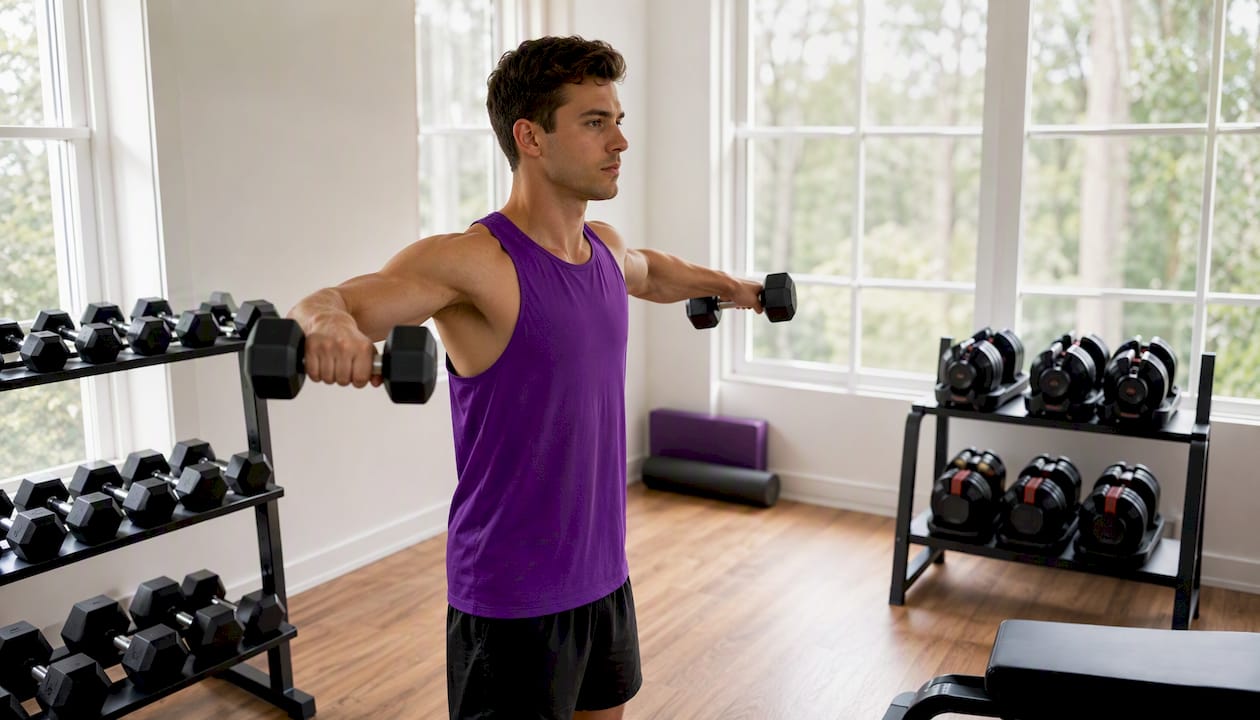
2. Small dedicated home gym (garage or spare room) Still likely adjustable, but this is where adding one or two fixed pairs starts making sense. A selectorized set for general training plus a fixed pair at your most-used heavy weight (say, 40 lb or 50 lb) gives you the best of both formats. Multiple buying guides recommend exactly this mixed approach for home gyms with some floor space.
3. Hypertrophy-focused bodybuilder Leaning toward fixed, especially for the weights you use most. Supersets and drop sets are central to hypertrophy programming, and the transition pause from an adjustable system disrupts the tempo that drives muscle fatigue. Even two or three fixed pairs at your working weights restore the workout flow that selectorized adjustables interrupt.
4. Strength athlete (heavy compound work) Fixed dumbbells. Selectorized systems cap at roughly 50–90 lb per hand, and the drop intolerance is a real concern for heavy rows, farmer carries, or any movement where a controlled drop is part of the lift. Plate-loaded adjustables can go heavier but introduce their own ergonomic and adjustment-time trade-offs.
5. Multi-user household Fixed pairs or a mixed setup. When two people with different strength levels train at the same time, a single adjustable pair creates a bottleneck. Two fixed pairs per person at their working weights, or one adjustable set plus a few fixed pairs, keeps both people moving.
The mixed approach—one adjustable pair plus one or two fixed pairs at frequently used weights—is what experienced home gym builders often land on. It covers the full weight range efficiently while eliminating the tempo penalty at the weights you reach for most.
How to choose before you buy: a practical checklist
Work through these before you spend anything.
1. Measure your available space. A selectorized tray is roughly 16–18 inches long. A full fixed rack from 5–50 lb needs at least 4–5 feet of wall space. Know your number before you browse.
2. Determine your max weight need. If you are pressing or rowing over 90 lb per hand, selectorized adjustables will not cover you. Plate-loaded adjustables or fixed pairs are your options.
3. Check increment granularity. Ask specifically: does this model adjust in 2.5 lb or 5 lb steps? For isolation exercises (lateral raises, curls), 2.5 lb increments are meaningfully better for progression.
4. Assess your training style. Circuit training, drop sets, or supersets? Fixed pairs or selectorized adjustables only. Spinlock adjustables are not compatible with fast-paced programming.
5. Evaluate drop tolerance. If your training involves any intentional dropping, only rubber hex or urethane fixed pairs are appropriate. Most adjustable warranties explicitly exclude drop damage.
6. Read the warranty carefully. A vague warranty with no stated service path is a red flag. Look for: what is covered, for how long, and whether replacement parts are available.
Red flags to watch for in product listings:
- No stated increment detail (just “multiple weights”)
- Warranty language that excludes “misuse” without defining it
- Plastic selector mechanisms with no service or parts availability
- No stated maximum weight per dumbbell (only “set” weight)
Budget guidance: For adjustables, spending more typically buys better selector precision and a more durable mechanism. Budget selectorized models under $150 can work for light-to-moderate use, but the selector mechanisms on cheaper units tend to jam or wear faster. If you plan to use them daily and progress to heavier loads, the total system cost often favors a mid-range adjustable set over buying individual fixed pairs to cover the same range.
For resale: popular adjustable brands hold value reasonably well on the secondhand market. Fixed pairs sell individually, which makes them easy to upgrade or offload one weight at a time.
Maintenance notes: Adjustable dumbbells need periodic inspection. Check selector alignment, tray engagement, and collar tightness before heavy sessions. Wipe down the mechanism after sweaty workouts to prevent corrosion in the selector. Fixed dumbbells need almost no maintenance beyond wiping down rubber or urethane heads to prevent odor buildup.
The space savings are real, and the tempo penalty is too
Kit Authority’s comparison measured the floor footprint difference directly: a pair of adjustable dumbbells occupies roughly 95% less floor area than a full fixed rack covering a comparable weight range. For anyone training in an apartment or a shared space, that number is the whole argument.
“A selectorized adjustable set that covers a broad range often costs a fraction of purchasing every fixed pair needed to match that range when you include rack cost.” — Southern Cross Fitness buying guide
The tempo penalty is just as real, though. Selectorized systems change weight in 2–3 seconds per dumbbell, which sounds trivial until you run the math on a circuit. A six-exercise circuit with weight changes between each movement adds 24–36 seconds of dead time per round, across both dumbbells. Over five rounds, that is two to three minutes of standing around mid-workout. For a hypertrophy program built around short rest periods, that dead time undermines the training stimulus.
Spinlock systems are worse: at 30–60 seconds per adjustment, a mid-circuit weight change is effectively a full rest period whether you want one or not.
The practical fix is the mixed approach: use adjustables for the bulk of your training, and keep one or two fixed pairs at the weights you reach for most often in circuits or drop sets. You get the space efficiency of adjustables without sacrificing training flow at your working weights.
Pro Tip: Before buying a workout routine that calls for specific dumbbell weights, map out which weights you will actually use most. Those are the fixed pairs worth buying. Everything else can be covered by adjustables.
Key Takeaways
For most home gym buyers, adjustable dumbbells are the right starting point, with fixed pairs added strategically for the weights and training styles where they genuinely outperform.
| Point | Details |
|---|---|
| Space savings are decisive | Adjustable pairs use roughly 95% less floor space than a full fixed rack covering the same range. |
| Tempo matters for your program | Selectorized adjustables change weight in 2–3 seconds; spinlock systems take 30–60 seconds, disrupting circuits and drop sets. |
| Fixed dumbbells win on durability | Rubber hex and urethane fixed pairs tolerate drops; most adjustable warranties explicitly exclude drop damage. |
| Mixed approach is the practical answer | One adjustable pair plus one or two fixed pairs at frequently used weights covers most home gym needs efficiently. |
| Dietexerciseshop for equipment and gear | Dietexerciseshop carries dumbbells, resistance bands, and fitness accessories to help you build the right home gym setup. |
The case for starting simple and building from there
The adjustable vs. fixed debate gets overcomplicated online because most articles are written for people who already have a dedicated gym space and a clear training program. Most people reading this do not have either yet, and that changes the answer.
If you are setting up a home gym for the first time, the right move is almost always to start with a quality adjustable pair, use it consistently for three to six months, and then identify which fixed weights you actually reach for in every session. Those are the pairs worth buying. The ones you never use stay covered by the adjustable.
The mistake is buying a full fixed rack upfront based on what you think you will need. Fixed pairs at weights you never train with are just expensive floor decorations. Adjustables give you the flexibility to figure out your actual training patterns before committing to a heavier investment.
One more thing worth saying plainly: the selector mechanism quality on adjustable dumbbells varies enormously. The difference between a well-built selectorized system and a budget one is not just durability; it is safety. A misaligned plate in a cheap tray means the dumbbell is not fully locked before you lift it. Always test tray engagement before every heavy set, and do not buy a system with no stated service or parts availability.
Dietexerciseshop has the gear to match your training style
Whether you land on adjustable, fixed, or a mix of both, the right apparel makes every session feel more intentional. The MEAL PREP & MUSCLE REPS Hoodie is built for people who take both their training and their nutrition seriously, and the TRUST THE PROCESS T-Shirt is a straightforward reminder that consistent effort compounds over time.
Dietexerciseshop stocks fitness apparel, resistance bands, dumbbells, eBooks, and online courses for people building real results at home. Browse the full range at dietexerciseshop.com, and check the best dumbbells for home gym guide for specific equipment picks matched to your training goals and space.
Further reading and sources used for this comparison
- Adjustable vs Fixed Dumbbells: Which Suits Your Home Gym? | Kit Authority — data-driven comparison with measured space and cost figures; the source for the 95% floor-space statistic and transition speed data.
- Adjustable Dumbbells vs Fixed: A Classic Home Gym Debate | Garage Gym Reviews — hands-on testing and real-world use notes; strong on the mixed-approach recommendation.
- Adjustable vs. Fixed Dumbbells: Buying Guide | Southern Cross Fitness — practical cost comparison and budget guidance for wide weight ranges.
- Adjustable Dumbbells vs Fixed: Which Should You Buy | UnityLife — detailed durability and warranty analysis, including drop-damage exclusions.
- The Best Adjustable Dumbbells | Wirecutter — independent hands-on testing with ergonomics and handle-length data across multiple models.
FAQ
What are the main disadvantages of adjustable dumbbells?
The biggest drawbacks are drop intolerance (most warranties exclude drop damage), longer physical handles that can interfere with pressing movements, and adjustment time that disrupts circuits and drop sets. Budget models also carry a higher risk of selector jams and misaligned plates.
Can you actually build muscle with just adjustable dumbbells?
Yes. A quality selectorized set covering 5–50 lb or more supports progressive overload across compound and isolation movements, which is the core driver of muscle growth. The main limitation is training tempo for supersets and drop sets, which fixed pairs handle more smoothly.
Why do some people sell their adjustable dumbbells after buying them?
The most common reasons are ergonomic frustration (the longer handle feels awkward on certain exercises), the tempo disruption during fast-paced training, and selector mechanism failures on lower-quality models. Buyers who primarily run circuits or drop sets often find fixed pairs serve them better.
Is a 20 lb adjustable dumbbell the same as a 20 lb fixed dumbbell?
The weight is the same, but the feel differs. Adjustable models at lighter settings often have the same physical length as at heavier settings, so a lighter adjustable dumbbell can feel longer and less balanced than a compact hex dumbbell.
Are adjustable dumbbells worth it for a home gym?
For most home gym setups, yes. The space savings alone (roughly 95% less floor area than a full fixed rack) make them the practical choice for apartment and small-space training. They become less worth it if your program relies heavily on drop sets, you need weights above 90 lb per hand, or you train in a way that requires dropping the weights.