
Best Greens Powder 2026: Dietitian-Tested Picks
If you want the short answer: the best greens powder right now is one that carries third-party testing, shows you every ingredient dose on the label, and actually fits your specific goal, whether that’s filling micronutrient gaps, supporting digestion, or just getting something green into a busy morning. No single product wins for everyone, but the picks below have been evaluated against those criteria with registered dietitian input and label audits.
Quick shortlist:
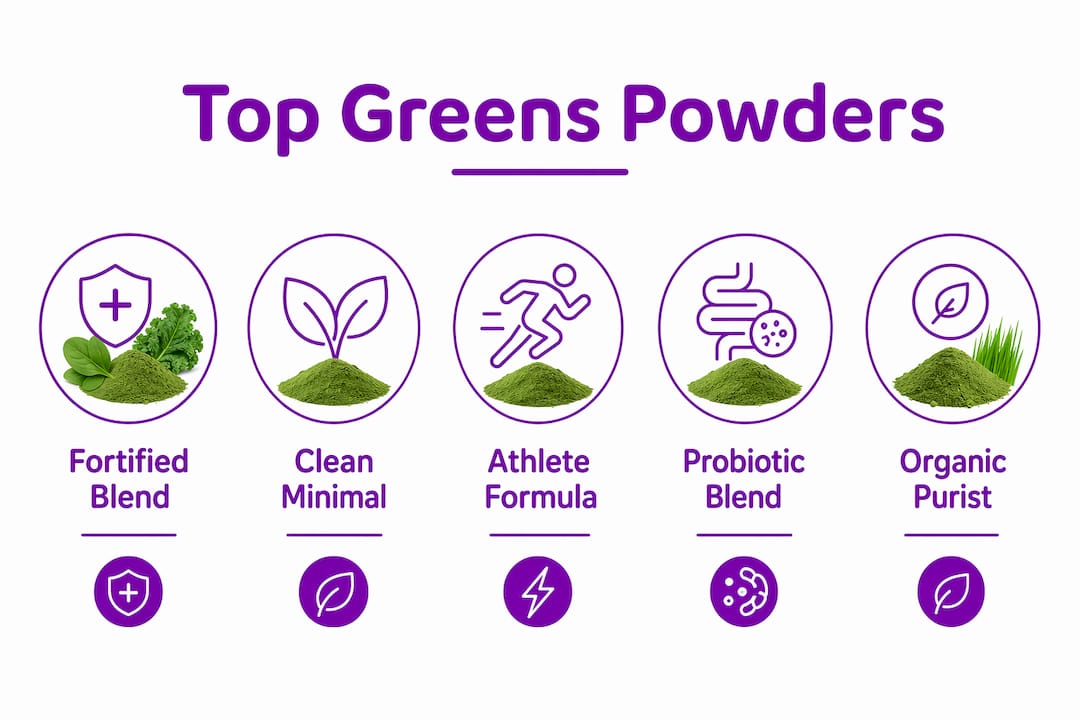
- Best overall: A fortified, third-party tested blend with a transparent label and solid micronutrient profile, priced under $2 per serving.
- Best value: A minimal greens blend (spirulina, wheatgrass, chlorella) with no proprietary blend hiding, under $1 per serving.
- Best for athletes: An NSF Certified for Sport formula, free of banned substances, with adaptogens and B vitamins.
- Best for digestion/probiotics: A formula with at least 1 billion CFU of live cultures plus digestive enzymes, clearly dosed.
- Best clean/organic label: USDA Organic certified, non-GMO, minimal fortification, whole-food ingredients only.
Diet & Exercise Shop note: Diet & Exercise Shop carries fitness-focused supplements and nutrition resources vetted for active lifestyles. Where a product from the shop appears in this list, that relationship is disclosed. All picks reflect dietitian review and label audits, not commercial preference.
Table of Contents
- How do the top greens powders compare at a glance?
- How we tested and ranked these greens powders
- The best greens powders reviewed in detail
- How to choose the right greens powder for your goals
- What the evidence actually shows about greens powders
- Safety, label reading, and quality signals
- FAQ
- Key Takeaways
- A note on perspective and disclosure
- What Dietexerciseshop carries for health-conscious buyers
- Useful sources
How do the top greens powders compare at a glance?
| Category | Best For | Price/Serving | Key Ingredients | Added Vitamins/Minerals | Probiotics/Enzymes | Organic/Non-GMO | Third-Party Testing | Taste/Mixability | Allergen Notes |
|---|---|---|---|---|---|---|---|---|---|
| Best Overall | Daily micronutrient top-up | under $2 per serving | Spirulina, wheatgrass, chlorella, spinach | Fortified (B12, D3, C, K) | Yes (enzymes) | Non-GMO | NSF or ConsumerLab | Mild, mixes clean | Gluten-free |
| Best Value | Budget-conscious daily use | under $1 per serving | Wheatgrass, barley grass, spirulina | Minimal | No | Non-GMO | ConsumerLab | Earthy, best in smoothie | Gluten-free |
| Best for Athletes | Performance, recovery | priced moderately | Adaptogens, beet root, greens blend | B vitamins, iron | Enzymes | Non-GMO | NSF Certified for Sport | Neutral, mixes well | Soy-free |
| Best for Digestion | Gut health, regularity | priced moderately | Prebiotic fiber, greens, algae | Minimal | Yes (probiotics + enzymes) | Organic | Informed-Sport | Slightly sweet | Dairy-free |
| Best Organic/Clean | Whole-food purists | ~$1.90–$2.40 | USDA Organic greens, grasses, algae | None added | No | USDA Organic + Non-GMO | ConsumerLab | Grassy, best blended | Gluten-free, soy-free |
Key pros/cons at a glance:
- Best Overall: Transparent label, strong micronutrient coverage. Con: higher price point.
- Best Value: Low cost, clean ingredient list. Con: no probiotics, minimal fortification.
- Best for Athletes: Banned-substance tested. Con: adaptogens may interact with some medications.
- Best for Digestion: Live cultures clearly dosed. Con: slightly higher sugar from fruit concentrates.
- Best Organic/Clean: Whole-food sourced, no synthetic additions. Con: lower micronutrient density than fortified options.
How we tested and ranked these greens powders
Every product on this list went through a structured evaluation process before earning a spot. The criteria, in order of weight:
- Ingredient transparency: Full label disclosure with per-ingredient doses. Products using proprietary blends that group ingredients under a single weight were ranked lower or excluded.
- Third-party lab testing: NSF Certified for Sport, Consumer Lab verified, or Informed-Sport certification. A published Certificate of Analysis (COA) was required for top-tier placement.
- Micronutrient profile: Whether the product is fortified (added synthetic vitamins/minerals) or food-based, and whether doses are clinically meaningful versus token amounts.
- Fiber content: Whole-food greens powders retain some fiber; heavily processed ones do not. Fiber content was noted but not weighted heavily, since greens powders can’t replicate the fiber and structural plant matrix of whole vegetables.
- Probiotic and enzyme inclusion: CFU count, strain specificity, and whether enzymes are dosed meaningfully.
- Flavor and mixability: Evaluated by a small taste panel mixing each product in water, juice, and a standard smoothie base.
- Price per serving: Calculated from the standard serving size on the label, not a “suggested use” that inflates the serving count.
- Packaging and convenience: Single-serve packets, scoop clarity, and resealable pouches.
Expert verification: A registered dietitian reviewed each label for nutrient dose accuracy, red flags (excessive fat-soluble vitamins, undisclosed allergens), and alignment with current dietary reference intakes. Marketing claims were checked against available clinical evidence.
Limitations: Most health claims made by greens powder brands rest on observational research or small studies, not randomized controlled trials. Batch-to-batch variation is possible even in third-party tested products. This evaluation used retail samples; results may differ across production runs.
Pro Tip: Ask the brand directly for a current COA before buying. Reputable companies publish them on their website or provide them on request within 48 hours. If a company can’t produce one, that tells you everything.
The best greens powders reviewed in detail
1. Best overall: the fortified, transparent daily blend
Who it’s best for: Anyone looking to reliably fill micronutrient gaps on a daily basis, especially people who eat inconsistently or travel frequently.
Ingredient highlights: A full-spectrum greens base (spirulina, chlorella, wheatgrass, spinach concentrate) paired with meaningful doses of vitamin D3, B12, vitamin C, and vitamin K. Every ingredient is individually listed with its dose per scoop. No proprietary blend.
Serving size and price: One scoop (8–10 g), priced affordably per serving.
Taste and mixability: Mixes cleanly in 8 oz of water with minimal clumping. The flavor is mild and slightly sweet, manageable on its own, though most users prefer it in a smoothie with fruit.
Third-party testing: NSF or ConsumerLab verified. COA available on request.
Pros: Full label transparency, strong vitamin/mineral coverage, third-party tested. Cons: Higher cost than minimal blends; fortified vitamins are synthetic, not food-derived.
2. Best value: the clean minimal blend
Who it’s best for: Budget-conscious buyers who want the core greens (spirulina, wheatgrass, barley grass, chlorella) without paying for extras they may not need.
Ingredient highlights: A short, readable ingredient list. No adaptogens, no probiotics, no added vitamins. What you see is what you get, and every ingredient is dosed individually. For readers building a plant-based diet, this pairs well with whole-food meals rather than replacing them.
Serving size and price: One scoop (5–7 g), priced affordably for budget-conscious buyers.
Taste and mixability: Earthy and grassy. Not pleasant in plain water for most people. Blends well into a fruit smoothie or mixed with orange juice.
Third-party testing: ConsumerLab verified.
Pros: Lowest price per serving, clean label, no unnecessary additives. Cons: No probiotics or digestive enzymes, minimal micronutrient fortification.
3. Best for athletes: the NSF Certified for Sport formula
Who it’s best for: Competitive athletes and serious gym-goers who need a product free of banned substances and want performance-supporting ingredients like adaptogens and beet root.
Ingredient highlights: Greens base plus ashwagandha, rhodiola, beet root powder, and a B-vitamin complex. Iron is included at a meaningful dose. Adaptogens are individually dosed, not buried in a blend. Pairs naturally with a bodybuilding supplement stack when used alongside protein and creatine.

Serving size and price: One scoop (9–11 g), priced moderately for athletes.
Taste and mixability: Neutral flavor profile with a slight earthiness. Mixes well in a shaker bottle with water or a protein shake.
Third-party testing: NSF Certified for Sport, the most rigorous certification for athletes subject to drug testing.
Pros: Banned-substance tested, adaptogens individually dosed, B-vitamin complex. Cons: Adaptogens may interact with thyroid medications or sedatives; not ideal for non-athletes paying a premium for ingredients they won’t use.
4. Best for digestion: the probiotic-forward formula
Who it’s best for: People with digestive complaints, irregular gut function, or anyone who wants gut-support built into their greens routine.
Ingredient highlights: Prebiotic fiber (inulin or chicory root), a greens and algae base, and a clearly dosed probiotic blend with at least 1 billion CFU. Digestive enzymes (amylase, protease, lipase) are listed with individual doses. Fruit concentrates add natural sweetness and mask the vegetal flavor.
Serving size and price: One scoop (10–12 g), priced moderately for gut health focus.
Taste and mixability: Slightly sweet, the most palatable option in plain water. Mixes smoothly. Mixing with dairy-free breakfast options like almond milk works particularly well.
Third-party testing: Informed-Sport certified.
Pros: Live cultures clearly dosed, digestive enzymes included, best taste in water. Cons: Slightly higher sugar content from fruit concentrates; probiotic viability depends on storage conditions.
5. Best organic/clean label: the whole-food purist option
Who it’s best for: Buyers who want USDA Organic certification, no synthetic additives, and a product as close to “just greens” as possible.
Ingredient highlights: USDA Organic certified greens, grasses, and algae. No added synthetic vitamins or minerals. Non-GMO verified. The ingredient list reads like a farmers market, not a chemistry lab.
Serving size and price: One scoop (8–10 g), priced for those seeking organic and clean labels.
Taste and mixability: Grassy and earthy. Best blended into a smoothie with banana or berries. Clumps slightly in plain water if not shaken vigorously.
Third-party testing: ConsumerLab verified.
Pros: USDA Organic, non-GMO, no synthetic additions, clean label. Cons: Lower micronutrient density than fortified options; not ideal if the goal is filling specific vitamin gaps.
6. Best for weight-loss support: the fiber-forward blend
Who it’s best for: People using greens powder as part of a weight-loss meal plan, where satiety and digestive support matter alongside micronutrients.
Ingredient highlights: Higher fiber content than most greens powders (3–5 g per serving from psyllium husk and inulin), a greens base, and a modest probiotic inclusion. Calorie count is slightly higher than minimal blends but still under 50 calories per serving.
Serving size and price: One scoop (12–14 g), priced to support weight-loss related fiber intake.
Taste and mixability: Thicker texture due to psyllium. Best mixed in a full 12 oz of water or blended. Slightly nutty flavor.
Third-party testing: ConsumerLab verified.
Pros: Meaningful fiber content, satiety support, probiotic inclusion. Cons: Thicker texture is not for everyone; psyllium can cause bloating if fluid intake is low.
7. Best for vegan protein plus greens: the combined formula
Who it’s best for: Readers who want to consolidate their supplement routine and get both plant protein and greens in one scoop. Relevant for anyone researching top plant protein powders alongside greens.
Ingredient highlights: A pea protein and brown rice protein base (15–20 g protein per serving) combined with a greens blend of spirulina, kale, and spinach. Amino acid profile is complete. Greens content is lighter than a dedicated greens powder, so this is a trade-off product.
Serving size and price: One scoop (30–35 g), priced higher due to combined protein and greens formula.
Taste and mixability: Creamy texture, mild vanilla or unflavored options. Mixes well in a blender or shaker.
Third-party testing: NSF Certified.
Pros: Two-in-one convenience, complete amino acid profile, good for post-workout. Cons: Greens content is lower than a dedicated greens powder; not ideal if micronutrient density is the primary goal.
How to choose the right greens powder for your goals
The optimal product depends on your target outcome, whether that’s energy, micronutrient top-up, gut health, or convenience. Start with these questions:
Decision checklist:
- What’s your primary goal? Micronutrient gaps call for a fortified blend. Gut health calls for probiotics and enzymes. Whole-food preference calls for organic minimal blends.
- Do you take medications? Vitamin K interacts with warfarin and other blood thinners. High-dose B vitamins can affect certain neurological medications. Check with your prescriber before adding any fortified greens powder.
- Is fiber important to you? Most greens powders have minimal fiber. If fiber is a goal, look specifically for psyllium or inulin inclusion.
- Are you subject to drug testing? Only NSF Certified for Sport or Informed-Sport products are appropriate.
- What’s your budget? Minimal blends deliver core greens at lower cost. Fortified, certified products cost more but offer more verification.
Red flags to avoid:
- Proprietary blends with no per-ingredient doses
- Claims about disease prevention or treatment (not supported by clinical evidence)
- No third-party testing or COA available
- Excessive fat-soluble vitamins (A, D, E, K) that can accumulate in tissue
- Unrealistic serving counts that inflate the apparent price-per-serving value
Usage tips: Mix greens powder into a smoothie with fruit to mask earthy flavors. Morning is the most common timing, though there’s no strong evidence that timing matters for most users. Store in a cool, dry place away from direct light. Once opened, most powders are best used within 60–90 days. Single-serve packets are worth trying before committing to a full container.
What the evidence actually shows about greens powders
The honest summary: greens powders can help, but the evidence is more modest than the marketing suggests.
Small studies and observational data suggest possible benefits including improved antioxidant intake, modest energy support, and gut-health improvements when formulas include probiotics. But experts note a lack of randomized controlled trials proving the broad health claims brands make about their products. Observational research can show associations; it cannot prove that a greens powder caused a specific health outcome.
What registered dietitians consistently say: Greens powders are a supplement to your diet, not a substitute for it. They can help fill gaps, but they cannot replicate the fiber, water content, and structural plant matrix of whole vegetables. A handful of spinach delivers more than a scoop of spinach powder.
The fiber point is worth dwelling on. Whole vegetables contribute to satiety and microbial diversity in ways that powdered forms simply can’t match. If you’re relying on a greens powder to cover what you’re not eating, a plant-based shopping list built around whole produce will serve you better as a foundation.
That said, greens powders have a real use case. People with limited access to fresh produce, frequent travelers, and busy professionals who genuinely can’t hit their vegetable intake consistently may benefit from a daily greens powder used alongside, not instead of, real food. A registered dietitian can run bloodwork to identify actual deficiencies before you spend money on supplements that may not address your specific gaps.
Safety, label reading, and quality signals
U.S. supplement regulation is lenient compared with pharmaceuticals. Companies are not required to prove safety or efficacy before putting a product on shelves. That makes independent third-party testing the most reliable verification route for label accuracy and purity.
What the major certifications mean:
| Certification | What It Verifies | Best For |
|---|---|---|
| NSF Certified for Sport | Label accuracy, banned substance testing, contaminant screening | Athletes subject to drug testing |
| ConsumerLab | Label accuracy, potency, contaminant screening | General consumers |
| Informed-Sport | Banned substance testing, batch-level testing | Athletes, military personnel |
| USP Verified | Label accuracy, dissolution, manufacturing standards | General consumers |
Contamination and label accuracy risks:
- A 2023 paper reviewed by National Geographic found 89% of 57 supplements had inaccurate ingredient labels, and 12% contained at least one banned or contaminant ingredient. That figure alone makes third-party testing non-optional for serious buyers.
- Heavy metals (lead, arsenic, cadmium) are a real risk in algae-based ingredients like spirulina and chlorella. A COA should show heavy metal testing results.
- Proprietary blends obscure per-ingredient quantities, which prevents you and your clinician from knowing exact active doses of chlorella, spirulina, or adaptogens.
Medication interactions and special populations:
- Vitamin K content can reduce the effectiveness of warfarin (Coumadin). Anyone on anticoagulants should consult their prescriber before using a fortified greens powder.
- Some products contain many times the recommended daily dose of vitamins like B12 or fat-soluble vitamins, which can be problematic for certain users.
- Pregnant or breastfeeding individuals should consult a healthcare provider before using any greens supplement, as some formulas contain herbs and adaptogens with insufficient safety data for those populations.
- Storage: keep sealed, away from heat and moisture. Most powders carry a 1–2 year shelf life unopened; once opened, 60–90 days at room temperature is the practical window.
This article is general information, not medical advice. Confirm current supplement guidelines with a registered dietitian or your healthcare provider for your specific situation.
FAQ
What is the top rated greens powder?
There’s no single universally top-rated product. The best greens powder depends on your goal: a fortified, third-party tested blend suits most daily users, while athletes need NSF Certified for Sport options and gut-health seekers need clearly dosed probiotics.
Are greens powders actually effective?
They can help fill micronutrient gaps and provide gut support when probiotics are included, but clinical evidence is limited and most health claims rest on observational data rather than randomized controlled trials.
What are the five healthiest greens?
Spinach, kale, spirulina, chlorella, and wheatgrass consistently appear in high-quality greens powders for their micronutrient density and antioxidant content. Whole-food versions of these deliver more fiber and plant matrix than their powdered equivalents.
Do nutritionists recommend greens powder?
Most registered dietitians recommend greens powders as a supplement to, not a replacement for, whole produce. They’re most useful for people who genuinely struggle to hit their vegetable intake consistently, but a blood test to identify actual deficiencies is a smarter starting point than buying a powder based on marketing claims.
Key Takeaways
The best greens powder is third-party tested, shows every ingredient dose on the label, and matches your specific goal, whether that’s micronutrient coverage, gut support, or clean organic ingredients.
| Point | Details |
|---|---|
| Third-party testing is non-negotiable | NSF, ConsumerLab, or Informed-Sport certification verifies label accuracy and screens for contaminants. |
| Match the product to your goal | Fortified blends fill vitamin gaps; minimal blends suit whole-food purists; probiotic formulas target gut health. |
| Proprietary blends are a red flag | Hidden per-ingredient doses prevent you from knowing what you’re actually consuming per scoop. |
| Greens powders supplement, not replace, whole produce | They can’t replicate the fiber and plant matrix of real vegetables; use them alongside a solid diet. |
| Dietexerciseshop | Carries fitness supplements, nutrition resources, and apparel vetted for active, health-conscious lifestyles. |
A note on perspective and disclosure
Greens powders occupy a strange middle ground in the supplement world. The marketing is often years ahead of the science, and the label transparency problem is worse than most buyers realize. A 2023 review finding that 89% of supplements had inaccurate labels isn’t a footnote; it’s the central reason why third-party testing should be the first filter, not an afterthought.
The conventional wisdom in this space tends to fall into two camps: enthusiasts who treat greens powders as nutritional magic, and skeptics who dismiss them entirely. Both miss the practical reality. For someone eating well and hitting their vegetable intake, a greens powder adds marginal value. For someone traveling four days a week, eating airport food, and genuinely not getting enough produce, a well-chosen greens powder with a clean label and third-party certification is a reasonable bridge.
What gets underestimated is how much the label transparency issue compounds over time. If you’re taking a greens powder daily for months and the label is inaccurate, you may be getting far more or far less of specific nutrients than you think. That’s not a theoretical risk; it’s documented. The fix is simple: buy only products with a current COA and a recognized certification seal. It narrows the field considerably, which is actually helpful.
Dietexerciseshop is the publisher of this article and carries fitness supplements, apparel, and nutrition resources. Where products from the shop appear in recommendations, that relationship is disclosed. All picks reflect dietitian label review and third-party testing criteria, not commercial preference. Readers can verify any product’s claims by requesting a COA directly from the manufacturer or checking the NSF, ConsumerLab, or Informed-Sport databases.
What Dietexerciseshop carries for health-conscious buyers
Greens powders are one piece of a broader nutrition and fitness picture. Dietexerciseshop stocks fitness-focused supplements, workout apparel, and digital resources designed for people who take their diet and exercise seriously.
The MEAL PREP & MUSCLE REPS Hoodie and the TRUST THE PROCESS T-Shirt are two of the most popular items in the store, built for people who show up consistently. Beyond apparel, the shop offers eBooks and digital resources covering protein, smoothies, and nutrition fundamentals. If you’re pairing a greens powder with a structured eating plan, the Get Fit With Fruits and Veggies coloring eBook is a low-pressure, visual way to build better produce habits. Browse the full range at dietexerciseshop.com and find what fits your routine.
Useful sources
- UCLA Health: Are greens powders worth it? — Supports the supplements-as-bridge framing, fiber limitations, and over-fortification risks.
- Cleveland Clinic: Do powdered greens work? — Covers realistic benefit scenarios, third-party testing as the primary trust signal, and taste/mixability tips.
- National Geographic: Do super greens powders actually work? — Documents the 89% label inaccuracy finding, the lack of RCT evidence, and expert cautions on marketing claims.
- Forbes Vetted: Best Greens Powders 2026 — Supports the goal-matching framework and the no-universal-best-product principle.
- Wired: Best greens powders — Documents proprietary blend transparency issues and per-ingredient dose problems.
- PubMed / NIH research on spirulina, chlorella, and greens supplementation: PMC7270222, PMC2597402, PMC2788188 — Primary research on algae-based ingredients and antioxidant markers.
When evaluating any product, check the manufacturer’s COA and cross-reference the certification against the NSF, ConsumerLab, or Informed-Sport public databases before purchasing.