
High Protein Snacks That Actually Fuel Your Workouts
The best high-protein snacks for fitness goals fall into five categories: animal-based (jerky, canned fish), dairy (Greek yogurt, cottage cheese), plant-based (edamame, roasted chickpeas), eggs, and bars or protein powders. For most training goals, aim for 10–20 grams of protein per snack, with post-workout recovery pushing toward a higher protein intake.
Here are six best-in-class picks to start with:
- Beef jerky — ≈9 g protein per oz, shelf-stable, gym-bag ready
- Nonfat plain Greek yogurt — ≈16 g per 5.3 oz container, great post-workout
- Canned tuna or salmon — ≈21–22 g per 3 oz, no refrigeration needed
- Lowfat cottage cheese — ≈12–14 g per ½ cup, cheap and filling
- Shelled edamame — ≈9 g per 4 oz, fiber-rich, fridge-friendly
- Hard-boiled eggs — roughly 6 g per egg, portable and inexpensive
Table of Contents
- Why protein snacks make a real difference for fitness
- The best high-protein snack options, organized by category
- How to choose a high-protein snack: a practical label checklist
- Packing snacks for the gym, commute, or travel
- Three quick homemade protein snacks you can make in 10 minutes
- Snack timing and portions for your specific fitness goal
- Health notes worth knowing before you stock up
- Key Takeaways
- The snack strategy most people get backwards
- Dietexerciseshop has the gear to match your nutrition game
- FAQ
Why protein snacks make a real difference for fitness
Protein keeps you full longer than carbs or fat do, and that satiety effect directly supports macro adherence. When you snack on protein-forward foods, blood sugar stays steadier, cravings for sweets drop, and you are less likely to blow your calorie budget at the next meal. Planned high-protein snacking can reduce cravings for sweets and refined snacks, which matters when you are tracking macros week after week.
For muscle maintenance, the distribution of protein across the day matters as much as the total. Spacing protein across meals and snacks — using Greek yogurt, cottage cheese, and eggs as vehicles — supports recovery and retention better than loading it all into one meal. Timed around workouts, a protein snack also gives muscles the amino acids they need when uptake is highest.
The best high-protein snack options, organized by category
| Category | Example Snack | Protein (g/serving) | Portability | Budget Note |
|---|---|---|---|---|
| Animal-based | Beef jerky (1 oz) | ≈9 g | Shelf-stable | Moderate cost |
| Animal-based | Canned tuna (3 oz) | ≈21–22 g | Shelf-stable | Very affordable |
| Dairy | Nonfat Greek yogurt (5.3 oz) | ≈16 g | Fridge required | Affordable |
| Dairy | Lowfat cottage cheese (½ cup) | ≈12–14 g | Fridge required | Very affordable |
| Plant-based | Shelled edamame (4 oz) | ≈9 g | Fridge required | Affordable |
| Plant-based | Trail mix (50 g) | ≈5.5 g | Shelf-stable | Affordable |
| Eggs | Hard-boiled egg (1 large) | ≈6 g | Fridge required | Very affordable |
| Bars/Powders | Protein bar (varies) | 10–20 g | Shelf-stable | Moderate–high |
Animal-based options like jerky and canned fish are the most portable. Beef jerky delivers ≈9 g per ounce, and premium beef crisp products can reach 24 g per bag — no refrigeration, no prep. Canned tuna is the budget king at roughly 21–22 g of protein for under a dollar per serving in most US grocery stores.
Plant-based picks take more planning. Edamame needs refrigeration and a microwave, and trail mix only provides ≈5.5 g per 50 g serving — boost that by choosing almonds or pistachios over lower-protein nuts. Roasted chickpeas are a solid shelf-stable swap with more protein and fiber per ounce than most chips. For a deeper vegan protein sources list, the Diet Exercise Shop blog covers the full range.
Dairy and eggs are the most cost-effective protein sources per gram in the US. Greek yogurt and cottage cheese are both under $2 per serving at most stores and deliver meaningful protein without much prep. Hard-boiled eggs batch-cook in 12 minutes and keep in the fridge for a week.
How to choose a high-protein snack: a practical label checklist
The one-line rule: pick snacks with at least 10 g of protein and fewer than 5 g of added sugar per serving. Then run through this checklist before you buy:
- Protein grams per serving — target 10–20 g; post-workout, push toward 20–30 g
- Added sugar — under 5 g; some flavored yogurts and bars hide 15–20 g
- Calories per serving — match to your goal (150–250 cal for weight loss; up to 300 for muscle gain)
- Sodium — some packaged snacks exceed 300 mg per serving; keep daily totals in check
- Fiber — 2–4 g adds satiety without calories
- Ingredient list — shorter is usually better; avoid snacks where sugar or syrup appears in the first three ingredients
- Serving size vs. package size — many bags contain two or three servings; the label numbers only apply to one
Pro Tip: Pre-portion calorie-dense snacks like nuts and trail mix into small containers or zip bags before the week starts. It takes two minutes and removes the temptation to eat straight from the bag, where portion sizes become guesswork.
Packing snacks for the gym, commute, or travel
Shelf-stable options — jerky, roasted seeds, protein bars, single-serve nut butter packets — are the default for gym bags and long commutes. They handle heat reasonably well and need no utensils. Fridge-required items like Greek yogurt, cottage cheese, and hard-boiled eggs stay safe for about two hours at room temperature; beyond that, use an insulated bag with an ice pack.
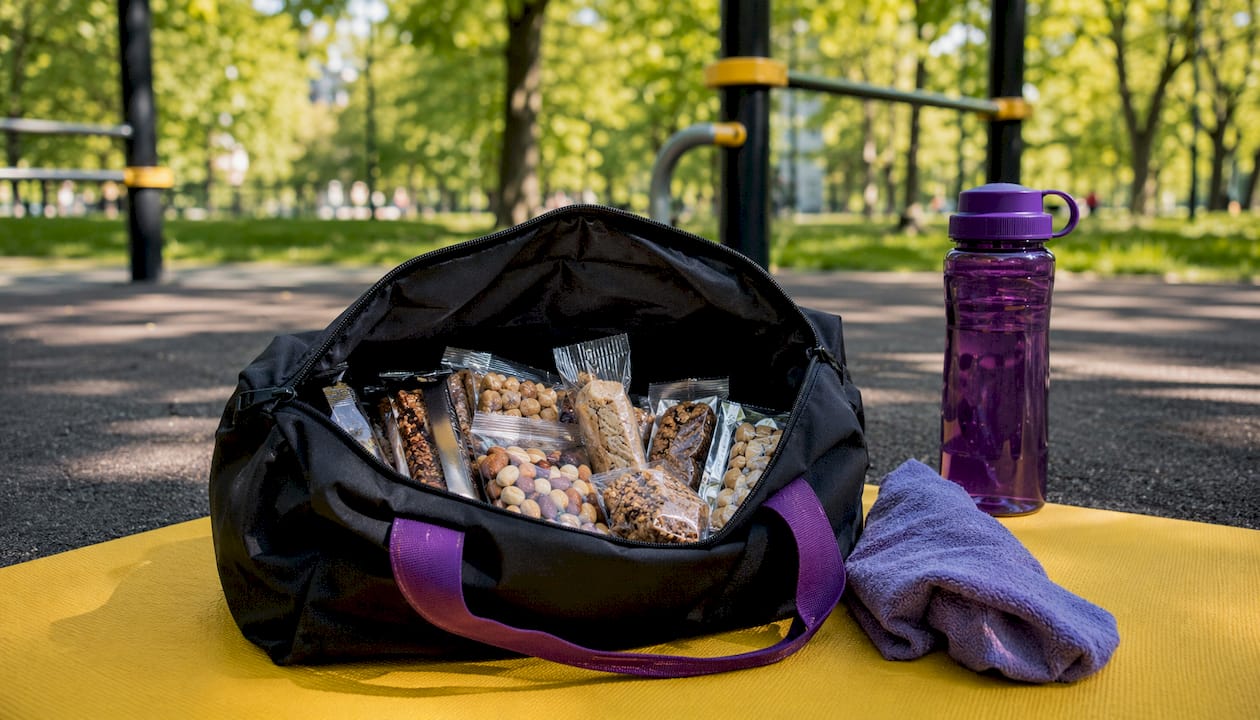
For air travel, single-serve pouches of canned fish, nut butter, or protein bars clear TSA without issue. Liquid or gel-like items (yogurt, cottage cheese) fall under the 3.4 oz liquid rule in carry-ons, so pack those in checked luggage or buy after security. A low-carb snack ideas guide from Dietexerciseshop has more shelf-stable options worth bookmarking for travel days.
Three quick homemade protein snacks you can make in 10 minutes
-
No-bake protein bites — Mix ½ cup rolled oats, 2 tablespoons peanut butter, 1 scoop protein powder, and 1 tablespoon honey. Roll into 8 balls and refrigerate 20 minutes. Each ball delivers roughly 8–10 g of protein depending on your powder. Eat 2 pre-workout for a clean carb-plus-protein hit.
-
Greek yogurt protein parfait — Layer one 5.3 oz container of nonfat plain Greek yogurt (≈16 g protein) with ¼ cup granola and a handful of berries. Total prep: 90 seconds. Swap in a plant-based yogurt and add a tablespoon of hemp seeds if you avoid dairy. Best as a post-workout snack or a quick high-protein breakfast when you are short on time.
-
Tuna-stuffed cucumber boats — Slice a cucumber lengthwise, scoop out the seeds, and fill with one 3 oz can of tuna mixed with a teaspoon of Greek yogurt and lemon juice. Total protein: roughly 22–24 g per serving, under 150 calories. Works as a pre-workout snack or a light midday option when you want something savory without cooking.
These recipes are flexible. Swap tuna for mashed chickpeas in the cucumber boats for a plant-based version, or use cottage cheese instead of Greek yogurt in the parfait for a slightly different texture and similar protein count.
Snack timing and portions for your specific fitness goal
Timing depends on your goal. Here is the short version:
- Pre-workout (30–60 min before): 10–20 g protein paired with fast-digesting carbs. A banana with Greek yogurt or two protein bites works well. Avoid heavy fat or fiber right before intense cardio — it slows digestion and can cause discomfort mid-session. For more on pre-workout snack timing, Diet Exercise Shop has a dedicated guide.
- Post-workout (within 30–60 min): 20–30 g protein to support muscle protein synthesis. Canned tuna, a large Greek yogurt, or cottage cheese with fruit all hit this range.
- Weight-loss midafternoon snack: 10–15 g protein, 150–200 calories. Hard-boiled eggs, a small serving of edamame, or a protein bar in this range keeps hunger controlled without adding significant calories before dinner.
Distributing protein across 3–5 meals and snacks throughout the day supports muscle retention better than concentrating it at one meal. Two eggs at breakfast, Greek yogurt mid-morning, canned tuna at lunch, and cottage cheese as an afternoon snack can add up to 60–70 g of protein before you even sit down to dinner.
Health notes worth knowing before you stock up
Most people can eat high-protein snacks freely, but a few cautions apply. Packaged jerky, protein bars, and flavored crackers can carry significant sodium; some options exceed 300 mg per serving, and stacking several throughout the day adds up fast. Anyone managing kidney disease should consult a healthcare provider before significantly increasing protein intake, since high protein loads can stress compromised kidneys.
Prevention’s July 2026 dietitian roundup recommends combining plant-based and high-quality animal proteins for cardiovascular health — not just for fitness performance. Leaning exclusively on red meat and processed jerky misses the heart-health benefits that legumes, edamame, and seeds provide.
On the environmental side, plant-based options like roasted chickpeas, edamame, and lentils carry a significantly lower carbon footprint than beef-based snacks. They also tend to cost less per gram of protein, making them smart budget picks. Rotating plant and animal sources covers both bases.
Key Takeaways
The most effective approach to high-protein snacking is pairing exact protein targets (10–30 g per snack) with smart label checks and snacks matched to your routine and fitness goal.
| Point | Details |
|---|---|
| Protein target per snack | Aim for 10–20 g most snacks; push to 20–30 g post-workout for recovery. |
| Check sugar and sodium | Keep added sugar under 5 g and watch for sodium over 300 mg per serving. |
| Match portability to routine | Shelf-stable (jerky, bars) for gym bags; fridge items need an ice pack beyond 2 hours. |
| Mix plant and animal sources | Rotating both supports cardiovascular health and covers a wider nutrient range. |
| Diet Exercise Shop resources | Diet Exercise Shop’s blog and product range support snack planning with guides, recipes, and fitness gear. |
The snack strategy most people get backwards
The conventional advice is to “add protein to your snacks.” That framing puts protein as an afterthought — something you bolt onto whatever you were already eating. The smarter move is to build the snack around the protein source first and fill in around it.
Start with the protein anchor (tuna, Greek yogurt, a hard-boiled egg, edamame) and then add carbs or fat as needed for the goal. Pre-workout? Add a banana. Weight loss? Keep it lean and stop there. That one mental shift changes how you shop, how you prep, and how consistently you hit your daily protein target. It also makes the label-check process faster: you are evaluating whether a snack earns its protein claim, not whether a carb-heavy snack has “some protein added.”
The other thing worth saying plainly: the best protein snack is the one you actually have with you. A perfectly optimized snack left in the fridge does nothing. Shelf-stable options like jerky and bars are not second-best choices — for anyone with a long commute, a busy gym schedule, or frequent travel, they are the practical first choice.
Diet & Exercise Shop has the gear to match your nutrition game
If you are putting this much thought into your protein snacks, you probably care just as much about the rest of your fitness routine. Diet Exercise Shop is built for exactly that mindset: fitness apparel, digital nutrition guides, and workout gear all in one place, without the fluff.
The MEAL PREP & MUSCLE REPS hoodie is a fan favorite for a reason — it says what most serious gym-goers already know: the kitchen work is half the training. Pair it with the Cardio & Carbs digital product for a practical look at how to fuel your sessions. Browse the full store at Dietexerciseshop and find what fits your routine.
FAQ
How much protein should a snack have?
Most fitness goals are well-served by 10–20 g of protein per snack. Post-workout, aim for 20–30 g to support muscle recovery.
What are the best high-protein snacks that don’t need refrigeration?
Beef jerky (≈9 g/oz), canned tuna (≈21–22 g/3 oz), protein bars, roasted chickpeas, and single-serve nut butter packets are all shelf-stable and gym-bag friendly.
Are plant-based snacks high enough in protein for fitness goals?
Yes, when chosen carefully. Edamame delivers ≈9 g per 4 oz, roasted chickpeas and lentils are solid options, and combining them across the day adds up. Dietexerciseshop’s vegan protein sources guide covers the full list.
What should I avoid on a high-protein snack label?
Watch for added sugar over 5 g, sodium over 300 mg, and ingredient lists where sugar or syrup appears in the first three items. Also check whether the package contains multiple servings — the label numbers apply to one serving only.
When is the best time to eat a protein snack?
Pre-workout: 30–60 minutes before, pairing protein with fast carbs. Post-workout: within 60 minutes, targeting 20–30 g. For weight loss, a 10–15 g protein snack mid-afternoon controls hunger before dinner.
Recommended
- 7 Best Pre Workout Snacks to Fuel Your Fitness in 2025 – Diet & Exercise
- What to Eat When Exercising to Fuel Your Fitness – Diet & Exercise
- Discover what to eat while exercising for energy & recovery – Diet & Exercise
- A Healthy Diet Plan for Athletes That Actually Works – Diet & Exercise