

Magnesium for Sleep: What Works and How to Try It
Magnesium genuinely helps some people sleep better, but the effect is modest, not dramatic. Clinical trials show it works best for people who aren’t getting enough from food, those with mild insomnia, or anyone whose sleep problems are tangled up with muscle tension or nighttime stress. Here’s what the evidence actually supports:
- Who benefits most: People with low dietary magnesium intake, mild-to-moderate insomnia, or sleep disruption linked to muscle cramps and tension. A randomized trial published on PMC found statistically significant improvements in insomnia severity after 28 days of 250 mg elemental magnesium daily as bisglycinate.
- What to expect: Modest, gradual improvement, not a knockout effect. Think falling asleep a little faster, waking up less, or feeling more rested. The Food and Nutrition Board sets a cautious upper guidance for supplemental magnesium intake for most adults.
- Safety caveat: People with kidney disease should not supplement without a clinician’s sign-off. Magnesium is cleared by the kidneys, and impaired function raises the risk of toxicity.
Table of Contents
- How does magnesium help you sleep?
- What does the clinical evidence actually show?
- Which magnesium form is best for sleep?
- How much magnesium should you take for sleep, and when?
- Is magnesium safe? Side effects, interactions, and red flags
- Magnesium-rich foods and why diet comes first
- Does topical magnesium actually work for sleep?
- A simple 4-week trial plan to test magnesium for your sleep
- When should you see a clinician instead of self-supplementing?
- Key Takeaways
- The part most magnesium articles skip
- Dietexerciseshop has the fitness gear to match your health goals
- Useful sources
- FAQ
How does magnesium help you sleep?
Magnesium doesn’t knock you out. It works through several overlapping physiological pathways that collectively lower arousal and support the conditions your body needs to fall and stay asleep.
- GABAergic modulation: Magnesium binds to and activates GABA-A receptors, the same receptors targeted by many prescription sleep medications. GABA is the brain’s primary inhibitory neurotransmitter, and higher GABA activity quiets neural firing. According to NIH-hosted research on magnesium’s mechanisms in sleep disorders, this pathway is one of the most clinically relevant links between magnesium status and sleep quality.
- NMDA receptor antagonism: Magnesium blocks NMDA glutamate receptors at rest. Glutamate is excitatory, so this blockade reduces the kind of hyperarousal that keeps people lying awake with racing thoughts.
- Melatonin synthesis support: Magnesium is a cofactor in the enzymatic pathway that converts serotonin to melatonin. Low magnesium can blunt melatonin production, which disrupts the circadian signal that tells your body it’s time to sleep.
- Cortisol modulation: Higher magnesium status is associated with lower evening cortisol. Cortisol is a wakefulness hormone, and elevated nighttime levels are a common driver of sleep-onset difficulty.
- Muscle relaxation: Magnesium acts as a natural calcium antagonist. Calcium triggers muscle contraction; magnesium counteracts it. This is why low magnesium often shows up as nighttime leg cramps, which are a direct sleep disruptor.
- Circadian rhythm support: Research published on PMC linking magnesium intake to sleep duration suggests that adequate magnesium helps regulate circadian gene expression, keeping the body’s internal clock better calibrated.
One thing worth knowing: a standard serum magnesium blood test often misses subclinical deficiency. Serum levels are tightly regulated and stay “normal” even when cellular stores are depleted. Red blood cell (RBC) magnesium is a more sensitive marker, though it isn’t routinely ordered. If you suspect deficiency and your serum test comes back normal, ask your clinician about RBC magnesium or simply evaluate your dietary intake.
Statistic callout: A PMC-published trial found that most sleep improvements from 250 mg elemental magnesium bisglycinate daily emerged within the first 14 days and were sustained at 28 days, suggesting the mechanisms above activate relatively quickly once magnesium status improves.
What does the clinical evidence actually show?
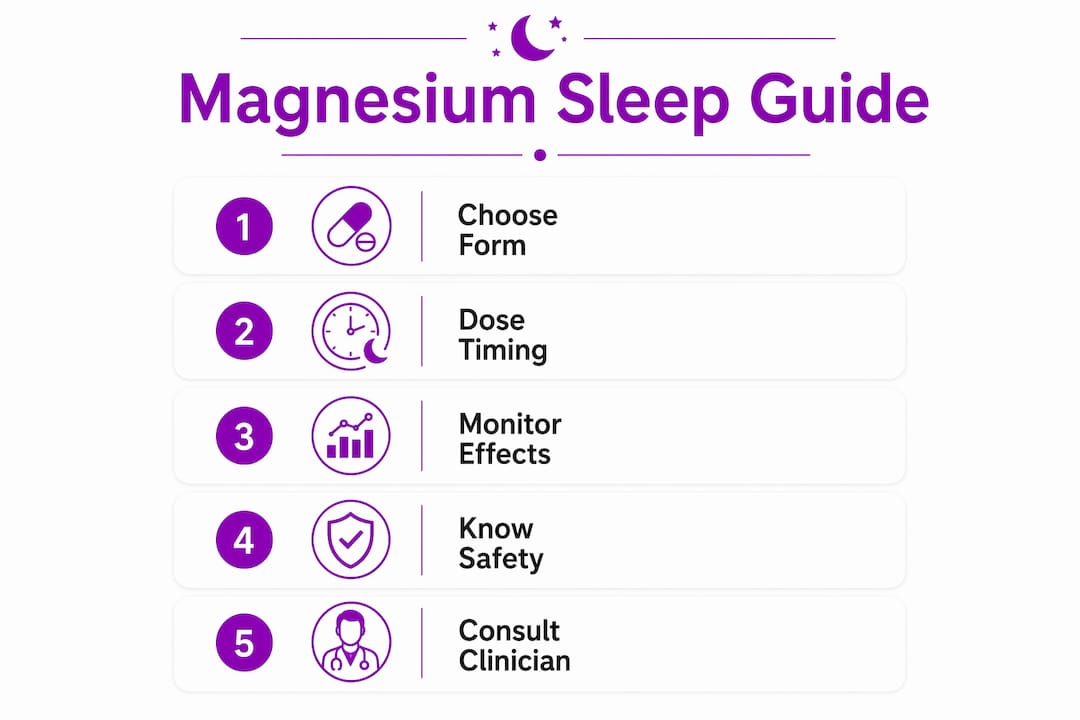
The honest answer: the evidence is promising but not overwhelming. Effects are real for certain people, small in absolute terms, and inconsistent across studies.
The Cleveland Clinic characterizes magnesium’s sleep benefits as modest and positions it as an adjunct, not a primary treatment for chronic insomnia. That framing is accurate. Pooled analyses report small average reductions in sleep-onset latency and mixed results for total sleep time, with heterogeneity across trials making it hard to draw firm conclusions.
| Trial / Review | Population | Dose (elemental Mg) | Duration | Key Result |
|---|---|---|---|---|
| Bisglycinate RCT (Dove Medical Press) | Healthy adults with poor sleep | 250 mg/day | 28 days | ISI reduced −3.9 (Mg) vs −2.3 (placebo); between-group difference −1.6 points (p = 0.049) |
| PMC bisglycinate trial | Healthy adults with poor sleep | 250 mg/day | 28 days | Per-protocol confirmed ITT; improvements emerged by day 14 |
| Pooled analyses (Supplement Clarity review) | Mixed adult populations | 250–700+ mg/day | 4–12 weeks | ~10–20 min reduction in sleep-onset latency; total sleep time effects inconsistent |
| PMC magnesium-intake cohort | General adult population | Dietary intake assessed | Cross-sectional | Higher magnesium intake associated with longer sleep duration |
Statistic callout: The most rigorous recent trial found a between-group ISI reduction of −1.6 points after 28 days of 250 mg elemental magnesium bisglycinate. The ISI (Insomnia Severity Index) runs from 0–28, so this is a small but statistically significant shift. Effect size was d = 0.2, which is clinically modest.
Key limitations to keep in mind:
- Most trials are small, short, and use different populations and doses.
- Placebo response in sleep trials is consistently high, which compresses the apparent drug-placebo gap.
- People with the lowest baseline magnesium intake appear to respond better, suggesting the benefit is partly about correcting a deficit rather than pharmacologically inducing sleep.
- Evidence is strongest for sleep-onset latency and insomnia severity scores; effects on total sleep time and sleep architecture are less consistent.
Which magnesium form is best for sleep?
Magnesium glycinate (also called bisglycinate) is the most commonly recommended form for sleep, and magnesium L-threonate is an emerging option worth knowing about, though its sleep-specific evidence is thinner.

| Form | Pros | Cons | Typical elemental Mg per common dose |
|---|---|---|---|
| Glycinate (bisglycinate) | High absorption, gentle on GI tract, glycine co-delivery may add sleep benefit | Costs more than oxide or citrate | ~100–200 mg elemental per 2–4 capsule serving |
| L-threonate | Crosses blood-brain barrier more readily; may support cognitive aspects of sleep | Weak sleep-specific trial data; expensive | ~50–70 mg elemental per serving |
| Citrate | Good absorption, widely available, affordable | Can have a mild laxative effect at higher doses | ~60–100 mg elemental per 200–400 mg compound dose |
| Oxide | Cheap, high compound weight | Poor absorption (~4%); mostly used as a laxative | ~60 mg elemental per 200 mg compound dose |
| Taurate | Magnesium + taurine (calming amino acid); theoretically good for stress-related sleep issues | Very limited clinical trial data | Varies; typically ~50–100 mg elemental |
| Topical (spray/oil/bath) | No GI side effects; relaxation ritual benefit | Minimal evidence for systemic magnesium increase | Not applicable (systemic delivery unreliable) |
The Sleep Foundation recommends magnesium glycinate as the preferred form for sleep, citing its absorption profile and tolerability. CNN’s health reporting echoes this, noting that L-threonate’s theoretical brain-delivery advantage hasn’t yet translated into strong sleep trial data.
Glycinate also delivers glycine alongside magnesium. Glycine itself has independent evidence as a sleep-promoting amino acid, which may partly explain why bisglycinate trials show slightly better results than you’d expect from magnesium alone.
Pro Tip: Always check the Supplement Facts panel for the “elemental magnesium” figure, not just the compound weight. A label reading “Magnesium Glycinate 500 mg” contains roughly 50–100 mg of elemental magnesium, not 500 mg. Many “magnesium complex” products hide low-bioavailability forms like oxide as the dominant ingredient. Look for the specific salt name and the elemental amount per serving before buying.
How much magnesium should you take for sleep, and when?
Trials that showed sleep benefits used moderate doses of elemental magnesium daily, typically taken as a single bedtime dose. The Sleep Foundation sets the supplemental upper guidance for most adults in a moderate range consistent with clinical advice. Mayo Clinic guidance notes that clinicians sometimes recommend moderate bedtime doses, but caution that total daily intake and kidney function must be factored in.

The compound dose on a label is not the elemental dose. Here’s how common products translate:
| Supplement label | Compound dose | Approximate elemental Mg | Notes |
|---|---|---|---|
| Magnesium glycinate | 400 mg | ~50–80 mg | Varies by manufacturer; check label |
| Magnesium glycinate | — | ~100–200 mg | Common “2-capsule” serving |
| Magnesium citrate | 400 mg | ~60–80 mg | Good absorption |
| Magnesium oxide | 500 mg | ~150–300 mg | Poor absorption; mostly laxative effect |
| Magnesium L-threonate | — | ~50–70 mg | Very low elemental per gram of compound |
Timing: Most people take magnesium 30–60 minutes before bed. There’s no hard pharmacokinetic reason it must be at bedtime, but the muscle-relaxation and GABA-modulating effects make evening dosing intuitive, and it’s what most trials used. If you experience GI discomfort, try taking it with a small snack.
Key dosing points:
- Start at the lower end, around 100–200 mg elemental magnesium, and increase only if needed.
- Don’t exceed 350 mg supplemental elemental magnesium without medical guidance.
- Some trials used higher doses (up to 700+ mg elemental), but higher doses increase GI side effects without clear additional sleep benefit.
- If you’re also eating magnesium-rich foods, your total intake from diet plus supplement should stay within safe ranges.
Is magnesium safe? Side effects, interactions, and red flags
For most healthy adults with normal kidney function, magnesium supplements within the recommended supplemental limit are well tolerated. The main issues are GI-related, dose-dependent, and manageable.
Common side effects:
- Diarrhea and loose stools (most common, especially with oxide and citrate at higher doses)
- Nausea or stomach cramping, usually at doses above 350 mg elemental
- Glycinate and taurate forms are significantly gentler on the digestive system
Drug interactions to know:
- Antibiotics (fluoroquinolones, tetracyclines): Magnesium can bind to these drugs and reduce their absorption. Space magnesium 2–4 hours away from the antibiotic dose.
- Bisphosphonates (e.g., alendronate for osteoporosis): Same issue; take bisphosphonates on an empty stomach, well away from magnesium.
- Diuretics: Some diuretics increase magnesium excretion (loop diuretics like furosemide), while others reduce it (potassium-sparing diuretics). Either way, check with your clinician.
- Proton pump inhibitors (PPIs): Long-term PPI use (omeprazole, pantoprazole) can cause hypomagnesemia. If you’re on a PPI, your baseline magnesium may already be low.
- Diabetes medications: Magnesium affects insulin sensitivity; people on diabetes medications should monitor blood glucose if starting supplementation.
Red flags — stop and seek care if you notice:
- Sudden muscle weakness or difficulty breathing
- Irregular heartbeat or palpitations
- Severe nausea, vomiting, or confusion
- Known kidney disease or dialysis (do not supplement without explicit clinician approval)
- Symptoms of hypermagnesemia: flushing, low blood pressure, extreme fatigue
A note on testing: serum magnesium is insensitive for detecting subclinical deficiency. If you’re on a PPI, have GI malabsorption, or eat a consistently low-magnesium diet, ask about RBC magnesium or a clinical assessment rather than relying on a normal serum result.
Magnesium-rich foods and why diet comes first
Before reaching for a supplement, look at your plate. Many Americans fall short of the recommended dietary allowance for magnesium, and food sources come packaged with fiber, cofactors, and other nutrients that supplements don’t replicate. The Sleep Foundation specifically recommends a food-first approach, using supplements only when dietary intake is consistently low or symptoms persist.
Top magnesium-rich foods with approximate amounts per serving:
- Pumpkin seeds (1 oz, roasted): ~150 mg magnesium
- Chia seeds (1 oz): ~111 mg magnesium
- Almonds (1 oz): ~80 mg magnesium
- Spinach (½ cup cooked): ~78 mg magnesium
- Black beans (½ cup cooked): ~60 mg magnesium
- Edamame (½ cup cooked): ~50 mg magnesium
- Dark chocolate (1 oz, 70–85% cacao): ~50 mg magnesium
- Whole wheat bread (2 slices): ~46 mg magnesium
- Avocado (1 medium): ~44 mg magnesium
- Brown rice (½ cup cooked): ~42 mg magnesium
The RDA for magnesium is 400–420 mg/day for adult men and 310–320 mg/day for adult women (higher during pregnancy). If you’re eating a varied diet with nuts, seeds, leafy greens, and legumes, you may already be close. If your diet leans heavily on processed foods, a supplement makes more sense as a gap-filler.
Does topical magnesium actually work for sleep?
Short answer: probably not for systemic effects, but it’s not useless either.
Topical magnesium products, including sprays, oils, and bath salts (usually magnesium sulfate or magnesium chloride), are marketed as a transdermal delivery route. The problem is that current evidence does not support meaningful increases in systemic magnesium from topical application. Skin is an effective barrier, and the amounts that cross it are unlikely to shift whole-body magnesium status.
What topical magnesium may actually do:
- Provide localized muscle relaxation when applied directly to cramping or tense muscles
- Support a relaxation ritual (warm bath, dim lighting, quiet) that independently improves perceived sleep quality through non-specific calming effects
- Reduce skin-surface irritation in some people (though it can also cause mild skin irritation in others, particularly sprays applied to sensitive skin)
If your goal is raising systemic magnesium levels to support sleep, oral supplementation is the evidence-backed route. If you want a wind-down ritual and enjoy an Epsom salt bath, there’s no harm in it. Just don’t count it as your magnesium dose for the night.
A simple 4-week trial plan to test magnesium for your sleep
A structured trial beats guessing. Here’s a step-by-step approach:
- Baseline week (days 1–7): Before starting any supplement, track your sleep for seven nights using a simple sleep diary. Record: time you got into bed, estimated time to fall asleep, number of nighttime awakenings, overall sleep quality (1–10 scale), and how you felt the next morning (energy, mood, focus, also 1–10).
- Choose your form and dose: Start with magnesium glycinate at 100–200 mg elemental magnesium per night. Check the label for the elemental figure, not the compound weight. If you’re new to magnesium supplements, start at the lower end.
- Set a consistent time: Take it 30–60 minutes before your target bedtime, every night. Consistency matters more than precision.
- Continue tracking: Keep the same sleep diary metrics through the trial. Don’t change other major variables (caffeine, alcohol, screen time, sleep schedule) during the four weeks, or you won’t know what’s working.
- Evaluate at 28 days: Compare your average scores from the baseline week to weeks 3–4. The bisglycinate trial showed most improvements emerged by day 14 and were sustained at day 28. If you see no meaningful change after four weeks, magnesium is unlikely to be the lever for your sleep issues.
- Decision criteria: A meaningful change is roughly 1–2 points on a 10-point sleep quality scale, a noticeable reduction in time to fall asleep, or fewer awakenings per night. Subtle improvements count; don’t dismiss them.
Sleep diary items to track each morning:
- Bedtime and wake time
- Estimated minutes to fall asleep
- Number of awakenings
- Sleep quality (1–10)
- Morning energy (1–10)
- Any side effects (GI discomfort, unusual symptoms)
If you experience diarrhea or GI cramping, reduce the dose by half for one week before stopping entirely. If you notice any of the red-flag symptoms listed in the safety section above, stop immediately and contact a clinician. Most people tolerate glycinate well even from day one, but individual responses vary.
When should you see a clinician instead of self-supplementing?
Magnesium is a reasonable first step for mild, situational sleep problems. It’s not the right tool for everything.
See a clinician before or instead of self-managing if:
- Your sleep problems are severe, worsening, or have lasted more than three months despite good sleep hygiene
- You snore loudly, gasp during sleep, or wake up unrefreshed regardless of hours slept (these suggest sleep apnea, which magnesium won’t address)
- You have known or suspected kidney disease, or you’re on dialysis
- You’re taking medications that interact with magnesium (antibiotics, bisphosphonates, diuretics, PPIs) and haven’t confirmed safe spacing
- You experience palpitations, muscle weakness, or other symptoms that could indicate electrolyte imbalance
- You’ve tried a four-week magnesium trial with no improvement and sleep problems are affecting your daily function
On lab testing: a normal serum magnesium result doesn’t rule out a clinically relevant deficiency. If your clinician suspects magnesium status is a factor, ask about RBC magnesium or a dietary intake assessment. Clinicians may also use clinical history and symptom patterns rather than relying solely on blood values.
Key Takeaways
Magnesium glycinate at 250 mg elemental per night, taken 30–60 minutes before bed and tracked consistently for four weeks, is the most evidence-supported approach to testing whether magnesium improves your sleep.
| Point | Details |
|---|---|
| Best form for sleep | Magnesium glycinate (bisglycinate) offers the best absorption and tolerability; use 250 mg elemental per night as supported by recent clinical trials. |
| Clinical effect size | A 28-day bisglycinate trial found a between-group ISI reduction of −1.6 points; effects are real but modest. |
| Safe supplemental limit | The Food and Nutrition Board sets the supplemental UL at 350 mg elemental magnesium per day for adults. |
| Trial length | Track for at least four weeks; most improvements appear by day 14 and are confirmed at day 28. |
| Dietexerciseshop | Dietexerciseshop carries fitness and nutrition products to support your health goals alongside a magnesium trial. |
The part most magnesium articles skip
Magnesium is one of the more honest supplements in the sleep category. It doesn’t promise to cure insomnia, and the trials don’t pretend it does. A between-group ISI difference of 1.6 points is small. But “small” isn’t the same as “not worth trying,” especially when the alternative is a prescription sleep aid with a longer side-effect profile and dependency risk.
What I think gets underplayed is the dietary angle. Most people who respond well to magnesium supplementation are probably correcting a deficit, not pharmacologically inducing sleep. That’s actually good news: it means the intervention is addressing a real gap, not just sedating you. If you eat a diet heavy in processed foods and light on nuts, seeds, and leafy greens, there’s a reasonable chance your sleep problems have a nutritional component. A supplement closes that gap faster than dietary overhaul alone.
The other thing worth saying plainly: magnesium is not a substitute for sleep hygiene. Consistent sleep and wake times, a cool dark room, no screens in the hour before bed, and limiting alcohol are each individually more powerful than any supplement. Use magnesium as a complement to those habits, not a workaround for skipping them.
Dietexerciseshop has the fitness gear to match your health goals
Sleep recovery is part of the fitness equation, and so is what you wear and eat while you’re building better habits. At Dietexerciseshop, you’ll find fitness-focused products designed for people who take their health seriously: from workout apparel to nutrition-focused digital resources.

If you’re running a magnesium trial alongside a structured fitness routine, the store’s MEAL PREP & MUSCLE REPS Hoodie and TRUST THE PROCESS T-Shirt are exactly the kind of gear that keeps you motivated through a four-week commitment. The “trust the process” mindset applies directly to a magnesium trial: results are gradual, consistency is everything, and the data tells you whether it’s working.
Browse the full store at Dietexerciseshop for apparel, eBooks, and nutrition resources. Disclosure: Dietexerciseshop is the publisher of this article and sells the products linked above. Always consult a qualified clinician before starting any new supplement, particularly if you have a health condition or take medications.
Useful sources
- The Mechanisms of Magnesium in Sleep Disorders (PMC/NIH): Peer-reviewed review of the physiological pathways linking magnesium to sleep, including GABA, NMDA, and circadian mechanisms.
- Association of Magnesium Intake with Sleep Duration (PMC): Population-level data on dietary magnesium intake and sleep duration; useful for understanding who is most likely to benefit.
- Magnesium Bisglycinate Supplementation in Healthy Adults Reporting Poor Sleep (PMC): The most recent randomized, placebo-controlled trial of 250 mg elemental magnesium bisglycinate for 28 days; primary source for ISI data cited in this article.
- Magnesium for Sleep (Sleep Foundation): Consumer-facing summary of evidence, recommended forms, and dosing guidance; well-sourced and regularly updated.
- Does Magnesium Help You Sleep? (Cleveland Clinic): Clinician-reviewed explainer setting realistic expectations and positioning magnesium as an adjunct to sleep hygiene.
- Magnesium for Sleep: Benefits and Guide (Mayo Clinic Press): Practical clinical guidance on dosing, timing, and safety considerations from Mayo Clinic.
FAQ
Which form of magnesium is best for sleep?
Magnesium glycinate (bisglycinate) is the most recommended form for sleep. It absorbs well, is gentle on the stomach, and the glycine it delivers alongside magnesium may independently support sleep quality.
Is it safe to take magnesium every night?
Yes, for most healthy adults with normal kidney function, nightly magnesium supplementation within the 350 mg elemental supplemental limit is considered safe. People with kidney disease should consult a clinician before supplementing.
Which is better for sleep, magnesium citrate or glycinate?
Glycinate is generally preferred for sleep. Citrate absorbs reasonably well but has a more pronounced laxative effect at higher doses, which can disrupt sleep rather than support it.
What are signs your body may need more magnesium?
Common signs of low magnesium include difficulty falling asleep, nighttime muscle cramps, restless legs, irritability, fatigue, and frequent headaches. A dietary assessment or RBC magnesium test is more informative than a standard serum test.
How long does magnesium take to improve sleep?
Clinical trial data suggests most people notice improvement within 14 days of consistent use, with effects confirmed at 28 days. Plan for a minimum four-week trial before deciding whether it’s working for you.