

Multivitamin for Athletes: What You Actually Need
Most athletes don’t need a daily multivitamin — but many benefit from a targeted strategy that includes sport-certified products, vitamin D, iron, or omega-3s when diet or testing reveals gaps. If you eat a varied, nutrient-dense diet and train at moderate volume, a multivitamin is optional insurance at best. If you’re cutting calories, traveling constantly, or following a restricted diet, it becomes a practical safeguard worth taking seriously.
Before you buy anything, do two things: get baseline blood tests (at minimum, 25-OH vitamin D and ferritin), and if budget allows, book a single session with a sports registered dietitian. Those two steps will tell you more than any supplement label.
Who should strongly consider a multivitamin:
- Athletes in calorie-restricted phases (cutting, weight-class sports like wrestling or rowing)
- Those eating limited food variety (vegan, elimination diets, travel-heavy schedules)
- Athletes logging very high training volume with limited recovery time
- Anyone with confirmed low vitamin D, ferritin, or B12 on blood work
- Female endurance athletes, who face elevated iron loss risk
Pro Tip: If you’re competitive and drug-tested, the certification on the label matters as much as the nutrient list. Only use products bearing the NSF Certified for Sport or Informed-Sport logo.
Table of Contents
- Do athletes need a multivitamin — and when does it actually help?
- Key nutrients athletes commonly lack — and what to check first
- How to choose an athlete-focused multivitamin
- When a targeted supplement beats a multivitamin
- Safety, drug testing, interactions, and knowing when to test
- Key Takeaways
- The case for testing first, not supplementing first
- Gear that matches the mindset
- FAQ
- Useful sources and further reading
Do athletes need a multivitamin — and when does it actually help?
A multivitamin is dietary insurance, not a performance enhancer. The research is clear: athletes who already eat well and cover their micronutrient bases through food see little measurable benefit from adding a daily multi. The value shows up at the margins, when diet quality slips or training demands outpace what food alone can deliver.
Several situations genuinely raise deficiency risk. Calorie restriction during a cutting phase compresses your micronutrient intake along with your calories. High training volume accelerates losses of magnesium, zinc, and B vitamins through sweat and metabolic demand. Travel disrupts meal quality in ways that are hard to compensate for in the short term. Vegan and plant-based athletes face structural gaps in B12, iron, zinc, and especially omega-3s, with evidence consistently supporting supplementation at 2–4 g/day combined EPA+DHA for optimal recovery and inflammation support when dietary intake is low.
What a multivitamin reliably delivers is simpler than most marketing suggests: it fills small, everyday gaps, keeps micronutrient status from drifting downward during demanding training blocks, and makes adherence easier when life gets complicated. It will not replace a healthy diet plan for athletes, and it will not substitute for targeted supplementation when a deficiency is confirmed.
The ISSN notes that athletes can be at higher risk for omega-3 insufficiency specifically, and that EPA/DHA supplementation supports cardiovascular function, endurance, sleep quality, and recovery when dietary intake is low. That’s a targeted need a standard multivitamin typically doesn’t address at meaningful doses.
Pro Tip: Build your food-first plan before adding any supplement. A post-workout recovery food strategy built around whole foods often closes more gaps than a multivitamin does.
Key nutrients athletes commonly lack — and what to check first
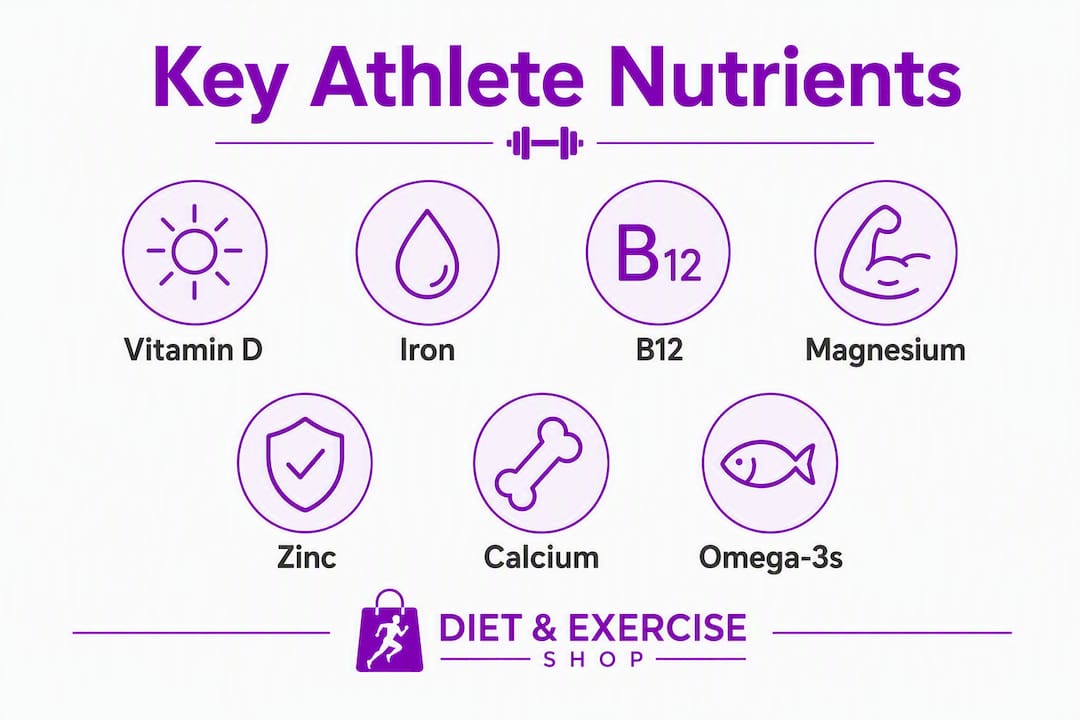
The highest-priority nutrients for athletes are vitamin D, iron/ferritin, B12, magnesium, zinc, calcium, and antioxidants. Omega-3s matter too, but they belong in a separate targeted supplement rather than a standard multi. Here’s how each one plays out in practice, and what to look for on a Supplement Facts panel.

| Nutrient | Primary athletic role | Deficiency signs in athletes | Label cues to look for |
|---|---|---|---|
| Vitamin D | Bone health, immune function, muscle recovery | Fatigue, stress fractures, frequent illness | D3 (cholecalciferol), not D2; 1,000–2,000 IU typical |
| Iron/Ferritin | Oxygen transport, endurance capacity | Fatigue, poor performance, breathlessness | Ferrous bisglycinate (chelated); check elemental iron mg |
| Vitamin B12 | Energy metabolism, red blood cell production | Fatigue, brain fog, tingling extremities | Methylcobalamin preferred over cyanocobalamin |
| Magnesium | Muscle contraction, sleep, recovery | Cramps, poor sleep, irritability | Magnesium glycinate or malate; avoid magnesium oxide |
| Zinc | Immune function, testosterone, wound healing | Frequent illness, slow recovery | Zinc bisglycinate or picolinate (chelated forms) |
| Calcium | Bone density, muscle contraction | Stress fractures, muscle spasms | Calcium citrate absorbs better than carbonate |
| Antioxidants (C, E, selenium) | Oxidative stress management | Slow recovery, increased illness | Moderate doses; megadoses may blunt training adaptations |
| Omega-3s (EPA/DHA) | Inflammation, recovery, cardiovascular | Joint pain, poor recovery, mood changes | Usually separate; look for combined EPA+DHA mg, not just “fish oil”; 2–4 g/day is the evidence-based range |
Reading a label well is half the battle. Chelated minerals (bisglycinate, picolinate, malate) absorb significantly better than inorganic salts like oxide or sulfate. For B vitamins, methylated folate (5-MTHF) outperforms folic acid for athletes who carry the MTHFR gene variant, which is more common than most people realize. Coenzymated B vitamins (P-5-P for B6, riboflavin-5-phosphate for B2) are the active forms your cells actually use. When a label lists “elemental iron,” that’s the amount of actual iron in the compound, not the total weight of the iron salt. A product listing 18 mg elemental iron as ferrous bisglycinate is a better choice than one listing 65 mg as ferrous sulfate, which causes more GI distress and absorbs less efficiently.
Powdered “greens” products marketed as multivitamins often lack standardized, stable doses of key micronutrients. Vitamin D degrades in powder form without proper stabilization, and iron is frequently absent. Encapsulated formulations give you more consistent dosing unless the product carries lab-verified batch testing.
How to choose an athlete-focused multivitamin
If you’ve decided a multivitamin fits your situation, here’s the exact checklist to use before you buy.
The athlete’s multivitamin checklist:
- Third-party sport certification first. Look for the NSF Certified for Sport or Informed-Sport logo on the label. USADA guidance is explicit: certified products verify label accuracy and confirm the absence of banned substances. For competitive athletes, this is a gating criterion, not a nice-to-have.
- Bioavailable mineral forms. Chelated minerals (bisglycinate, glycinate, picolinate) absorb better than oxides and sulfates. If the label lists magnesium oxide as the primary form, put it back.
- Coenzymated or methylated B vitamins. Look for methylfolate (5-MTHF), methylcobalamin (B12), and P-5-P (B6) rather than their synthetic counterparts.
- Realistic doses, not megadoses. A multivitamin should deliver 50–100% of the Daily Value for most nutrients. Products pushing 500–1,000% DV for B vitamins are not more effective; they’re just more expensive and create overlap risk when you’re also using energy drinks or pre-workouts.
- No proprietary blends. If the label groups multiple ingredients under a “performance blend” without individual amounts, you can’t verify what you’re actually getting.
- Clear Supplement Facts panel. Every ingredient and dose should be listed individually. If it isn’t, skip it.
- Batch verification. NSF and Informed-Sport both offer batch lookup tools on their websites. Use them before you open the bottle.
Product formulations vary widely. Some athlete-focused multivitamins skip vitamin D entirely; others load excessive B vitamins while leaving magnesium at token doses. The checklist above cuts through that noise faster than reading marketing copy.
For many athletes, a targeted single-ingredient approach actually beats a full multivitamin. If your only confirmed gap is vitamin D, a standalone D3 supplement at a clinician-guided dose is cleaner and cheaper than a full multi. Same logic applies to iron: endurance athletes with low ferritin need clinician-guided iron dosing, not a multivitamin with 18 mg of ferrous bisglycinate.
When a targeted supplement beats a multivitamin
Targeted supplements are often the better call when testing reveals a specific deficiency or when strong evidence supports a particular outcome. A multivitamin spreads nutrients thin across many categories; a targeted supplement delivers a therapeutic dose where you actually need it.

Omega-3s (EPA+DHA) are the clearest example. Systematic reviews show EPA+DHA consistently supports injury recovery and reduces inflammation in athletes, with most clinical studies using 2–4 g/day combined EPA+DHA and measurable results appearing within 4–12 weeks. A standard multivitamin might contain 50–100 mg of omega-3s, which is essentially decorative. If you don’t eat fatty fish at least twice a week, a dedicated fish oil or algae-based omega-3 supplement at 2–4 g/day combined EPA+DHA is one of the highest-value additions you can make.
The ISSN’s position on omega-3s reinforces this: EPA/DHA supplementation supports cardiovascular function, endurance, sleep quality, and recovery when dietary intake is insufficient. A network meta-analysis of 35 RCTs found omega-3s ranked highest for recovery outcomes among protein, creatine, and omega-3 comparisons, with creatine leading for strength and protein for endurance. That’s the clearest argument for matching your supplement to your actual goal rather than defaulting to a broad multi.
Practical dose guidance by target:
- Omega-3s: 2–4 g/day combined EPA+DHA; look for a fish oil or algae-based product with the combined EPA+DHA total clearly stated, not just “fish oil” weight. For faster recovery, take with a fat-containing meal to improve absorption.
- Vitamin D: Test first (25-OH vitamin D), then dose based on results. Most athletes with insufficiency respond well to 2,000–4,000 IU/day of D3, but clinician guidance is worth it for anyone below 20 ng/mL.
- Iron: Ferritin-guided only. Indiscriminate iron supplementation without confirmed deficiency carries real risk, including GI distress and interference with zinc absorption.
- Creatine: 3–5 g/day monohydrate for strength and power athletes. No interaction with a standard multivitamin, but check for overlap if your multi includes creatine in a “performance blend.”
When stacking a multivitamin with targeted supplements, watch for nutrient overlap. If your multi already delivers 100% DV of zinc and you’re adding a separate zinc supplement for immune support, you’re likely exceeding the tolerable upper intake level. The same applies to fat-soluble vitamins A, D, E, and K, where excess accumulates rather than flushes out.
Safety, drug testing, interactions, and knowing when to test
Safety and certification should be the first filter for any competitive athlete, full stop. The supplement industry in the United States is not pre-approved by the FDA before products hit shelves, which means contamination risk is real. USADA’s guidance is direct: NSF Certified for Sport and Informed-Sport are the two certifications that verify both label accuracy and the absence of banned substances. If a product isn’t certified, a drug-tested athlete should not use it in a competitive context.
Common interactions and timing issues:
- Omeprazole and other PPIs: Long-term use of proton pump inhibitors reduces B12 absorption and can impair iron uptake. If you’re on a PPI, check B12 status annually and discuss iron monitoring with your clinician.
- Fat-soluble vitamins (A, D, E, K): These absorb best with a fat-containing meal. Taking your multivitamin with breakfast that includes eggs, avocado, or nut butter meaningfully improves uptake.
- B vitamin overlap: Pre-workouts, energy drinks, and some protein powders already contain B vitamins. Stack a multivitamin on top and you may be hitting 500–800% DV for B6, which at sustained high doses has been linked to peripheral neuropathy.
- Calcium and iron: These two compete for absorption. If you need both, take them at different times of day.
Which blood tests to request:
- 25-OH vitamin D (vitamin D status)
- Serum ferritin and hemoglobin (iron status and anemia screening)
- Serum B12 (especially for plant-based athletes or PPI users)
- A complete metabolic panel if fatigue is unexplained
Re-test 8–12 weeks after starting a targeted supplement to confirm the intervention is working. Don’t assume a supplement is doing its job without follow-up labs.
Quick safety questions:
Can I take a multivitamin with creatine or protein powder? Yes. There’s no meaningful interaction between a standard multivitamin and creatine monohydrate or protein powder. Just check for nutrient overlap in the Supplement Facts of each product.
Can I take a multivitamin and omega-3s together? Yes, and for most athletes this is the most practical combination. Take both with a meal containing fat.
Key Takeaways
Athletes who eat well may not need a daily multivitamin, but those with diet gaps, high training loads, or confirmed deficiencies benefit most from a sport-certified product paired with targeted supplements like vitamin D, iron, or omega-3s.
| Point | Details |
|---|---|
| Test before you supplement | Get 25-OH vitamin D, ferritin, and B12 tested before buying anything. |
| Certification is non-negotiable | Only use NSF Certified for Sport or Informed-Sport products if you compete and are drug-tested. |
| Prioritize targeted supplements | Omega-3s at 2–4 g/day combined EPA+DHA and test-guided vitamin D often outperform a broad multivitamin. |
| Read the label for bioavailable forms | Choose chelated minerals and methylated B vitamins; avoid oxide and folic acid forms. |
| Dietexerciseshop supports your nutrition | Dietexerciseshop offers athlete-focused supplements, eBooks, and apparel to support your training and diet goals. |
The case for testing first, not supplementing first
The conventional wisdom in athletic circles is to grab a multivitamin as a baseline and add from there. That approach gets the order wrong. A multivitamin taken without baseline testing is a guess, and guesses are expensive when you’re stacking multiple products.
The approach that actually holds up: test first, identify the specific gaps, address them with the most targeted intervention available, then reassess after 8–12 weeks. A multivitamin earns its place in that sequence only when the diet audit and blood work show multiple small gaps that don’t warrant individual targeted supplements. That’s a real scenario, especially for athletes in demanding training blocks with limited meal variety, but it’s not the default.
What I look for in a product before recommending it: NSF Certified for Sport or Informed-Sport certification, a transparent Supplement Facts panel with no proprietary blends, chelated mineral forms, and a dose profile that sits at 50–100% DV rather than megadose territory. Those four signals filter out the majority of products on the market. The ones that remain are worth evaluating on nutrient profile.
The omega-3 question deserves its own note. Most athletes underestimate how far their EPA+DHA intake falls below the 2–4 g/day range that clinical research uses. A standard multivitamin does nothing meaningful here. A quality fish oil or algae-based supplement, taken consistently with meals, is one of the few supplements with evidence strong enough to recommend broadly, regardless of whether a full multivitamin fits your situation.
Gear that matches the mindset
Athletes who take their nutrition seriously tend to take everything seriously, including what they wear to the gym. Diet & Exercise Shop carries apparel built for that mindset: the MEAL PREP & MUSCLE REPS Hoodie says exactly what it needs to say about how you approach training, and the TRUST THE PROCESS T-Shirt is the kind of reminder worth wearing on a hard training day.
Beyond apparel, Diet & Exercise Shop stocks athlete-focused supplements, recovery eBooks, and nutrition resources that complement the evidence-based approach this article lays out. If you’re building a supplement stack, use the checklist in this article first, then browse the Diet & Exercise Shop for products that fit your goals. The store is worth a look whether you’re after gear, nutrition education, or both.
FAQ
Should athletes take a multivitamin every day?
Not automatically. Athletes with varied, nutrient-dense diets often don’t need one, while those with restricted diets, high training loads, or confirmed deficiencies benefit from a sport-certified multivitamin as dietary insurance.
What is the best multivitamin for athletes?
The best option is one that carries NSF Certified for Sport or Informed-Sport certification, uses chelated minerals and methylated B vitamins, and delivers 50–100% DV without megadoses. Test your blood work first to confirm which nutrients you actually need.
What vitamins should I take if I use omeprazole?
Long-term PPI use like omeprazole reduces B12 absorption and can impair iron uptake. Monitor B12 status annually and discuss iron testing with your clinician, as supplementation needs vary by individual.
What vitamins are most important for athletic performance?
Vitamin D, iron/ferritin, B12, magnesium, and zinc are the nutrients athletes most commonly lack. Omega-3s (EPA+DHA at 2–4 g/day) are also worth prioritizing separately for recovery and inflammation support.
Can I take omega-3s and a multivitamin together?
Yes. Fish oil or algae-based omega-3s at 2–4 g/day combined EPA+DHA pair well with a standard multivitamin. Take both with a fat-containing meal and check for nutrient overlap in each product’s Supplement Facts panel.
Useful sources and further reading
The sources below were selected for their authority: peer-reviewed systematic reviews, ISSN position papers, NIH Office of Dietary Supplements fact sheets, and USADA guidance. These are the primary references behind the claims in this article.
- Omega-3 supplementation for injury recovery and inflammation in athletes (PubMed systematic review)
- ISSN position stand on omega-3 fatty acids and athletic performance
- Comparative effects of protein, creatine, and omega-3 in athletes: network meta-analysis (PMC)
- USADA: Supplement risk and NSF Certified for Sport
- NIH Office of Dietary Supplements: Dietary supplements for exercise and athletic performance
- Omeprazole and B12/iron absorption: PeaceHealth Health Information Library
- Athlete’s guide to multivitamins: Eleat Sports Nutrition
- Body recomposition for athletes: nutrition and supplement context (HTK Training)
This article is general information, not medical or dietary advice. Confirm supplement choices and dosing with a sports registered dietitian or your clinician based on your own blood work and health history.
Recommended
- A Healthy Diet Plan for Athletes That Actually Works – Diet & Exercise
- Best Supplements for Bodybuilding - Your Ultimate Guide – Diet & Exercise
- What Are Macronutrients and Micronutrients? A Complete Guide – Diet & Exercise
- Discover what to eat while exercising for energy & recovery – Diet & Exercise