

Make Ashwagandha Work: 8–12 Week Test for Muscle Gain
Ashwagandha does not build muscle by itself, but the trial evidence is more convincing than most supplements ever earn. Taken consistently at 300 to 600 mg a day for 8 to 12 weeks alongside resistance training, it produces modest-to-moderate strength gains and measurable recovery improvements; effects on muscle size are real but smaller and less consistent. Think of it as an adjunct that makes your training environment work better, not a substitute for protein, sleep, or progressive overload.
TL;DR:
- Taking 300 to 600 mg daily of standardized ashwagandha extract for 8 to 12 weeks can modestly improve strength and recovery, especially when combined with resistance training.
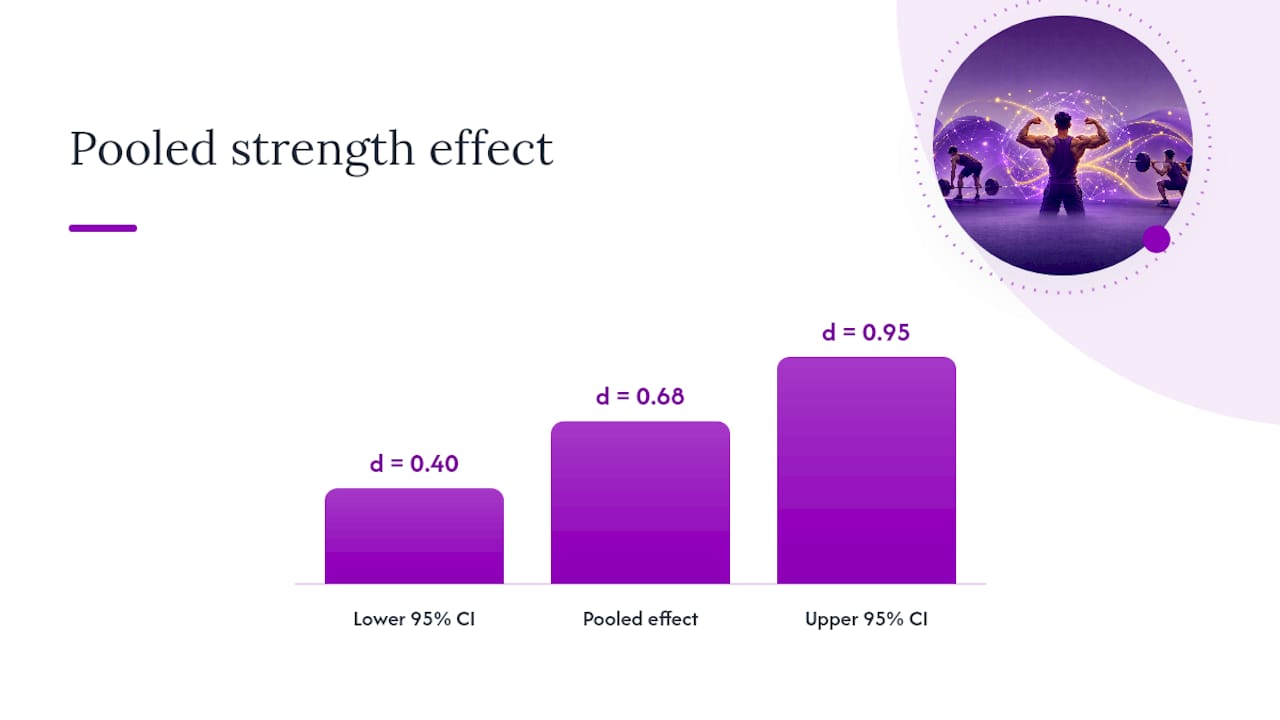
- Most studies show consistent strength gains, with a pooled effect size around d = 0.68, but effects on muscle size are smaller, less consistent, and often less significant.
- The supplement likely supports muscle building by reducing cortisol levels and improving sleep, rather than directly triggering muscle growth or boosting testosterone in trained individuals.
- Small sample sizes, varied extracts, and short durations limit the strength of evidence; standardized extracts like Sensoril® and proper dosing are key to seeing benefits.
- Long-term safety remains unproven, and individuals with health conditions or on medications should consult a healthcare professional before use.
Table of Contents
- Does Ashwagandha Actually Help With Muscle Gain and Strength?
- What Do the Individual Trials Actually Show?
- How Does Ashwagandha Support Muscle Growth Biologically?
- What Dose and Extract Should You Use for Muscle Gain?
- Are There Side Effects or Risks With Ashwagandha?
- How Do You Test Ashwagandha Alongside a Muscle-Building Program?
- Who’s Behind This Guide and What Resources Support It
- Is an 8-Week Ashwagandha Trial Worth Overthinking?
- Gear and Guides Worth Pairing With Your Trial
- Where the Research in This Guide Comes From
- Sources
- FAQ
Does Ashwagandha Actually Help With Muscle Gain and Strength?
The short answer: yes for strength, with more hedging on muscle size. The strongest signal across the literature comes from a Bayesian meta-analysis by Bonilla et al. that pooled multiple randomized trials and found a medium effect favoring ashwagandha over placebo for strength and power, with a pooled effect size around d = 0.68. That is not a rounding error. It is comparable to effect sizes seen with some established sports supplements, though the studies feeding into it are smaller and more varied than what you’d find backing something like creatine.
The individual trials tell a consistent story even though they used different extracts and doses.
- An 8-week randomized controlled trial using 300 mg twice daily found significantly larger gains in bench press and leg extension strength, bigger increases in arm and chest circumference, less exercise-induced muscle damage, and a bigger testosterone bump than placebo.
- A 12-week trial using Sensoril®, a standardized root and leaf extract, at 500 mg/day found greater 1RM gains in squat and bench press, plus better perceived recovery, in recreationally active men.
- Team-sport athlete studies have shown stabilized cortisol responses during pre-season training, particularly in female athletes, alongside some power-output improvements in male athletes.
The pooled numbers: Across 13 studies analyzed through 2020, ashwagandha showed a medium favorable effect on strength and power (d = 0.68, 95% CI 0.40 to 0.95), plus supporting evidence for VO2max and recovery gains.
The honest caveat here matters. Most of these trials involved small samples, sometimes fewer than 30 people per arm, and researchers used different extracts, different doses, and different training protocols. Few trials have looked at already well-trained, competitive athletes rather than recreationally active men. A recent narrative review on ashwagandha’s mechanisms and sports performance concludes the effects are positive but genuinely modest and inconsistent across studies, which is a fair summary. The probability of some benefit is high. The probability of a dramatic one is not.
That distinction is worth sitting with before you spend money on it. Ashwagandha is not going to replace the basics covered in a guide to building muscle mass, and it will not do anything for you if your protein intake or training volume is off.
What Do the Individual Trials Actually Show?
Numbers matter more than adjectives here, so here is what the best-documented trials found, extract by extract.
The Wankhede 2015 trial is the one most people cite first, and for good reason: it is one of the few studies with clean before-and-after strength data. Fifty-seven young men with limited resistance-training experience took either 300 mg of ashwagandha root extract twice daily or a placebo for 8 weeks while following a standardized training program. The differences were substantial.
| Trial | Duration | Extract & dose | Population | Key outcome |
|---|---|---|---|---|
| Wankhede et al. 2015 | 8 weeks | Root extract, 300 mg twice daily | Untrained young men | Bench press substantial gains vs placebo; leg extension moderate improvement |
| Sensoril® RCT (Nutrients, 2018) | 12 weeks | Sensoril® root and leaf extract, 500 mg/day | Recreationally active men | Squat 1RM notable increases vs placebo; bench 1RM moderate gains |
| Team-sport pre-season study | ~6 weeks | Root extract, 600 mg/day | Male and female team-sport athletes | Cortisol stabilization in women; power/CMJ gains in men |
| 2026 dose-response abstract | Short-term | Root extract, 14 mg/kg/day (high dose) | Trained adults | Incremental 1RM gains with high dose vs low dose and placebo |
Testosterone came up as a secondary outcome in the Wankhede trial and it moved meaningfully: the ashwagandha group saw testosterone rise more than the placebo group. That is a real signal worth noting, but it is a single trial in untrained men, and it does not tell us whether the effect persists at higher training ages or shows up the same way in women.
The Sensoril® trial is worth separating out because it used a standardized, patented extract rather than a generic root powder, and it ran for 12 weeks instead of 8. That longer window matters. Adaptogens tend to work on a delay, not a switch. A 2024 review on short-term supplementation timelines notes that meaningful physiological change from ashwagandha typically emerges over several weeks rather than in the first sessions, so trials running less than 8 weeks probably undersell its real effect.
A newer wrinkle comes from a 2026 dose-response abstract presented at a physiology conference, which found that trained adults taking a higher short-term dose (roughly 14 mg per kilogram of body weight daily) showed incrementally better 1RM and lifting-volume improvements than those on a lower dose or placebo. This is conference-abstract-level evidence, not a published peer-reviewed paper, so treat it as an early signal rather than settled science. It does suggest dose matters more than the “just take 300 mg and forget about it” framing implies.
Across all these trials, the clearest, most repeatable signal is strength (1RM on major lifts). Muscle size and testosterone changes show up but with more variability trial to trial. VO2max and recovery metrics, like reduced muscle soreness and stabilized cortisol, show up often enough to take seriously but rely on fewer, smaller studies.
How Does Ashwagandha Support Muscle Growth Biologically?
The mechanism story is more “supporting cast” than “star player,” and that framing matters if you want realistic expectations.
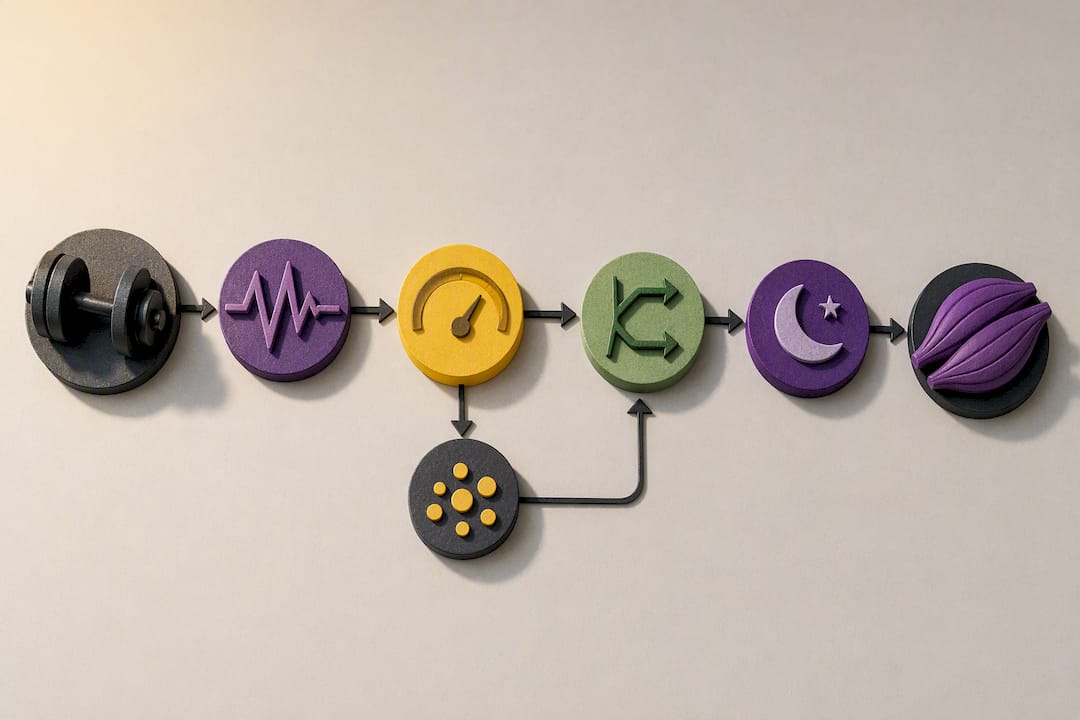
Ashwagandha is classified as an adaptogen, a category of botanicals thought to help the body regulate its stress response rather than acting on any single pathway. The most consistent finding across trials is cortisol modulation. Chronically elevated cortisol interferes with recovery, disrupts sleep, and can work against the anabolic signaling you need after hard training sessions. Team-sport athlete data backs this up directly: female athletes on ashwagandha showed stabilized salivary cortisol during pre-season training, while the placebo group’s cortisol climbed, according to a study in Nutrients on ashwagandha and stress responses in athletes.
The testosterone finding from the Wankhede trial gets a lot of attention in marketing copy, and it deserves a measured take. A meaningful testosterone increase relative to placebo is a genuine result, but it comes from one trial in untrained young men. Extrapolating that finding to trained lifters, older adults, or women requires real caution, since hormonal baselines and training-induced adaptations differ substantially between those groups.
The anti-inflammatory and antioxidant angle is the third mechanism worth understanding. Reduced creatine kinase (CK) elevation after training, seen in some trials, suggests less exercise-induced muscle damage, which theoretically shortens the recovery window between hard sessions. That is plausible and consistent with what adaptogens are supposed to do. It is not the same as proving ashwagandha directly triggers muscle protein synthesis the way resistance training or adequate protein does.
The honest summary: ashwagandha likely helps by making your recovery environment, sleep quality, and stress load more favorable for adaptation. It is not established as a direct anabolic driver in the way testosterone therapy or heavy progressive overload is.
What Dose and Extract Should You Use for Muscle Gain?
Trial-backed dosing options cluster into two camps, and both have real data behind them.
- 300 mg of root extract, twice daily (600 mg total), the protocol used in the Wankhede 8-week trial that showed the largest strength and muscle-size gains.
- 500 mg/day of Sensoril®, a standardized extract, used in the 12-week trial that showed strong squat and bench 1RM gains.
- 600 mg/day of root extract used in shorter athlete-focused studies (around 6 weeks) that showed recovery and cortisol benefits.
Extract standardization is the detail most shoppers skip and shouldn’t. Look for the withanolide percentage on the label. Withanolides are the compound class believed to drive most of ashwagandha’s physiological effects, and trials use extracts standardized to a specific percentage rather than raw root powder with an unknown concentration. Sensoril® and KSM-66 are the two branded extracts that show up repeatedly in published trials because they are standardized and reproducible batch to batch, unlike generic “ashwagandha root powder” products where withanolide content can vary widely.
A usable label checklist:
- Named extract (Sensoril®, KSM-66, or a specified standardized root extract), not just “ashwagandha powder.”
- A stated withanolide percentage, not just “high potency.”
- Third-party testing disclosure, since supplement label accuracy varies by manufacturer.
- A clear daily dose that matches or approximates a trial-tested range.
On timing: ashwagandha is not a pre-workout stimulant, and taking it right before training will not do anything session-to-session the way caffeine does. If you’re building a supplement stack around workout timing, that distinction belongs in your pre-workout timing plan, not stacked next to your stimulants. Consistency matters more than timing precision. Take it daily, ideally at the same time, and give it the full 8 to 12 weeks the trials used before judging whether it’s working.
Pro Tip: Start at the lower end of the trial range (300 mg twice daily or 500 mg once daily of a standardized extract) and track your top-set weights on two or three main lifts weekly. If you can’t see a trend after 8 weeks, the dose or extract probably isn’t the issue, your training or recovery basics likely are.
Are There Side Effects or Risks With Ashwagandha?
The safety profile in short trials is reassuring but incomplete. The most commonly reported adverse events across studies are mild: stomach upset and drowsiness, occurring more often at higher doses. None of the major trials cited here reported serious safety signals over their 8 to 12 week windows. That said, the NIH Office of Dietary Supplements factsheet is direct about the gap that matters: there simply isn’t much long-term safety data beyond a few months of use, and interaction research is still thin.
A few groups need a conversation with a clinician before starting, not a Google search:
- Pregnant or breastfeeding individuals, since safety data here is limited.
- People with autoimmune conditions, because ashwagandha’s immune-modulating effects are not well characterized in this population.
- Anyone with a thyroid disorder, since ashwagandha may influence thyroid hormone levels.
- Anyone taking sedatives, immunosuppressants, or anticoagulants, due to plausible interaction risk that hasn’t been thoroughly studied in humans.
Practical precautions beyond that list: if you’re on any prescription medication, ask your doctor before adding it, not after. Pause supplementation before scheduled surgery, since sedative interactions are a reasonable concern. And if you’re the type who tracks bloodwork, keep an eye on mood, sleep quality, and any relevant lab markers during your trial period rather than assuming “natural” means “risk-free.”
How Do You Test Ashwagandha Alongside a Muscle-Building Program?
Fundamentals come before supplements, always. Progressive overload, roughly 1.6 to 2.2 grams of protein per kilogram of body weight, adequate calories, and consistent sleep are the levers that move muscle growth the most. Ashwagandha sits downstream of all of that. If those basics from a protein powder guide or a bodybuilding supplement rundown aren’t dialed in, no adaptogen will fix it.
Here’s a straightforward 8 to 12 week test plan that mirrors what the trials actually did:
- Baseline week: Record your 1RM or a rep-max estimate on two or three major lifts, plus body weight, a couple of circumference measurements, and a subjective sleep/recovery rating.
- Pick your dose: 300 mg twice daily of a standardized root extract, or 500 mg once daily of Sensoril®, taken consistently at the same time each day.
- Run your normal training block: Keep progressive overload, protein intake, and sleep consistent; don’t change three variables at once or you won’t know what worked.
- Check-in at week 4: Retest your main lifts and note recovery quality. Expect early signals to be subtle, this is a cumulative-effect supplement, not an overnight one.
- Check-in at week 8 to 12: Retest 1RMs, remeasure circumferences, and compare against baseline. This is where the trial data suggests you’ll see the clearest difference.
- Decide: If strength and recovery metrics moved meaningfully, continue or consider cycling off for a few weeks before restarting. If nothing changed, the money is better spent elsewhere.
Pairing this with structured recovery work, covered in more depth in a recovery-focused guide, gives you a fuller picture of whether sleep and stress, not just the supplement, are driving your results. And if strength training itself is inconsistent in your week, a look at strength training’s broader health impact is a good reminder of why the training variable outweighs the supplement variable almost every time.
Who’s Behind This Guide and What Resources Support It
This breakdown comes from Mark at Dietexerciseshop, built around published randomized trials and meta-analyses rather than supplement marketing copy. The goal was straightforward: take the actual RCT data on ashwagandha and turn it into something a lifter can act on in the next 12 weeks, not just read and forget.
Dietexerciseshop’s position throughout has been consistent: apply the evidence through a defined trial with clear before-and-after metrics, not vague “give it a try” advice. If you want structure for that trial period, the FUNCTIONAL FITNESS eBook covers progressive resistance programming, and the FITNESS ELEMENTS 101 eBook walks through the training and recovery fundamentals that need to be locked in before any supplement gets credit for your progress.
Is an 8-Week Ashwagandha Trial Worth Overthinking?
The honest answer is no, and that’s the most useful thing anyone will tell you about this supplement. The conventional advice online treats ashwagandha like a mystery box, either overselling it as a natural testosterone booster or dismissing it entirely because it’s “just an herb.” Neither read matches what the trials show.
What the research actually supports is narrower and more useful: modest strength gains, real recovery benefits, and a plausible mechanism through cortisol and sleep, not a shortcut around training basics. Where most advice falls short is skipping the measurement step. People take ashwagandha for a few weeks, feel vaguely better, and call it a win without ever tracking a number.
Prioritize the boring stuff first, protein, sleep, progressive overload, then treat ashwagandha as a controlled variable you test and measure, not a supplement you take on faith. Track your lifts. Give it the full 8 to 12 weeks the trials used. Then decide with data, not vibes.
— Mark
Gear and Guides Worth Pairing With Your Trial
If you’re running an 8 to 12 week ashwagandha trial, the biggest failure point isn’t the supplement, it’s inconsistency in training and tracking. The eBook lineup includes a FUNCTIONAL FITNESS eBook with structured resistance programming, and FITNESS ELEMENTS 101 covering training and recovery fundamentals.

For the days you need a reminder to stay consistent, the TRUST THE PROCESS T-Shirt says exactly what an 8 to 12 week trial demands: patience. If your training partners need convincing that you’re actually testing something instead of just chasing trends, the BRO, DO YOU EVEN LIFT? T-Shirt and TURNIP THE GAINS T-Shirt make good gym-day motivators. Browse the full T-Shirts collection for more, or grab the Bodybuilding Guide eBook if you want a complete framework to run alongside your supplement test starting this week.
Where the Research in This Guide Comes From
- Wankhede et al. 2015 RCT: the clearest strength and muscle-size data, plus the testosterone finding.
- Bonilla et al. 2021 Bayesian meta-analysis: the pooled effect size backing overall efficacy claims.
- Sensoril® 2018 RCT: longer-duration data using a standardized extract.
- NIH ODS factsheet: the authoritative word on safety gaps and who should consult a clinician first.
Sources
- Examining the effect of Withania somnifera supplementation on muscle strength and recovery: a randomized controlled trial
- Sensoril® supplementation trial (Nutrients 2018)
- Effects of Ashwagandha (Withania somnifera) on physical performance: systematic review and Bayesian meta-analysis
- Ashwagandha — NIH Office of Dietary Supplements (Health Professional Fact Sheet)
- Dose-response effects of short-term Ashwagandha supplementation on anaerobic and resistance exercise performance in trained adults (2026 abstract)
FAQ
Does Ashwagandha Increase Muscle Mass?
Trials show a real but modest effect on muscle size, smaller and more inconsistent than the strength gains seen in the same studies, so treat it as a supporting factor rather than a primary driver of hypertrophy.
Is Ashwagandha or Creatine Better for Muscle Gain?
Creatine has decades of large-scale, highly consistent trial data behind it for muscle and strength gains, while ashwagandha’s evidence base is smaller and more variable; the two work through different mechanisms and are often used together rather than as substitutes.
Is There a Downside to Taking Ashwagandha?
Mild stomach upset and drowsiness are the most commonly reported side effects, and long-term safety data beyond a few months is still limited, so anyone pregnant, breastfeeding, or on thyroid, sedative, or immune-related medications should check with a clinician first.
How Much Ashwagandha Should I Take for Muscle Growth?
Trial-backed doses range from 300 mg of root extract twice daily to 500 to 600 mg/day of a standardized extract like Sensoril®, taken consistently for 8 to 12 weeks to match the timeframe used in the studies showing results.