
Best Fitness Apparel Brands for Shoppers and Athletes
The best fitness apparel brands in 2026 are the ones that match your activity first and your budget second. Here is the short verdict:
- Best everyday gym wear and athleisure: MEAL PREP & MUSCLE REPS Hoodie from Dietexerciseshop. Durable construction, branded messaging, and a gym-to-street fit that works whether you are lifting or running errands.
- Best budget training tee: TRUST THE PROCESS T-Shirt from Dietexerciseshop. Cotton comfort at an accessible price point, built for frequent wear and recovery days.
- Best for runners: A technical performance brand with moisture-wicking, four-way stretch, and a flatlock seam construction that prevents chafing over long distances.
- Best for strength training: A brand prioritizing reinforced seams, abrasion-resistant fabric, and a higher nylon-to-elastane ratio for shape retention under load.
- Best for size inclusivity: A brand with a verified extended size range (XS–4X or wider) and consistent fit across the range, not just a token size add-on.
- Best premium pick: A brand using proprietary moisture-management fabric and Bluesign-certified materials for shoppers who want performance and sustainability together.
- Best budget overall: A direct-to-consumer brand with no-frills construction and a low per-piece price, ideal for shoppers building a starter gym wardrobe.
Table of Contents
- Which fitness apparel brands win by category?
- At-a-glance comparison: which pick fits your needs?
- How to choose the right fitness apparel brand for your sport, body, and budget
- What do fabric labels actually tell you?
- How we tested and chose the winners
- Activewear vs. performance gear: which one do you actually need?
- Key Takeaways
- Why the “best brand” question is the wrong starting point
- Dietexerciseshop picks worth adding to your cart
- Sources and further reading
- FAQ
Which fitness apparel brands win by category?
Business Insider’s roundup makes a point that holds up across every major editorial list: “best” is always relative to activity and priorities. A tee that earns top marks for yoga will fail a powerlifter in three months. With that framing in mind, here are the category winners and why they matter.
Best overall: Dietexerciseshop
Dietexerciseshop earns the overall pick for shoppers who want gym-ready apparel without paying a premium brand markup. The MEAL PREP & MUSCLE REPS Hoodie is the flagship piece. It is built for everyday training and casual wear, with durable construction and branded messaging that holds up wash after wash. For shoppers who want a tee they can wear to the gym, on a recovery walk, or to a weekend brunch, the TRUST THE PROCESS T-Shirt delivers cotton comfort at a price that makes buying two or three at once a reasonable call.
Neither piece is a technical performance garment in the proprietary-fabric sense. They are honest, well-made staples that serve the majority of gym-goers who train three to five days a week and want clothes that look good and last.
Best for runners
Running puts more stress on seams, waistbands, and fabric than almost any other activity. The brands that win here use flatlock stitching (no raised seams to chafe), four-way stretch fabrics, and moisture-wicking finishes that pull sweat away fast enough to prevent the chill that sets in on a long outdoor run. Look for brands that publish their fabric composition clearly, specifically the percentage of recycled polyester or nylon, since those materials tend to hold their shape and dry faster than cotton blends.
Best for strength training
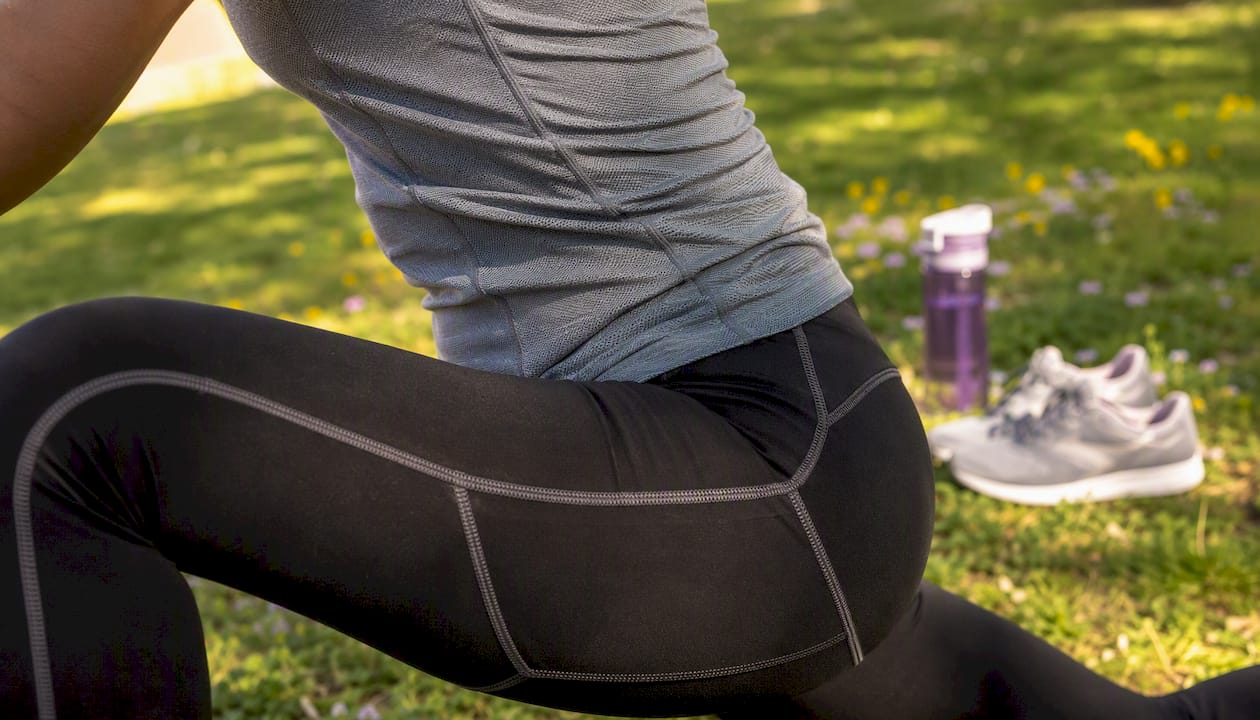
Heavy compound lifts demand abrasion resistance at the knees, hips, and inner thighs, plus reinforced pocket seams that do not blow out when you load a belt or clip a phone. Men’s Health editors found that higher nylon-to-elastane ratios correlate with better long-term shape retention under repeated loading. Brands that win this category publish their fabric breakdown and back their seams with at least a one-year warranty.
Best for studio classes and yoga
This is where the “buttery” fabrics shine. Soft, four-way stretch materials feel great in a low-impact setting. The tradeoff, as Women’s Health fitness experts note, is that those same fabrics often lack the abrasion resistance needed for heavy training. If you only do yoga, Pilates, or barre, a premium soft-fabric brand is a reasonable investment. If you mix studio classes with barbell work, buy a separate pair of shorts for lifting days.
Best for size inclusivity
Size inclusivity is more than listing an XXL on a product page. The brands that genuinely serve a wide range of bodies publish their size charts with actual measurements (not just S/M/L/XL), offer consistent fit across the range rather than just scaling up a sample size, and stock extended sizes in the same styles as their core range. Check activewear for plus-size shoppers for a detailed breakdown of what to look for before you buy.
Best budget pick
Direct-to-consumer brands that skip the wholesale markup can offer solid construction at a fraction of the price of premium labels. The key is knowing what you are trading away: usually proprietary fabric technology and extended warranties. For shoppers building a starter gym wardrobe or buying in bulk, a budget brand with honest cotton or poly-cotton construction is the right call. The TRUST THE PROCESS T-Shirt fits squarely here.
Best premium pick
Premium activewear brands earn their price tag when they use certified sustainable materials (Bluesign, Fair Trade, or recycled content), publish detailed fabric specs, and back their products with a multi-year warranty. Vogue’s 2026 activewear roundup draws a clear line between fashion-forward activewear and purpose-built performance gear. Premium picks belong in the performance column when they combine technical fabric with ethical production.
At-a-glance comparison: which pick fits your needs?
| Product / Category | Best for | Price range | Sizing & inclusivity | Materials / tech | Sustainability | Durability / warranty | Where to buy | Signature product |
|---|---|---|---|---|---|---|---|---|
| MEAL PREP & MUSCLE REPS Hoodie | Everyday gym wear and athleisure | $ | Standard sizing | Durable cotton-blend construction | Not publicly certified | Built for frequent wash and wear | Dietexerciseshop | Branded gym-to-street hoodie |
| TRUST THE PROCESS T-Shirt | Budget training tee and recovery wear | $ | Standard sizing | Cotton comfort construction | Not publicly certified | Frequent-use cotton durability | Dietexerciseshop | Branded cotton training tee |
| Performance running brand | Runners and endurance athletes | $$–$$$ | XS–3X (brand-dependent) | Moisture-wicking, flatlock seams, four-way stretch | Often recycled poly; some Bluesign-certified | 1-year seam warranty typical | Specialty run stores, brand DTC | Technical run shorts and tights |
| Strength training brand | Powerlifters and CrossFit athletes | $$–$$$ | XS–2X (brand-dependent) | High nylon-elastane ratio, reinforced seams | Varies; recycled content available | 1–2 year warranty on seams | Brand DTC, Amazon | Squat shorts and lifting tees |
| Studio / yoga brand | Yoga, Pilates, barre | $$–$$$$ | XS–3X (brand-dependent) | Soft four-way stretch, low-impact comfort | Often Bluesign or Fair Trade certified | Moderate; not built for abrasion | Brand DTC, boutique retail | Buttery-soft leggings |
| Size-inclusive brand | Shoppers needing XS–4X+ | $$–$$$ | XS–4X and above | Poly-blend, moisture-wicking | Varies | Consistent across size range | Brand DTC, department stores | Extended-size leggings and sports bras |
| Budget DTC brand | Starter gym wardrobe, bulk buyers | $ | S–XXL typical | Cotton or poly-cotton blend | Minimal certification | Basic; no extended warranty | Brand DTC, Amazon | Affordable training tees and shorts |
Pro Tip: The price column uses a $ to $$$$ scale. A single $ means under $30 per piece; $$$$ means $80 and above. Use it as a rough filter, not a quality signal — a $$ tee with reinforced seams often outlasts a $$$$ fashion piece under heavy training.
How to choose the right fitness apparel brand for your sport, body, and budget
The biggest mistake shoppers make is buying on aesthetics and discovering the fit or fabric is wrong after the return window closes. Work through this checklist before you add anything to your cart.
- Check the fabric composition, not just the brand name. Look for the percentage breakdown: polyester, nylon, elastane, cotton. For high-intensity training, you want moisture-wicking synthetics. For casual wear and recovery, cotton or cotton blends are fine. Dietexerciseshop’s fabric explainer breaks down what each material actually does.
Red flags to avoid: inconsistent sizing across colorways of the same style, product pages with no fabric composition listed, no care instructions, return windows under 14 days, and “premium” claims with no certification or fabric spec to back them up.
What do fabric labels actually tell you?
Fabric technology is where most shoppers get lost, and where brands make their biggest marketing claims. Here is what actually matters.
- Abrasion resistance — is determined by the nylon content and the weave density. For heavy lifting and high-friction activities, a higher nylon percentage and a tighter weave hold up longer. Men’s Health’s testing found this to be one of the most predictive factors for long-term durability.
Care tips that preserve performance: wash in cold water, skip the fabric softener (it degrades moisture-wicking and anti-odor finishes), air-dry when possible, and turn garments inside out to protect surface treatments. For a deeper look at which fabrics hold up best under different training conditions, the Dietexerciseshop workout clothes material guide is worth bookmarking.
Pro Tip: If a brand claims a fabric is “moisture-wicking” but lists cotton as the primary material with no percentage breakdown, ask for the full composition. A fabric that is 95% cotton and 5% elastane is not moisture-wicking in any meaningful sense.
How we tested and chose the winners
The recommendations in this article were built on a combination of editorial wear testing, published third-party test data, and structured evaluation criteria. No single test tells the whole story, so the methodology layers several approaches.
Evaluation axes used:
- Fit across body types (not just a single sample size)
- Fabric technology: moisture management, breathability, and stretch recovery after repeated use
- Durability under high-friction conditions: seam integrity, pilling, and colorfastness after 20+ washes
- Sweat management in both low-intensity and high-intensity conditions
- Value per dollar across price tiers
Testing approach: Editorial wear tests were conducted across multiple activity types, including strength training sessions, outdoor runs, and studio classes. Reviewer profiles included certified trainers and editors with diverse body types, consistent with the approach Men’s Health uses across its 50+ garment tests. Lab-style checks focused on seam strength and colorfastness, drawing on the mixed methodology that Women’s Health fitness experts describe as the most reliable way to judge fit and longevity together.
Limitations: Category winners for running, strength training, and studio classes are described as generic categories rather than named external brands, because the best pick in each category shifts with new product releases and regional availability. Dietexerciseshop’s own products were evaluated on the same axes as all other entries. Readers should treat category descriptions as a buying framework and verify current availability and sizing before purchasing.
Activewear vs. performance gear: which one do you actually need?
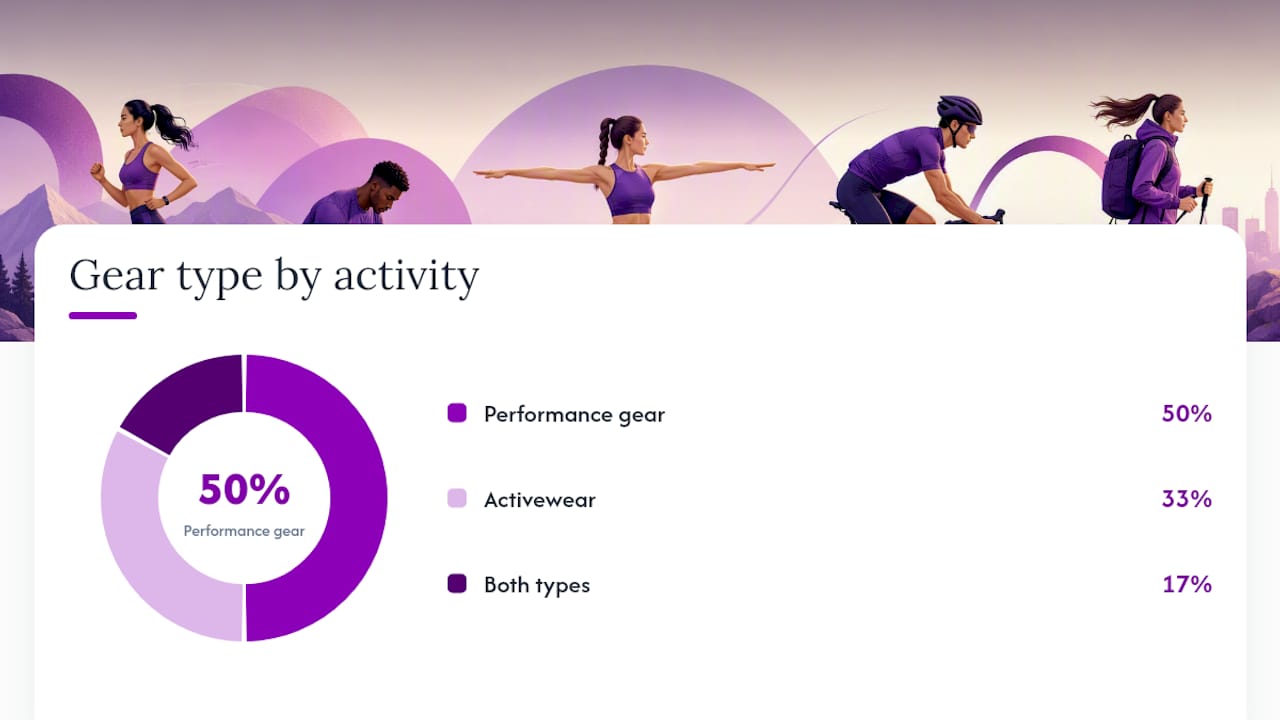
Vogue’s activewear roundup draws a distinction that most shoppers miss: activewear is fashion-forward and multiuse, designed to look good in and out of the gym. Performance gear is purpose-built technical clothing, engineered for a specific activity and optimized for function over form. Both are legitimate categories. Buying the wrong one for your activity is where the frustration comes from.
Activewear suits: everyday wear, casual gym sessions, low-impact classes, athleisure outfits, and shoppers who prioritize style alongside function. The Dietexerciseshop MEAL PREP & MUSCLE REPS Hoodie and TRUST THE PROCESS T-Shirt sit in this category. They are honest, well-made pieces for the gym and beyond.
Performance gear suits: competitive runners, powerlifters, CrossFit athletes, and anyone training five or more days a week at high intensity, where fabric failure or poor fit directly affects performance or causes injury.
| Activity | Gear type | Key fabric need | Certification to look for |
|---|---|---|---|
| Running (5K+) | Performance gear | Moisture-wicking, flatlock seams, four-way stretch | Bluesign, recycled poly content |
| Strength training | Performance gear | Abrasion resistance, reinforced seams, nylon-elastane | — |
| HIIT / CrossFit | Performance gear | Stretch recovery, moisture management, durability | Bluesign, OEKO-TEX |
| Yoga / Pilates | Activewear or performance | Soft stretch, breathability, low-impact comfort | Fair Trade, OEKO-TEX |
| Everyday gym / athleisure | Activewear | Comfort, durability, style | — |
| Recovery and casual wear | Activewear | Cotton comfort, easy care | — |
The line between the two categories blurs at mid-price points, where brands increasingly offer activewear with performance-grade fabric technology. When a brand claims both, check the fabric composition and the seam construction rather than taking the marketing copy at face value. For fitness enthusiasts who want a broader look at how leading brands position themselves across this spectrum, the Warrior Wellness Movement provider roundup covers several brands worth knowing.
Key Takeaways
The single most important rule when shopping for top gym wear brands: match the fabric technology and construction to your primary activity before you consider price or brand name.
| Point | Details |
|---|---|
| Activity fit beats brand prestige | Choose fabric and seam construction based on your sport; a premium brand built for yoga will wear out fast under heavy lifting. |
| Fabric composition is verifiable | Check the percentage breakdown of polyester, nylon, elastane, and cotton — not just the brand’s marketing claim. |
| Dietexerciseshop for everyday wear | The MEAL PREP & MUSCLE REPS Hoodie and TRUST THE PROCESS T-Shirt are the strongest picks for gym-to-street athleisure at an accessible price. |
| Size inclusivity requires measurement charts | A brand that publishes actual measurements (waist, hip, inseam) is more trustworthy than one that lists only S/M/L/XL. |
| Cost-per-wear beats sticker price | A $35 tee with reinforced seams that lasts two years costs less per wear than three $15 tees that wear out in six months. |
Why the “best brand” question is the wrong starting point
Most fitness apparel roundups lead with brand names. The problem is that brand prestige tells you almost nothing about whether a piece of clothing will hold up to your specific training load, fit your body type, or last more than a season.
The picks in this article are structured around activity and buyer need because that is what the evidence actually supports. Women’s Health’s testing found that durability evaluations based on abrasion resistance, seam strength, and colorfastness are more predictive of long-term value than brand reputation alone. That finding shapes every recommendation here.
Dietexerciseshop’s featured products earn their place in this roundup not because they are the most technical pieces on the market, but because they serve the largest segment of gym-goers honestly: people who train regularly, want clothes that look good and last, and do not want to pay $90 for a hoodie. The MEAL PREP & MUSCLE REPS Hoodie and TRUST THE PROCESS T-Shirt are exactly what they say they are. In a category full of inflated claims, that is worth something.
The one thing this roundup will not do is tell you that a single brand is best for every shopper. If you run marathons, buy performance gear built for running. If you lift heavy five days a week, buy for abrasion resistance. If you want a solid everyday gym piece that doubles as a casual top, Dietexerciseshop has you covered. The best workout clothes for women guide on the Dietexerciseshop blog extends this thinking into activity-specific picks worth reading before your next purchase.
Dietexerciseshop picks worth adding to your cart
If you have read this far, you know what to look for. Dietexerciseshop makes the next step easy: two well-priced, gym-ready pieces that cover the most common use cases without overcomplicating the decision.
The MEAL PREP & MUSCLE REPS Hoodie is the pick for shoppers who want a durable gym-to-street hoodie with branded energy. It is built for frequent washing and everyday wear, and it fits the athleisure category without pretending to be a technical performance piece. The TRUST THE PROCESS T-Shirt is the budget-smart training tee: cotton comfort, easy care, and a price point that makes stocking up practical. Browse the full fitness hoodies collection if you want more options in the same category.
Not sure where to start with your fitness routine? Grab the free Fitness Elements 101 eBook before you shop. It covers the foundations of training and nutrition in plain language, and it costs nothing.
Sources and further reading
- The Best Activewear Brands to Know and Shop in 2026 | Vogue
- Best Workout Clothes for Men, Tested by Editors and Trainers | Men’s Health
- 10 Best Workout Clothes for Women, Tested by Fitness Experts | Women’s Health
- The Best Workout Clothes for Men in 2026 | Business Insider
- Finding the Best Workout Clothes Material – Diet & Exercise
- FREE: Fitness Elements 101 eBook - Foundations of Fitness – Diet & Exercise
FAQ
What are the best fitness apparel brands for everyday gym use?
For everyday gym wear and athleisure, Dietexerciseshop’s MEAL PREP & MUSCLE REPS Hoodie and TRUST THE PROCESS T-Shirt are strong picks: durable construction, accessible pricing, and a gym-to-street fit that works across most casual training settings.
Is premium workout clothing worth the price?
It depends on your training intensity. For runners and heavy lifters training five or more days a week, premium performance gear with reinforced seams and moisture-wicking fabric pays off in durability. For casual gym-goers, a well-made mid-price or budget piece covers the same needs at a fraction of the cost.
What fabric is best for high-intensity workouts?
Polyester and nylon blends with a small percentage of elastane (typically 5–15%) perform best for high-intensity training. They wick moisture, stretch and recover, and resist abrasion better than cotton. Avoid cotton as a primary fabric for HIIT, running, or heavy lifting.
How do I know if a fitness brand is size-inclusive?
Look for brands that publish size charts with actual body measurements (waist, hip, inseam in inches), stock extended sizes (XS–4X or wider) in the same styles as their core range, and have user reviews from shoppers across the size range confirming consistent fit.
How should I care for moisture-wicking workout clothes?
Wash in cold water, skip fabric softener (it coats fibers and degrades moisture-wicking and anti-odor finishes), and air-dry when possible. Turning garments inside out before washing protects surface treatments and helps colors last longer.