
Best Online Fitness Courses for Home Workouts: Expert Picks
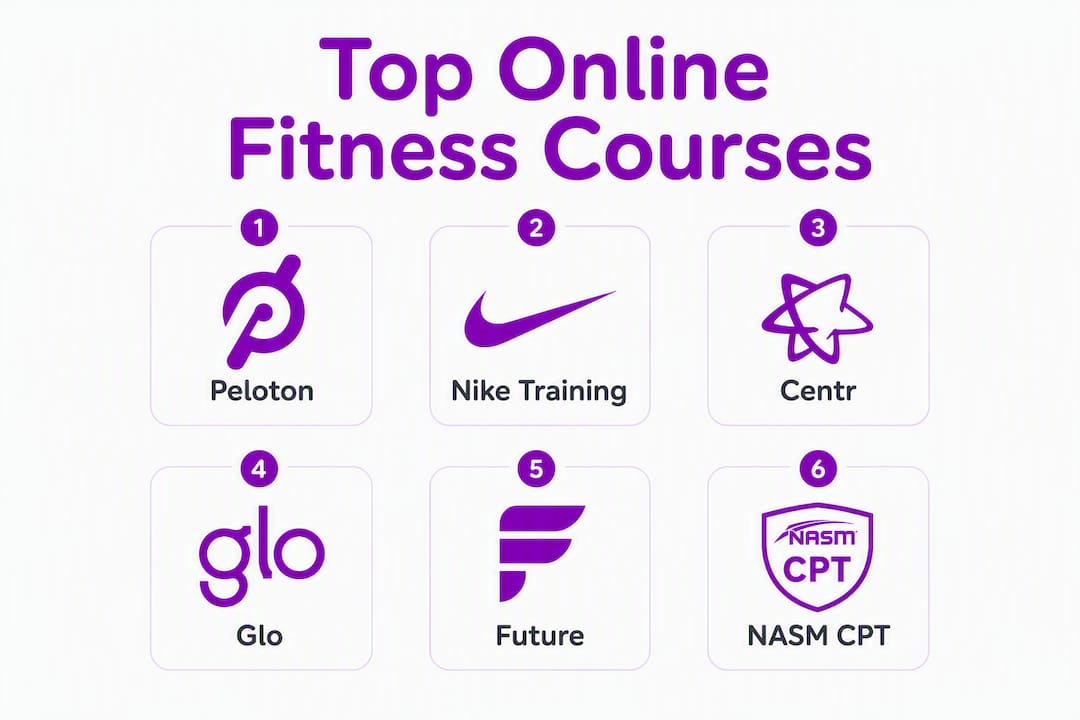
The best online fitness courses right now are Peloton App (best overall), Nike Training Club (best free option), Centr (best for structured programming), iFIT (best for equipment-paired training), NASM CPT via Coursera (best for professional certification), and Dietexerciseshop’s TRANSFORM YOURSELF: POWER UP X1000 (best for habit-focused personal development). These six cover the full range of home-training goals, from zero-equipment cardio to NCCA-accredited professional credentials.
Reviewer-led roundups typically test 20+ platforms before publishing a ranked list, evaluating price, trainer quality, device compatibility, and workout variety. The picks here went through the same lens, filtered specifically for home-friendly formats and real-world usability.
Quick shortlist:
- Best overall: Peloton App — massive on-demand library, strong community, works without Peloton hardware
- Best for beginners: Nike Training Club — free, structured beginner plans, zero equipment needed
- Best for strength: Centr — periodized 12-week programs, trainer-led, pairs with minimal home gear
- Best for yoga/Pilates: Glo — instructor-led classes, searchable by style and level, strong mobile app
- Best budget/free: Nike Training Club — $0 with no catch
- Best for personalized coaching: Future — 1:1 coaching from a certified personal trainer (CPT), fully remote
- Best for professional certification: NASM CPT (available via Coursera) — NCCA-accredited, industry-recognized
- Best for habit and mindset: Dietexerciseshop TRANSFORM YOURSELF: POWER UP X1000 — pairs habit-change tools with fitness programming
Table of Contents
- What are the best online fitness courses at a glance?
- In-depth reviews of the top online fitness programs
- How we tested and ranked these programs
- How do you pick the right online fitness course for your goals?
- What does “online fitness course” actually mean?
- Key Takeaways
- What the fitness industry gets wrong about online programs
- Dietexerciseshop courses and gear that pair with any fitness program
- Sources and further reading
- FAQ
What are the best online fitness courses at a glance?
| Program | Best for | Pricing | Format | Equipment | Personalization | Trial/Refund | Platform |
|---|---|---|---|---|---|---|---|
| Peloton App | Overall variety | ~$12.99/mo | On-demand + live | None/minimal | Low | 30-day free trial | iOS, Android, web, TV |
| Nike Training Club | Beginners, budget | Free | Structured plans + library | None | Low | N/A (free) | iOS, Android |
| Centr | Structured strength | ~$29.99/mo | Multi-week programs | Minimal | Medium | 7-day free trial | iOS, Android, web |
| Glo | Yoga/Pilates | ~$22.99/mo | On-demand classes | None/mat | Low–Medium | 7-day free trial | iOS, Android, web |
| Future | 1:1 coaching | ~$199/mo | Live coaching + custom plan | Varies | High | First month guarantee | iOS |
| NASM CPT (Coursera) | Professional cert | Varies by plan | Self-paced course | None | Medium | Coursera refund policy | Web, iOS, Android |
| Dietexerciseshop TRANSFORM YOURSELF | Habit + mindset | Single purchase | Structured digital course | None | High | Contact store | Web |
Editor’s pick: Peloton App. At roughly $12.99/month with a 30-day free trial, it offers the widest content range of any platform tested, works on any device without proprietary hardware, and has a genuinely active community. For most home exercisers, it covers cardio, strength, yoga, and meditation in one subscription.
In-depth reviews of the top online fitness programs
Peloton App
Peloton’s hardware reputation overshadows what is actually a strong standalone app. The on-demand library runs into the thousands of classes across cycling, running, strength, yoga, and meditation. No bike or treadmill required. Instructors are credentialed and the production quality is noticeably higher than most competitors.
Best for: Anyone who wants variety without committing to a single training style. Format: On-demand library plus scheduled live classes. Pricing: ~$12.99/month; 30-day free trial. Equipment: None required; dumbbells expand options. Trainer credentials: All instructors are certified (CPT or equivalent); many hold additional specialty certifications. Pros: Enormous content library; strong community features (leaderboard, challenges, group rides). Cons: No structured periodized program pathway; easy to drift between classes without real progression. Platform: iOS, Android, web, Apple TV, Fire TV, Roku.
Nike Training Club
Free is a strong word in fitness, but Nike Training Club earns it. The app includes structured beginner programs, bodyweight-only plans, and guided workouts from Nike-affiliated trainers. No subscription wall, no hidden tier.
Best for: Beginners who want structure without spending anything. Format: Structured multi-week programs plus a standalone class library. Pricing: Free. Equipment: None for most programs; some workouts use dumbbells. Trainer credentials: Nike-affiliated certified trainers; credentials vary by instructor. Pros: Genuinely free; beginner programs are well-sequenced; clean interface. Cons: Limited personalization; no live coaching; content updates less frequent than paid platforms. Platform: iOS, Android.

Centr
Chris Hemsworth’s name is on the marketing, but the actual programming is built by a team of certified trainers and nutritionists. Structured multi-week programs with progressive overload show better adherence and measurable strength gains in reviewer tests, and Centr’s 12-week plans are built exactly on that principle. The nutrition and meal-planning integration is a genuine differentiator.
Best for: People who want a complete program (training + nutrition) without a gym. Format: Multi-week structured programs with daily workouts. Pricing: ~$29.99/month or ~$119.99/year; 7-day free trial. Equipment: Minimal (dumbbells, resistance bands); some programs are bodyweight-only. Trainer credentials: Certified trainers and registered dietitians on staff; professional bodies recommend evaluating programs based on trainer credentials and goal alignment. Pros: Periodized programming; nutrition plans included; strong app design. Cons: Higher monthly cost; less variety outside structured programs. Platform: iOS, Android, web.
Pro Tip: If you’re pairing Centr with home equipment, resistance bands and a set of adjustable dumbbells cover roughly 80% of the program’s strength workouts. Check out home gym equipment for beginners before you start.
Glo
Glo is the most focused yoga and Pilates platform on this list. The class library is searchable by style (Vinyasa, Yin, Pilates, meditation), level, duration, and instructor. That granularity matters when you’re trying to match a 20-minute morning flow to your actual schedule, not a 60-minute class you’ll skip.
Best for: Yoga and Pilates practitioners at any level. Format: On-demand class library; some live sessions. Pricing: ~$22.99/month; 7-day free trial. Equipment: Yoga mat; blocks and straps optional. Trainer credentials: Instructors are certified yoga teachers (RYT-200 or higher) and Pilates instructors. Pros: Deep, searchable library; high instructor quality; works well on mobile and TV. Cons: Limited strength or cardio content; not ideal as a sole fitness platform. Platform: iOS, Android, web, Chromecast.
Future
Future is the most expensive option here, and it’s worth knowing exactly what you’re paying for. You get matched with a real certified personal trainer who builds your weekly plan, checks in daily via the app, and adjusts programming based on your progress. That level of personalization is what separates it from every subscription platform on this list.
Best for: People who need accountability and a truly customized plan. Format: 1:1 remote coaching with a CPT; custom weekly programming. Pricing: ~$199/month; first-month satisfaction guarantee. Equipment: Varies by trainer and goal; home-friendly plans available. Trainer credentials: All coaches are CPT-certified; Future vets credentials before onboarding coaches. Pros: Real human accountability; fully personalized; adapts week to week. Cons: High monthly cost; requires Apple Watch for full functionality; iOS only. Platform: iOS.
NASM CPT via Coursera
This is a different category from the others. If your goal is a career in fitness rather than personal training, NASM’s CPT program is self-paced and typically takes 3–6 months to complete, with flexible payment plans and an NCCA-accredited exam. NCCA accreditation is the recognized benchmark for professional fitness certifications in the U.S., and commercial gyms frequently require it for hiring.
Best for: Career-minded individuals pursuing professional trainer credentials. Format: Self-paced online course with study tools, practice quizzes, and a proctored exam. Pricing: Varies by plan; installment options available in several plans. Equipment: None (study course). Trainer credentials: NASM is the certifying body; the exam is NCCA-accredited. Pros: Industry-recognized credential; flexible study pace; strong employer acceptance. Cons: Not a workout program; significant time and financial investment; exam required. Platform: Web, iOS, Android via Coursera.
Dietexerciseshop TRANSFORM YOURSELF: POWER UP X1000
Most fitness programs tell you what to do. This one focuses on the internal architecture that determines whether you actually do it. The TRANSFORM YOURSELF: POWER UP X1000 course from Dietexerciseshop addresses habit formation, mindset, and consistency, which behavior-change research from ACE identifies as the real driver of sustainable results. It pairs naturally with any of the workout platforms above as a habit layer, not a replacement.
Best for: Anyone who starts programs and quits, or who wants to build the mental framework behind consistent training. Format: Structured digital course; self-paced. Pricing: Single purchase (no recurring subscription). Equipment: None. Personalization: High — structured reflection and habit-building tools throughout. Pros: No subscription lock-in; directly addresses adherence and consistency; pairs with any workout program. Cons: Not a workout program itself; results depend on active engagement with the material. Platform: Web.
Fitness eBooks from Dietexerciseshop, including THE CONSISTENCY CODE, work on the same principle: high-value digital fitness content is best used as an interactive manual with trackers and logs, not a passive read. That approach consistently improves adherence and measurable results.
How we tested and ranked these programs
Every program on this list was evaluated against a consistent set of criteria. Here’s the rating framework and what each dimension covers.
Rating weights:
- Programming quality (30%) — Does the program follow periodization principles? Is there a clear progression pathway, or is it a random class library?
- Value for money (20%) — Price relative to content depth, trial policy, and cancellation terms.
- Usability (15%) — App performance, device compatibility, offline access, and streaming quality.
- Personalization (15%) — Adaptive programming, coaching access, and goal-setting tools.
- Community and support (10%) — Forums, challenges, social features, and customer service responsiveness.
- Content freshness (10%) — How often new programs and classes are added; whether content reflects current exercise science.
Testing checklist:
- Content depth and program structure (fixed plan vs. open library)
- Video and audio production quality
- Trainer qualifications and credential transparency
- Equipment requirements and home-friendliness
- Pricing clarity, hidden fees, and cancellation ease
- Trial period and refund policy
- App store ratings and user review patterns
- Device compatibility (mobile, web, TV, offline downloads)
Forbes Health editorial roundups analyze more than 20 programs and rank them by price, device accessibility, and workout styles, providing a useful benchmark for selection criteria. This article used a similar multi-criteria framework, with additional weight on home-friendliness and habit-change tools.
Disclosure: Dietexerciseshop’s own products (TRANSFORM YOURSELF: POWER UP X1000, eBooks, and apparel) were assessed as complementary items, not ranked against subscription platforms. They serve a different function — habit tools and digital education — rather than competing directly with workout streaming services.
How do you pick the right online fitness course for your goals?
The Cleveland Clinic recommends filtering programs by environment, primary goal, and available equipment to cut through selection overload. That’s the right starting point. Here’s a practical framework.
Match your goal to a format:
- Lose weight: On-demand cardio + strength platforms (Peloton App, Nike Training Club). Consistency matters more than intensity; pick the platform you’ll actually open.
- Build muscle: Structured periodized programs (Centr, or a strength-focused plan from a CPT). Programs using periodization and progressive 3–12 week cycles outperform random class-hopping for measurable strength gains.
- Improve mobility: Yoga/Pilates platforms (Glo) or mobility-focused programs within broader apps.
- Mindful movement: Glo, Peloton’s meditation and yoga tracks, or a habit-focused course like TRANSFORM YOURSELF.
Diagnostic questions to answer before you subscribe:
- How many hours per week can you realistically train? (Under 3 hours = short-format programs; 4+ hours = structured multi-week plans)
- What equipment do you have at home? (Resistance bands and dumbbells cover most programs; bodyweight-only plans exist for zero-equipment setups)
- What’s your monthly budget? ($0–$15 = Nike Training Club or Peloton App; $20–$35 = Centr or Glo; $150+ = Future)
- Do you need a human coach, or will a structured plan keep you accountable?
- Are you training around an injury, pregnancy, or specific medical condition? (Consult a physician before starting any new program.)
Red flags to avoid:
- No visible trainer credentials or certification information
- No clear program progression (just a random class library with no pathway)
- Confusing or absent refund policy
- App store rating below 3.5 stars with recent complaints about billing
- Claims of dramatic results in unrealistically short timeframes
Practical checklist for comparing your final 2–3 options:
- Does each program have a free trial? Start all of them before paying.
- Check the trainer credentials page — are certifications listed and verifiable?
- Watch one full workout before committing. Production quality and coaching style matter for long-term adherence.
- Read the cancellation policy before entering payment details.
- Confirm the program works on your primary device (phone, TV, laptop).
- Look for a structured pathway, not just a class library.
- Check whether nutrition guidance is included or sold separately.
- Verify that the equipment required matches what you own or plan to buy.
Pro Tip: If you’re a beginner, start with beginner workout routines at home before committing to a paid subscription. A few weeks of consistent bodyweight training will tell you a lot about what format and intensity level actually suits you.
What does “online fitness course” actually mean?
The phrase covers five genuinely different product types, and confusing them is one of the most common reasons people end up with the wrong purchase.
The five formats:
- On-demand subscription platforms — Monthly or annual access to a library of classes (Peloton App, Glo). No fixed endpoint; you use them as long as you subscribe. Best for variety-seekers and people who want ongoing access without a set program.
- Multi-week structured programs — A fixed 4–12 week plan with daily workouts that build on each other (Centr’s 12-week programs, many CPT-designed plans). Best for people with a specific goal and a defined timeframe.
- Single-topic short courses — A focused 4–8 week course on one skill or topic (HIIT fundamentals, nutrition basics, mobility). Lower commitment, lower cost, and useful as a complement to a broader program.
- Professional certification programs — NCCA-accredited credentials like the NASM CPT, designed for people pursuing a fitness career. NASM’s CPT program typically takes 3–6 months at a self-paced study rate, with a proctored exam at the end. These are not workout programs.
- Fitness eBooks and digital guides — Structured written content with trackers, logs, and frameworks. Top-selling fitness books include logs and templates that convert readers into doers rather than passive readers. Best used actively, not read once and shelved.
| Format | Typical time commitment | Primary outcome | Best for |
|---|---|---|---|
| Subscription platform | Ongoing (monthly) | Variety, consistency, habit | General fitness, variety-seekers |
| Structured multi-week program | 4–12 weeks | Specific goal (strength, weight loss) | Goal-focused individuals |
| Short course | 4–8 weeks | Skill or topic mastery | Supplementing a main program |
| Professional certification | 3–6 months | NCCA-accredited credential | Career-minded fitness professionals |
| eBook / digital guide | Self-paced | Knowledge + habit tools | Learners who want frameworks and trackers |
On credential value: NCCA accreditation is the industry standard employers look for. A certificate of completion from an online course is not the same thing. If you’re training clients professionally, the distinction matters for employment and liability. For personal fitness goals, a certificate of completion is perfectly sufficient.
For readers who want to pair a workout program with nutrition knowledge, a nutrition course online adds a layer that most workout platforms don’t cover in depth.
Key Takeaways
The single most effective approach to choosing an online fitness course is to match format to goal first, then filter by equipment and budget, rather than picking the most popular platform and hoping it fits.
| Point | Details |
|---|---|
| Match format to goal | Structured programs beat open libraries for measurable progress; subscriptions suit variety-seekers. |
| Periodization drives results | Programs built on 3–12 week progressive cycles consistently outperform random class-hopping for strength and endurance gains. |
| NCCA accreditation matters for careers | A certificate of completion is not equivalent to an NCCA-accredited credential; the distinction matters for professional hiring. |
| Filter before you subscribe | Use equipment level, weekly time, and coaching preference to cut the shortlist before starting any trial. |
| Dietexerciseshop as a habit layer | TRANSFORM YOURSELF: POWER UP X1000 and the eBook range pair with any workout platform to address the consistency gap most programs ignore. |
What the fitness industry gets wrong about online programs
Most roundups treat program selection as a features problem. More classes, better app, lower price. That framing misses the actual reason most people quit within six weeks: the program was never matched to how they actually live.
A $200/month coaching subscription is a waste if you travel four days a week and can’t keep a consistent schedule. A free app is a waste if you need external accountability to show up. The format has to fit the life, not the other way around.
There’s also a persistent confusion between professional certification programs and personal fitness courses. They are completely different products solving completely different problems. NASM’s CPT is for someone who wants to train other people for money. Peloton App is for someone who wants to get fit. Treating them as comparable options in the same list does a disservice to both audiences.
The habit layer is the most underrated piece of the whole equation. ACE’s behavior-change research is clear that sustainable results come from habit formation and progressive overload, not novelty. Most platforms sell novelty. The programs that actually stick are the ones that build the internal structure to keep showing up when motivation drops. That’s exactly what Dietexerciseshop’s habit-focused courses and eBooks address, and it’s the gap that a streaming subscription alone won’t close.
Dietexerciseshop courses and gear that pair with any fitness program
Workout programs give you the plan. What they rarely give you is the internal framework to stay consistent when life gets in the way. That’s where Dietexerciseshop fills the gap.
The TRANSFORM YOURSELF: POWER UP X1000 course is built around habit formation, mindset, and the consistency mechanics that determine whether any fitness program actually sticks. It’s a single purchase with no subscription, and it works alongside any platform you’re already using or plan to start.
Pair it with the MEAL PREP & MUSCLE REPS Hoodie for training days that feel intentional, or grab the TRUST THE PROCESS T-Shirt as a daily reminder that the work compounds. For structured digital tools, the THE CONSISTENCY CODE eBook gives you the trackers and habit frameworks that turn a fitness program from something you try into something you finish.
Browse the full range of online courses and fitness eBooks at Dietexerciseshop and find the tools that make your chosen workout program actually work long-term.
Sources and further reading
Research and authority sources used in this article:
- NASM CPT All-Inclusive Program — Program details, time commitment, and NCCA accreditation information. Pricing changes periodically; check the NASM site for current rates.
- American Council on Exercise (ACE) — Behavior-change models and evidence-based program design principles.
- Cleveland Clinic Health Essentials — Guidance on filtering fitness programs to reduce selection overload.
- Best Online Workout Programs — Forbes Health — Multi-program editorial roundup; useful for cross-referencing selection criteria.
- 10 Best Online Workout Programs of 2026 — Garage Gym Reviews — Tested roundup with ranked lists by specialty; strong benchmark for programming quality.
- The best online workout programs of 2026, tried and tested — Yahoo Health — Reviewer-tested roundup covering mental-health and adherence benefits.
- Muscle for Life — Michael Matthews (Simon & Schuster) — On the value of interactive fitness books with trackers and logs.
- Best Fitness Courses & Certificates — Coursera — Platform for accessing NASM, ACE, and university-backed fitness courses online.
- Build a Workout Routine from Scratch — HTK Training Blog — Practical guidance on structuring training routines for muscle-building programs.
Pricing for all platforms listed in this article changes regularly. Always verify current rates directly on each provider’s website before subscribing.
FAQ
What are the best online fitness classes for home workouts?
Peloton App and Nike Training Club are the strongest options for home workouts: Peloton offers the widest variety at ~$12.99/month, while Nike Training Club is completely free with solid beginner programs that require no equipment.
What is the 3-3-3 rule in the gym?
Definitions vary across trainers, but a common version refers to performing 3 sets of 3 exercises for 3 rounds, used as a simple structure for full-body strength sessions. It is not a universally standardized framework.
Is $300 a month a lot for a personal trainer?
Online personal training pricing typically varies widely; Future is one example costing around $199/month. Value depends entirely on coach credentials and how much programming and check-in access is included.
Which fitness certification is best?
NASM CPT and ACE CPT are the two most widely recognized personal trainer certifications in the U.S., both NCCA-accredited and accepted by commercial gyms nationwide. NCCA accreditation is the industry benchmark employers look for when hiring trainers.
Do fitness eBooks actually work for beginners?
Yes, when used actively. High-value fitness eBooks that include trackers, logs, and habit-building worksheets consistently outperform passive reads; Dietexerciseshop’s fitness eBooks for beginners are built on exactly that interactive model.