
Best Nutrition Course Online for Fitness Enthusiasts
For fitness-focused learners who want real results, the Diet & Exercise Shop Online Nutrition Course is the top pick: it covers the full performance nutrition stack (macronutrients through supplementation) with practical assignments that map directly to training goals, not generic meal templates. Sample a lesson today or enroll at Dietexerciseshop and start applying what you learn within the first module.
Table of Contents
- What does a quality nutrition course online actually teach?
- How do you vet any online nutrition course before buying?
- What format, timeline, and cost should you expect?
- Why the Diet & Exercise Shop course fits fitness learners best
- Three ways course knowledge changes your training immediately
- Key Takeaways
- What most learners get wrong about nutrition education
- Ready to put your nutrition knowledge to work?
- Useful sources for deeper research
- FAQ
What does a quality nutrition course online actually teach?
The gap between a good course and a mediocre one shows up in the syllabus, not the sales page. A course built for fitness results covers these topics in depth:
- Macronutrients (protein, carbohydrates, fat): how each fuels specific training demands
- Micronutrients: vitamins and minerals that affect recovery, hormone function, and energy production
- Energy balance: how caloric intake and expenditure interact with body composition goals
- Digestion and metabolism: how the body processes food and why individual metabolic rate matters
- Nutrient timing: pre-, intra-, and post-workout fueling for performance and recovery
- Supplementation basics: what the evidence actually says about protein powder, creatine, and common ergogenic aids
- Hydration: fluid needs by training intensity and environment
- Applied meal design: building eating patterns around training phases, not just daily calorie targets
Programs like NASM’s sports nutrition curriculum go further by teaching individualized macronutrient periodization tied to each athlete’s metabolism and activity profile. Cornell’s certificate takes a similar depth-first approach, grounding every topic in biochemical pathways and physiological systems rather than surface-level meal plans.
Pro Tip: When you review a syllabus, look past the topic list. A course that includes nutrition assessments, case studies, or graded assignments is teaching you to apply the science. One that offers only video lectures is teaching you to watch it.

How do you vet any online nutrition course before buying?
The single most important criterion is this: does the course teach evidence-based principles with practical application, or does it sell a system? Everything else follows from that.
Instructor credentials are the first filter. Look for an RD (Registered Dietitian), MS, or PhD in nutrition or exercise science, or affiliations with recognized bodies like NASM or ACSM. Vague bios with no verifiable credentials are a red flag.
Syllabus detail separates real courses from content farms. A trustworthy program lists specific module topics, learning outcomes per module, and the type of assessments used. Concordia University Chicago’s sports nutrition certificate requires a practicum component, including a nutrition assessment and planning case study, which is a strong signal that the program expects you to do something with the knowledge.
CEUs and accreditation matter if you plan to use the credential professionally. Cornell’s certificate includes 60 professional development hours (6 CEUs); NASM lists CEU offerings for its sports nutrition courses. If you are a personal trainer or coach, those hours can count toward license renewal.
Watch for these red flags on any course sales page: promises of rapid body transformation through a proprietary system, a syllabus that lists only broad topic names with no module breakdown, no mention of assessments or assignments, and instructor credentials that cannot be verified through a professional registry or institution website.
Before buying, ask support two questions: What does a typical assignment look like? and What is the refund policy if the course does not meet expectations? A program confident in its content answers both clearly.
What format, timeline, and cost should you expect?
Delivery format shapes how much you actually retain, not just how fast you finish.
- Self-paced: maximum flexibility, works well when paired with practical assignments; weakest for accountability without external deadlines
- Cohort or facilitated: structured discussions and peer interaction help learners work through complex nutrition debates; better for depth
- Hybrid: combines self-paced video with scheduled live sessions or instructor feedback
- Graduate certificate: longest commitment, highest credential value, often requires prerequisite coursework
Timeline and cost vary significantly by program type. Here is a realistic snapshot for U.S. learners:
| Program type | Typical duration | Approximate U.S. cost |
|---|---|---|
| Marketplace course (e.g., Udemy listing) | ~8 hours of video | $15–$150 |
| Self-paced professional cert (e.g., NASM CSNC) | up to 365 days to complete | moderate price tier |
| University continuing ed (e.g., Baylor online) | typically takes several weeks to months | substantial cost |
| University certificate (e.g., Cornell eCornell) | 6 months at 3–5 hours/week | $3,750 (with possible discounts) |
| Graduate certificate (e.g., Concordia, Simmons) | typically 15 credit hours, duration and cost depend on credit requirements | cost varies by credits |
What drives cost upward: CEU recognition, instructor access, graded assignments, and university accreditation. A $15 Udemy course may advertise international accreditation, but that credential often carries no U.S. professional recognition. For fitness enthusiasts who want applied knowledge without a graduate degree, the sweet spot sits in the self-paced professional or university continuing-ed tier.
Why the Diet & Exercise Shop course fits fitness learners best
The Diet & Exercise Shop Online Nutrition Course is built around one premise: you are not studying nutrition to become a clinical dietitian. You are studying it to train smarter, eat better, and make confident decisions about the supplements and foods you already buy.
| Feature | What it includes |
|---|---|
| Core curriculum | Macronutrients, energy balance, nutrient timing, supplementation, hydration |
| Practical work | Applied meal design exercises and module-level assignments |
| Instructor signals | Evidence-based content aligned with performance nutrition standards |
| Format | Self-paced, accessible on any device |
| Learner support | Content ecosystem including eBooks, articles, and video resources |
This course fits you if you are a gym-goer, endurance athlete, or someone who buys protein powders and wants to understand what the label actually means. It also works well for fitness coaches who want to give better guidance to clients without overstepping into medical nutrition therapy. For clinical needs, an RDN is the right professional.
Pair the course with the Get Fit With Fruits and Veggies eBook for a practical visual reinforcement of the nutrition principles you are learning.
Three ways course knowledge changes your training immediately
Weight loss goal. A learner who understands energy balance stops guessing at portion sizes and calculates a realistic deficit based on their actual activity level. Three immediate actions: log one week of food intake, calculate your total daily energy expenditure using the course formula, and adjust protein intake to preserve muscle during the cut. The weight loss workout plan at Diet Exercise Shop pairs directly with this approach.
Muscle gain goal. Nutrient timing knowledge means you stop treating the post-workout window as a myth and start using it deliberately. Three actions: schedule a protein-and-carbohydrate meal within 90 minutes of training, track weekly protein totals (not just daily), and use the course’s supplementation module to decide whether creatine fits your protocol. NASM’s performance nutrition research confirms that individualized macronutrient periodization outperforms generic high-protein advice.
Endurance training goal. Carbohydrate periodization separates recreational runners from athletes who actually finish strong. Three actions: map your weekly training load, identify which sessions need high-carb fueling versus low-carb adaptation days, and review the course’s hydration module before your next long run. The sports nutrition for endurance athletes resource at Diet Exercise Shop extends this into race-day strategy.
Key Takeaways
Evidence-based nutrition education with practical assignments produces better fitness outcomes than video-only courses built around generic meal templates.
| Point | Details |
|---|---|
| Curriculum depth matters | Look for macronutrients, nutrient timing, metabolism, and supplementation — not just meal plans. |
| Credentials and CEUs | Verify instructor qualifications (RD, MS, NASM/ACSM) and check whether the program offers CEU recognition. |
| Format affects retention | Self-paced works best when paired with assignments and feedback, not passive video watching. |
| Cost vs. credential | Marketplace course costs up to $150; university certificate programs such as Cornell’s are higher cost (e.g., $3,750), and cost varies by credential tier. |
| Dietexerciseshop course | Built for fitness enthusiasts who want applied, evidence-based nutrition knowledge without a clinical degree. |
What most learners get wrong about nutrition education
Most people shopping for a nutrition course are looking for the wrong thing. They want a system: a meal plan, a macro formula, a supplement stack. What actually changes their results is understanding why those tools work and when to adjust them.
The courses that deliver that understanding share one trait: they teach biochemistry and physiology before they teach application. A learner who knows how insulin response affects muscle protein synthesis makes better decisions at the grocery store, at the supplement shelf, and mid-training block than one who memorized a macro split.
The Diet Exercise Shop course was designed with that sequence in mind: science first, application second, shopping-smart consumer education third. The broader product ecosystem, including eBooks, blog articles, and video content, exists because nutrition education does not stop at the checkout page. If your goal is clinical medical nutrition therapy, you need an RDN, not a fitness course. But if your goal is to train and eat with genuine understanding, this is where to start.
Ready to put your nutrition knowledge to work?
The Diet & Exercise Shop Online Nutrition Course gives fitness enthusiasts a direct path from “I know I should eat better” to “I know exactly why and how.” No fluff, no fad-diet detours, just performance-focused nutrition grounded in the science that actually moves the needle.
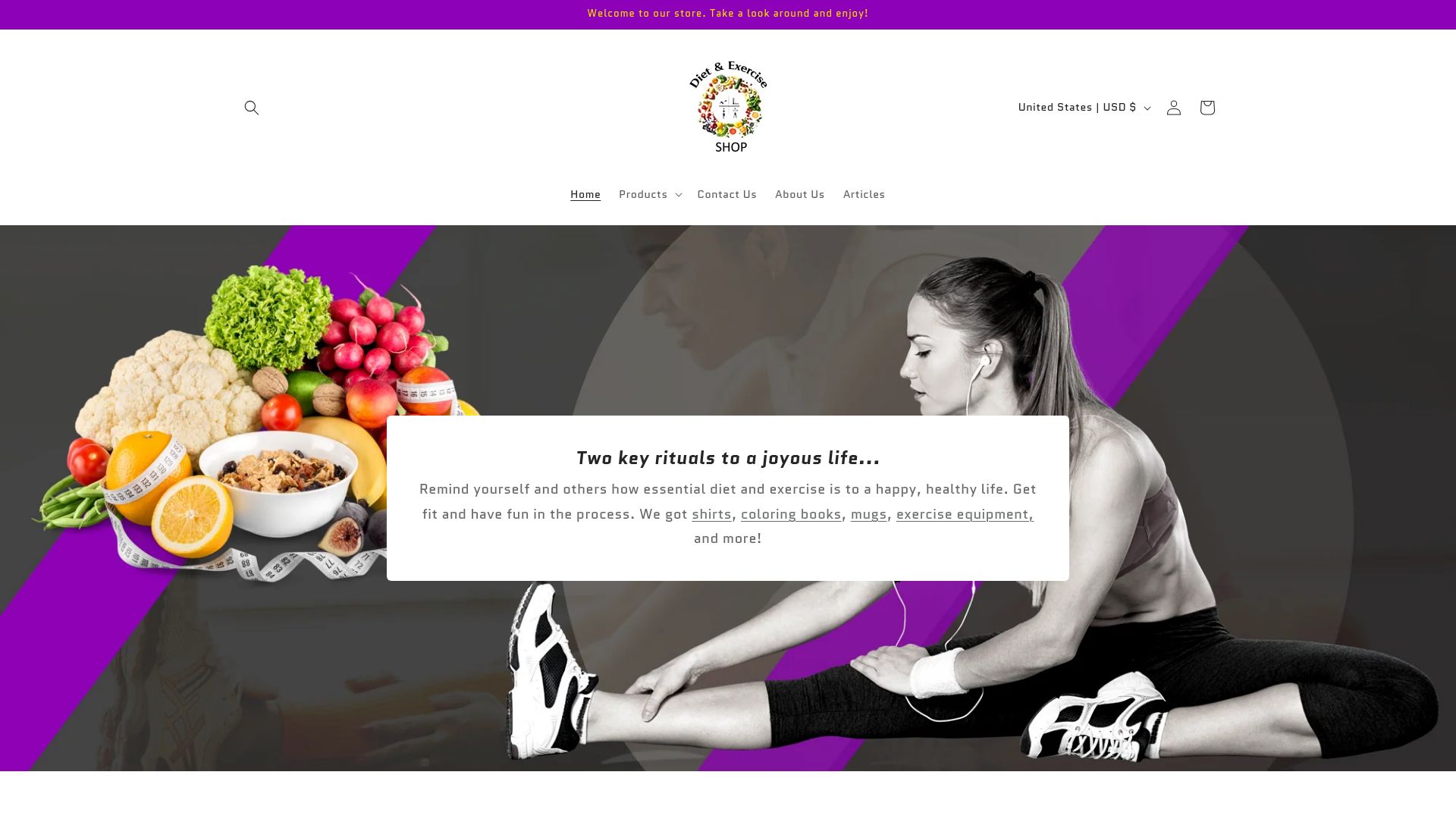
Pair your enrollment with the MEAL PREP & MUSCLE REPS Hoodie for a bundle that keeps you motivated on and off the gym floor. Or add the Get Fit With Fruits and Veggies eBook as a practical visual companion to the course modules. A satisfaction guarantee means you can sample the content risk-free. Head to Diet Exercise Shop to view the course, check current pricing, and enroll today.
Useful sources for deeper research
These are the primary sources worth bookmarking when comparing programs:
- Stanford Center for Health Education: Eight-module open online course covering macronutrients, micronutrients, and calorie balance. Good for foundational science before enrolling in a performance-focused program.
- Cornell eCornell Nutrition Certificate: Six-month program with facilitated discussions, 60 professional development hours, and a biochemistry-grounded curriculum. Best for learners who want a university credential with CEU recognition.
- NASM Sports Nutrition Certification: Self-paced, performance-focused, with a 365-day study window and CEU credits. Strong choice for personal trainers needing continuing education.
- Concordia University Chicago Sports Nutrition Certificate: Graduate-level, includes a practicum component, and prepares learners for the CISSN exam. Best for those pursuing a professional credential in sports nutrition.
When comparing any program, check three things: the module-level syllabus (not just topic names), whether practical assignments are graded, and whether the accrediting body is recognized in the U.S. for your intended use. If you need medical nutrition therapy for a clinical condition, consult a Registered Dietitian Nutritionist. This article covers general nutrition education for fitness purposes and is not a substitute for professional medical advice.
FAQ
What topics should a fitness nutrition course cover?
A solid course covers macronutrients, micronutrients, energy balance, metabolism, nutrient timing, supplementation basics, and hydration, with applied meal design for different training phases.
How long does an online nutrition course take to complete?
It depends on the format: marketplace courses run roughly 8 hours of video, self-paced professional certifications allow up to 365 days, and university certificates such as Cornell’s typically take 6 months at 3–5 hours per week.
Do online nutrition courses offer CEUs?
Some do. Cornell’s certificate includes 60 professional development hours (6 CEUs), and NASM’s sports nutrition certification offers continuing education credits, making both useful for fitness professionals tracking continuing education.
Is the Diet & Exercise Shop course right for beginners?
Yes. The course is designed for fitness enthusiasts at any level who want to understand the evidence behind their nutrition choices, from supplement labels to meal timing around workouts.
When do I need an RDN instead of a nutrition course?
If you have a clinical condition requiring medical nutrition therapy, such as kidney disease, eating disorders, or diabetes management, a Registered Dietitian Nutritionist is the appropriate professional, not a fitness nutrition course.
Recommended
- Your Complete Diet and Workout Plan for Beginners – Diet & Exercise
- A Healthy Diet Plan for Athletes That Actually Works – Diet & Exercise
- Want To Train For HYROX? Here’s The Formula…#SHORT - YouTube
- Benefits of Exercise and Healthy Eating: Your Ultimate Guide – Diet & Exercise