
The Best Workout Fabrics for Every Exercise Type
For high-intensity sweat sessions, polyester or nylon blends with elastane are your best bet. For multi-climate comfort and natural odor resistance, merino wool or lyocell (TENCEL) blends earn their place in any gym bag. Here’s the short version before the full breakdown:
- Polyester/elastane blends: running, HIIT, cycling, most gym work
- Nylon/elastane blends: yoga, Pilates, high-abrasion activities
- Merino wool: cold-weather training, endurance events, travel
- Lyocell (TENCEL): low-to-moderate intensity, sensitive skin, casual gym wear
- Cotton: warm-up layers, low-sweat sessions, lifestyle wear
Polyester is the most commonly used synthetic in sports apparel, though the right choice still depends on your workout type, climate, and how hard you sweat. Dietexerciseshop carries apparel matched to these categories, and the Woolmark standard remains the benchmark for merino quality in activewear.
Key Takeaways
Polyester and nylon blends with elastane cover the majority of workout types, while merino wool and lyocell fill the gaps for natural comfort, odor resistance, and multi-climate performance.
| Point | Details |
|---|---|
| Match fabric to intensity and climate | Polyester/elastane for high-sweat sessions; merino or lyocell for cold-weather or sensitive skin. |
| Elastane percentage signals stretch | Look for 5–10% for general gym wear, 15–20% for yoga, compression, or deep-range movements. |
| Knit structure drives breathability | Mesh panels and open warp knits improve evaporative cooling, sometimes more than fiber type alone. |
| Cotton belongs in low-sweat contexts | Cotton holds moisture rather than wicking it, making it suitable for warm-ups and casual wear only. |
| Care preserves performance | Wash cold, skip fabric softener, and air dry to protect wicking channels and elastane life. |
| Dietexerciseshop apparel | The store’s workout tees match fabric comfort to activity type, from warm-ups to studio sessions. |
Table of Contents
- What makes a workout fabric actually perform?
- The best workout fabrics explained: pros, cons, and use cases
- Which fabrics work best for your specific workout?
- Fabric treatments and technologies worth knowing
- How to wash workout fabrics without wrecking them
- What the research actually says about fabric performance
- How to choose the right workout fabric: a practical checklist
- The part most fabric guides get wrong
- Dietexerciseshop apparel that matches your fabric needs
- Sources
- FAQ
What makes a workout fabric actually perform?
Moisture management is the first thing to understand, and there’s a distinction most shoppers miss. Moisture absorption means a fiber holds water inside itself (cotton does this). Moisture wicking means a fiber moves sweat away from your skin to the outer surface, where it evaporates. Polyester, polypropylene, and nylon are engineered for wicking through low moisture regain and capillary action built into the fiber structure. Cotton absorbs but doesn’t wick, so it sits wet against your skin when you’re working hard.
Beyond wicking, the qualities that separate a good performance fabric from a mediocre one are:
- Breathability: how freely air moves through the fabric, which drives evaporative cooling
- Quick-dry speed: how fast surface moisture evaporates after wicking
- Stretch and recovery: how much the fabric gives under movement and snaps back to shape
- Elastane percentage: typically 5–20% for general activewear; higher for compression garments
- Compression: graduated pressure that can support muscles and reduce fatigue
- Odor resistance: either natural (merino) or via antimicrobial treatment
- Durability: resistance to pilling, abrasion, and repeated washing
Knit structure matters as much as fiber choice. Open warp knits and mesh zones improve evaporative heat loss sometimes more than the fiber itself. A mesh-paneled polyester shirt can outperform a solid-knit nylon shirt in breathability, even if nylon is technically the stronger fiber.
Pro Tip: Flip a garment inside out and look at the knit. A tight, uniform stitch with no open zones is a sign of a budget construction. Engineered activewear typically shows varied stitch density, mesh inserts at the underarm or back, or a brushed inner surface for moisture pickup.
The best workout fabrics explained: pros, cons, and use cases
Fiber choice, knit structure, and chemical finishing together determine wicking performance. No single fiber is perfect for every situation. Here’s what each major material actually delivers.
| Fabric | Strengths | Weaknesses | Best For |
|---|---|---|---|
| Polyester | Fast-dry, shape retention, affordable, durable | Can trap odor without treatment | Running, HIIT, cycling, general gym |
| Nylon | Soft hand, strong wicking, abrasion-resistant | Slower to dry than polyester in some conditions | Yoga, Pilates, leggings, high-wear zones |
| Elastane/Spandex | Exceptional stretch and recovery, compression | Never used alone; always blended | All activewear blends |
| Cotton | Soft, breathable at low intensity, affordable | Absorbs moisture, stays wet, heavy when damp | Warm-up layers, casual gym wear |
| Merino Wool | Natural odor resistance, thermoregulation, soft | Expensive, requires gentle washing | Cold-weather, endurance, travel |
| Lyocell/TENCEL | Soft, natural wicking, sustainable | Less durable than synthetics under abrasion | Low-to-moderate intensity, sensitive skin |
Polyester dominates sports apparel for good reason. It dries fast, holds its shape through hundreds of washes, and costs less than most alternatives. The downside is odor retention: polyester fibers can harbor bacteria after repeated use unless treated with an antimicrobial finish.
Nylon wicks well and feels softer against skin than polyester, which is why it shows up in leggings and base layers. A peer-reviewed narrative review notes that nylon sometimes dries more slowly than polyester in certain conditions, so the “better” choice between the two depends on your activity and environment.
Elastane (spandex) is never a standalone fabric. At 5–10% in a blend, it adds four-way stretch and shape retention. At 15–20%, it delivers compression. LYCRA® SPORT’s PCE™ Index tests stretch, recovery, compression, and fit as a system, which is the kind of engineered approach that separates performance leggings from basic ones.
Cotton is comfortable at rest and during low-intensity activity. TESTEX’s technical guidance is direct: cotton holds moisture rather than wicking it, so it becomes heavy and cold against skin during heavy sweating. It belongs in warm-up layers and casual gym tees, not in high-sweat sessions.
Merino wool is the standout natural fiber. Woolmark confirms it offers natural odor resistance and thermoregulation that most synthetics need chemical treatment to match. Fine merino (17–19 microns) is soft enough to wear against skin without itching.
Lyocell/TENCEL is a man-made cellulosic fiber (MMCF) derived from wood pulp. It wicks naturally, feels smooth, and is rising as a sustainable alternative to synthetics in sportswear. It’s not as durable as nylon under repeated abrasion, but for yoga, Pilates, or studio classes, it’s a strong choice.
Blends are where performance really lives. Polyester + elastane gives you quick-dry plus stretch. Nylon + elastane gives you a softer, more durable base with compression capability. Merino + nylon adds durability to wool’s natural comfort. High-quality activewear rarely uses a single fiber for this reason.
Which fabrics work best for your specific workout?
Fabric choice shifts depending on how hard you work, how long you train, and where you train. Expert recommendations from Women’s Health align with the research: polyester and nylon blends with spandex cover most workouts, while merino and lyocell fill the gaps for comfort-first or multi-climate needs.
- Running: Polyester/elastane blends with mesh panels. Look for flatlock seams to prevent chafing and a fabric weight under 150 gsm for warm-weather runs. For cold-weather running, a merino base layer under a DWR-treated shell works well.
- HIIT: Polyester or nylon/elastane blends with 4-way stretch. You need fabric that moves in every direction and dries fast between rounds. Check for at least 10% elastane.
- Weightlifting: A slightly heavier polyester blend (150–200 gsm) for durability at the knees and seat. Compression shorts with 15–20% elastane support muscle groups during heavy lifts.
- Yoga and Pilates: Nylon/elastane blends or lyocell blends. The priority is a smooth, non-slip surface and enough stretch for deep ranges of motion. Check for 15–20% elastane in leggings and confirm opacity before buying.
- Cycling: Chamois-padded shorts use polyester/elastane shells for aerodynamic fit. For the upper body, lightweight polyester jerseys with back mesh panels handle sweat at sustained effort.
- Cold-weather outdoor training: Merino wool base layers, then a mid-layer fleece (polyester), then a DWR or membrane shell. Technical outdoor fabrics engineered for early-morning or pre-dawn conditions follow the same layering logic.
- Endurance events (marathon, triathlon): Merino or polyester/elastane blends that manage odor over long durations. Seam placement matters as much as fabric here — flatlock or bonded seams prevent blisters over hours of movement.
Pro Tip: For yoga and any squat-heavy movement, do the squat-and-spread test before buying: pull the fabric taut at the seat and hold it up to light. If you can see through it, the elastane content is too low or the fabric weight is too light for that movement.
Fabric treatments and technologies worth knowing
Treatments applied after weaving or knitting can meaningfully change how a fabric performs, though not all of them hold up equally well over time.
Antimicrobial finishes using silver ions or zinc compounds slow bacterial growth on the fabric surface, which reduces odor. These work well when new but can degrade after 20–30 washes depending on the application method. Merino achieves natural odor resistance through its fiber structure, which doesn’t wash out.
Phase-change materials (PCM) are microcapsules embedded in fabric that absorb or release heat as they change state, theoretically buffering skin temperature. The PMC narrative review notes that PCM and other chemical finishes show performance and comfort benefits in laboratory conditions, but broader human-trial confirmation is still limited. Treat PCM claims as a bonus, not a primary reason to buy.
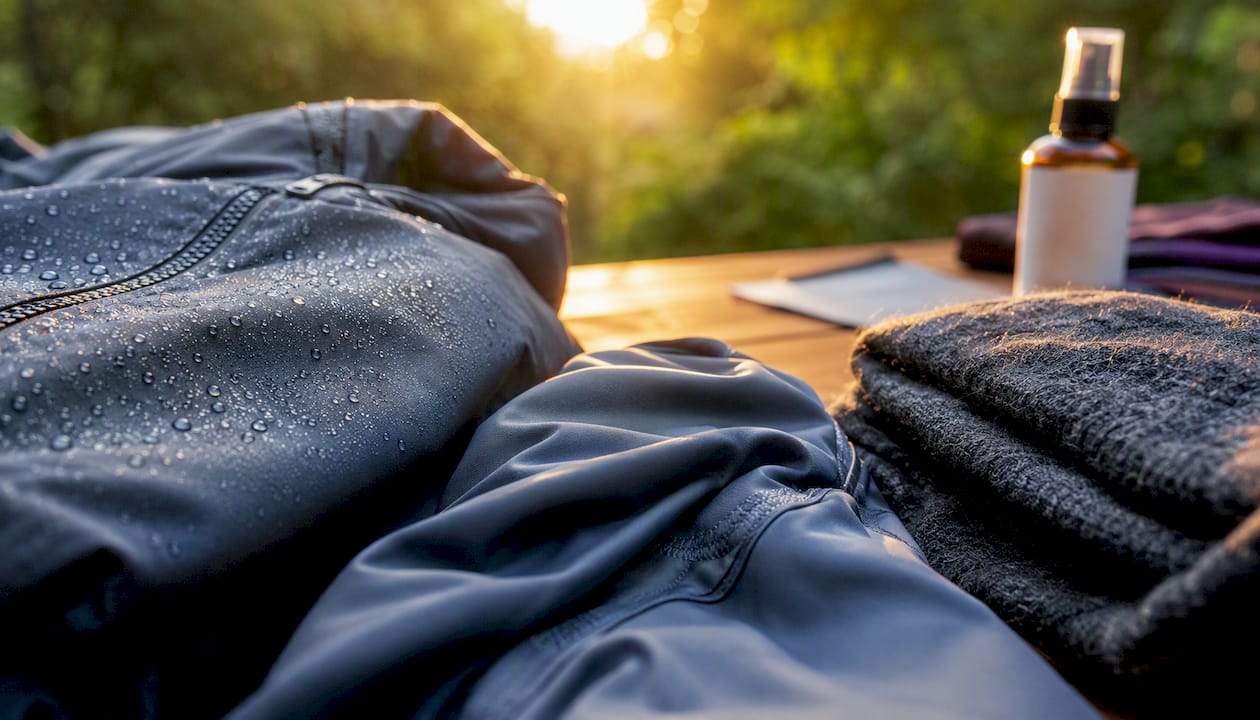
DWR (Durable Water Repellency) coatings cause water to bead and roll off the outer surface. Standard in running jackets and cycling shells, DWR wears off with washing and needs periodic reactivation (low heat in a dryer often restores it temporarily).
Silicone-based wicking finishes alter the surface energy of a fiber to improve capillary transport. They’re common in budget polyester garments as a substitute for engineered knit construction. They work initially but tend to wash out faster than structural wicking built into the knit itself.
Advanced membrane technologies, such as those used in Toray’s technical sports textiles, combine waterproof-breathable membranes with fast-drying knit faces for outdoor performance apparel where weather protection and moisture management both matter.
How to wash workout fabrics without wrecking them
The fastest way to ruin a performance garment is to wash it the same way you wash a cotton t-shirt.
- Wash in cold water (30°C/86°F or below); heat degrades elastane and sets odor into synthetic fibers
- Never use fabric softener on activewear; it coats fibers and blocks wicking channels
- Turn garments inside out to protect surface finishes and reduce pilling
- Use a mild or technical detergent (enzyme-based formulas work well for odor)
- Air dry whenever possible; repeated high-heat drying shortens elastane life significantly
- For persistent odor, soak in a diluted white vinegar solution for 30 minutes before washing
- Avoid chlorine bleach entirely; it breaks down elastane and antimicrobial finishes
Enzyme-based technical detergents can restore wicking performance in garments that have lost it through softener buildup or residue. Sun-drying also helps neutralize odor naturally.
Pro Tip: If a polyester shirt has lost its wicking feel, run it through a wash with a dedicated sports detergent (no softener), then tumble dry on low for 10 minutes. The light heat can reactivate the surface finish. Skip this for merino and lyocell, which prefer air drying.
What the research actually says about fabric performance
The honest answer from the science is: it depends. The PMC narrative review found that comparative trial outcomes between polyester, nylon, cotton, and wool vary with environment, exercise intensity, and study design. No single fabric wins every test.
What the evidence does consistently support:
Cotton’s comfort reputation is real at low intensity, but TESTEX’s technical guidance confirms it holds moisture rather than moving it, making it a poor choice for sustained sweating. The wet, heavy feeling is not a perception issue; it’s a fiber physics issue.
Nylon’s higher moisture absorption (compared to polyester) can mean slower drying in some conditions, even though it wicks effectively. The PMC review flags this tradeoff. For short, intense sessions, polyester’s faster dry time often wins. For longer, lower-intensity sessions where softness matters more, nylon holds its own.
Knit construction can outweigh fiber identity in determining thermal comfort and evaporative heat loss. A well-constructed polyester mesh can outperform a poorly constructed nylon jersey. This is why reading the fiber label alone isn’t enough.
Statistic callout: The PMC review found that perceived benefits of synthetics over natural fibers depend heavily on climate and exercise duration, meaning a polyester shirt that performs well in a dry gym may not outperform merino in humid outdoor conditions.
Pro Tip: To test wicking in a store, press the inside of the fabric against your wrist for five seconds, then pull it away. A wicking fabric should feel dry on the inner surface almost immediately. A cotton or poorly finished synthetic will leave a damp impression.
How to choose the right workout fabric: a practical checklist
Use this when shopping online or in-store. A garment that passes most of these checks will perform well regardless of brand.
- Check the fiber label. Look for polyester, nylon, or a blend as the primary fiber (60%+). Avoid 100% cotton for anything above low-intensity activity.
- Find the elastane percentage. For general gym wear, 5–10% is enough. For yoga or compression, look for 15–20%.
- Check fabric weight. Lightweight (under 150 gsm) for cardio and warm weather; medium (150–200 gsm) for lifting and cooler conditions.
- Look for mesh panels. Underarm, back, or side mesh panels signal engineered breathability, not just a marketing claim.
- Check seam type. Flatlock seams lie flat against skin and prevent chafing. Raised seams are fine for casual wear but a problem over long runs or rides.
- Do the opacity test. Stretch the fabric at the seat or thigh. If it becomes see-through, the weight or elastane content is too low for that movement.
- Look for treatment claims. “Antimicrobial,” “odor-resistant,” or “DWR” on the label adds value, but ask how many washes the treatment is rated for.
- Check sustainability signals. “Recycled polyester,” “TENCEL,” or “MMCF” indicate lower environmental impact. TENCEL lyocell is rising as a sustainable sportswear fiber without sacrificing comfort.
- For women’s fit: check whether the product page specifies fabric opacity and four-way stretch. Fit-specific guidance can help narrow choices by activity and body type.
- For plus-size fit: compression percentage and fabric recovery matter more than weight alone. Activewear fit guidance covers what to look for in stretch and support.
For a deeper look at how fabric durability holds up under intense training, the best workout clothes material guide at Dietexerciseshop covers construction and longevity in more detail.
The part most fabric guides get wrong
The conventional wisdom says “just avoid cotton.” That’s true but incomplete. The more useful frame is: match fabric to the combination of intensity, duration, and environment, not just the activity name.
A merino base layer in a 90°F gym is a bad idea regardless of how well merino performs in cold-weather endurance events. A polyester t-shirt on a 20-mile trail run in November will leave you cold and clammy once sweat saturates it. The research backs this up: the PMC review found that perceived benefits of synthetics over natural fibers shift with climate and duration, not just fiber identity.
The other thing most guides underweight is construction. Two polyester shirts at the same fiber percentage can perform completely differently if one has open-knit mesh zones and the other is a tight jersey weave. Fiber content is the starting point. Knit structure, seam type, and finishing are what separate a garment that works from one that just looks like it should.
Fit matters too, and it’s the variable most people skip when they’re focused on fabric specs. A technically superior fabric in the wrong cut will chafe, bunch, or restrict movement in ways that negate every performance advantage. Buy the right fabric AND the right fit.
Dietexerciseshop apparel that matches your fabric needs
The fabric knowledge above points to a clear conclusion: the right workout shirt is one that fits your activity, manages sweat, and keeps you motivated to show up. Dietexerciseshop’s apparel line covers both the functional and the motivational side of that equation.
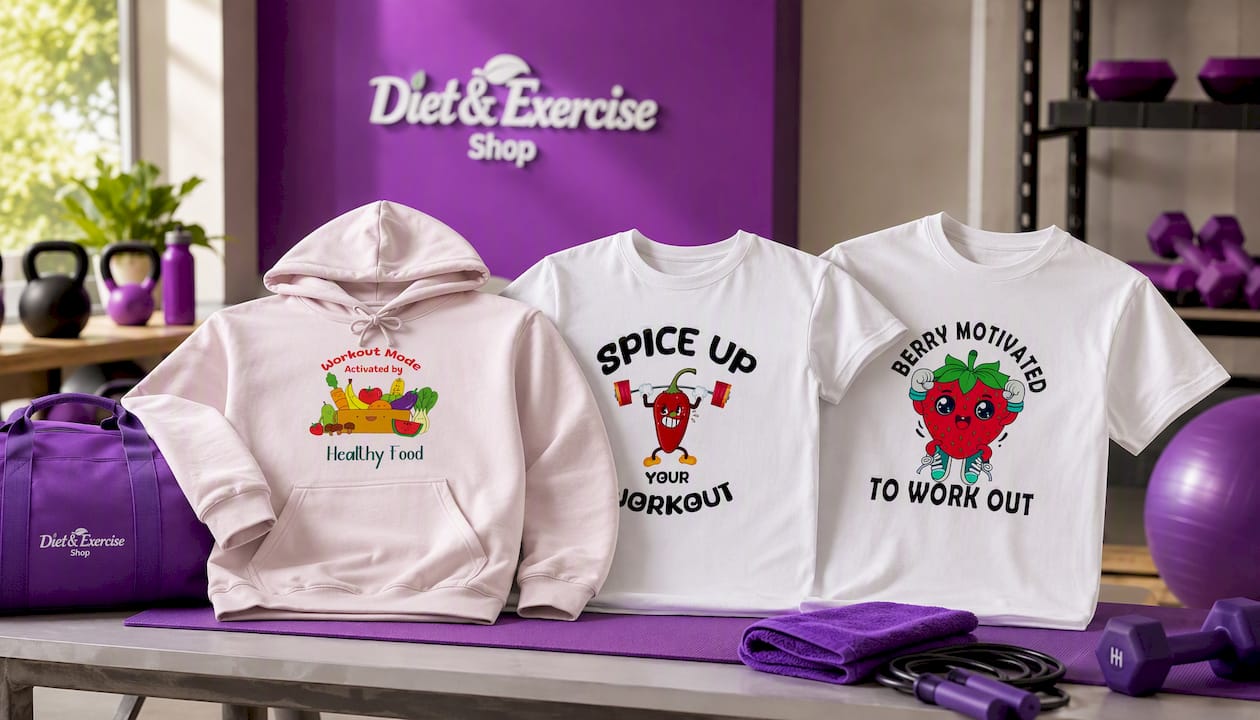
Three shirts worth looking at right now:
The WORKOUT MODE ACTIVATED BY HEALTHY FOOD tee pairs the mindset of clean eating with gym-ready style, suited for warm-up sessions and low-intensity training days when cotton’s comfort is a genuine advantage.
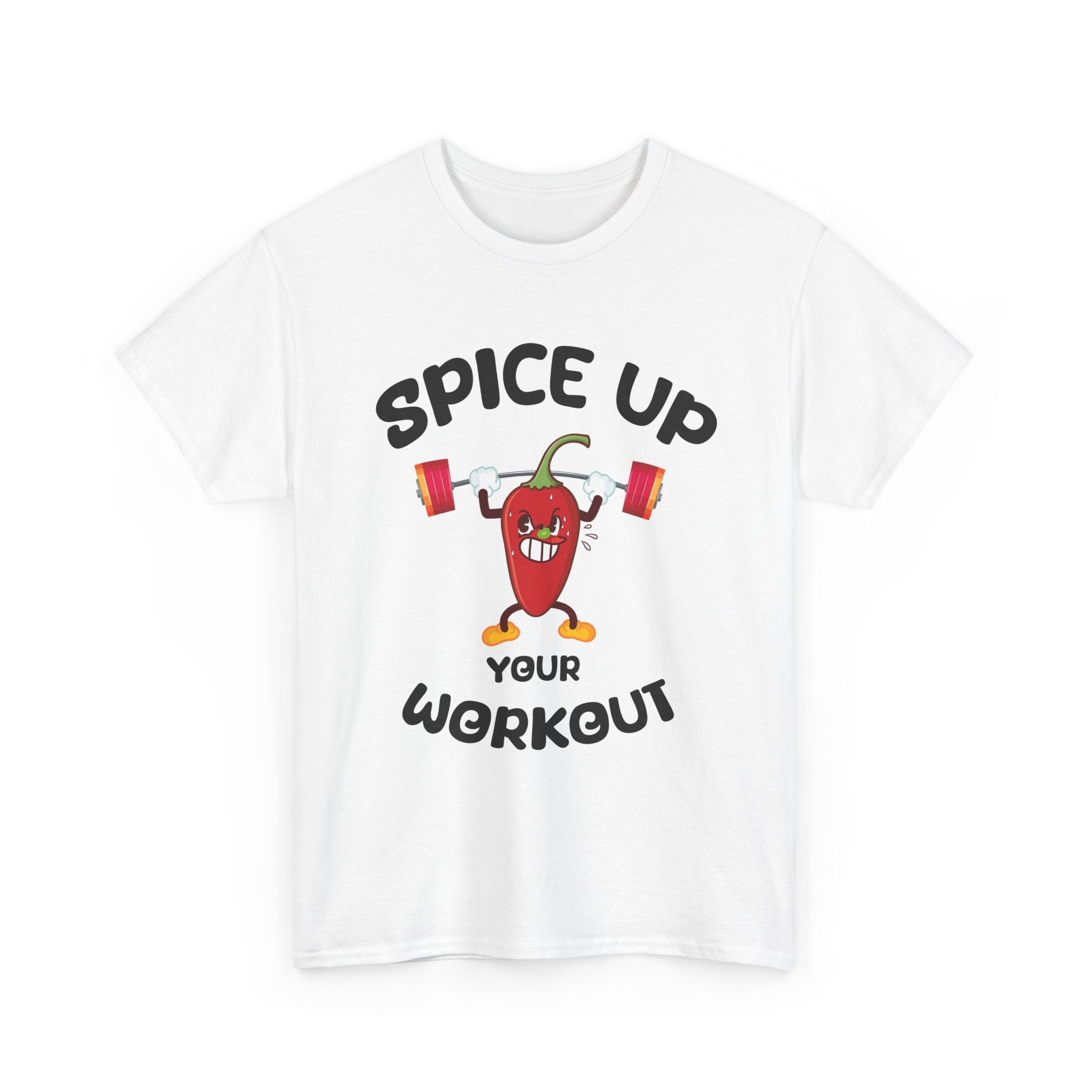
The SPICE UP YOUR WORKOUT T-Shirt is built for casual gym sessions and active lifestyle wear, the kind of shirt you reach for on a lighter training day or a walk that turns into a jog.
The BERRY MOTIVATED TO WORK OUT T-Shirt brings the energy of a pre-workout mindset into a comfortable, wearable format, ideal for studio classes or any session where you want to feel good before you even start moving.
Browse the full apparel range at Dietexerciseshop and match your next purchase to the fabric guidance above.
Sources
- Applications Insight: The Fundamentals of Wicking | James Heal
- Woolmark
- The Role of Sports Clothing in Thermoregulation, Comfort, and Performance During Exercise in the Heat: A Narrative Review - PMC
- LYCRA® SPORT Fabric Technology: Performance Fabrics for Athletes and Active People
- Moisture-Wicking Fabric: How Wiking Works and Its Role in Knit Fabric Dyeing - Practical Textile
- Best material for workout clothes — Women’s Health
- What Is Sportswear Made Of? The 5 Most Dominant Fabrics — SCI (Sport Casuals International)
- Essential knowledge about moisture-wicking fibres for textile professionals — TESTEX
FAQ
Which material is best for workout clothes?
Polyester or nylon blended with elastane (spandex) is best for most workouts because these fibers wick moisture away from skin, dry fast, and hold their shape. For natural fiber preference, merino wool offers comparable performance with added odor resistance.
What is the best natural fabric for activewear?
Merino wool is the top natural fiber for activewear, rated highly for natural odor resistance and thermoregulation across varied conditions. Fine merino (17–19 microns) is soft enough for direct skin contact without irritation.
What’s the difference between moisture absorption and moisture wicking?
Absorption means a fiber holds water inside itself (cotton does this); wicking means a fiber moves sweat from skin to the outer surface where it evaporates. Wicking fabrics like polyester and nylon keep you drier during exercise; absorbent fabrics like cotton feel wet and heavy once saturated.
What fabric should I avoid at the gym?
100% cotton is the main fabric to avoid for high-intensity gym sessions. It absorbs sweat and stays wet against your skin, which can cause chafing, discomfort, and temperature drops during rest periods.
Does Dietexerciseshop carry workout apparel?
Yes. Dietexerciseshop offers workout tees and apparel including the WORKOUT MODE ACTIVATED BY HEALTHY FOOD, SPICE UP YOUR WORKOUT, and BERRY MOTIVATED TO WORK OUT t-shirts, suited for casual training, warm-ups, and studio sessions.