

How to Choose a Fitness Course That Fits Your Goal
If you want a direct answer: the TRANSFORM YOURSELF: POWER UP X1000 Course from Dietexerciseshop is the strongest all-around pick for most U.S. buyers right now. It covers multiple goals, comes with structured support, and pairs cleanly with a nutrition eBook. Here’s why it works for most people:
- Goal fit: Designed for weight loss, muscle gain, and consistency, so it covers the three most common buyer priorities in one program.
- Delivery format: Self-paced with structured progression, meaning you move at your own speed without losing the program’s built-in logic.
- Low purchase risk: Dietexerciseshop offers a clear product catalog with digital access, so you can start immediately after checkout.
If your goal is more specific, the sections below map every common goal to the right course or eBook. Read the 60-second checklist next, then make your purchase.
Key Takeaways
Choosing a fitness course comes down to three things: matching the program to your specific goal, confirming it includes structured progression and a nutrition component, and verifying the instructor’s credentials before you buy.
| Point | Details |
|---|---|
| Match program to goal | Weight loss, muscle gain, and endurance each require different nutrition and training structures. |
| Require structured progression | Programs with phased training blocks produce better results than static, repeated workouts. |
| Realistic outcome timeline | Safe weight loss runs 0.5–2 lb per week; expect 5–10% of starting body weight in six months. |
| Verify credentials and refund policy | Confirm instructor certifications and a money-back guarantee before purchasing any program. |
| Dietexerciseshop recommendation | The TRANSFORM YOURSELF: POWER UP X1000 Course is the strongest all-around pick for multi-goal buyers. |
Table of Contents
- How do you choose a fitness course in 60 seconds?
- What criteria actually predict results in a fitness course?
- What does an effective consumer fitness course actually include?
- Which Dietexerciseshop course or eBook matches your goal?
- When should you consult a healthcare professional first?
- What red flags should make you walk away from a program?
- Final pre-purchase checklist before you click Buy
- Dietexerciseshop courses and eBooks worth buying right now
- What most buyers get wrong when they select a workout program
- Sources
- FAQ
How do you choose a fitness course in 60 seconds?
Run through this before you spend a dollar. Tick every item that applies to you:
- Primary goal: Weight loss, muscle gain, endurance, or energy and consistency?
- Available time: Can you commit 3–5 sessions per week, or do you need something under 30 minutes a day?
- Equipment: Do you have dumbbells, resistance bands, or gym access, or are you bodyweight-only?
- Support level: Do you want a coach checking in, a community forum, or are you fine working solo?
- Budget: Are you looking for a one-time eBook purchase, a mid-range course, or a premium coaching tier?
- Refund policy: Does the program offer a trial period or money-back guarantee?
How to use it: The item you can’t tick is your deciding factor. No equipment? Filter out gym-dependent programs first. No refund policy? Walk away. One unresolved item narrows the field faster than any feature comparison.
What criteria actually predict results in a fitness course?
Most buyers focus on price and aesthetics. The criteria that actually separate effective programs from expensive PDFs are structural.
Reshape App’s evaluation guide identifies clear audience targeting, structured progression, safety guidance, and transparent coaching expectations as the strongest green flags in online workout programs. Barpath Fitness adds that missing video demonstrations, no regressions for beginners, and vague instructor credentials are reliable red flags.
| Criterion | What good looks like | What bad looks like |
|---|---|---|
| Goal clarity | Explicitly states who the program is for | “Works for everyone” with no specifics |
| Progression | Phases or weeks with increasing load | Same workout repeated indefinitely |
| Safety guidance | Warm-ups, regressions, stop criteria | No modifications, no injury notes |
| Nutrition integration | Meal templates tied to training goal | Generic “eat clean” advice only |
| Instructor credentials | Registered dietitian, certified coach | No credentials listed anywhere |
| Support and feedback | Weekly check-ins, logs, or app tracking | One-time PDF download, no follow-up |
| Total cost | All-in price stated upfront | Upsells revealed after purchase |
Nutrition matching matters more than most buyers realize. Weight loss requires a calorie deficit with adequate protein; muscle gain needs a surplus and higher protein; endurance performance depends on carbohydrate timing. A program that hands everyone the same meal plan is ignoring the most important variable.
What does an effective consumer fitness course actually include?
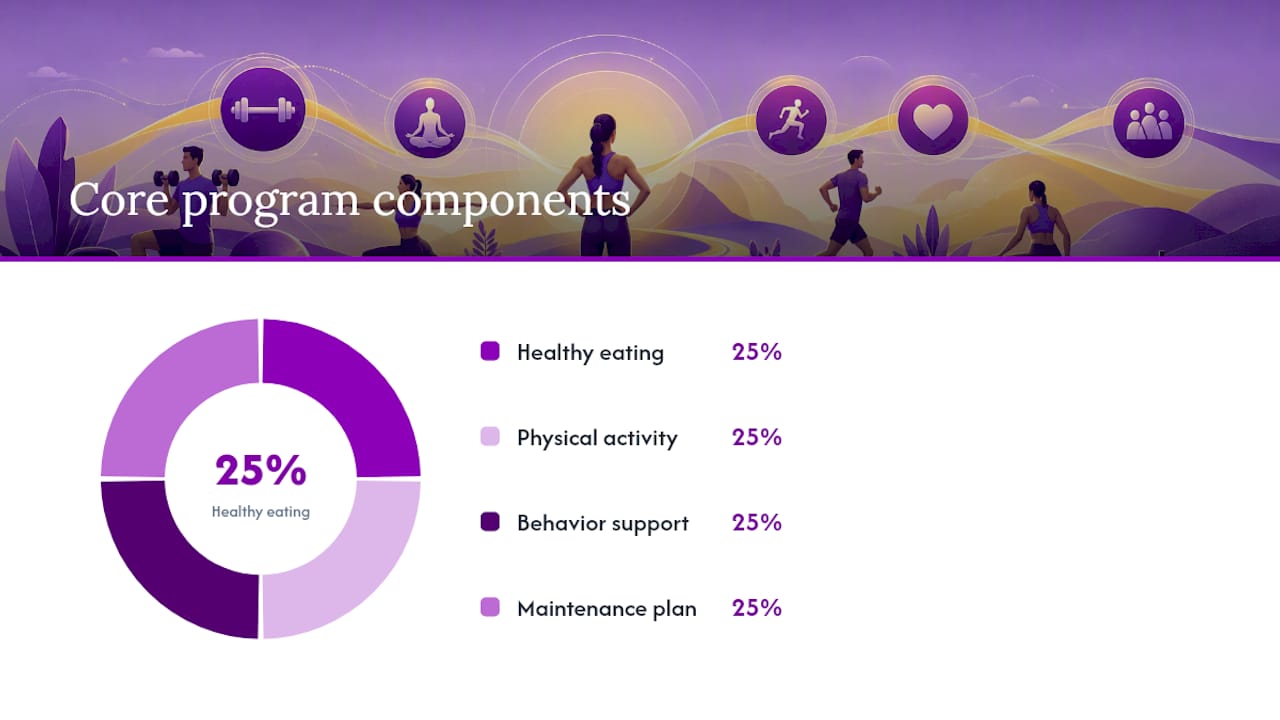
The NIDDK defines four non-negotiable components for any safe, effective weight-loss program: a healthy reduced-calorie eating plan, a physical activity plan appropriate to your ability, behavior-change support, and a maintenance plan. Those four elements apply equally to muscle gain and endurance programs, just with different targets.
A complete course syllabus should cover:
- Onboarding and baseline assessment: Starting measurements, fitness test, or goal-setting worksheet.
- Progressive training blocks: Workouts organized by phase (e.g., weeks 1–4 foundation, weeks 5–8 build), not random daily sessions.
- Nutrition basics and meal templates: Grocery lists, sample meal plans, and macro targets tied to the training goal.
- Recovery and mobility: At least one dedicated session or module per week.
- Habit-change coaching: Guidance on barriers, tracking daily behaviors, and social support, since programs that include these elements produce more durable results than those that only list meals or workouts.
- Maintenance and transition plan: What to do after the program ends, not just during it.
When evaluating eBooks specifically, Breaking Muscle recommends focusing on fully worked workout templates, progressive plans, and printable guides rather than inflated page counts or decorative bundle extras.
Pro Tip: Watch for subjective signals in the first two to three weeks: improved recovery time, higher energy during the day, and less fatigue during high-intensity sessions are early indicators a program is working, and they often show up before the scale moves. Mayo Clinic’s weight-loss blog notes these internal signals are commonly overlooked in favor of scale weight alone.
Which Dietexerciseshop course or eBook matches your goal?
| Your goal | Recommended pick | Format | Best for |
|---|---|---|---|
| Weight loss | HIIT 2 Fit eBook + resistance bands | Self-paced digital | Rapid fat loss with minimal equipment |
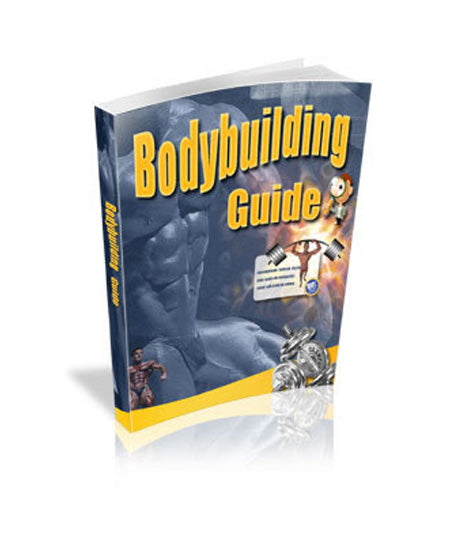
| Muscle gain | Bodybuilding Guide eBook | Self-paced digital | Structured strength programming from scratch |
| Consistency and habits | THE CONSISTENCY CODE eBook + FOCUS MASTERY Course | Course + eBook hybrid | Buyers who start programs but don’t finish them |
| Energy and recovery | ENERGY++ eBook | Self-paced digital | Fatigue, poor sleep, low motivation |
| Multi-goal transformation | TRANSFORM YOURSELF: POWER UP X1000 Course | Structured course | Buyers who want one program that covers everything |
For a beginner-friendly starting point, pair any eBook with the FORTIFY YOUR SUCCESS WITH HEALTHY HABITS Mini Course to build the behavioral foundation before adding intensity.
When should you consult a healthcare professional first?
Most healthy adults can start a moderate fitness program without a clinical sign-off. But certain situations call for a conversation with your doctor before you begin:
- Diagnosed chronic condition (heart disease, type 2 diabetes, hypertension, osteoporosis)
- Pregnancy or recent postpartum period
- Surgery or significant injury in the past six months
- Current prescription medications that affect heart rate or blood pressure
- Planned use of added-load training such as weighted vests or weighted running, which carries specific injury risk for those new to the format or with prior injury history (see weighted running safety considerations)
Script for your appointment: “I’m starting a structured fitness program focused on [goal]. The program includes [resistance training / HIIT / endurance work]. Are there any movements, intensity levels, or dietary changes I should avoid given my current health status?”
Stop training and seek medical attention if you experience chest pain, dizziness, shortness of breath disproportionate to effort, or sharp joint pain during any session.
This article is general information, not medical advice. Consult a qualified healthcare professional before starting any new exercise or nutrition program.
What red flags should make you walk away from a program?
- “Lose 30 pounds in 30 days” or any promise that exceeds the Mayo Clinic’s recommended pace of 0.5–2 lb per week. Faster than that usually means water weight or muscle loss.
- Spot reduction claims: No program can target fat loss in a specific body part. Any sales copy that promises otherwise is a reliable signal to stop reading.
- One-size-fits-all restrictive diets: A 1,200-calorie plan handed to every buyer regardless of body weight, activity level, or goal is not a nutrition plan.
- No instructor credentials listed: If you can’t find a name, certification, or professional background anywhere on the sales page, assume there isn’t one.
- Hidden costs revealed after purchase: Supplements “required” for results, paid community access, or coaching sold separately from what the sales page implied was included.
- No progression: A program where week 8 looks identical to week 1 will stop producing results after the initial adaptation phase.
Final pre-purchase checklist before you click Buy
- Total price confirmed: Have you seen the all-in cost, including any required supplements, equipment, or add-ons?
- Refund or trial policy: Is there a money-back guarantee or a free sample lesson you can access before committing?
- Time per session stated: Does the program specify session length and weekly frequency, and does it fit your schedule?
- Equipment requirements listed: Do you own or have access to everything the program requires?
- Progress tracking included: Does the program provide a log, app, or weekly check-in template?
- Instructor credentials visible: Can you find a name, certification (e.g., NASM, ACE, registered dietitian), or professional background?
- Sample content available: Can you read a sample chapter, watch a demo workout, or preview a meal template before buying?
If any item on this list is a “no” or “unclear,” email the vendor before purchasing. A legitimate program answers these questions without hesitation.
Dietexerciseshop courses and eBooks worth buying right now
Dietexerciseshop’s online courses and eBook library are built for buyers who want structured, goal-specific programs without paying for a personal trainer or a monthly subscription that auto-renews forever.
The TRANSFORM YOURSELF: POWER UP X1000 Course is the flagship pick for multi-goal buyers. It covers the full arc from baseline to maintenance, includes structured progression, and pairs naturally with the HIIT 2 Fit or Bodybuilding Guide eBook depending on your primary goal. The FOCUS MASTERY Course is the right call if consistency has been your sticking point, not knowledge.
Every purchase is a one-time digital product with immediate access. No recurring fees, no locked coaching tiers. Pair any course with the MEAL PREP & MUSCLE REPS Hoodie or the TRUST THE PROCESS T-Shirt if you want a physical reminder of the commitment you just made. Browse the full catalog and pick your program at Dietexerciseshop.
What most buyers get wrong when they select a workout program
The biggest mistake isn’t picking the wrong program. It’s picking the right program for the wrong reason: the before-and-after photos, the influencer endorsement, the low introductory price. Those signals tell you nothing about whether the program will work for your body, your schedule, or your actual goal.
The research is consistent on this. Programs that include behavior-change support, weekly tracking, and a maintenance plan outperform those that only deliver workouts and meal lists. The NIDDK’s guidance on weight-loss programs frames this clearly: sustainable results come from lifestyle change, not a temporary protocol. A six-week shred that has no plan for week seven is not a fitness program. It’s a countdown.
The other thing buyers underestimate is the value of subjective signals over scale weight in the early weeks. If you’re sleeping better, recovering faster between sessions, and feeling less fatigued by Thursday, the program is working, even if the number on the scale hasn’t moved yet. That’s the signal worth tracking.
Sources
- Choosing a Safe & Successful Weight-loss Program - NIDDK
- Weight loss: Choosing a diet that’s right for you - Mayo Clinic
- How to Evaluate Online Workout Programs: Red Flags and Green Flags | Reshape App
- Online Workout Programs: What To Look For - Barpath Fitness
- 9 things to consider when buying a fitness ebook - Breaking Muscle
This article is general information, not a substitute for advice from a qualified doctor. Consult a qualified healthcare professional about your own circumstances before acting on anything here.
FAQ
What should a good fitness course always include?
A solid program includes a progressive training plan, a nutrition component tied to your goal, behavior-change support, and a maintenance plan for after the program ends. The NIDDK identifies these four elements as the foundation of any safe, effective weight-loss or fitness program.
How fast should I expect results from a fitness course?
Subjective improvements like better sleep, higher energy, and faster recovery often appear in the first two to three weeks before scale weight changes.
How do I find a fitness class or course that fits my schedule?
Filter first by session length and weekly frequency, not by program name or price. A program you can complete three times a week consistently beats a five-day program you abandon by week two.
What makes Dietexerciseshop courses worth buying?
Dietexerciseshop’s courses and eBooks are one-time purchases with immediate digital access, no recurring subscription fees, and goal-specific content covering weight loss, muscle gain, consistency, and energy. The TRANSFORM YOURSELF: POWER UP X1000 Course is the flagship option for buyers with multiple goals.
When should I avoid starting a fitness program without medical clearance?
Consult a healthcare professional first if you have a chronic condition, are pregnant or recently postpartum, have had surgery in the past six months, or are taking medications that affect heart rate or blood pressure.