

How to Wash Gym Clothes Without Killing the Fabric
Wash synthetic activewear as soon as you can after a workout, use an enzyme-based detergent, skip the fabric softener, and let items air-dry. That routine alone solves most of the odor and fabric-breakdown problems gym-goers deal with. Washing workout clothes right away is the single most effective habit for keeping sweat and body oils from setting permanently into synthetic fibers, according to P&G scientist Kim Romine’s guidance on sweat and odor removal. Consumer testing group Which? backs the same approach, and it’s the exact standard Dietexerciseshop recommends for anyone trying to protect performance apparel long term.
Three moves matter more than anything else:
- Get sweaty clothes out of a sealed bag and into the wash within a few hours, not a few days.
- Choose a detergent built to break down protein and oil, not just dirt.
- Skip the dryer sheet and let the fabric breathe as it dries.
Key Takeaways
Washing gym clothes soon after use with an enzyme detergent and cold water removes odor at the source instead of masking it temporarily.
| Point | Details |
|---|---|
| Wash immediately | Get sweaty items into the wash within hours, not days, to stop odor from setting into fibers. |
| Use enzyme detergent | Choose a liquid enzyme formula over standard powder to break down sweat proteins and body oils. |
| Skip softener and heat | Avoid fabric softener, dryer sheets, chlorine bleach, and hot water on synthetics with elastane. |
| Escalate stubborn odors carefully | Rewash first, then try a vinegar or baking soda soak, then an oxygen cleaner before anything more drastic. |
| Choose fabric built for the routine | Dietexerciseshop’s MEAL PREP & MUSCLE REPS Hoodie and TRUST THE PROCESS T-Shirt hold up well to cold-water washing and air-drying. |
Table of Contents
- What to Do With Gym Clothes Right After a Workout
- How Should You Sort and Prep Workout Clothes for the Wash?
- What’s the Best Way to Pre-Treat Sweat Stains and Odors?
- Which Detergent Actually Removes Sweat Odor From Activewear?
- What Washer Settings Protect Gym Clothes Best?
- Air-Dry or Machine Dry: What’s Safer for Workout Clothes?
- How Do You Get Rid of Odors That Won’t Go Away?
- Why Does Your Washing Machine Need Cleaning Too?
- The Science Behind Why This Routine Actually Works
- Wash Smarter, Wear Longer With Dietexerciseshop
- Sources
- FAQ
What to Do With Gym Clothes Right After a Workout
Bacteria and body oil start bonding to synthetic fibers almost immediately, which is why the worst thing you can do is stuff a damp shirt into a gym bag and forget about it until laundry day. Air out sweaty garments the moment you take them off. Hang them over a chair, a shower rod, or a drying rack so moisture can evaporate instead of festering.
If a real wash isn’t possible for a few hours, don’t just toss everything in the hamper.
- Stash sweat-soaked items in a separate, ventilated mesh bag rather than a sealed plastic one.
- Give particularly ripe pieces a quick cold-water rinse and wring them out before storing.
- Wash within 24 hours whenever you can. Washing ASAP remains the highest-impact single habit, per Real Simple’s reporting on sweat and odor removal.
Pro Tip: Pull removable padding out of sports bras before they go anywhere near a bag or hamper, and keep sweaty socks and shoes away from your shirts and shorts. Damp footwear breeds a different kind of bacteria that can transfer odor to clean fabric sitting next to it.
How Should You Sort and Prep Workout Clothes for the Wash?
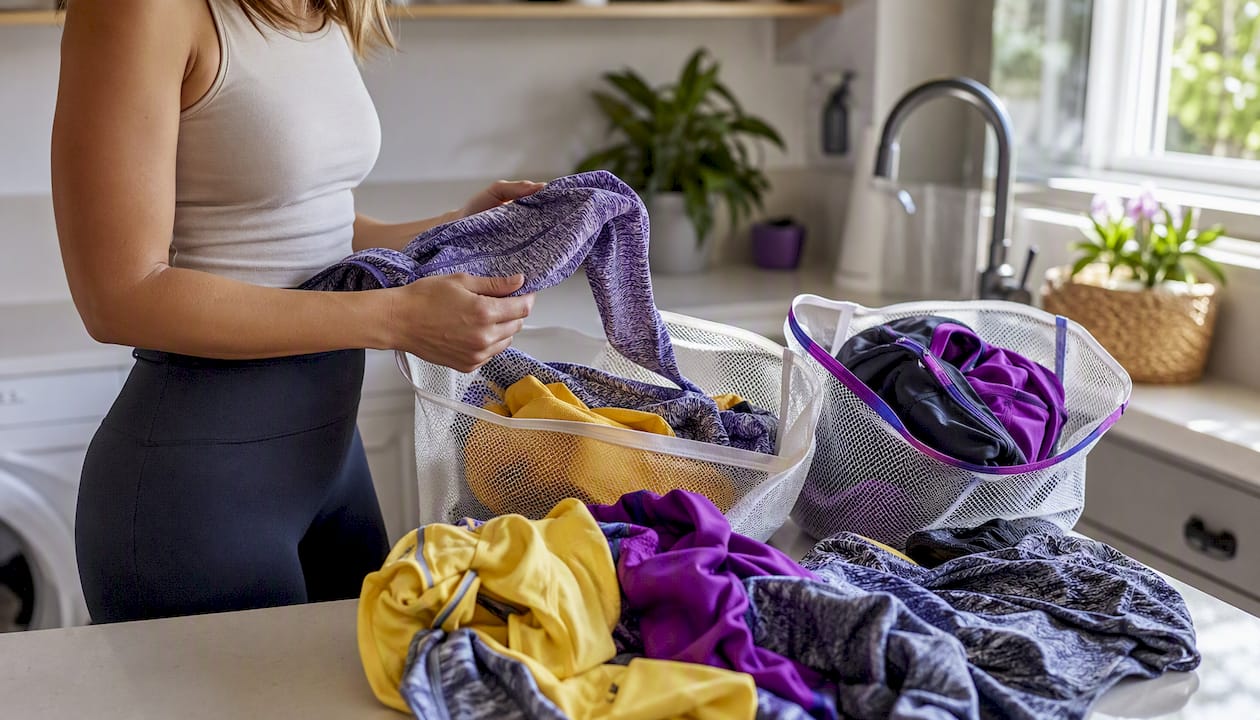
Synthetics and cotton don’t behave the same way in a washing machine, so lumping them together usually means one or the other comes out wrong. Separate moisture-wicking synthetics from cotton towels and t-shirts before you even open the detergent.
From there, prep each load like this:
- Turn every piece inside out so the sweat-exposed side faces the water and detergent directly.
- Close zippers and secure hook-and-loop straps so they don’t snag or abrade other fabrics.
- Remove any padding from bras or compression tops.
Turning garments inside out puts the most heavily soiled surface in direct contact with detergent, which also cuts down on fading, according to Wirecutter’s testing on cleaning workout clothes. Always check the care label. A cotton hoodie like Dietexerciseshop’s MEAL PREP & MUSCLE REPS Hoodie tolerates a normal cycle just fine, but a compression legging with spandex belongs on delicate. Fragile mesh tops do best zipped into a mesh laundry bag.
What’s the Best Way to Pre-Treat Sweat Stains and Odors?
Some odors need a head start before they’ll fully release in the wash, and knowing the right steps for specialized garment care can make all the difference, as explained in how to wash period underwear and make it last. A basin soak works better than dumping raw ingredients straight into the machine, and it targets exactly the zones that matter.
For a general odor soak, mix one part white distilled vinegar with several parts cold water and let the garment sit for a period of time before washing. Nike’s own care guidance for workout clothes recommends this ratio specifically because it loosens oils, dirt, and bacteria so the machine can finish the job. Baking soda works as a milder alternative: dissolve a few tablespoons in a basin of warm water and soak the same way.
- For concentrated odor zones like armpits and waistbands, rub a small amount of enzyme detergent directly onto the fabric and let it sit 10 to 15 minutes before washing.
- Use a full soak for whole garments that smell all over; use spot treatment for isolated problem areas.
- Never pour vinegar directly and repeatedly into your washing machine’s dispenser drawer. The acidity degrades rubber seals and plastic parts over time, so keep vinegar treatments confined to a separate basin, per Which?'s cleaning guidance.
- Rinse soaked items briefly before loading them into the machine to avoid overwhelming it with vinegar residue.
Which Detergent Actually Removes Sweat Odor From Activewear?
Regular laundry detergent is built to lift dirt and general grime. It’s not always formulated to break down the specific combination of body oils and sweat proteins that soak into polyester and nylon. Enzyme-based detergents solve that problem directly. Textile expert Wendy Saladyga has explained that enzymes target the proteins in sweat that standard surfactants leave behind, which is why a sports-specific or enzyme liquid detergent consistently outperforms a basic powder on gym gear.
- Use a liquid enzyme detergent as your default for any load of synthetic activewear.
- Add an oxygen-based laundry booster when odors are stubborn or a garment has been ignored too long in the hamper.
- Skip chlorine bleach entirely on colored synthetics. It weakens elastic fibers and can bleach patterns unevenly.
More detergent isn’t better here. Overdosing leaves residue trapped in the weave of moisture-wicking fabric, which actually reduces its ability to pull sweat away from skin and can trap the very odors you’re trying to remove. Follow the line on the cap, not your instinct to pour extra for a “deep clean.”
What Washer Settings Protect Gym Clothes Best?
Heat is the enemy of elastane, the stretch fiber woven into most leggings, sports bras, and compression shirts. Hot water can weaken that elastane over time and, counterintuitively, can also set odors deeper into the fabric rather than lifting them out, per Women’s Health’s reporting on activewear care. Cold or cool water on a synthetics or gentle cycle is the safer default for almost everything in a gym bag.
Don’t overload the machine. Garments need room to move through the water so detergent can actually reach every surface, and an overstuffed drum means poor rinsing.
- Do: use cold water, a gentle or synthetics cycle, and a moderate spin speed.
- Don’t: use fabric softener or dryer sheets. Both coat synthetic fibers and choke off moisture-wicking performance, according to Which?.
- Don’t: run hot water or a high-heat setting on anything with spandex or elastane.
Pro Tip: If your washer has a dedicated sportswear or activewear cycle, use it. Many run an extra rinse automatically, which helps flush out detergent residue that would otherwise sit in the fabric and trap odor.
Air-Dry or Machine Dry: What’s Safer for Workout Clothes?
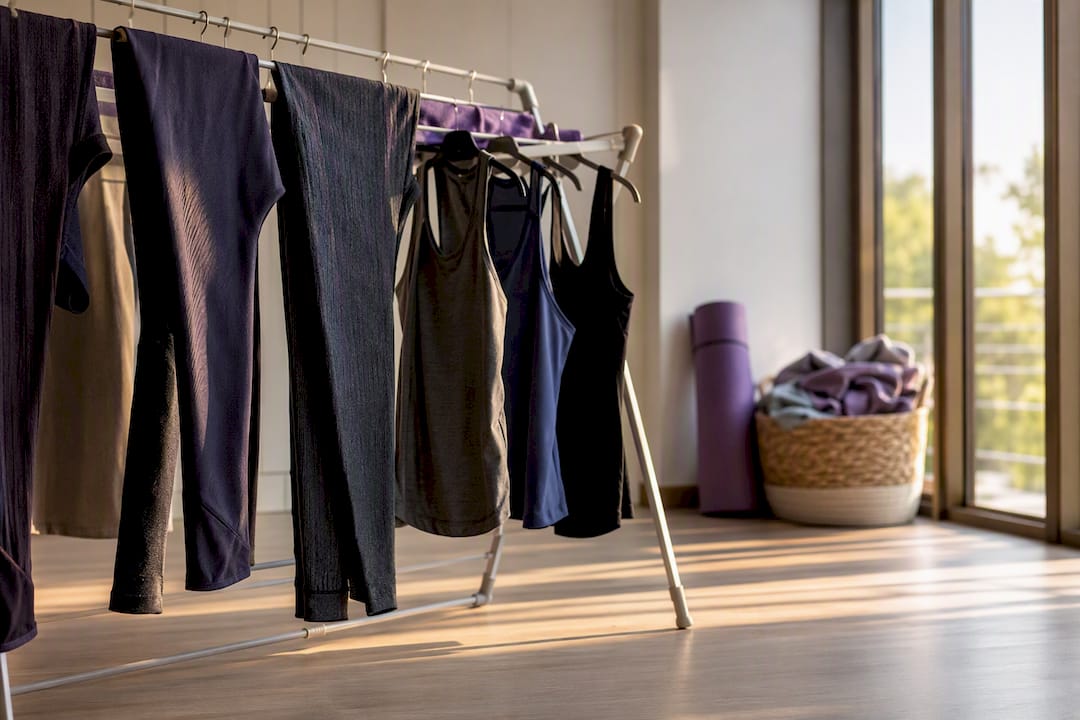
Air-drying on a rack or a lint-free towel is the better long-term choice for anything with stretch or wicking technology. Heat from a dryer breaks down elastic fibers faster than almost anything else in the laundry routine, and repeated high-heat cycles are how leggings lose their shape after a year of regular wear. If you need a dryer, use the lowest heat or air-only setting and pull items out the moment the cycle ends, not an hour later.
Storage matters just as much as the wash itself. Make sure everything is completely dry before it goes into a drawer or a gym bag. Fold heavier items like hoodies and sweatshirts; hang leggings and tanks if you have the space, since folding can crease synthetic fabric into permanent lines over time. For travel or a locker at the gym, a breathable mesh bag beats a sealed plastic pouch every time.
Never tuck a slightly damp item into a drawer or a zipped bag. That’s exactly the environment mildew needs, and once mildew sets into synthetic fabric, it’s often impossible to fully remove. If you’re building a post-workout routine that also covers how your body recovers, not just your clothes, our guide on cooling down after a workout covers the other half of that window.
How Do You Get Rid of Odors That Won’t Go Away?
Some smells survive a normal wash. When that happens, escalate through these steps in order rather than jumping straight to the most aggressive option.
- Rewash the item with enzyme detergent and add an extra rinse cycle if your machine allows it.
- If the smell persists, do a full vinegar soak (one part vinegar to four or five parts cold water, 10 to 30 minutes) or a baking soda soak, then rewash.
- Still smelling? Move to an oxygen-based cleaner soak, following the package directions for concentration and timing, then wash as usual. Women’s Health notes oxygen-based boosters are effective for genuinely stubborn odor without the harshness of chlorine bleach.
- Laundry stripping, a deep soak using a mix of detergent, borax, and washing soda, is a real last resort. It’s time-consuming and can be too aggressive for delicate synthetics.
A few safety notes matter at every stage:
- Test any treatment on an inconspicuous inside seam first, especially on printed or dyed fabric.
- Never use chlorine bleach on colored synthetics or anything with elastic. It breaks down the fibers and strips color unevenly.
- If a garment still smells after two full escalation attempts, it may have reached the end of its usable life. At that point, replacing it is usually more practical than continuing to fight it.
Why Does Your Washing Machine Need Cleaning Too?
A machine that’s never cleaned will slowly re-contaminate every load you run through it, no matter how good your detergent is. Residue, mildew, and bacteria build up in the drum, the seals, and the dispenser trays over time.
- Run an empty hot-water cycle with a washing-machine cleaner or an oxygen-based powder once a month.
- Pull out the detergent dispenser tray and wipe down the rubber door seal, where grime collects fastest.
- Wipe the drum interior dry after a cycle and leave the door cracked open between washes so moisture doesn’t turn into mildew.
Skip the temptation to pour vinegar into the machine itself for this cleaning. As mentioned earlier, repeated direct exposure degrades rubber and plastic parts, so save vinegar for basin soaks and occasional manual wipe-downs instead.
The Science Behind Why This Routine Actually Works
Body oils and sweat don’t just sit on top of synthetic fibers. Given enough time, they bond into the polyester or nylon weave itself, which is exactly why a shirt that’s been sitting damp for two days smells worse than one washed the same night.
Enzyme-based detergents work because they’re formulated to target proteins and oils specifically, breaking them down into pieces that a normal wash cycle can rinse away. Standard detergents rely more on general surfactants that lift dirt but often leave protein-based residue behind, which is what keeps re-releasing odor every time you sweat in the same shirt again.
That’s the combined thinking behind guidance from Kim Romine at P&G and Wendy Saladyga. Follow the routine consistently, cold water, enzyme detergent, no softener, air-dry, and the practical payoff is real: fabric keeps its stretch, wicking technology keeps working, and you stop reaching for a shirt that smells fine in the drawer but turns rank the moment you start sweating in it.
A Simple Habit Worth Building
I keep a small drying rack folded behind my laundry room door specifically for gym clothes. It sounds minor, but having somewhere to hang a damp shirt the second I walk in means I never end up shoving it into a hamper and forgetting about it for three days. Build the habit, check the care label before every wash, and the rest of this routine takes care of itself.
Wash Smarter, Wear Longer With Dietexerciseshop
Getting the wash routine right is only half the equation. What you’re washing matters just as much, and Dietexerciseshop builds its apparel with fabric performance in mind from the start, not as an afterthought. If you’re already turning garments inside out and skipping the fabric softener, pair that habit with gear designed to hold up to it. The TRUST THE PROCESS T-Shirt and the MEAL PREP & MUSCLE REPS Hoodie are both built from fabric that responds well to cold-water washing and air-drying, so the routine above actually extends their life instead of just slowing the damage.

Whether you’re stocking up on cotton tees that survive the wash easily or a hoodie for cooler mornings before a run, browse the full hoodie collection and see which pieces fit your training schedule. Add one to your cart today and start building a laundry routine that actually protects your gear.
Sources
- Your Workout Clothes Might Still Be Dirty After the Wash—Here’s How to Actually Get Sweat and Odors Out | Real Simple
- How to wash workout clothes | Martha Stewart
- 7 tips for washing gym clothes - Which?
- How To Wash And Care For Your Workout Clothes, Per Experts | Women’s Health
- How to Wash and Care for Dirty Workout Clothes | Nike
FAQ
Can I wash my gym clothes with my regular clothes?
You can wash light-colored, low-lint cotton with synthetics occasionally, but it’s better to separate them. Cotton sheds lint that clings to moisture-wicking fabric, and heavier items can cause excess friction against delicate synthetic weaves.
How do I get sweat smell out of gym clothes?
Wash items soon after wearing them with an enzyme-based detergent in cold water, and pre-soak stubborn odors in a vinegar solution (one part vinegar to four or five parts cold water) for 10 to 30 minutes before washing.
How should I deal with a pile of dirty gym clothes?
Air out each item right away instead of letting damp clothes sit in a sealed bag, then wash within 24 hours using cold water and an enzyme detergent to prevent bacteria and odor from building up further.
Is it better to wash gym clothes in cold or warm water?
Cold or cool water is the better choice for gym clothes because hot water can weaken elastane fibers and may actually set odors deeper into synthetic fabric rather than remove them.