
One Week Meal Prep eBook: Ready Plans, Grocery Lists, and Safety Tips
A meal prep eBook gives you a week’s worth of recipes, a shopping list built around them, and a day-by-day prep schedule so you cook once and eat well for days. The good ones also cover storage, reheating, and portioning so nothing goes to waste. If you’re choosing between browsing free blog recipes and buying a structured guide, a well-built eBook saves the planning time, not just the cooking time.
TL;DR:
- A well-structured meal prep eBook provides clear recipes with precise timings, ingredient lists, and step-by-step instructions, unlike vague or incomplete recipes.
- It consolidates all necessary ingredients into a single, organized shopping list and offers detailed storage, freezing, and reheating guidance for long-lasting meals.
- Choosing a guide aligned with your diet goal, whether high-protein, keto, family-sized, or freezer-friendly, ensures the recipes meet your specific nutritional and portion needs.
- Successful meal prep requires starting small with limited days, using labeled, leak-proof containers, and focusing on foods that maintain quality after reheating to avoid common pitfalls.
- Prioritizing guides with comprehensive plans, realistic prep times, and detailed storage advice over extensive recipe counts helps build a sustainable, effective meal prep system.
Table of Contents
- What’s Inside a Meal Prep eBook: Recipes, Lists, and Safety Guidance
- How Do You Choose the Right Meal Prep eBook?
- High-Protein, Keto, Freezer-Friendly, or Family: What Changes by Diet Focus
- A Sample 1-Week Meal Prep Plan You Can Actually Use
- Why Trust This Guide (and Where to Find Ready-Made Plans)
- Scaling Recipes Up or Down Without Ruining Them
- The Meal Prep Mistakes That Derail Most Beginners
- Adjusting Meal Prep for Allergies and Dietary Restrictions
- The Gap Between What Meal Prep eBooks Promise and What Actually Works
- Get a Meal-Prep System Instead of Piecing One Together
- Sources
- FAQ
What’s Inside a Meal Prep eBook: Recipes, Lists, and Safety Guidance
Most meal prep eBooks follow a predictable structure, and knowing that structure helps you judge quality before you buy. A full recipe entry should give you the ingredient list with exact quantities, total time (prep plus cook), yield in servings, and numbered steps that don’t assume you already know what “blanch” or “sear” means. If a recipe just says “cook chicken until done,” that’s a red flag, not a shortcut.
The core of any good eBook is the weekly plan. It breaks meals out by day and by slot (breakfast, lunch, dinner, snacks) so you’re not guessing what Tuesday looks like. Better guides also roll every ingredient from that week into one consolidated shopping list, grouped by store section (produce, proteins, dry goods) so you’re not backtracking through the store three times.
Batch cooking is where the real time savings live. A solid eBook explains how to cook double portions of a base protein or grain once and repurpose it across three or four different meals. Freezer-friendly recipes deserve their own callout, since freezing badly (wrong container, no label, wrong portion size) is the most common reason people give up on meal prep. Cookbooks like Skinnytaste Meal Prep build entire chapters around freeze-and-reheat logic, including which dishes hold up in the freezer and which turn mushy.
Safety guidance matters more than most people expect. Cooked meals generally hold up in the refrigerator for about four days; anything you’re planning to eat later in a 7-day window needs to go in the freezer, not just get pushed to the back of the fridge. A trustworthy eBook will say this plainly instead of implying you can cook Sunday and eat fine through the following Saturday.
Here’s what separates a genuinely useful meal prep eBook from a recipe dump:
- Full recipe cards with time, yield, and numbered steps, not vague summaries.
- A single consolidated grocery list, not five separate ones you have to merge yourself.
- Freezer and reheating instructions for anything meant to last past day four.
- Printable PDF format or a template you can check off as you shop and prep.
- Macro or calorie information per serving, at least for the recipes built around a specific goal.
That last point connects to a broader pattern in well-designed diet programs: books like The Mayo Clinic Diet pair recipes with actual planning tools like trackers and journals, because the plan only works if you can follow it past week one.
How Do You Choose the Right Meal Prep eBook?
Start with your actual goal, not the eBook with the flashiest cover. A book built for muscle gain will load recipes with higher protein and bigger portions. One built for weight loss will lean on lower-calorie swaps and tighter portion control. If you’re feeding a family, you want batch sizes that scale past two servings without turning into a math problem every night.
Here’s a practical way to vet an eBook before you buy it:
- Confirm the diet focus matches your goal. A keto-focused guide won’t help much if you’re training for a marathon and need carbs.
- Look for sample pages or a free preview. Most credible sellers post a few sample recipes so you can judge the writing quality and realistic time estimates before paying.
- Check that it includes a shopping list and templates, not just recipes. This is the single biggest time-saver and the thing most free blog content skips.
- Confirm portion guidance is clear. You want servings stated per recipe, not a vague “serves a family” note.
- Check the format. A printable PDF works best if you like paper checklists on the counter; an ePub file is better if you’re working entirely from your phone.
- Watch for red flags, like a “prep the entire week in 20 minutes” claim, or a single plan applied to every diet goal at once.
That last point deserves more attention than it gets. A guide claiming rapid results with minimal effort across every possible goal, weight loss, muscle gain, and family cooking all in one plan, usually means none of those goals were actually the priority. Programs that emphasize sustainable habit formation over quick fixes tend to hold up better over months, not just the first week.
Pro Tip: Before buying any meal prep eBook, search for one recipe by name plus “review” or check the seller’s sample pages. If the prep time listed doesn’t match what a home cook without professional training could realistically do, skip it.
Price and length matter less than fit. A 40-page eBook with 15 tight, well-explained recipes and a real shopping list beats a 200-page eBook padded with filler and stock photos. Judge it on usability, not page count.
High-Protein, Keto, Freezer-Friendly, or Family: What Changes by Diet Focus
Meal prep eBooks split along diet lines, and the differences show up in the shopping list and the workload on prep day, not just the recipes.
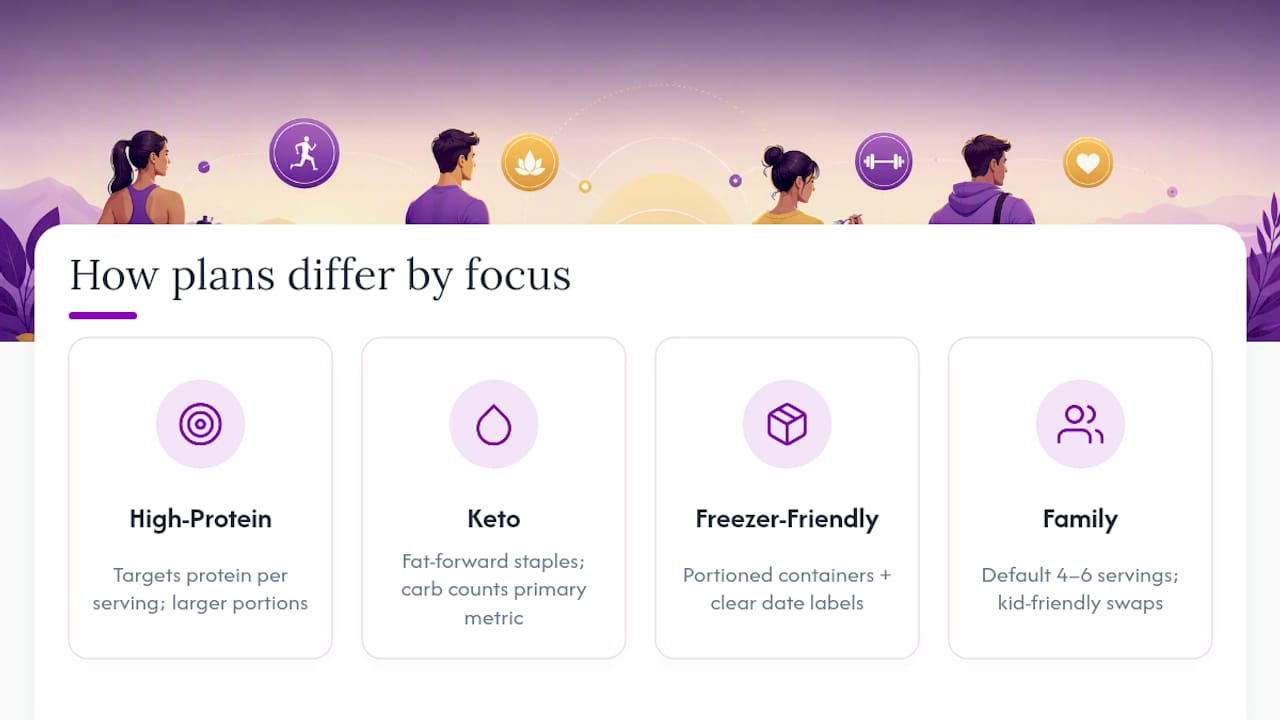
High-protein plans target a specific protein amount per serving, often paired with larger portions to support muscle gain, and they tend to schedule meals around training days. The High-Protein Meal Prep Cookbook runs a multiweek guided program alongside a library of over 100 recipes, so you start with structure and graduate to picking your own combinations. Dietexerciseshop’s guide on high-protein meal prep walks through a similar weekly system if you want to test the approach before committing to a full eBook.
Keto-focused eBooks flip the shopping list toward fat-forward staples: nut butters, oils, fattier cuts of meat, and low-carb vegetables replace the rice and pasta that anchor most grocery runs. Carb counts per serving become the primary metric instead of calories. If you’re new to this, keto meal prep for beginners covers the pantry basics before you invest in a full plan.
Freezer-friendly guides organize recipes by how well they hold up frozen, and good ones tell you exactly which dishes to avoid freezing (cream-based sauces, anything with raw lettuce) and which thrive in a deep freeze. Portioned containers and clear labeling with dates are non-negotiable parts of this system, a point Skinnytaste Meal Prep builds its entire structure around.
Family-focused eBooks scale differently: recipes are written for four to six servings by default, with kid-friendly swaps built in rather than treated as an afterthought. Snacks get more real estate here than in solo-focused plans, since grazing kids need more grab-and-go options than a single adult on a fixed meal schedule.
Each of these choices reshapes your shopping list. A keto week costs more per pound of protein and skips the bulk grains; a family week needs bigger containers and more total volume; a high-protein plan often needs a supplement aisle stop most other diets skip entirely.
A Sample 1-Week Meal Prep Plan You Can Actually Use
This is the kind of plan a solid meal prep eBook hands you on page one, adjust portions to your own calorie needs before treating it as final.
Seven-day meal outline:
- Breakfast (all week): Overnight oats with Greek yogurt, batch-prepped Sunday in five jars. Prep time: 15 minutes total.
- Lunch, days 1 to 3: Grilled chicken, roasted sweet potato, and steamed broccoli. Prep time: 40 minutes for all three servings.
- Lunch, days 4 to 7: Turkey chili made in bulk, split into four containers. Prep time: 30 minutes active, plus simmer time.
- Dinner, days 1 to 4: Sheet-pan salmon with asparagus, cooked fresh each night, roughly 20 minutes per dinner.
- Dinner, days 5 to 7: Frozen turkey chili portions reheated, roughly 8 minutes each.
- Snacks (daily): Hard-boiled eggs (dozen boiled Sunday) and sliced vegetables with hummus.
Consolidated grocery list, organized by section:
- Produce: sweet potatoes, broccoli, asparagus, mixed vegetables for snacking, bananas for oats.
- Protein: chicken breast, salmon fillets, ground turkey, a dozen eggs.
- Dairy: Greek yogurt, hummus.
- Pantry: rolled oats, canned beans and tomatoes for chili, chili seasoning.
- Frozen: freezer-safe containers if you don’t already own a set.
Prep day schedule (do this in order): boil the eggs first since they need to cool, start the turkey chili simmering while you prep everything else, roast the sweet potatoes and broccoli together on one sheet pan, portion the overnight oats last since they need almost no active time.
Label every freezer container with the contents and the date before it goes in. Anything you’re not eating within four days belongs in the freezer, not the back of the fridge, since that’s the point where a 7-day meal prep plan can turn into a food safety problem instead of a time-saving one.
Why Trust This Guide (and Where to Find Ready-Made Plans)
Everything above reflects patterns found across well-regarded meal prep resources: consolidated shopping lists, batch-cook schedules, and diet-specific portioning aren’t invented advice, they’re what shows up consistently in books built by working dietitians and recipe developers. Dietexerciseshop has covered several of these systems directly, including meal prep ideas for weight loss and bulking-focused meal prep, so you can test the underlying approach before deciding whether a full eBook is worth buying.
If you’re ready for a structured, ready-to-use plan instead of piecing one together from articles, eBooks are available covering various weight-loss goals, each built around core deliverables such as recipes, shopping lists, and a week you can actually follow. Mark, who covers diet and fitness content for Dietexerciseshop, edited this guide with an eye toward the parts most eBooks gloss over, storage safety and realistic prep timing.
Scaling Recipes Up or Down Without Ruining Them
Most meal prep eBooks write recipes for two or four servings, which means you’ll eventually need to scale. The easy part is multiplying ingredients. The harder part is knowing what doesn’t scale linearly.
Seasoning is the biggest trap. Salt, garlic, and spices don’t need to double just because the protein does. Start at 1.5 times the seasoning for a doubled recipe, taste, then adjust. Cook times shift too: a sheet pan of chicken that takes 20 minutes for four servings might need an extra 5 to 8 minutes for eight servings if you’re using the same pan and crowding the proteins.
Liquid-based recipes like soups, chili, and stews scale more forgivingly than roasted or seared dishes, since the cooking method is more about time than surface area. If you’re scaling down (cooking for one instead of a family recipe), pay attention to pan size. A recipe written for a 9x13 baking dish won’t cook evenly in a small toaster-oven pan just because you cut the ingredients in half.
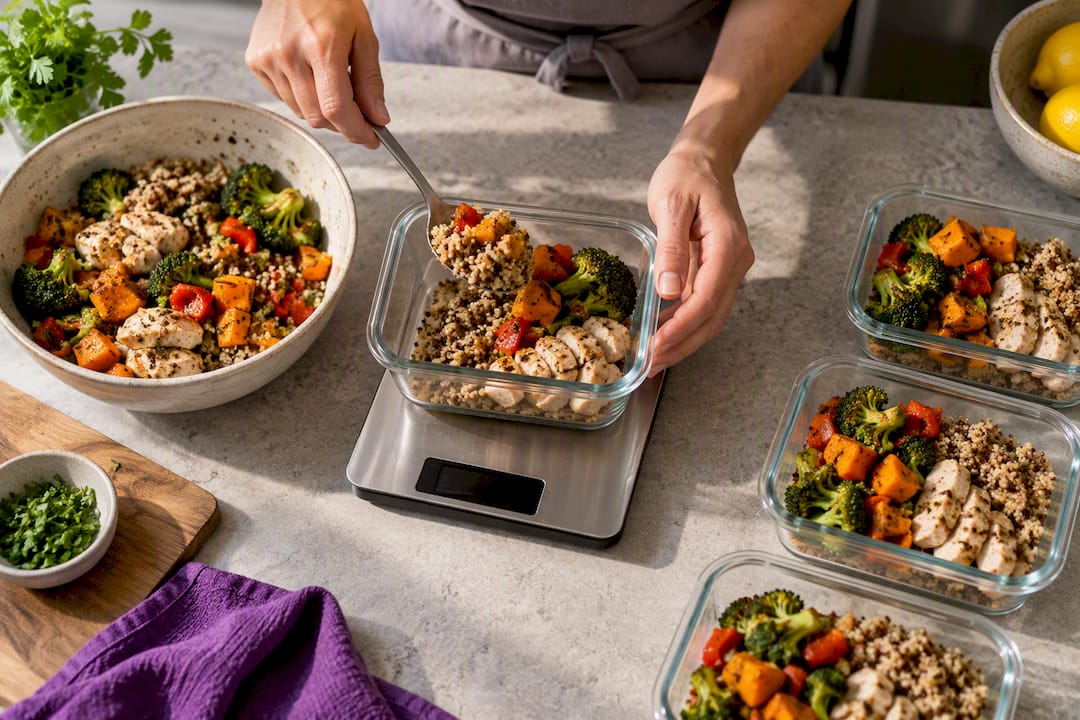
For portion consistency, weigh a batch once with a kitchen scale, then use that weight to divide future batches evenly. It’s faster than eyeballing five containers and more accurate than “roughly the same size.”
The Meal Prep Mistakes That Derail Most Beginners
The most common mistake isn’t cooking badly, it’s overplanning. New meal preppers often try to prep every single meal for seven days on the first attempt, burn out by hour three, and quit before dinner is even done. Start with three days of lunches or dinners, not a full week, until you know your actual pace.
The second mistake is storage. Using containers that aren’t stackable or leak-proof turns a full fridge shelf into a mess, and skipping labels means you’re guessing what’s in a container by day three. Write the contents and the date on every container, every time.
Third: ignoring texture changes. Some foods just don’t reheat well. Rice gets gummy, lettuce wilts, and fried anything loses its crunch. Build your plan around dishes that hold up (grain bowls, soups, roasted vegetables) and add fresh elements like greens or crunchy toppings right before eating instead of prepping them days ahead.
Fourth, and probably the costliest: shopping without a consolidated list. Buying ingredients recipe by recipe means duplicate purchases and forgotten items. This is exactly why a real eBook’s single combined grocery list, organized by store section, earns its place as a core feature rather than a bonus.
Adjusting Meal Prep for Allergies and Dietary Restrictions
A meal prep eBook built for a general audience won’t automatically work for food allergies or specific restrictions, but the core system, recipes, lists, and batch schedules, still applies once you know what to swap.
For gluten intolerance, the main adjustments are pasta, bread, and soy sauce, which almost always has wheat in it unless labeled gluten-free. Rice, quinoa, and gluten-free tamari cover most of the gap without changing the recipe’s structure.
Dairy allergies usually hit hardest in breakfast recipes built around yogurt or cheese-heavy dinners. Canned coconut milk or unsweetened plant-based yogurt work as direct swaps in most overnight oats or smoothie recipes without changing prep time.
Nut allergies require more label reading than substitution, since nuts show up in unexpected places like granola, some sauces, and pesto. Sunflower seed butter is the most common one-to-one swap for peanut or almond butter in recipes and snacks.
For vegetarian or vegan adaptations, protein sources need the biggest rework: beans, lentils, tofu, and tempeh replace meat, but they also change cook times and liquid ratios in a recipe, so it’s worth testing one substituted recipe before batch-cooking an entire week around it. Whatever the restriction, the shopping list structure and batch-cook schedule from any decent eBook still work, you’re just swapping the ingredients that go on it.
The Gap Between What Meal Prep eBooks Promise and What Actually Works
Most meal prep content sells the fantasy of a single Sunday afternoon producing a flawless week of food. That’s rarely how it plays out for beginners, and eBooks that lean hard on that promise tend to set people up to quit by Wednesday. The guides that actually work are the ones that treat meal prep as a system you build gradually, not a stunt you pull off once.
The overrated part of this whole category is recipe count. A 300-recipe eBook sounds impressive, but nobody needs 300 recipes; they need 15 good ones they’ll actually repeat, plus a shopping list that doesn’t require a spreadsheet to assemble. What’s underrated is the boring stuff: clear labeling, realistic 4-day fridge limits, and portion sizes that match your actual calorie target instead of a stock photo’s idea of a serving.
If you’re buying your first meal prep eBook, prioritize the shopping list and the storage guidance before the recipes themselves. Recipes you can find for free. A system that keeps you from throwing out spoiled food in week three is worth paying for.
— Mark
Get a Meal-Prep System Instead of Piecing One Together
Some meal prep eBooks offer a complete, tested meal-prep system in one download instead of stitching together recipes from a dozen browser tabs and building your own shopping list from scratch. Each eBook comes with the plan, the recipes, and the grocery list already built, so the only work left is shopping and cooking.

If your goal is steady, sustainable weight loss, the Successful Weight Loss eBook gives you a full framework built around that pace. If you want something more aggressive, the Drop the Fat Now eBook is built for faster results with a tighter meal structure. And if belly fat specifically is the target, The Lose Your Belly Diet eBook focuses the plan around that goal directly. Pair any of them with a planning app like Yumzi if you want a running list of dinner ideas between full prep weeks.
Beyond eBooks, Dietexerciseshop also carries the containers, apparel, and equipment that make the actual prep day faster. Selecting an eBook that matches your goal can help you have next week’s meals planned with minimal effort.
Sources
For readers who want a deeper, clinically grounded approach to meal planning, The Mayo Clinic Diet book bundle pairs recipes with journaling tools built around long-term habit change rather than quick fixes.
- The Mayo Clinic Diet Book, Third Edition and Journal Bundle - Mayo Clinic Press
- Skinnytaste Meal Prep by Gina Homolka
FAQ
What Is the 3-3-3 Rule for Meal Prep?
The 3-3-3 rule generally refers to prepping three proteins, three carb sources, and three vegetables in bulk, then mixing and matching them across the week instead of cooking full separate recipes each day. It’s a flexible shortcut rather than a strict formula, and it works well alongside any structured weekly plan from a meal prep eBook.
Is There a Free PDF Version of a 28-Day Diet Recipe Book Available?
Some brands offer free downloadable meal-prep PDFs as previews or lead magnets, usually with a smaller sample of recipes and grocery lists rather than a full multiweek program. A specific “28 Day Diet” free PDF isn’t something we can confirm exists or is legitimate, so check the seller’s official site directly rather than trusting third-party download links.
Is It Safe to Meal Prep for 7 Days?
It’s safe as long as you separate what stays refrigerated from what goes in the freezer. Cooked meals generally hold up in the fridge for about four days, so anything meant to last the full week needs to be frozen and properly labeled with the date, then reheated when you’re ready to eat it.
What Does a Meal Prep eBook Cost?
Pricing varies by publisher and format, and current prices for Dietexerciseshop’s eBooks, including the Drop the Fat Now eBook, are listed directly on the product pages. Check there for the exact price before purchasing.