

Post Workout Nutrition for Muscle Recovery: Meals & Timing
After resistance training or any high-intensity workout, eat 20 to 40 grams of high-quality protein plus carbohydrates within 1 to 2 hours. That single move covers most of what matters for muscle protein synthesis and glycogen recovery. The fastest ways to hit that target:
- A whey or plant protein shake blended with a banana
- Greek yogurt or cottage cheese with berries
- A lean protein source (chicken, fish, tofu) with rice or potatoes
Protein dose: aim for 20 to 40 grams per sitting. Lean toward the higher end of that range, closer to 40 grams, if you’re training fasted, you’re older, or the session was unusually long or damaging.
Key Takeaways
Post-workout recovery depends on total daily protein and carbohydrate intake, with 20 to 40 grams of protein within 1 to 2 hours after training optimizing the muscle-building response.
| Point | Details |
|---|---|
| Protein dose | Eat 20 to 40 grams of high-quality protein within 1 to 2 hours after resistance or high-intensity training. |
| Carbs scale with urgency | Use roughly 1 to 1.2 g/kg/h of carbohydrate only when your next session is within 24 hours. |
| Timing flexibility | Light workouts don’t need strict timing; total daily intake matters more for casual exercisers. |
| Fat isn’t the enemy | Full-fat meals still deliver recovery benefits, just with slightly slower digestion. |
| Dietexerciseshop supports the habit | eBooks and apparel like the MEAL PREP & MUSCLE REPS Hoodie reinforce consistent recovery nutrition, alongside real food as the priority. |
Table of Contents
- Post Workout Nutrition Basics: Protein, Carbs, and Fat
- How Much Protein and Carbs You Actually Need, and When
- Post Workout Meal Ideas That Fit the Macros
- Hydration and Supplements Worth Considering
- The 4 R’s Framework for Recovery Nutrition
- Why Micronutrients Matter for Recovery
- Strength Training vs. Endurance: Different Recovery Needs
- Build Better Recovery Habits With the Right Tools
- Sources
- FAQ
Post Workout Nutrition Basics: Protein, Carbs, and Fat
Protein rebuilds the muscle fibers you just tore down. During resistance training, you create microscopic damage to muscle tissue, and protein supplies the amino acids your body uses to repair and reinforce it. The ISSN’s position stand on nutrient timing confirms that ingesting high-quality protein anywhere from immediately after training to 2 hours later triggers a strong rise in muscle protein synthesis. A single serving of 20 to 40 grams appears to be the effective range for most adults; more than that per sitting doesn’t seem to add much extra benefit.
Carbohydrates handle a different job: they refill glycogen, the stored fuel your muscles burned through during the workout. If you trained hard or you have another session within 24 hours, replacing that glycogen becomes a priority, not an afterthought. If your next hard effort is days away, there is less urgency to prioritize immediate carbohydrate intake.
Fat gets a bad reputation in post-workout circles because it slows gastric emptying and digestion. That’s real, but it doesn’t cancel the benefit. A meal of salmon, avocado, and sweet potato still delivers protein and carbs. It just arrives a little slower. Whole eggs, nut butter on toast, or a full-fat yogurt bowl all work fine as recovery food. Nobody needs to fear fat at this meal.
- Protein: 20 to 40 grams per serving
- Carbs: tailored to training intensity and timing until the next session
- Fat: fine in moderate amounts, though it may slow digestion slightly
The bigger picture matters more than any single meal. Total daily protein and calorie intake predict long-term muscle and strength gains far better than what you eat in the 30 minutes after your last set.
How Much Protein and Carbs You Actually Need, and When
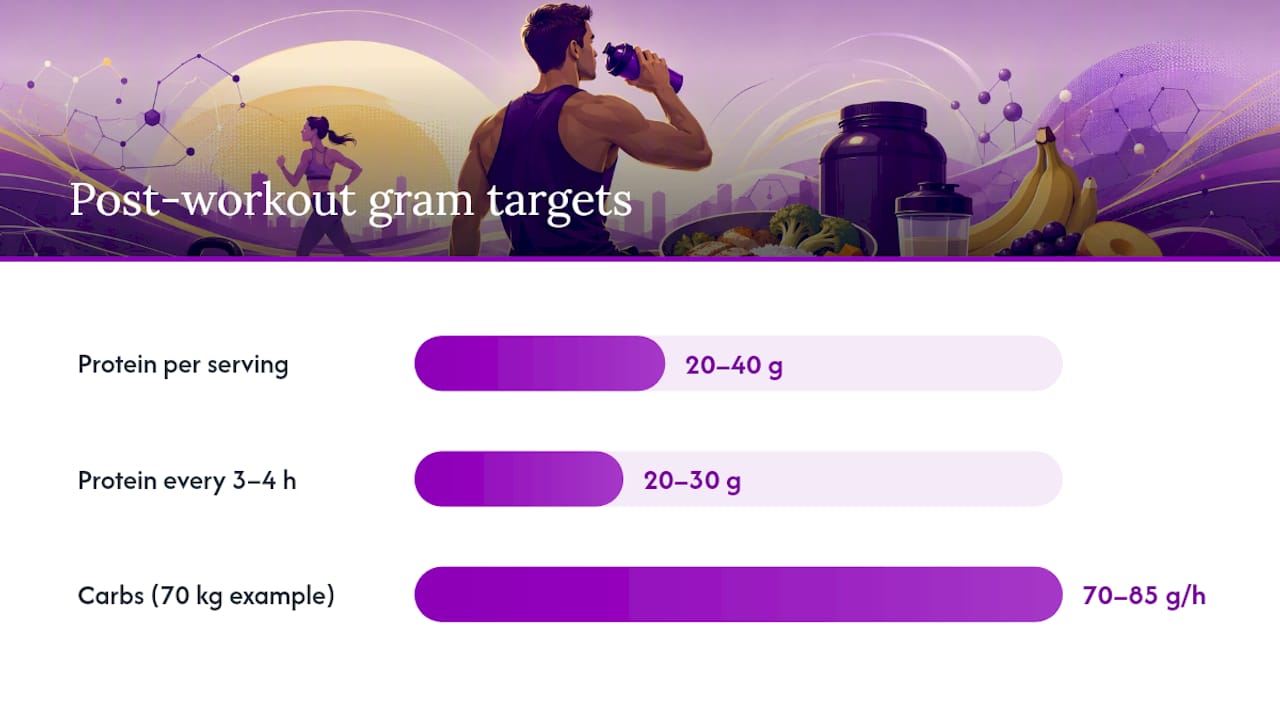
Numbers make this concrete. For protein, stick with 20 to 40 grams per serving; a 90 kilogram athlete after a heavy leg day and a 60 kilogram runner after an easy jog can both use that same range, adjusted toward the higher end for larger body size or harder training.
Carbohydrates scale with body weight and urgency. When you need to restore glycogen fast, such as before a second training session the same day or an endurance event with back-to-back stages, research on post-exercise recovery points to roughly 1 to 1.2 grams of carbohydrate per kilogram of body weight per hour for the first several hours. For a 70 kilogram athlete, that’s about 70 to 85 grams per hour, which is aggressive and really only necessary for that short-turnaround scenario.
- Determine your recovery window: hours until your next session or how depleted you feel.
- If it’s under 24 hours, prioritize carbs immediately, using the 1 to 1.2 g/kg/h range as your guide for the first few hours.
- If it’s a single daily session with no rush, eat a balanced meal within a couple of hours and let the rest of the day fill in the gaps.
- Pair whatever carb amount you choose with your 20 to 40 gram protein serving.
Pro Tip: Spread protein across the day in servings of 20 to 30 grams every 3 to 4 hours instead of loading it all at once. That pattern keeps muscle protein synthesis elevated far more consistently than one large post-workout meal.
Light workouts, a 25 minute walk or an easy mobility session, don’t demand any of this precision. Eat your next normal meal and move on.
Post Workout Meal Ideas That Fit the Macros
Real food beats theory. Here are combinations that land in or near the 20 to 40 gram protein range, with carbs adjusted to the session:
- Greek yogurt with a banana and a drizzle of honey: about 20 g protein, 40 g carbs
- Chocolate milk (two cups): roughly 16 g protein, 50 g carbs, and a proven rehydration option thanks to its electrolyte and fluid content
- Grilled chicken breast with a cup of rice: about 35 g protein, 45 g carbs
- Tuna packet with whole grain crackers: about 25 g protein, 30 g carbs, and it survives a gym bag without refrigeration
- Cottage cheese with pineapple: about 24 g protein, 20 g carbs
- Whey protein shake blended with oats and a banana: about 30 g protein, 45 g carbs
- Turkey and cheese sandwich on whole wheat: about 28 g protein, 35 g carbs
- Eggs (three) with toast and avocado: about 22 g protein, 30 g carbs, slower to digest thanks to the fat but still effective
- Salmon with sweet potato: about 30 g protein, 35 g carbs
For quick snacks between meals or on the way out of the gym: a ready-to-drink protein shake, a handful of almonds with dried fruit, string cheese with an apple, a protein bar with at least 15 grams of protein, edamame, or plain hummus with pita.
Plant-based options work just as well. Tofu or tempeh stir-fried with rice, a pea and rice protein blend shaken with fortified plant milk, or lentils with quinoa all hit comparable numbers. If you’re checking a nutrition label, add the grams of protein and carbs per serving and multiply by however many servings you actually eat. That’s it. Whole foods and supplements both count toward the same daily total, so pick whichever fits your schedule and budget.

Hydration and Supplements Worth Considering
Replace what you sweat out. For most training sessions, drinking to thirst plus a glass or two of fluid with your post-workout meal covers it. After a heavy sweat session, add electrolytes, either through a sports drink or something like chocolate milk, which handles fluid and refueling at once.
Among supplements, creatine has the most consistent backing for recovery and strength gains, and pairing it with carbohydrate intake may speed glycogen resynthesis in some situations. Caffeine before training can improve performance, but taken too late in the day it disrupts sleep, which undermines recovery. BCAAs on their own show weak evidence once you’re already eating enough total protein. Talk to a doctor before adding any new supplement, especially if you take medications or have an existing condition.
- Water or a sports drink to match sweat loss
- Creatine, taken consistently, not just post-workout
- Caffeine, timed earlier in the day if sleep is a concern
Pro Tip: Skip the BCAA powder if you’re already hitting your daily protein target. A complete protein source does the same job for less money.
The 4 R’s Framework for Recovery Nutrition
The 4 R’s give you a simple order of operations after any workout:
- Rehydrate: replace fluid and electrolytes lost through sweat.
- Refuel: eat carbohydrates to restore glycogen.
- Repair: eat protein to rebuild muscle tissue.
- Rest: prioritize sleep and lower-intensity days to let adaptation happen.
A single strength session with a full day before your next workout doesn’t need to rush through these steps. Two-a-day training, or a tournament with matches hours apart, requires more immediate attention to recovery nutrition.
Why Micronutrients Matter for Recovery
Vitamins and minerals don’t build muscle directly, but they run the machinery that does. Vitamin D supports muscle function and bone health, and low levels are linked to slower strength gains. Magnesium plays a role in muscle relaxation and energy production, and it’s commonly under consumed in diets heavy on processed food. Iron carries oxygen to working muscles, and low iron status hits endurance athletes, especially women, harder than most people realize.
Zinc supports tissue repair and immune function, both of which take a hit after intense training blocks. Vitamin C and E work as antioxidants, though megadosing them right after exercise may actually blunt some training adaptations, so getting them from food rather than high-dose supplements is the safer bet. Calcium matters for bone density, particularly for athletes doing repetitive high-impact training like running.
The practical fix is boring but effective: eat a variety of colorful vegetables, fruit, and whole grains alongside your protein sources. A recovery meal built entirely from protein powder and white rice hits your macros but skips the micronutrients your body needs to actually use that protein and carbohydrate efficiently. Spinach, bell peppers, citrus fruit, and dairy round out a meal in ways a shake alone never will.
Strength Training vs. Endurance: Different Recovery Needs
A powerlifter and a marathon runner are not solving the same problem, even though both just finished exhausting workouts. Strength and resistance training causes localized muscle damage. Protein takes priority, and the 20 to 40 gram guideline applies almost directly, with carbs playing a supporting role to refill the glycogen used during the sets.
Endurance training burns through glycogen across the entire body, not just in the muscles worked. A long run or ride depletes liver and muscle glycogen simultaneously, which is why endurance athletes need to weight their post-workout meal more heavily toward carbohydrates, sometimes at a 3 or 4 to 1 carb to protein ratio, especially after sessions over 90 minutes.
Mixed or intermittent sports, soccer, basketball, CrossFit, sit in between and generally do fine with a more balanced 2 to 1 carb to protein ratio. The common mistake is treating every workout the same: a lifter loading up on gels meant for marathoners, or a distance runner under eating carbs because they read a bodybuilding article. Match the meal to the demand the workout actually placed on your body, not to whatever protocol is trending.
What Actually Works Day to Day
Total daily protein matters more than any single post-workout meal. In practice, that means batch-cooking chicken or tofu on Sundays and keeping a shake in the gym bag, so the decision is already made before hunger or fatigue sets in. Aim for a balanced meal every 3 to 4 hours; it takes the pressure off hitting some narrow post-workout window perfectly.
Build Better Recovery Habits With the Right Tools
Knowing the numbers is one thing. Actually hitting 20 to 40 grams of protein at the right times, day after day, is a habit problem as much as a nutrition problem. Dietexerciseshop stocks resources built for exactly that gap.
The eBooks collection includes meal-planning guides that lay out sample days hitting these protein and carb targets without you doing the math each time. If muscle building is the specific goal, The Bodybuilding Guide eBook walks through structured nutrition planning alongside training. And if you want a daily reminder to stay consistent, the MEAL PREP & MUSCLE REPS Hoodie and the TRUST THE PROCESS T-Shirt work as simple lifestyle cues, nothing more.
To be clear: food choices come first. Products are optional support, not a substitute for eating enough protein and carbs consistently. Browse the eBooks collection if a structured plan would help you stay on track.
Sources
- Post-exercise protein dose and timing recommendations (PMC article)
- Nutritional strategies to improve post-exercise recovery and subsequent performance (Sports Medicine review)
FAQ
What Are the 4 R’s of Recovery Nutrition?
The 4 R’s are Rehydrate, Refuel, Repair, and Rest, a framework for sequencing fluid replacement, carbohydrate intake, protein intake, and recovery time after exercise.
What Should You Avoid Doing After a Workout?
Avoid skipping food entirely for hours, relying only on water with no electrolytes after heavy sweating, and assuming a single big protein meal replaces the need for consistent protein intake throughout the day.
Should You Eat Protein or Carbs After a Workout?
Both, ideally together: protein in the 20 to 40 gram range supports muscle repair, while carbohydrates restore the glycogen your muscles used during training.
Is the Anabolic Window Really Only 30 Minutes?
No. The effective window for post-exercise protein intake extends to about 2 hours, and total daily protein intake matters more than hitting an exact minute mark.
Can Plant-Based Eaters Meet These Post-Workout Targets?
Yes. Combinations like tofu with rice, or a pea and rice protein blend with fortified plant milk, deliver comparable protein and carb amounts to animal-based options.