

Lose 4–8 Pounds in 4–8 Weeks: 20–30 Minute Home Workouts for Beginners
Yes, you can lose real weight with home workouts. Start with three strength sessions and two brisk walks or short HIIT sessions each week, 20 to 30 minutes per session, and pair it with a simple protein-first eating pattern. Pick Workout A below and do it today. Consistency over the next four to eight weeks matters more than how hard any single session feels.
TL;DR:
- Consistency over four to eight weeks yields better weight loss results than pushing hard in single sessions, with gradual volume increases supporting progress.
- Key exercises like squats, push-ups, and lunges require proper form, such as hip pushing and core engagement, to prevent injury and maximize effectiveness.
- Strength training protects lean muscle and metabolism during weight loss, while cardio plays a supportive role, especially for joint safety and endurance.
- Tracking weekly weight, measurements, and performance progress ensures sustainable momentum without over-relying on scale fluctuations.
- A balanced weekly routine of three strength sessions and two brisk walks or HIIT sessions, with proper recovery and nutrition habits, optimizes fat loss safely.
Table of Contents
- What Are the Best Home Workout Weight Loss Routines for Beginners?
- What Does a 4 to 8 Week Beginner Progression Look Like?
- How Do You Perform the Core Exercises Correctly?
- Should You Prioritize Cardio or Strength Training for Fat Loss?
- How Many Minutes a Week Should You Work Out, and How Do You Track Progress?
- What Nutrition Habits Actually Support Home Workouts?
- What Warm-Up, Cool-Down, and Recovery Steps Matter Most?
- Building Confidence and Equipment for the Long Haul
- The Part Most Beginner Guides Get Wrong
- Ready for a Structured Program? Here’s What’s Next
- Sources
- FAQ
What Are the Best Home Workout Weight Loss Routines for Beginners?
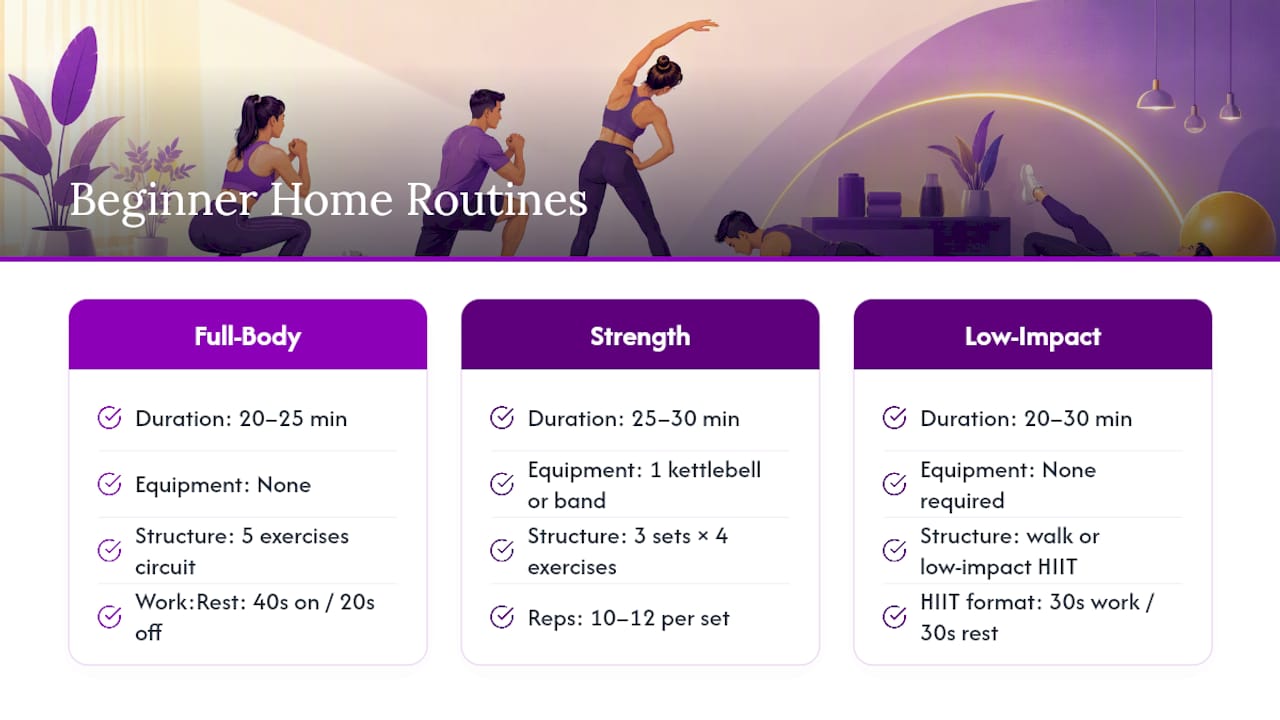
You don’t need a gym membership or a garage full of equipment to trigger fat loss. You need three repeatable sessions that fit your week, hit your major muscle groups, and get harder in small, predictable steps. Here are three you can start using this week.
1. Full-Body Circuit (20 to 25 minutes, no equipment) Do five exercises back to back for 40 seconds of work and 20 seconds of rest, then repeat the circuit three to four times with a one-minute break between rounds: bodyweight squats, push-ups (from knees if needed), glute bridges, reverse lunges, and a plank hold. This is your go-to for effective home exercises that need zero setup.
2. Strength Session (25 to 30 minutes, minimal equipment) If you own a single kettlebell or a resistance band, use it here. Three sets of 10 to 12 reps for goblet squats, bent-over rows, kettlebell swings, and Romanian deadlifts, resting 60 to 90 seconds between sets. Add one rep per set each week, or move to a slightly heavier kettlebell once 12 reps feels easy across all three sets.
3. Low-Impact Conditioning (20 to 30 minutes) Some days call for lower joint stress. A brisk 25-minute walk works, or swap in a low-impact HIIT round: 30 seconds of step-ups or marching high knees, 30 seconds of rest, repeated for 15 to 20 minutes. This keeps your heart rate up without hammering your knees two days in a row.
Pro Tip: If a move hurts a joint rather than burns a muscle, regress it immediately. A wall push-up or a chair-assisted squat still builds strength; a bad rep just builds an injury.
Rotate these three sessions across your week and you’ve covered the entire structure most beginner programs are built around, without needing a coach standing over you.
What Does a 4 to 8 Week Beginner Progression Look Like?
Weight loss from home workouts follows a curve, not a straight line. The first two weeks feel hard because your body is learning new movement patterns, not because you’re failing. A structured beginner weight loss workout progression removes the guesswork.
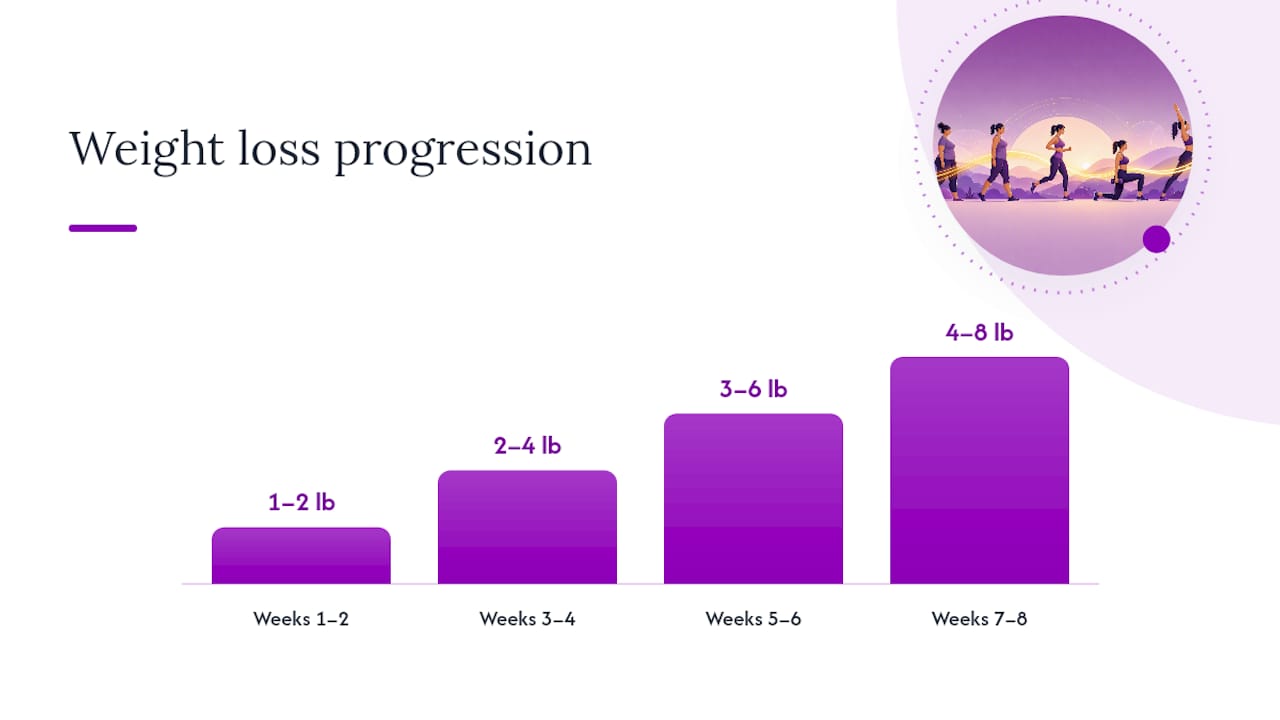
- Weeks 1 and 2 (foundation): Three strength sessions and two 20 minute walks. Focus entirely on form. Don’t chase intensity yet.
- Weeks 3 and 4 (build): Add five minutes to walks (25 to 30 minutes) and increase circuit rounds from three to four. This is roughly a 10% weekly volume increase, the same ceiling strength coaches recommend to avoid overuse injuries.
- Weeks 5 and 6 (progress): Swap one walk for a short HIIT session. Increase strength reps from 10 to 12 per set, or shorten rest from 90 seconds to 60.
- Weeks 7 and 8 (consolidate): Hold the higher volume steady. This is where most beginners notice visible changes in energy, sleep, and how clothes fit, even if the scale moves slower than they’d like.
A sample week by week 5 might look like: Monday strength, Tuesday walk, Wednesday full-body circuit, Thursday rest, Friday strength, Saturday short HIIT, Sunday rest. Two rest days keep recovery honest.
By week 8, expect measurable strength gains (more reps at the same load), a noticeable drop in how out of breath the circuit leaves you, and, per realistic pacing guidelines, roughly 4 to 8 pounds down if you’ve also managed your eating. That range comes from a safe pace of about 0.5 to 1 pound per week. Faster than that usually means you’re losing muscle along with fat, which works against you long term. For a longer-form version of this structure, beginner routines at home walks through additional variations.
How Do You Perform the Core Exercises Correctly?
Form separates a workout that builds you up from one that wears you down. Here’s what to watch for on the movements that show up most in beginner home routines:
- Squats: Push your hips back like sitting into a chair, keep your chest up, and drive through your heels. If your knees cave inward, slow the tempo down and focus on pushing your knees outward as you rise.
- Push-ups: Keep a straight line from head to heels and lower your chest to about fist height off the floor. Sagging hips is the most common fix, drop to a wall or knee push-up until your core can hold the line.
- Lunges: Step far enough forward that your front knee stays above your ankle, not past your toes. Hold a wall for balance if you’re wobbly.
- Planks: Squeeze your glutes and pull your belly button toward your spine, breathe steadily rather than holding your breath. Thirty solid seconds beats two shaky minutes.
- Glute bridges: Drive through your heels, not your toes, and squeeze at the top for a full second.
- Rows (band or kettlebell): Pull your elbow back past your ribs and squeeze your shoulder blade, don’t just bend the elbow.
- Kettlebell swings: This is a hip hinge, not a squat and not an arm lift. Snap your hips forward and let the bell float, using your arms only to guide it.
Once these feel automatic, progressions are simple: slow the tempo down, work one side at a time, or add load with a heavier kettlebell. A starter equipment guide can help you pick the right band resistance or kettlebell weight for your current strength.
Should You Prioritize Cardio or Strength Training for Fat Loss?
Strength training comes first for a specific reason: it protects your lean muscle while you’re in a calorie deficit, and muscle preservation during weight loss is what keeps your metabolism from tanking as the scale drops. Cardio-only plans tend to burn fat and muscle together, which leaves you lighter but weaker and, often, hungrier.
That doesn’t mean cardio is optional. It just plays a supporting role.
- 3 strength + 2 walks works well if your joints need a gentler ramp up or you’re managing a physical limitation.
- 2 strength + 2 HIIT suits people who adapt quickly and want a faster conditioning boost, as long as recovery is respected.
- HIIT can keep your metabolism elevated for a stretch after the session ends, but it demands real recovery. Cap it at two sessions a week as a beginner, and swap a HIIT day for a brisk walk anytime you feel unusually sore or flat.
- Never stack two HIIT days back to back. Your joints and nervous system need at least 48 hours between hard efforts.
How Many Minutes a Week Should You Work Out, and How Do You Track Progress?
Public health guidance is consistent on this: adults should aim for at least 150 minutes of moderate activity per week, split however fits your schedule. Twenty to 30 minutes a day, five to six days a week, lands you right in that zone without any single day feeling like a grind. The CDC’s activity guidelines add a second layer: strength and balance work at least twice weekly, on top of the aerobic minutes, which is exactly what the routines above already build in.
By the numbers: A 20 to 30 minute bodyweight circuit burns a meaningful chunk of calories per session, and stacking that with regular walking adds up to real weekly energy expenditure. Diet still does the heavier lifting on the actual deficit.
Track progress with more than the bathroom scale. Weigh yourself once a week, same day, same time, since day-to-day water and food weight swings can mislead you. Add a tape measure around your waist and hips monthly. Log performance too: more reps at the same weight, or a faster recovery between circuit rounds, both count as real progress even in weeks the scale doesn’t move. A safe, sustainable rate is 0.5 to 1 pound per week. Anything faster usually borrows from muscle, not fat.
What Nutrition Habits Actually Support Home Workouts?
Your workouts create the deficit’s demand side; your plate decides whether you actually lose fat or just feel tired. Get protein right first: aim for a palm-sized portion of protein at each meal, roughly 0.7 to 1 gram per pound of body weight daily if you’re active. Protein protects the muscle your strength sessions are building and keeps you fuller between meals.
- Build plates around the palm method: one palm of protein, one fist of vegetables, one cupped hand of carbs, one thumb of fats.
- Cut liquid calories before you touch food. Soda, juice, and flavored coffee drinks add up fast and don’t fill you up the way solid food does.
- Swap one processed snack a day for something with protein or fiber, like Greek yogurt or an apple with nut butter.
- Choose habit-first changes (protein at every meal, one fewer sugary drink) if strict calorie counting feels overwhelming or unsustainable. Adherence beats precision here.
Pro Tip: Weigh your intentions against your patterns for one week before changing anything. Most people are shocked by how many calories come from drinks they don’t even think of as food.
Long-term studies back this habit-first approach: dietary adherence predicts weight loss success far more reliably than which specific diet you follow. If you thrive on structure, calorie counting works too, just don’t let perfect tracking replace showing up for your workouts. A combined diet and exercise plan can help you sequence both without overhauling your life overnight.
What Warm-Up, Cool-Down, and Recovery Steps Matter Most?
A five-minute dynamic warm-up (arm circles, leg swings, bodyweight squats, walking lunges) primes your joints and cuts injury risk before you load anything heavier. Close every session with a three-minute cool-down: slow walking to bring your heart rate down, then static stretches for hamstrings, hips, and shoulders.
- Take at least one full rest day weekly, non-negotiable even when motivation is high.
- Sleep and food intake drive recovery as much as the workout itself does.
- Follow the 10% rule: never raise weekly volume (reps, rounds, or minutes) by more than about 10% at a time.
- Persistent joint pain, unusual fatigue, or a dip in performance for more than two sessions in a row means back off, not push through.
A quick cool-down routine walks through specific stretches if you want a ready-made sequence.
Building Confidence and Equipment for the Long Haul
This guidance reflects public-health frameworks from the NHS and CDC, cross-checked against peer-reviewed findings on resistance training and weight-loss pacing, written from experience helping beginners equip and structure home routines that stick.
- Log every session, even briefly. Date, exercise, reps, and how it felt. Patterns show up after two or three weeks that you’d otherwise miss.
- Pace yourself by breath, not by the clock. If you can’t hold a short conversation during your walk, slow down.
- First equipment purchases worth making: a resistance band (cheap, versatile, travels anywhere) and a single kettlebell (covers swings, squats, and rows in one piece of gear).
A beginner equipment starter guide breaks down specific weights and band tensions if you’re buying your first set.
The Part Most Beginner Guides Get Wrong
Most advice built around home workout weight loss oversells intensity and undersells repetition. You’ll see programs promising dramatic transformations in two weeks, built around workouts that leave you too sore to train again for four days. That’s not fat loss strategy, it’s a recipe for quitting by week three.
The research backing this article points somewhere more boring, and more useful: adherence beats intensity, every time. A 20-minute circuit you actually finish five days a week outperforms a brutal 90-minute session you do once and then avoid out of dread. Strength training gets undersold too, treated as an accessory to “real” cardio when it’s actually the piece protecting your metabolism while you’re in a deficit.
Where I’d push back hardest on conventional wisdom: stop chasing soreness as proof of progress. Soreness measures novelty, not effectiveness. Your first priority should be showing up on a schedule you can sustain past week four, then let intensity build from there. The plan in this article works precisely because it’s boring enough to repeat.
— Mark
Ready for a Structured Program? Here’s What’s Next
Free routines get you moving today, but some readers want a coached structure with built-in progression instead of building their own week by week. That’s where some guides pick up where this article leaves off.
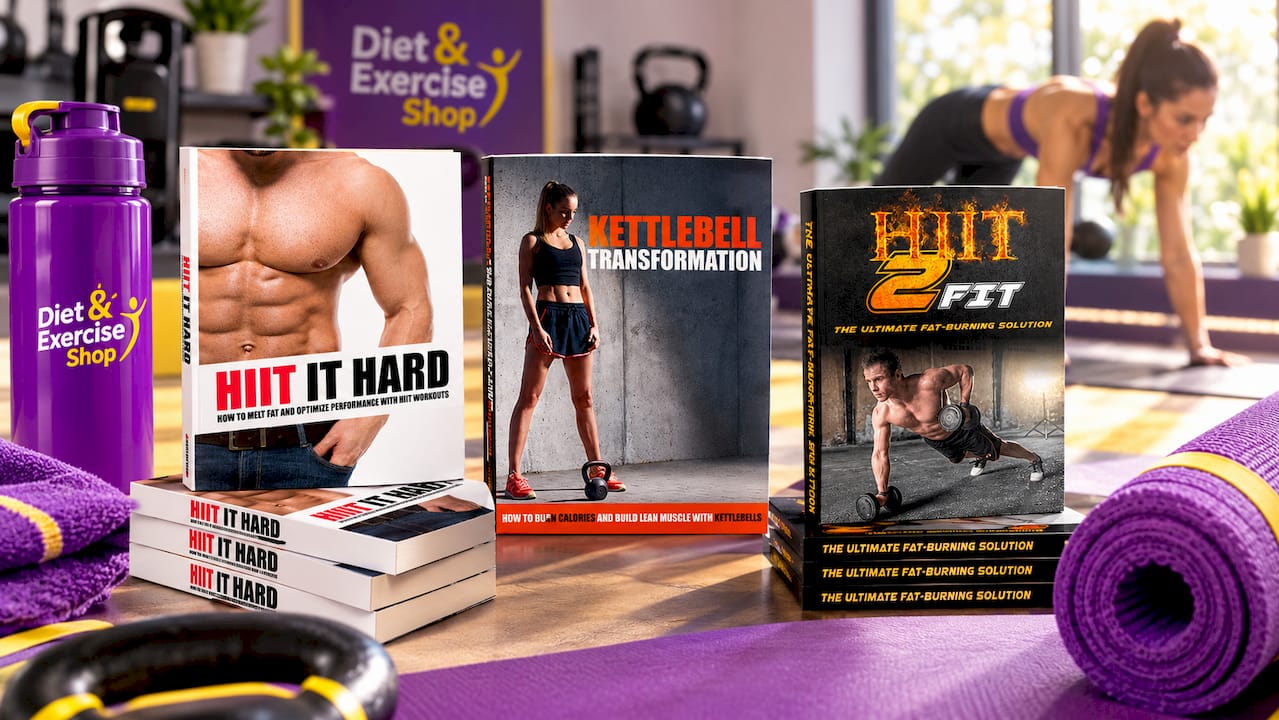
The HIIT IT HARD Training Guide suits anyone who’s outgrown the basic circuits here and wants a full interval program with built-in progression, ideal once you’re past week four and craving more structure. The KETTLEBELL TRANSFORMATION eBook is built for readers who bought that single kettlebell and want a real progression plan instead of guessing at reps. The HIIT 2 FIT eBook offers shorter, punchier sessions for weeks when 30 minutes isn’t realistic but you still want intensity.
None of these replace the free plan above, they extend it once consistency stops being the hard part. Start with Workout A this week, and when you’re ready for a program that plans the next 8 weeks for you, browse the guides at Dietexerciseshop and pick the one that matches your equipment.
Sources
- Get active — NHS
- Physical activity guidelines for adults — CDC
- PMC article supporting resistance training benefits
- PubMed article on weight-loss rates
FAQ
Can I lose weight doing at-home workouts?
Yes. Combining three strength sessions and two cardio sessions weekly with a modest calorie deficit produces steady, sustainable weight loss, no gym required.
What is the 3-3-3 rule for weight loss?
There’s no single agreed-upon definition of the “3-3-3 rule” in credible fitness or nutrition research, so treat any specific version you see online with caution rather than as an established standard.
How can I drop 20 pounds quickly?
Rapid, drastic weight loss usually costs you muscle along with fat. A safer, more sustainable pace is 0.5 to 1 pound per week, meaning 20 pounds realistically takes four to five months, not weeks.
What is the best exercise to lose weight at home?
No single exercise wins. A mix of strength training (to preserve muscle) and brisk walking or short HIIT (for calorie burn) beats any one movement done in isolation.
How many days a week should beginners do home workouts?
Five days total works well for most beginners: three strength sessions and two cardio sessions, with at least one full rest day built into the week.