

10 to 30 Minutes for a Quiet Hotel Room Workout That Works
Yes, you can get an effective, no-equipment workout in a hotel room in as little as 10 minutes. Pick the quiet 10-minute maintenance circuit for early mornings or jet lag, the 20-minute full-body circuit when you have a bit more time, or the 25 to 30 minute HIIT-style session on days you want a real training effect. Every option below uses just your body, a chair or desk, and floor space the size of a yoga mat. What follows covers step-by-step routines, form cues, modifications for different fitness levels, and the gear worth packing.
TL;DR:
- The 10-minute maintenance circuit is ideal after poor sleep or jet lag, involving low-impact moves like wall sits and plank holds to keep activity manageable.
- The 20-minute full-body routine effectively maintains strength through controlled, timed exercises such as chair sit-to-stands and reverse lunges, suitable for most travel days.
- The 25 to 30-minute HIIT session produces the most sweat and benefits, best reserved for days when bigger energy reserves and post-workout showers are available.
- Most exercises require minimal equipment, relying on furniture and body weight, with resistance bands as a highly portable tool to increase resistance.
- Adjust workouts based on room size and energy levels, emphasizing standing and stationary moves in small spaces and more dynamic moves when space allows.
Table of Contents
- Three Ready-To-Do Hotel Room Workouts You Can Start Today
- The Core Exercise Library: Moves You’ll Actually Use
- Scaling the Workout Up or Down for Your Fitness Level
- Keeping It Quiet: Etiquette and Safety in Small Spaces
- A Fast Warm-Up and Cool-Down for Any Room Size
- The One Accessory Worth Packing: Resistance Bands
- What the Research Says About Short Travel Workouts
- Hydration and Nutrition That Actually Support a Travel Workout
- Adjusting Your Routine to the Room You Actually Got
- Fixing the Two Biggest Travel Complaints: Back Pain and Jet Lag Fatigue
- Staying Consistent on the Road Isn’t About Motivation
- Where Dietexerciseshop Fits Into Your Travel Routine
- Sources
- FAQ
Three Ready-To-Do Hotel Room Workouts You Can Start Today
The right workout depends on how much time you have and how much energy you’re willing to spend before a day of meetings or a red-eye flight. Here are three templates, each tested against the reality of carpeted floors, thin walls, and a queen bed taking up half the room.
1. The 10-minute quiet circuit (maintenance mode) Do 2 rounds of these five moves, 40 seconds of work with 20 seconds of rest between each:
- Wall sit
- Elevated push-ups (hands on desk or dresser)
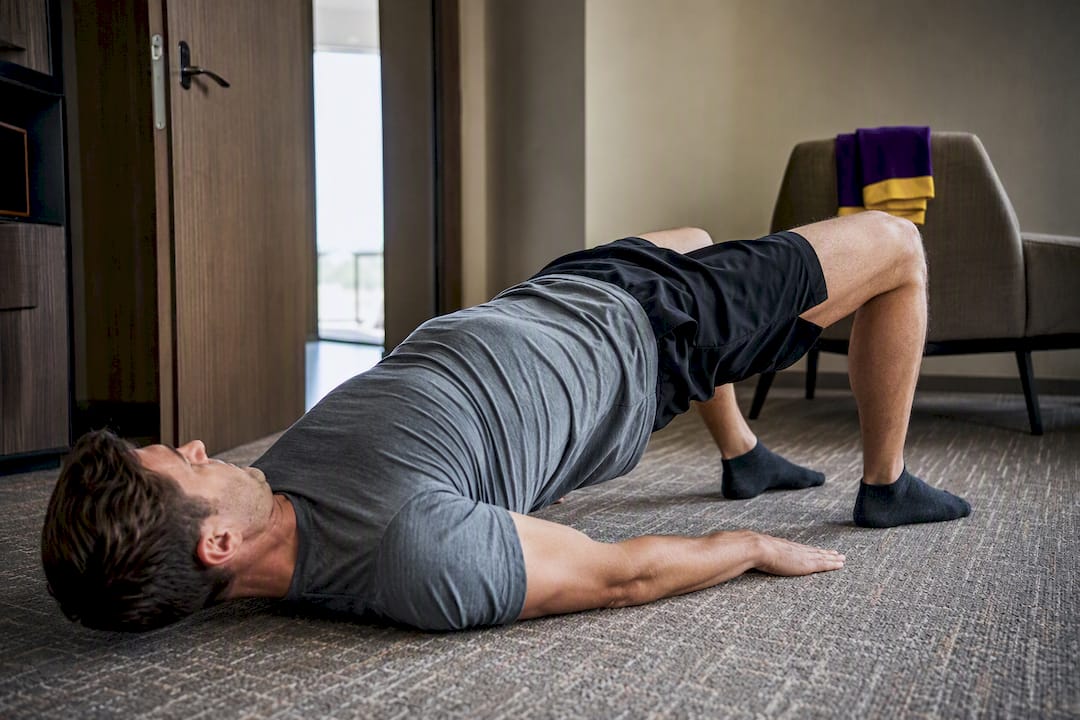
- Glute bridges
- Standing marches (knee drives)
- Plank hold
This one keeps your heart rate up without a single jump, which matters if the room below you is occupied. It works well as a wake-up sequence or a way to shake off six hours in an airplane seat.
2. The 20-minute full-body circuit This is the one to reach for most often. Run through 3 to 4 rounds of six to eight exercises, spending 45 seconds on each move with 15 seconds of transition time:
- Chair sit-to-stands
- Suitcase Romanian deadlifts
- Towel or door-frame rows
- Reverse lunges (alternating legs)
- Side plank (30 seconds per side)
- Calf raises
- Bird dogs
- Push-ups (standard or elevated)
Keep tempo controlled rather than rushed. A 20-minute circuit performed with deliberate intensity is enough to maintain strength and conditioning during a multi-day trip, and the structure translates almost exactly to what you’d do in a hotel gym with a couple of dumbbells.
3. The 25 to 30 minute HIIT-style session For days when you actually want to sweat, use a 40-seconds-on, 20-seconds-off interval structure across 5 exercises, repeated for 4 to 5 rounds after a proper warm-up:
- Step jacks (quiet substitute for jumping jacks)
- Reverse lunges with a knee drive
- Push-up to plank walk-out
- Wall sit with alternating leg lifts
- Mountain climbers (slow tempo to reduce impact)
Spend three to five minutes warming up first, and don’t skip the cooldown. This template is the closest thing to a real training session you’ll get without equipment, and it’s the one most likely to leave you sweaty, so save it for after your last meeting, not before.
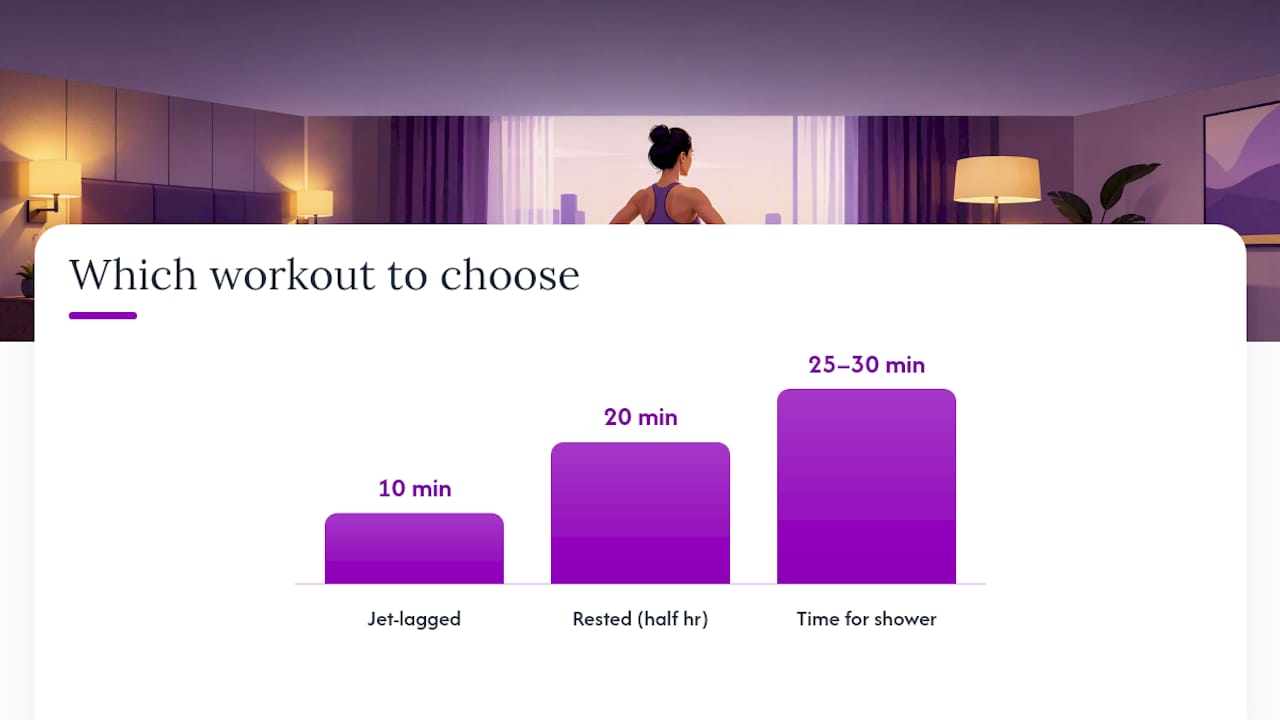
How to choose: if you slept badly or you’re jet-lagged, take the 10-minute option. If you’re rested and have a free half hour, the 20-minute circuit is the sweet spot for most travelers. Save the HIIT session for days when your schedule actually allows a shower afterward.
The Core Exercise Library: Moves You’ll Actually Use
These are the moves that show up across every hotel workout template because they work with almost no space and no gear.
- Elevated push-ups: hands on a desk or dresser, body in a straight line. Common mistake: letting hips sag. Substitute knee push-ups if the incline still feels too hard.
- Wall sits: back flat against the wall, thighs parallel to the floor. Hold for 30 to 45 seconds. Mistake: knees creeping past the toes.
- Chair sit-to-stands: use a sturdy desk chair (not one on wheels). Drive through the heels to stand. Mistake: using momentum instead of leg strength.
- Suitcase Romanian deadlifts: hold a heavy bag or a filled water bottle in each hand, hinge at the hips with a soft knee bend. Mistake: rounding the lower back instead of hinging.
- Towel or door-frame rows: loop a towel around a closed door handle at chest height, lean back, and pull. Mistake: using arms only instead of squeezing the shoulder blades together.
- Glute bridges: lie on your back (towel underneath), feet flat, drive hips upward. Mistake: overarching the lower back at the top.
- Planks and side planks: forearm on the floor, body in one line. Mistake: letting hips drop or pike upward.
- Calf raises: hold the desk for balance, rise onto the toes slowly. Mistake: bouncing instead of controlling the descent.
- Step jacks or marching: a quiet alternative to jumping jacks that still raises your heart rate. Mistake: going too fast and losing the marching pattern.
If floor space is tight, drop the lunges and side planks in favor of standing moves like wall sits, calf raises, and step jacks. Elevated push-ups, wall sits, chair sit-to-stands, and suitcase RDLs cover almost every muscle group without needing to touch the carpet at all.
Scaling the Workout Up or Down for Your Fitness Level
Nobody’s hotel workout should look identical on day one of a trip and day five. Adjust based on energy, soreness, and how much you actually slept.
- To make any move easier: reduce range of motion (shallower squats), use an incline (hands higher on the wall for push-ups), or cut the hold time in half.
- To make any move harder: switch to single-leg variations (single-leg glute bridge, single-leg RDL), slow the eccentric phase to a 3 to 4 second lowering, or add a resistance band.
- Structure a multi-day trip around one maintenance day (the 10-minute circuit), one harder session (20-minute or HIIT), and one active recovery day of walking or stretching only.
Watch your intensity by talking test: if you can’t hold a short conversation during the work interval, you’re pushing hard enough for a HIIT day. If you can chat easily through the whole set, you’re in maintenance territory, which is fine on a heavy travel day.
Pro Tip: Rate your energy out of 10 before you start. Anything below a 5 means today is a 10-minute circuit day, not a HIIT day. Forcing intensity on a depleted body just extends how long you feel run down.
Keeping It Quiet: Etiquette and Safety in Small Spaces
Jumping moves transmit impact through floors and ceilings in ways standing exercises never will. High-impact moves like burpees and jump squats are best avoided in most hotel rooms, with step jacks, marching, and wall-based movements standing in perfectly well.
- Swap any jump for a step jack, march, or slow mountain climber.
- Test a chair, desk, or bed frame’s stability with your hands before loading it with your body weight.
- Lay a towel down before floor work; it protects you from questionable carpet and cuts down on noise.
- Keep push-up and plank sets on the towel rather than directly on the bed frame or nightstand corners.
- Avoid anything that involves dropping weight or slamming your feet down, even softly.
A Fast Warm-Up and Cool-Down for Any Room Size
Three to five minutes of movement before you start prevents the stiff, tight feeling that shows up mid-workout, especially after a long flight or a day of sitting in meetings.
- March in place for 60 seconds, lifting knees to hip height.
- Arm swings and shoulder circles, 10 each direction.
- Leg swings holding the wall for balance, 10 per side.
- Standing core twists, 20 total.
- Two or three bodyweight squats to finish raising your heart rate.
For the cooldown, spend two minutes on slow breathing paired with a standing hamstring stretch, a chest opener against the door frame, and a gentle spinal twist. This combination isn’t just about feeling looser. Short bodyweight sessions paired with proper warm-up and cooldown work help reduce stiffness from long transit and may support circadian regulation, which is exactly what you need after a transatlantic flight. If you need a low-sweat option before a meeting, stick to the warm-up sequence alone and skip anything past a light march and stretch.
The One Accessory Worth Packing: Resistance Bands
A single lightweight resistance band changes what’s possible in a hotel room more than any other item you could pack. It weighs almost nothing, rolls up smaller than a pair of socks, and turns bodyweight-only moves into loaded strength work.
- Banded rows: loop the band around a closed door at mid-height, step back, and pull with controlled shoulder blade squeeze.
- Banded squats: stand on the band with feet shoulder-width, hold the handles at shoulder height, and squat against the tension.
- Banded glute bridges: loop the band above the knees while lying down to add resistance to the standard bridge.
Loop the band around a closed door at mid-height or under a heavy piece of furniture, always testing the anchor point before loading it fully. A minimalist packing list for any trip: one band, a pair of shoes you’d actually run in, and a small towel. Dietexerciseshop’s guide to the best resistance bands for travel breaks down which band strength suits your current fitness level.
What the Research Says About Short Travel Workouts
Research on bodyweight training backs up what frequent travelers already suspect: brief sessions using nothing but gravity provide real cardiovascular and strength benefits, along with mobility gains that ease the stiffness of long transit. Certified trainers point to the same conclusion from a different angle, noting that compact, intentional routines lower the barrier to exercise enough that travelers actually follow through on trip after trip. Safety matters just as much as programming. Test any fixture, whether it’s a door handle or a desk chair, before you put weight on it, and keep floor contact on a towel rather than bare carpet.
Hydration and Nutrition That Actually Support a Travel Workout
Airplane cabins and long car rides dehydrate you faster than a normal day at home, and a dehydrated body performs worse on every single one of the moves above. Aim to drink water steadily through the day rather than chugging a bottle right before you exercise. A simple habit: refill a water bottle every time you pass through a hotel lobby or airport gate, so you’re not relying on memory alone.
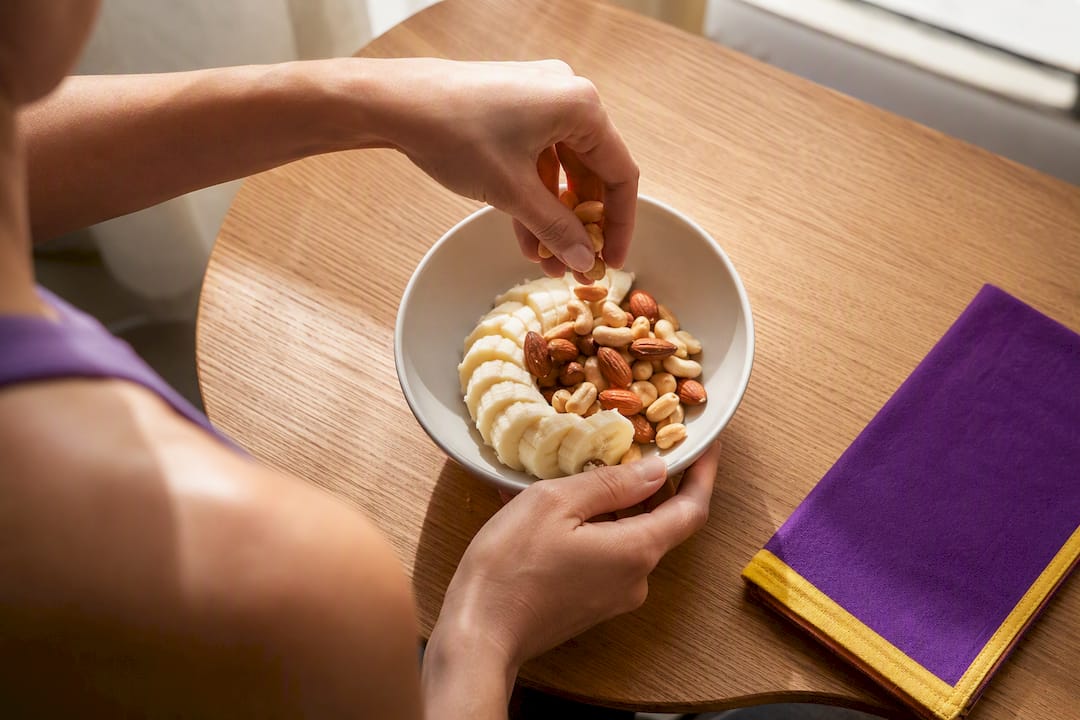
Meals matter almost as much as the workout itself. A light snack with some protein and carbohydrate, think a banana with a handful of nuts, or oatmeal from the breakfast buffet, about 30 to 60 minutes before a session gives you enough fuel without weighing you down. After a HIIT-style session especially, protein intake within a couple of hours helps recovery along, which matters more on a trip where sleep is already disrupted by time zones or an unfamiliar bed.
Alcohol is worth flagging separately. It’s easy to treat a work trip’s dinner and drinks as separate from your fitness goals, but alcohol disrupts the same sleep quality you’re already fighting to protect through jet lag. Cutting back on travel days, even without cutting it out entirely, tends to pay off the next morning far more than an extra rep or two would.
Adjusting Your Routine to the Room You Actually Got
Not every hotel room gives you the same working space, and pretending otherwise leads to stubbed toes and knocked-over lamps. A compact city hotel room might give you a 4 by 6 foot patch of open floor between the bed and the window; a suburban extended-stay room might hand you triple that.
In tight rooms, prioritize standing and stationary moves: wall sits, calf raises, step jacks, elevated push-ups against the desk, and towel rows anchored to the door. Skip anything that requires lunging forward or side to side, since you’ll run out of room mid-rep. Push the coffee table or luggage rack against the wall first; a few seconds of rearranging saves you from tripping through an entire circuit.
Larger rooms open up lunges, mountain climbers, and side-to-side shuffles, plus more comfortable floor work for planks and bridges. If you’ve got a suite or a room with a separate sitting area, that’s your best bet for anything involving lateral movement. Whatever the layout, do one full walk-through of your planned moves before you start the clock. It takes 20 seconds and prevents a mid-rep collision with the nightstand.
Fixing the Two Biggest Travel Complaints: Back Pain and Jet Lag Fatigue
Lower back pain from hours in an airplane seat or a cramped rental car responds well to a specific handful of moves rather than a generic full-body circuit. Suitcase Romanian deadlifts strengthen the muscles that support the lower back without any spinal loading. Glute bridges wake up the glutes, which tend to go quiet after long sitting and force the lower back to compensate. Add a slow standing core twist and a doorway chest stretch to counter the forward-hunched posture that a plane seat locks you into for hours.
Jet lag fatigue calls for a different approach: movement timed around when you need to feel alert, not just whenever you have a free ten minutes. A short, moderate-intensity circuit, the 10-minute quiet version works well here, done shortly after waking in your new time zone helps signal to your body that it’s time to be active. Save any harder HIIT session for later in the day once you’ve adjusted, since intense exercise too close to bedtime in a new time zone can make falling asleep even harder. Pairing this with regular strength sessions shown to deliver outsized health benefits over time gives frequent travelers a reason to keep the habit going well past the current trip.
Staying Consistent on the Road Isn’t About Motivation
Most travelers don’t skip hotel workouts because they lack willpower. They skip them because the plan wasn’t specific enough to survive a delayed flight or a packed schedule. The fix isn’t more discipline, it’s smaller decisions made in advance: which 10-minute circuit you’ll default to, which shoes are already in your bag, which 20 minutes on the calendar you’ll protect.
Treat these routines as travel-first tools, not a downgrade from your normal gym session. Pair movement with something you already do daily, like doing wall sits while the coffee brews or planks right after you unpack. That kind of pairing sticks far better than any amount of good intention.
— Mark
Where Dietexerciseshop Fits Into Your Travel Routine
Dietexerciseshop gives you a structured next step once you’re past improvising circuits from a hotel notepad, no agency, no gym membership, just a program built for exactly this situation. The REAL LIFE FITNESS eBook is the pick for readers who want a full travel-friendly program with built-in progression rather than piecing routines together trip by trip. If short, intense sessions are more your speed, the HIIT 2 FIT eBook hands you ready-made timed templates that slot directly into the 25 to 30 minute HIIT structure covered above.
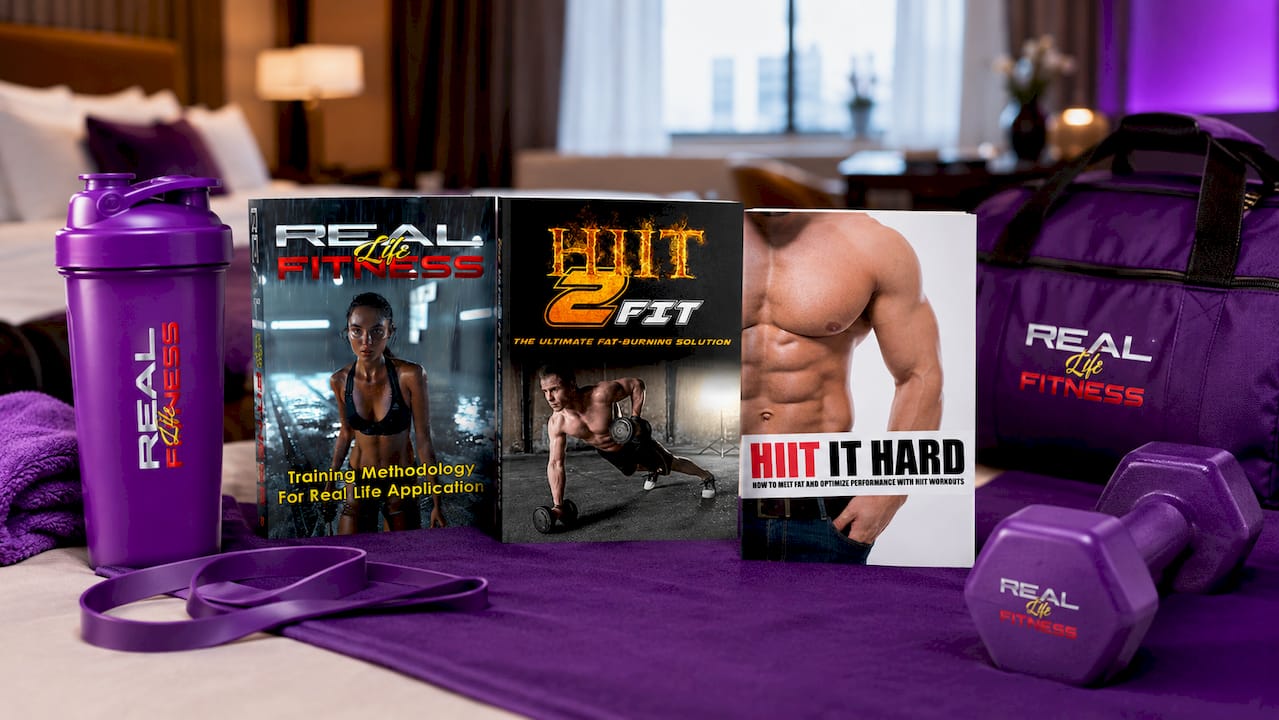
For travelers who’ve built a base and want to push harder on trips where time actually allows it, the HIIT IT HARD Training Guide adds progressive overload to the mix instead of repeating the same circuit every hotel stay. Between the three, you get a full arc: structured programming, quick HIIT templates, and a path to greater intensity as your travel fitness improves. Browse the full lineup at Dietexerciseshop and pick the guide that matches your next trip’s schedule.
Sources
- A 7-Move Bodyweight Workout You Can Do in Any Hotel Room
- Hotel Room Workout: Quiet Exercises for Travel, Small Rooms, and No Gym
- Travel workout ideas (NYT Wellness)
- The 20-Minute Hotel Workout: 10 Quick Exercises
FAQ
What exercises are included in a 10-minute hotel room workout?
A quiet 10-minute circuit typically includes wall sits, elevated push-ups, glute bridges, standing marches, and a plank hold, run for two rounds with short rest between moves.
How do I work out in a hotel room without equipment?
Use bodyweight moves that rely on furniture for support, like chair sit-to-stands, desk push-ups, and door-frame rows, combined with standing moves like wall sits and step jacks that need no equipment at all.
What exercises can I do with a resistance band in a hotel room?
Banded rows anchored to a door, banded squats standing on the band, and banded glute bridges looped above the knees all work well and add real resistance without extra bulk in your bag.
What are good back exercises I can do in a hotel room?
Suitcase Romanian deadlifts and glute bridges both target the muscles that support the lower back, while towel or door-frame rows strengthen the upper back without any spinal loading.
How long should a hotel room workout be?
Ten minutes works for maintenance on tired or jet-lagged days, twenty minutes is the sweet spot for most travel days, and 25 to 30 minutes suits a HIIT-style session when your schedule allows it.