

Hydration for Runners: How Much to Drink and When
Drink to replace most of what you sweat, not a fixed number of ounces, and add sodium once you’re out past 60 to 90 minutes. Weigh yourself before and after a run to get your real number, sip on a schedule you’ve rehearsed in training. Let thirst plus a body-weight check keep you from overdrinking. That’s the entire system. Everything else is detail.
TL;DR:
- Runners should add sodium to hydration plans after 60 to 90 minutes of effort to prevent hyponatremia and maintain fluid balance.
- Monitoring body weight loss during runs helps determine sweat rate, which guides actual fluid and electrolyte replacement needs.
- High-sodium drinks are useful for longer runs but typically do not require exact sodium matching, as over-replacement offers limited performance benefits.
- During efforts under 60 minutes, plain water suffices, but electrolyte drinks become advantageous for longer or hotter runs.
- Hydration strategies must be tested during training, with focus on timed drinking, sodium intake, and personalized adjustments based on individual sweat rate and conditions.
Table of Contents
- How Much Water Should Runners Drink Before, During, and After a Run?
- What Should Runners Drink: Water, Electrolytes, or Gels?
- How Do You Calculate Your Personal Sweat Rate?
- Building a Hydration Strategy for Race Day and Long Runs
- Handhelds, Belts, or Vests: Choosing How to Carry Fluids
- How Can Runners Avoid Overhydration and Hyponatremia?
- What I’ve Learned Testing Hydration Strategies in Training
- Gear and Fuel That Support Your Training and Recovery
- Sources
- FAQ
How Much Water Should Runners Drink Before, During, and After a Run?
Hydration timing matters more than volume alone. Drink 16 to 20 fl oz two to four hours before a run, then a small 4 to 6 fl oz sip about 15 minutes before you head out. That gap gives your kidneys time to process excess fluid so you’re not starting a run sloshing.
During the run, plain water covers most runs under an hour. Past that window, a light electrolyte drink starts to matter more than the water itself, a point echoed in the Active. A common sip rule, repeated across Runner’s World’s hydration guide and other coaching resources, is 4 to 5 fl oz every 15 minutes, adjusted up in heat and down in cool, low-effort conditions.
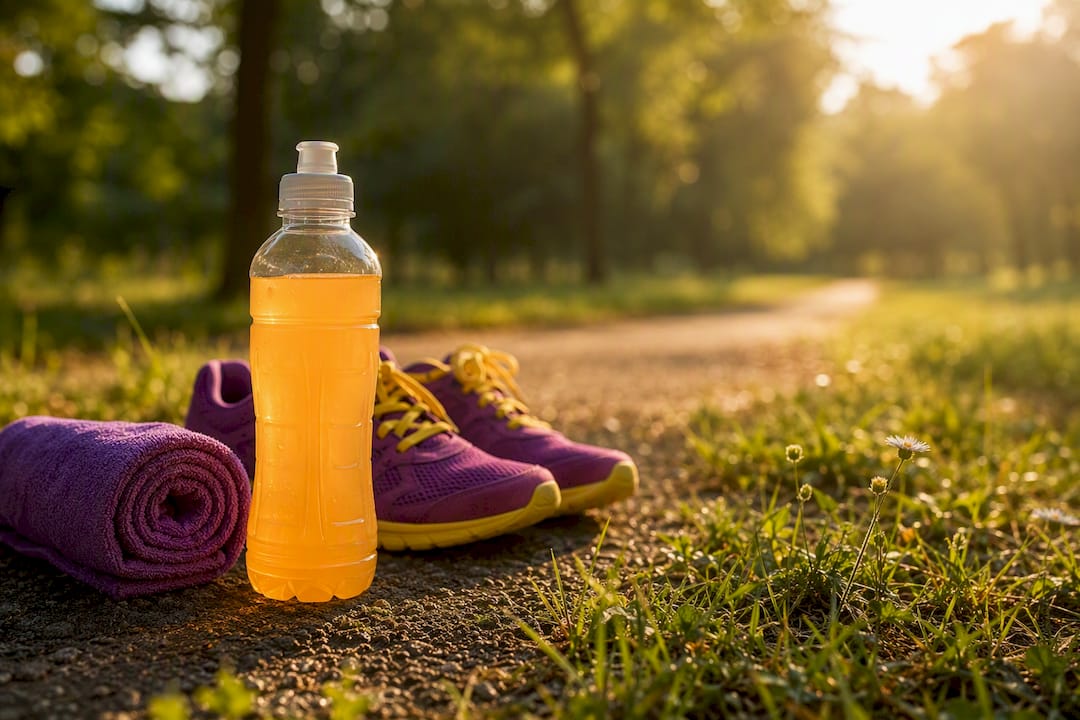
Pro Tip: Set a recurring vibration alert on your watch for every 15 minutes instead of trying to remember. Forgetting to drink for the first 40 minutes and then chugging is worse than steady small sips.
Post-run, use body weight as your guide:
- Weigh yourself dry, right after finishing, before drinking anything.
- For every pound lost, drink roughly 16 to 24 fl oz to fully rehydrate.
- Add a pinch of salt or a salty snack if the run went past 90 minutes or was hot and humid.
- Don’t chug it all in five minutes; spread replacement over the next couple hours.
A loss of body weight after a 60-minute run reflects your sweat rate and can guide adjustments to your hydration during the run.
What Should Runners Drink: Water, Electrolytes, or Gels?
Sodium is the piece most runners underrate. It helps maintain blood volume, keeps fluid where your body needs it, and is your main defense against exercise-associated hyponatremia, the dangerous dilution that happens when you drink plain water faster than you lose sodium. The American College of Sports Medicine recommends roughly 300 to 600 mg of sodium per hour during prolonged exercise, a range wide enough to account for how much runners’ sweat composition varies.
Your options break down into a few categories:
- Plain water works fine for runs under 60 minutes in moderate temperatures.
- Isotonic sports drinks carry both carbohydrate and sodium, useful when you also need calories.
- Electrolyte powders and tablets let you control sodium concentration independently of your calorie intake, handy if gels are covering your fuel.
- Gels with added sodium double up on fuel and electrolytes but concentrate GI load into one hit.
- Salty foods (pretzels, salt tabs, even a slice of bread with a pinch of salt) work at aid stations when you’d rather not carry another bottle.
Higher-sodium drinks retain fluid better but often taste worse, which is why some runners prefer capsules alongside plain water rather than one heavily salted bottle, a tradeoff noted in sodium and hydration research. Trying to replace 100% of sodium losses isn’t usually necessary or even beneficial. A 2025 review on sodium and hyperhydration found that aggressive sodium loading shows limited performance payoff and can hurt tolerability. The goal is staying in a safe range, not chasing an exact match. Test your product and dose on a training run at race pace, never for the first time on race day.
How Do You Calculate Your Personal Sweat Rate?
Guessing your fluid needs wastes the most useful data point you have access to: your own body. A sweat-rate test takes one run and basic math.
- Weigh yourself nude or in dry clothes immediately before running.
- Track exactly how much fluid you drink during the run, in fluid ounces.
- Weigh yourself again immediately after, before showering or drinking more.
- Add any fluid you drank to your weight loss, then divide by run time in hours.
Worked example: You weigh 160 lb before a 60-minute run, drink 8 fl oz during it, and weigh 158.5 lb after. That’s 1.5 lb lost plus 8 fl oz consumed, roughly 1.5 pt total sweat loss for the hour, or about 24 fl oz/hour. Pair that with a sodium target near the ACSM’s midpoint, around 450 mg/hour, and you have a real plan instead of a guess.
Run the test again in different heat and humidity. Your sweat rate on a cool 50-degree morning and a humid 85-degree afternoon can differ by a factor of two, so one test tells you one condition, not your number forever.
Building a Hydration Strategy for Race Day and Long Runs
Long-run hydration strategies fall apart most often not from bad math but from testing nothing beforehand. The 48 to 72 hours before a race call for slightly more fluid than your normal training days, not a dramatic overload.
- Sip 16 to 20 fl oz two to three hours before the start, then a small amount closer to the gun.
- At aid stations, take what matches your rehearsed plan. Skip a station if you’re already on schedule with your own bottle or vest.
- If your stomach turns on you mid race, switching briefly to plain water can settle things by changing what’s sitting in your gut, then return to your electrolyte drink once symptoms ease, a tactic detailed in Active.com’s long-run hydration guide.
- After finishing, weigh in to confirm how much you actually need to replace, then favor salty recovery foods or an electrolyte drink over large volumes of plain water.
Rehearse this exact sequence, aid-station habits included, on a long training run. Race day is the wrong place to discover you can’t tolerate a new gel.
Handhelds, Belts, or Vests: Choosing How to Carry Fluids
Your carrying system should match your distance, not your budget alone. A handheld bottle works well for runs under 90 minutes: cheap, easy to refill, and simple to clean, though it does tire one hand on longer efforts.

A waist belt holds one or two small bottles plus a pocket for gels or electrolyte tablets, a solid middle ground for 10-mile to half-marathon distances where you want both hands free.
A hydration vest carries a bladder or soft flasks, typically 500 mL to 2 L, and distributes weight across your shoulders instead of your waist. That makes it the right call for marathons, trail runs, or anywhere aid stations are sparse.
- Pack a spare electrolyte tablet or two, not just your mixed fluid.
- Bring a small snack (dates, a mini bar) on anything past two hours.
- Rinse bladders and bottles after every use; mold in a hydration bladder is a real, avoidable problem.
- On courses with frequent aid stations, a lighter handheld plus reliance on the course can beat carrying a full vest.
How Can Runners Avoid Overhydration and Hyponatremia?
Exercise-associated hyponatremia happens when you drink plain water faster than your body can process sodium, diluting your blood to dangerous levels. It’s a bigger risk for most recreational runners than mild dehydration, since the instinct to “drink more” during a long race can push well past what’s needed, a pattern noted in running-specific hydration guidance.
Watch for confusion, swelling in hands or feet, nausea, or a headache that worsens as you keep drinking. Any of those calls for stopping and getting help, not pushing on with more water.
- Check urine color each morning; pale yellow is the target, not clear.
- Track morning body weight for sudden unexplained swings.
- Never drink more per hour than your measured sweat rate.
- Add sodium once you pass 60 to 90 minutes of effort, and back off fluid volume in cooler, shorter sessions where you’re barely sweating.
What I’ve Learned Testing Hydration Strategies in Training
Most runners overthink the drink and underthink the training progression and adaptation involved in hydration needs. I’ve watched training partners nail their fluid volume to the ounce and still cramp or feel foggy late in a long run, because they treated water as the whole equation. The sweat-rate test fixes half the problem. Practicing the actual product, actual concentration, and actual timing in training fixes the other half.
Dietexerciseshop stocks the kind of practical resources that support that testing process, from recovery-focused eBooks to apparel built for the actual conditions you train in. None of it replaces the test itself. Try any product or schedule on a training run first, log how your gut and energy respond, then decide if it earns a spot in your race-day kit.
— Mark
Gear and Fuel That Support Your Training and Recovery
Once your hydration numbers are dialed in, the rest of your routine still needs to hold up, warmups, cooldowns, and the fueling that surrounds a long training block. Dietexerciseshop built its catalog around exactly that gap: practical apparel and guides for runners who’d rather test one good resource than sort through a dozen generic options.
For layering after a sweaty long run, the MEAL PREP & MUSCLE REPS Hoodie and the RUNNING ON COFFEE AND PROTEIN SHAKES Hoodie work well for the cool down window when your core temperature is dropping fast. If you want your training kit to say something about the miles you’re logging, the TRUST THE PROCESS T-Shirt, the SQUATS? I THOUGHT YOU SAID SQUASH? T-Shirt, and the TURNIP THE GAINS T-Shirt cover warmups and rest days alike. On the fueling side, the MUSCLE GAIN SECRETS eBook and the 3-Pack Fat Burner with MCT Supplements round out recovery nutrition once your electrolyte plan is set. The CARDIO AND CARBS, THE PERFECT PAIRING Hoodie makes a fitting pick for anyone building fueling habits alongside their mileage. Browse the full eBook collection and test one resource against your own training log before your next long run.
Sources
FAQ
What do runners use to hydrate while running?
Most runners use plain water for efforts under an hour and switch to an electrolyte drink, gel with sodium, or salty snack once they pass 60 to 90 minutes, carried in a handheld bottle, belt, or vest depending on distance.
How should I hydrate 24 hours before a marathon?
Drink normally through the day, add a slightly salty meal or snack in the evening, and avoid loading up on large volumes of plain water right before bed, since that just means more bathroom trips and no real hydration benefit.
How often should I hydrate on a run?
For runs under an hour, sip when thirsty. For longer efforts, a common starting point is 4 to 5 fl oz every 15 minutes, adjusted based on your measured sweat rate and the day’s heat and humidity.