

Pre Workout Meal Timing: 0.5–1 g/kg Carbs, 10–25 g Protein
Choose a carbohydrate-first meal with a moderate amount of protein, and limit fat and fiber if you’re eating within 60 minutes of training. The right pre workout meal depends heavily on timing: a full plate works fine at 2 to 3 hours out, but under 30 minutes calls for something small and fast-digesting, like a banana or a sports drink. Workout type matters too, and the specifics below break down exactly what to eat and when.
TL;DR:
- Carbohydrate intake should be adjusted based on timing, with heavier, balanced meals 2 to 3 hours before and simple carbs less than an hour out.
- Longer or intense endurance workouts require higher carbs both pre- and during exercise, while strength training benefits from carbs plus protein to reduce muscle breakdown.
- Pre-workout carbohydrate recommendations typically range from half to one gram per kilogram of body weight, combined with 10 to 25 grams of protein for optimal performance.
- Small, easy-to-digest snacks like bananas or rice cakes are best within 30 to 60 minutes before training, avoiding large meals to prevent discomfort.
- Hydration and supplement timing, including fluids and caffeine, should be tailored to workout duration and conditions, with electrolytes and caffeine improving performance in specific scenarios.
Table of Contents
- How Timing Changes Your Pre-Workout Meal
- What Should You Eat Based on Your Workout Type?
- How Many Carbs and Protein Should You Eat Before Training?
- Pre-Workout Meal Examples for Every Timing Window
- Hydration and Supplement Timing Before You Train
- Where Dietexerciseshop Fits Into Your Nutrition Plan
- What Actually Works Once You’re Out of the Gym
- Build a Fueling Routine You’ll Actually Stick To
- Sources
- FAQ
How Timing Changes Your Pre-Workout Meal
The clock matters more than the food itself. A meal that’s perfect three hours before a run can wreck a session eaten twenty minutes before it, because digestion takes time your gut doesn’t have once you start moving.
Here’s how composition should shift as the workout gets closer:
- 2 to 3 hours out: A balanced plate works. Combine carbohydrates, protein, and a modest amount of fat, similar to a chicken and rice bowl or oatmeal with fruit. Fiber is fine here since you have time to digest it.
- 1 to 2 hours out: Lean more heavily toward carbs with moderate protein. Start trimming fat and fiber so your stomach isn’t still working when you start your warmup.
- 30 to 60 minutes out: Stick to easy-to-digest carbs with a small amount of protein. Think rice cakes or a banana, not a burrito.
- Under 30 minutes: Go small and concentrated. A sports drink, an energy gel, or half a banana gives you usable glucose without sitting in your stomach.
The common thread across every window: the closer you get to training, the simpler and smaller the meal needs to be.
What Should You Eat Based on Your Workout Type?
Not all exercise demands the same fuel. A PMC review of pre-exercise carbohydrate research found that carb timing and amount interact with exercise duration and intensity, meaning a 20-minute mobility session and a 90-minute run have almost nothing in common nutritionally.
- Endurance and cardio: Load up on carbs beforehand, and if you’re running or cycling past 60 to 90 minutes, plan for carbs during the session too, not just before it.
- Strength training: You need carbs for power output, but adding protein beforehand helps limit muscle protein breakdown during heavy lifting.
- HIIT: Keep it moderate on carbs and minimal on fat and fiber. If your session starts soon, choose something fast-digesting rather than a heavier meal eaten an hour ago.
- Yoga, Pilates, and flexibility work: These sessions often need little to no pre-workout food. A light snack is optional and comes down to personal comfort more than performance need.
UCLA Health’s guidance on workout-specific nutrition backs this up directly: cardio benefits from carb-heavy meals, while strength sessions do better with a protein-and-carb combination. One nuance worth knowing: carbs temporarily suppress fat burning during exercise, but training fasted hasn’t reliably produced better long-term fat-loss results in research, so pick your pre-workout fuel based on how you want to perform that day, not on a fat-burning theory.
How Many Carbs and Protein Should You Eat Before Training?
Numbers help more than vague advice here. A practical starting range is typically around half to one gram of carbohydrate per kilogram of bodyweight before training, leaning toward the higher end for longer or more intense sessions.
By the Numbers: For an average-weight person, an appropriate amount of carbs pre-workout may range from moderate to higher quantities depending on the session length and intensity, scaled accordingly. Pair that with 10 to 25 grams of protein to help limit muscle breakdown during the workout, per carbohydrate research on endurance performance.
Morning workouts complicate this. If your appetite is low right after waking, a small carb-dense snack tends to sit better than a full meal. And regardless of the numbers, avoid stacking a large meal right before training. A big plate eaten 20 minutes before you lift is a near-guaranteed recipe for cramping or nausea mid-set. For a deeper breakdown of daily timing beyond just the pre-workout window, what to eat when exercising covers the full picture.
Pre-Workout Meal Examples for Every Timing Window
Theory is only useful once it becomes a plate of food. Here’s what these targets actually look like:
- 2 to 3 hours before: Chicken breast with rice and steamed vegetables, or oatmeal topped with nut butter and banana. Vegan swap: tofu stir-fry with rice, or oatmeal with plant-based protein powder.
- 1 to 2 hours before: Greek yogurt with berries, a turkey sandwich on whole-grain bread, or rice and beans. Dairy-free swap: coconut yogurt with berries and a drizzle of honey.
- 30 to 60 minutes before: A banana with a small yogurt, rice cakes with jam, or a light protein smoothie.
- Under 30 minutes: A sports drink, an energy gel, or a few bites of white bread with honey.
Pro Tip: Keep two or three go-to options on hand for each timing window so you’re never scrambling ten minutes before a session. Rice cakes, a banana, and a shelf-stable protein shake cover almost every scenario without needing a grocery run.
For readers managing allergies or specific diets, the low-carb pre-workout snacks guide from Wellnosh offers keto-friendly swaps that still hit the timing principles above. And if you want more portable, grab-and-go ideas, these pre-workout snack picks round out the list nicely.
Hydration and Supplement Timing Before You Train
Fluid intake matters as much as food. Drink roughly 5 to 10 mL per kilogram of bodyweight 2 to 4 hours before training, then take small sips in the final 15 to 30 minutes if you’re thirsty.
- Electrolytes become more important for sessions longer than an hour or in hot conditions, where sweat losses climb fast.
- Caffeine, often dosed 30 to 60 minutes pre-training, is one of the most researched performance aids, though the right amount varies by tolerance.
- Creatine works differently: it builds up in muscle over weeks of consistent daily use, so acute pre-workout timing matters far less than staying consistent day to day.
For a fuller breakdown of stacking caffeine and other supplements around your training schedule, see mastering pre-workout supplement timing.
Where Dietexerciseshop Fits Into Your Nutrition Plan
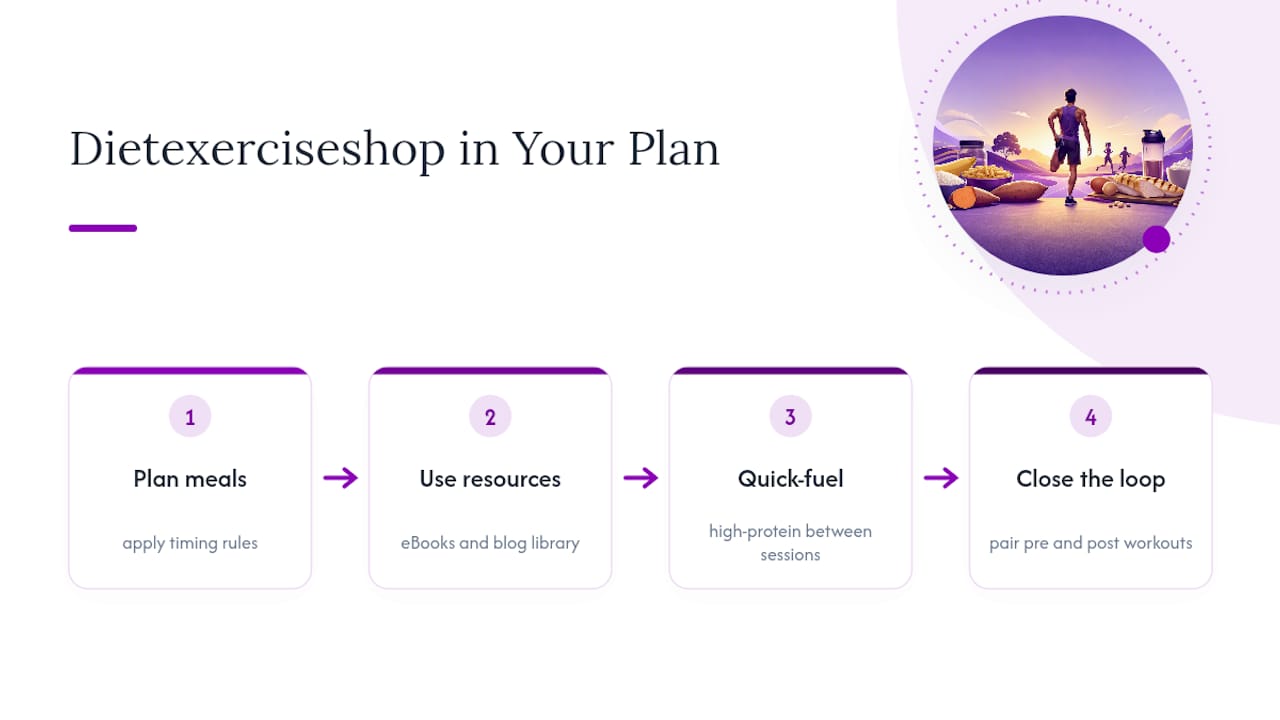
The catalog is designed to help people turn nutrition science into meals to eat before training. The available eBooks and blog library offer guidance to help apply timing rules like these without guessing every week.
If you want more on quick-fuel options between sessions, high protein snacks that fuel your workouts is worth a read, and pairing pre-workout strategy with post-workout recovery nutrition closes the loop on full-day fueling.
What Actually Works Once You’re Out of the Gym
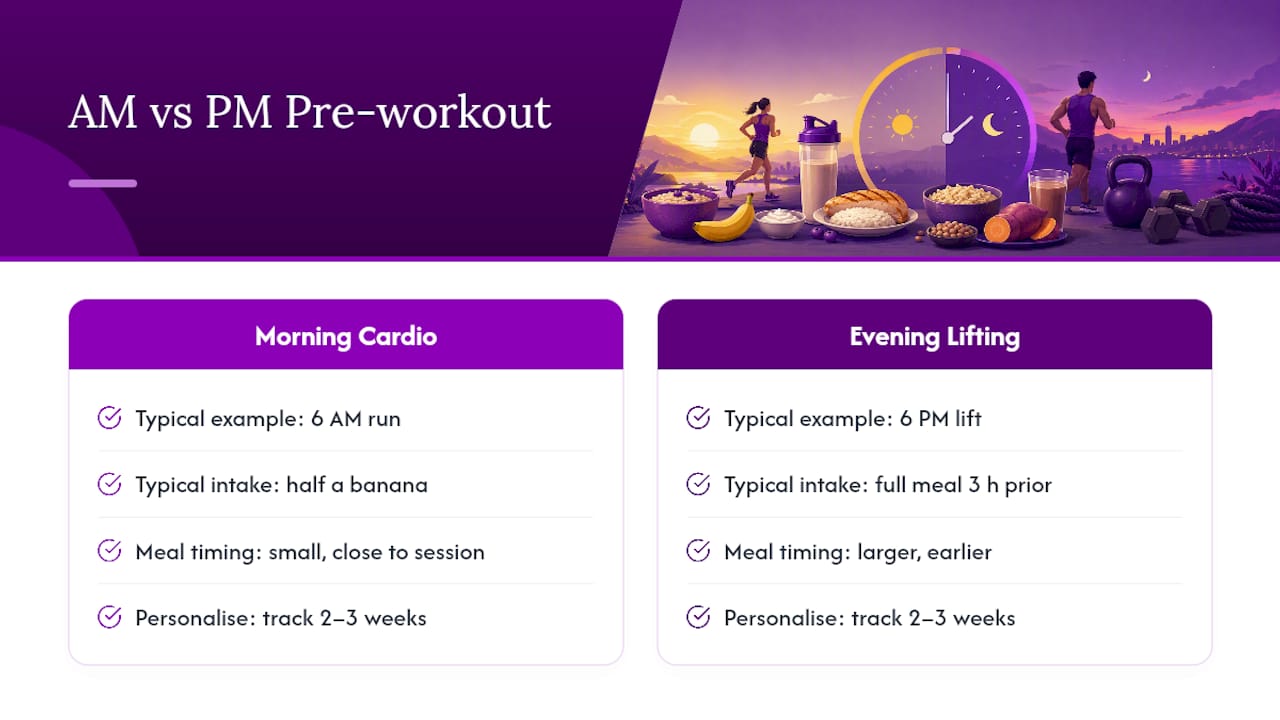
Morning cardio and evening lifting call for almost opposite approaches in practice. A 6 AM run might only tolerate half a banana, while a 6 PM lifting session gives you room for a real meal three hours earlier. The macronutrient math in this guide is a starting point, not a rulebook carved in stone.
Track how you feel for two or three weeks, adjust portions up or down, and let your own digestion be the final judge. Nutrition research gives you the range. Your training log tells you where inside that range you actually belong.
— Mark
Build a Fueling Routine You’ll Actually Stick To
Knowing the timing windows is one thing. Building a repeatable weekly routine around them is another, and that’s where a structured guide beats guessing meal by meal. The FUNCTIONAL FITNESS eBook walks through training programming alongside meal timing, so your pre-workout choices connect directly to your workout plan instead of floating separately.

If your schedule is unpredictable, the REAL LIFE FITNESS eBook is built specifically for fitting real nutrition timing into a real week, including mornings when a full meal isn’t realistic. And for those who like their gym mindset visible off the mats, the Weights Before Dates T-Shirt is a small, honest reminder of where your priorities sit. Grab the eBook that fits your week and start building meals around your training, not the other way around.
Sources
This guide draws on the PMC review of pre-exercise carbohydrate research, Healthline’s pre-workout eating guidance, Mayo Clinic’s exercise nutrition tips, and UCLA Health’s workout-specific nutrition advice.
- When and What to Eat Before a Workout — Healthline
- Pre-Exercise Nutrition and the Response to Endurance Exercise — PMC
- What to eat before and after a workout, based on your workout type — UCLA Health
FAQ
What Should I Eat 30 Minutes Before a Workout?
Stick to small, easy-to-digest carbs like a banana, rice cakes, or a few sips of a sports drink. Skip protein and fat this close to training since they digest too slowly.
What Is the Best Pre-Workout Meal?
There’s no single best meal, but the strongest pattern is carbs first, 10 to 25 grams of protein, and minimal fat or fiber the closer you get to training. A chicken and rice bowl eaten 2 to 3 hours out is a reliable go-to for most workout types.
What Should I Eat for Pre-Workout Fuel?
Choose based on your timing window: a balanced meal 2 to 3 hours out, or a light carb-focused snack if you’re training within the hour. Endurance sessions benefit from more carbs, while strength sessions do well with added protein.
What Should I Eat 2 Hours Before My Workout?
Lean toward carbs with moderate protein, like Greek yogurt with berries or a turkey sandwich on whole-grain bread. Keep fat and fiber lower than you would in a meal eaten three or more hours out.