

Reduce Soreness Up to 72 Hours: Compression Shirt Benefits & Fit
Compression shirts reliably ease muscle soreness and speed recovery after hard training, but they won’t shave time off your 10K or melt fat off your midsection. The benefits that matter most show up after the workout, not during it. How much you feel them depends heavily on fit and pressure, which is why the wrong size can undo whatever good the fabric is supposed to do.
TL;DR:
- Compression shirts mainly support recovery by reducing muscle soreness and aiding muscle stabilization post-exercise, with evidence showing benefits up to 72 hours after workouts.
- They do not enhance endurance, speed, or overall athletic performance, as studies show no consistent improvement in race times or aerobic capacity.
- Proper fit is crucial for effectiveness and safety; shirts should feel snug but not restrict breathing or cause numbness, and sizing should be tested through movement.
- Their mechanical benefits stem from reducing soft-tissue vibration during activity and supporting venous return after workouts, rather than affecting oxygen delivery or metabolism.
- People with circulatory issues or circulation disorders should seek medical advice before wearing compression garments to avoid health risks.
Table of Contents
- What Are the Main Benefits of Compression Shirts?
- Recovery Vs. Performance: What the Evidence Actually Says
- How Compression Shirts Actually Work
- Who Should Be Careful With Compression Wear
- Buying and Fitting a Compression Shirt That Actually Works
- Mark’s Take on Compression Shirts
- Gear Up With Shirts Built for the Work, Not Just the Squeeze
- Sources
- FAQ
What Are the Main Benefits of Compression Shirts?
The clearest, best-documented benefit is recovery, not raw performance. If you’re comparing compression shirts for workouts against a plain cotton tee, here’s what actually changes:
- Less soreness, faster bounce-back. Reviews through 2025 and 2026 point to reduced delayed-onset muscle soreness (DOMS) and quicker restoration of strength and power output in the 1 to 72+ hour window after a hard session, based on systematic reviews and meta-analyses on compression garments.
- More stability during movement. Snug fabric limits how much your muscles bounce and jiggle with each stride or rep, which many lifters and runners describe as feeling more locked-in.
- Better body awareness. Some wearers report sharper proprioception, that sense of exactly where your limbs are in space, along with a lower perceived effort at a given intensity.
- Sweat management and skin protection. Moisture-wicking blends pull sweat off the skin faster than cotton, and the snug layer cuts down on chafing during long sessions.
- Warmth without bulk. Compression fabric traps a thin layer of heat, useful for cold-weather training days without adding the weight of a jacket.
What compression shirts don’t do: burn extra fat or rev up your metabolism. Any slimmer look in the mirror is a temporary, cosmetic squeeze, not a physiological change, according to the same comprehensive review that found no metabolic fat-loss mechanism at play. If belly fat reduction is the goal, that’s a diet and training question, not an apparel one.
Recovery Vs. Performance: What the Evidence Actually Says
The research splits cleanly into two buckets, and conflating them is where most marketing claims go wrong.
On recovery, the signal is real. Pooled data across multiple reviews shows strength recovery scores running noticeably higher in some analyses when athletes wore compression garments post-exercise, alongside lower creatine kinase levels and reduced soreness markers up to 72 hours out. That’s a meaningful edge for anyone stacking training days back to back.
On performance, the case falls apart. A comprehensive 2025 review found no consistent improvement in race times, aerobic endurance, or speed. Whatever benefit shows up during activity traces back to reduced soft-tissue vibration and sharper proprioception, not any boost to oxygen delivery or running economy.
The numbers behind the claim: A 2026 Frontiers systematic review pooling nine studies on post-exercise compression found a soreness effect (Hedges g = 0.62) that leaned favorable but carried a wide confidence interval of -0.57 to 1.82, meaning the true effect could range from negligible to substantial. Endurance performance outcomes in that same review stayed unresolved.
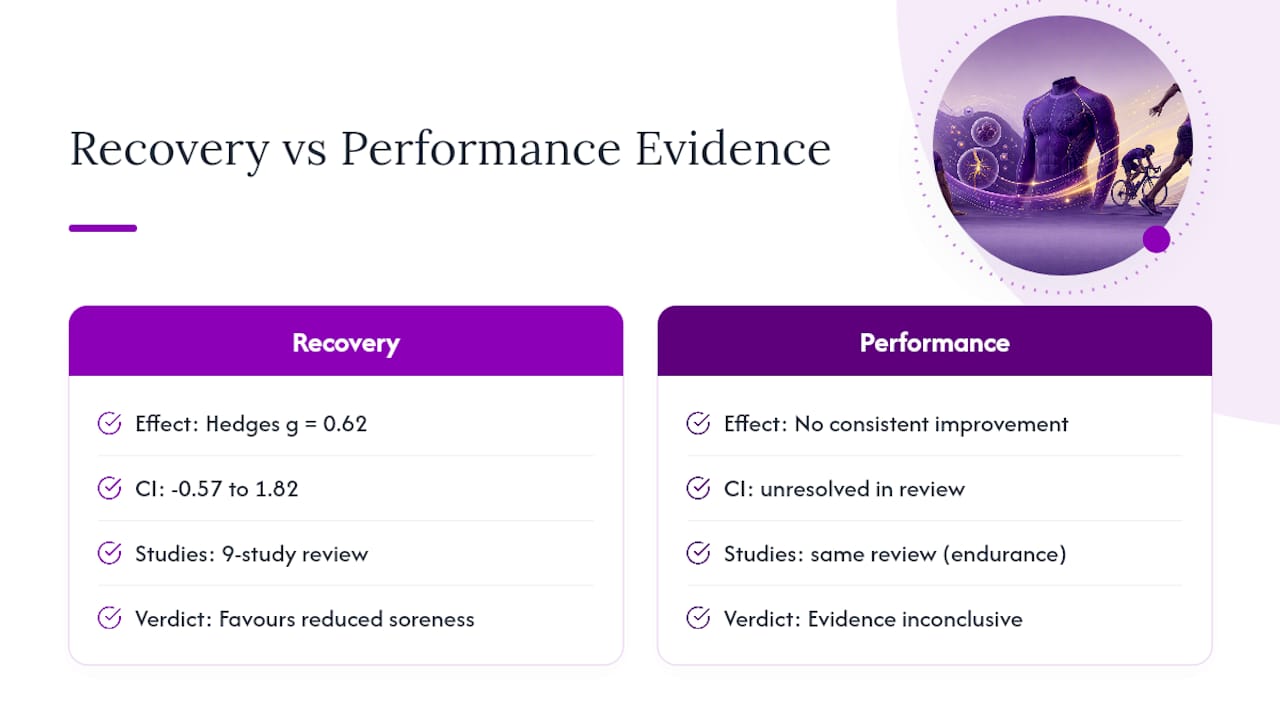
That uncertainty comes down to how differently studies are built. Pressure levels vary from garment to garment, timing ranges from immediately post-workout to 48 hours later, coverage runs from a compression sleeve to a full bodysuit, and participants range from untrained volunteers to competitive endurance athletes. Mixing all of that into one average is part of why performance claims stay shaky while recovery claims hold steadier ground.
How Compression Shirts Actually Work
Not all compression is built the same, and that distinction explains why results vary so much between studies. Athletic compression shirts typically apply uniform or targeted pressure across the torso and arms, built for comfort and support during movement. Medical-grade garments use a graduated pressure profile, tighter at the extremities and looser moving inward, engineered specifically to treat circulatory issues like venous insufficiency.
That pressure difference matters. In recovery contexts, the gentle squeeze from an athletic shirt can support venous return and help manage post-exercise swelling. During activity, the same pressure reduces how much soft tissue vibrates with each stride, which is likely behind the improved proprioception many wearers notice. Local skin temperature can also rise slightly under the fabric, tied to lower perceived soreness, though heart rate and oxygen consumption stay largely unchanged. That’s precisely why the mechanics support recovery and comfort far more convincingly than they support speed or endurance.
Who Should Be Careful With Compression Wear
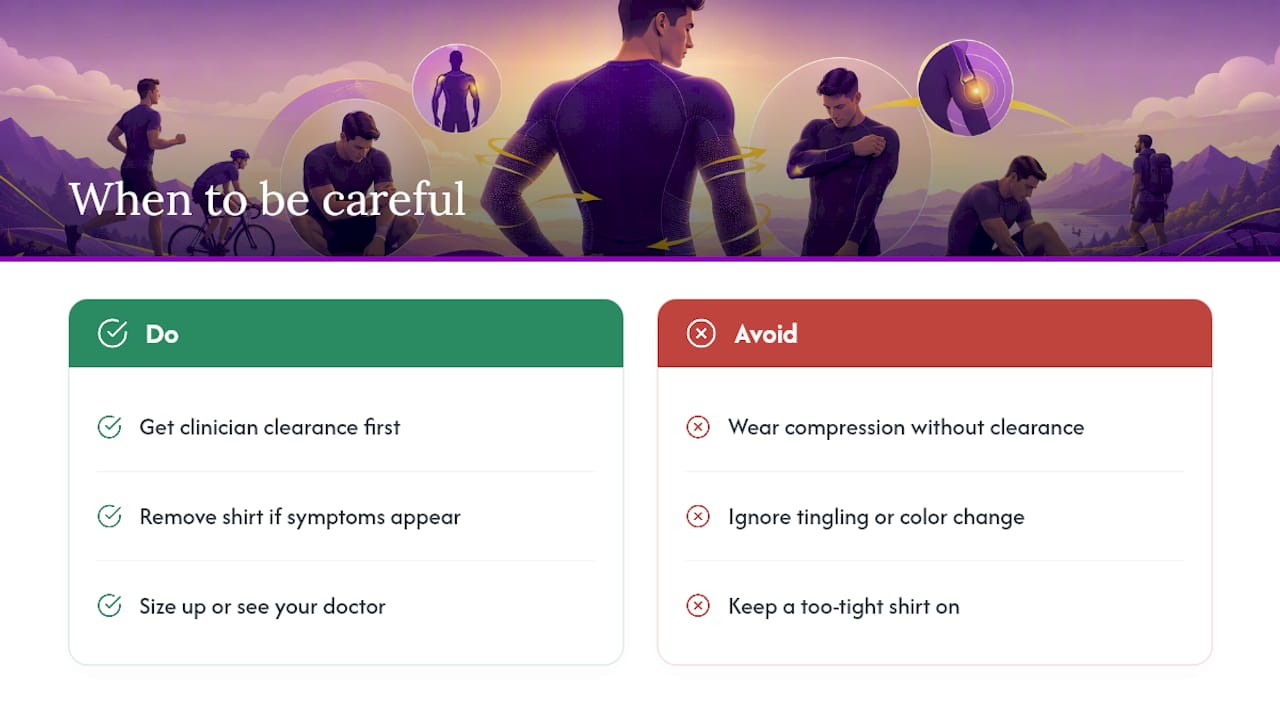
Compression isn’t risk-free for everyone. Anyone with peripheral arterial disease, severe vein disease, or a history of uncontrolled deep vein thrombosis should get clearance from a clinician before wearing compression garments, according to clinical guidance on compression and circulatory conditions.
Fit matters just as much as medical history. A shirt that’s too tight can cause numbness, skin discoloration, or restricted breathing across the chest. If you notice tingling, a color change in your skin, or trouble taking a full breath, take the shirt off and don’t put it back on until you’ve sized up or talked to a doctor.
Buying and Fitting a Compression Shirt That Actually Works
A compression shirt only delivers on its benefits if the fit and fabric are right. Here’s how to check before you commit:
- Test the squeeze. It should feel snug against your torso and arms without pinching, and you should be able to take a full, deep breath without restriction.
- Move through your full range. Raise your arms overhead, twist your torso, do a few squats. Nothing should bunch, ride up, or dig in.
- Match coverage to your goal. Targeted torso and upper-body compression works fine for most gym sessions; full-body coverage suits multi-day endurance events or long travel days, where reducing swelling and aiding between-session recovery matters more.
- Check the fabric blend. Look for sweat-wicking, durable elastane blends that hold their stretch wash after wash. The right workout fabric makes a bigger difference to comfort than most people expect.
- Wash it right. Skip the fabric softener and high heat. Both break down elastane fibers over time, which is how a compression shirt loses its squeeze months before it looks worn out. A quick gym-clothes washing guide covers the basics.
Pro Tip: Wear compression during travel days and immediately after your hardest training sessions, not necessarily during every workout. That’s when the recovery and swelling-reduction benefits actually kick in.
For general sizing logic that applies to any snug-fitting top, this graphic tee sizing guide walks through print scale and fit without over-restricting movement, useful context even outside compression wear specifically.
Mark’s Take on Compression Shirts
Compression earns a permanent spot in my gym bag for multi-day events and heavy training blocks, not because it makes me faster, but because I recover better between sessions. Treat it as a comfort and recovery tool, not a performance shortcut.
— Mark
Gear Up With Shirts Built for the Work, Not Just the Squeeze
If you’re shopping for something to actually wear to the gym rather than a medical device, the available t-shirt options lean into motivation and fit over any clinical promise. The SPICE UP YOUR WORKOUT T-Shirt brings a little personality to leg day, while the BRO, DO YOU EVEN LIFT? tee and the NO PAIN NO GAIN T-Shirt lean into the kind of gym humor that makes a tough session slightly more bearable.
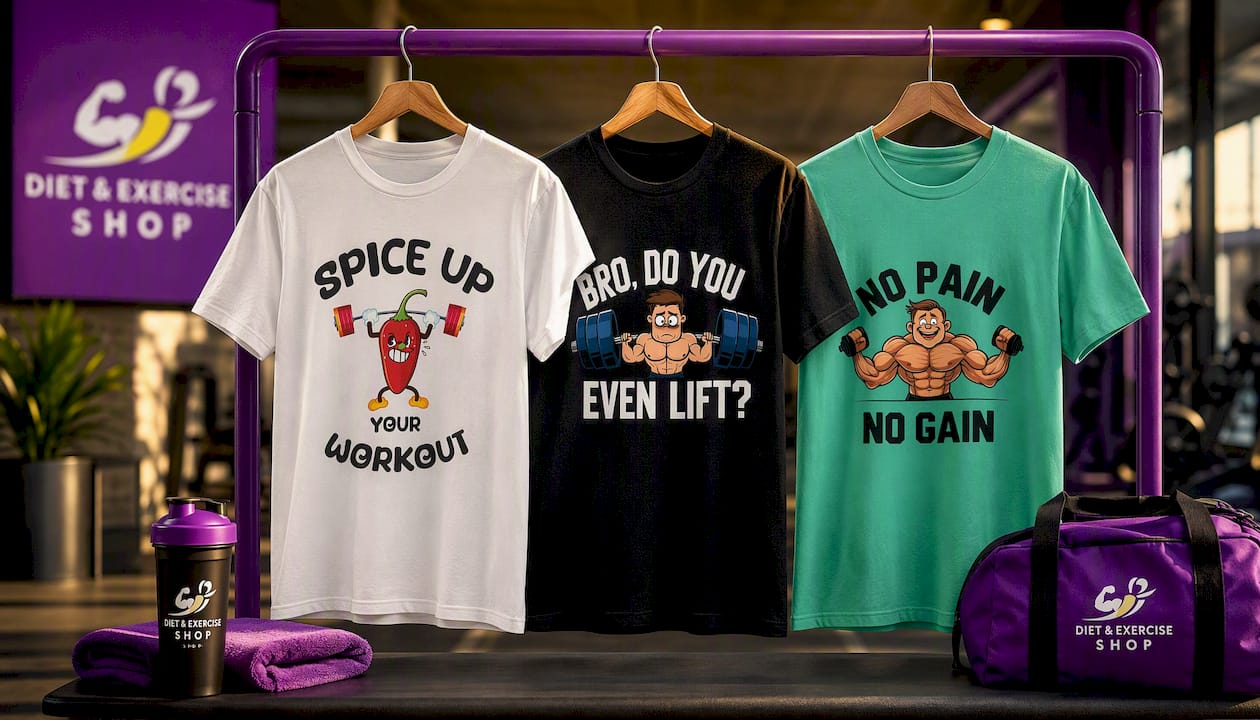
None of these are marketed as compression garments. What they offer instead is comfortable, durable apparel that fits the day-to-day reality of training. Check sizing charts and fabric details on the full apparel and gear selection before you order, and pick the shirt that matches your sense of humor as much as your workout.
Sources
- PubMed: systematic reviews/meta-analyses on compression garments (2025–2026)
- Comprehensive review concluding limited performance gains
- Frontiers 2026 systematic review on post-exercise compression in endurance athletes
FAQ
Are Compression Shirts Good for You?
For most healthy adults, yes. They ease muscle soreness and support recovery between training sessions, though people with circulatory conditions should check with a clinician first.
Do Compression Shirts Help You Lose Belly Fat?
No. Compression fabric creates a temporary, cosmetic slimming effect, but there’s no metabolic mechanism that burns fat from wearing it.
What Are the Disadvantages of Wearing Compression Clothing?
A poor fit can cause numbness, skin discoloration, or restricted breathing, and the performance benefits people expect (faster times, more endurance) generally don’t materialize.
Who Should Not Wear Compression Garments?
Anyone with peripheral arterial disease, severe vein disease, or a history of uncontrolled deep vein thrombosis should get medical clearance before use, since athletic compression differs from medical-grade compression built for those conditions.
Are Compression Shirts Worth It for Everyday Gym Use?
They’re worth it if recovery and comfort are your priority, especially around heavy training blocks or travel; just don’t expect them to boost your speed or endurance. Dietexerciseshop’s apparel lineup focuses on comfortable, motivating gym wear rather than performance claims either way.