
Glutamine Benefits: What's Proven and What Isn't
Glutamine supplementation is medically proven for exactly one thing: reducing complications in sickle cell disease, where the FDA has approved a pharmaceutical-grade formula called Endari for patients aged 5 and older. For nearly everything else people take glutamine for, including gut health, immune support, and workout recovery, the science ranges from “promising but inconsistent” to “no measurable benefit for healthy adults.” That gap between the marketing and the data is the whole story here.
If you already eat enough protein and you’re not dealing with a major illness, injury, or surgery, extra glutamine probably won’t do much. Cleveland Clinic’s medical summary states plainly that most healthy people already produce sufficient glutamine on their own. Where it gets interesting is in specific, high-stress physiological states, and in a handful of exercise contexts where the biology is plausible even though the human trial data are messy.
The clearest, best-documented benefit of glutamine isn’t in a gym or a green smoothie. It’s in a hospital, treating a genetic blood disorder that has nothing to do with fitness marketing.
Here’s where the evidence actually points, by category:
- Sickle cell disease: Strong, FDA-approved evidence for reducing acute complications.
- Gut health: Biologically plausible, moderate evidence in stressed or injured guts, weaker for healthy digestion.
- Immune support: Reasonable mechanistic support, but not a substitute for basic immune health habits.
- Exercise recovery: Mixed and inconsistent results in trials on healthy, well-fed athletes.
- Burns, critical illness, major surgery: Meaningful supporting evidence, though study quality varies.
Key Takeaways
Glutamine supplementation is proven for one FDA-approved use, sickle cell disease, while its benefits for gut health, immunity, and exercise recovery in healthy people remain inconsistent and often modest.
| Point | Details |
|---|---|
| One proven clinical use | Endari is FDA-approved for reducing sickle cell complications; other uses have mixed or limited evidence. |
| Diet usually comes first | Adequate total protein intake covers most healthy people’s glutamine needs without supplementation. |
| Stress states change the equation | Burns, major surgery, critical illness, and certain cancer treatments create conditionally essential demand. |
| Don’t self-treat serious GI symptoms | Persistent gut issues need clinical evaluation, not supplement guesswork. |
| Dietexerciseshop supports the fundamentals | Apparel like the TRUST THE PROCESS T-Shirt reinforces consistent training and nutrition habits, not a substitute for medical care. |
Table of Contents
- What Is Glutamine and What Forms Does It Come In?
- How Does Glutamine Work in the Body?
- What Does the Clinical Evidence Actually Show?
- Who Actually Benefits From Taking Glutamine?
- What Foods Contain Glutamine, and Should You Just Eat More Protein?
- How Much Glutamine Do Studies Use, and When Should You Take It?
- Is Glutamine Safe, and Who Should Avoid It?
- Should You Try Glutamine? A Decision Checklist
- Why the Gap Between Glutamine’s Reputation and Its Evidence Matters
- Gear Up for the Recovery Habits That Actually Matter
- Sources
- FAQ
What Is Glutamine and What Forms Does It Come In?
Glutamine is the most abundant free amino acid in the human body, found in high concentrations in skeletal muscle, blood plasma, and the lining of the gut. Under normal conditions, it’s classified as nonessential, meaning your body manufactures enough of it on its own without needing dietary supplementation.
That classification changes under stress. Glutamine becomes “conditionally essential” during severe injury, major surgery, burns, or critical illness, according to clinical stress physiology research. In those states, the body’s demand for glutamine outpaces what it can produce, and tissues that rely on it heavily, like the gut lining and immune cells, can become starved for fuel.
You’ll see glutamine sold in a few common forms. Free-form L-glutamine powder is the most widely available consumer product, usually unflavored and mixed into water or shakes. Capsules offer the same compound in a more portable format. Then there’s Endari, the pharmaceutical-grade oral powder formulation the FDA approved specifically for sickle cell disease, which is dosed and monitored very differently from a scoop of powder bought online. Clinical trials studying critical illness or surgical recovery typically use standardized, higher-purity formulations, not the same product sitting on a supplement store shelf.
Beyond illness and injury, some cancer treatment contexts also increase glutamine demand, since chemotherapy and radiation can damage the same rapidly dividing gut and immune cells that rely on this amino acid as fuel.
How Does Glutamine Work in the Body?
Glutamine’s biological role comes down to three main jobs: feeding cells that divide and work hard, shuttling nitrogen around the body, and acting as a building block for one of your most important antioxidants.
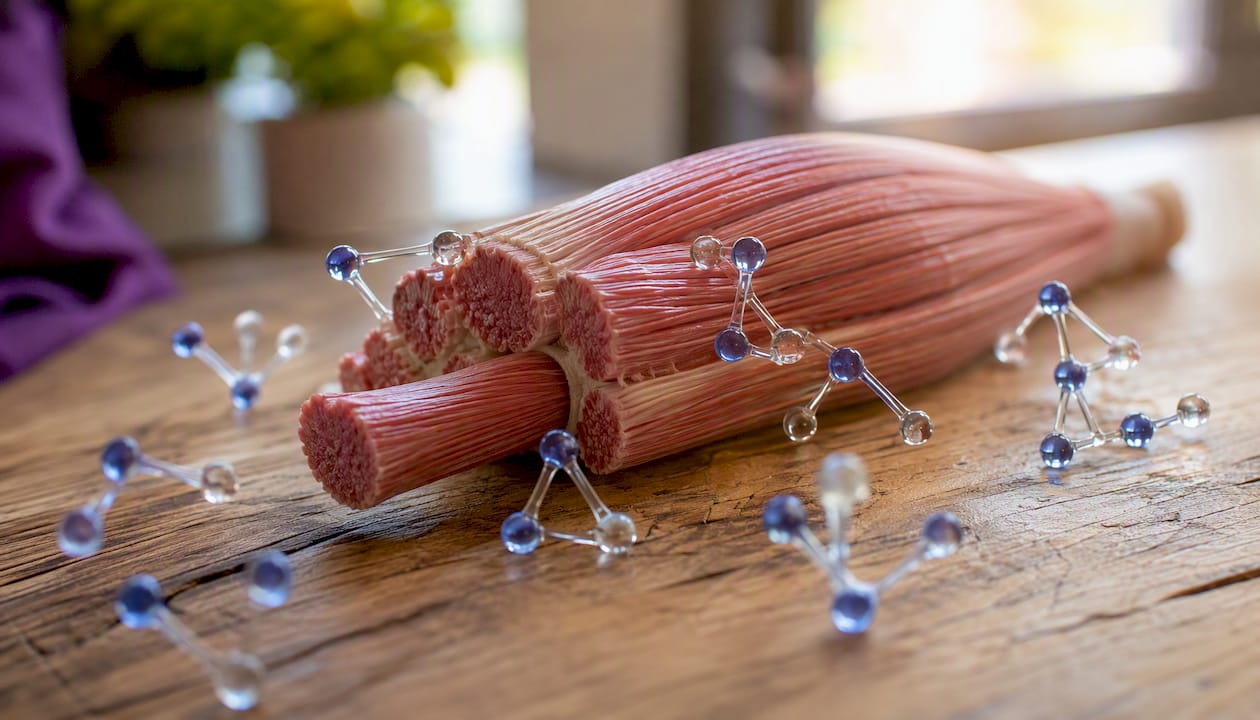
Enterocytes, the cells lining your small intestine, use glutamine as a primary fuel source, arguably more important to them than glucose. Immune cells, including lymphocytes and macrophages, also burn through glutamine at a high rate, especially during infection or injury when they’re multiplying and mounting a response. Glutamine additionally serves as a nitrogen transporter between organs and acts as a precursor for glutathione, the body’s master antioxidant, which matters for managing oxidative stress and supporting nitrogen and amino acid metabolism more broadly.
For exercise specifically, the mechanistic story involves several overlapping pathways. Intense training can transiently increase intestinal permeability, sometimes called “leaky gut,” and some preclinical and clinical work suggests glutamine may reduce that permeability and support mucosal integrity after strenuous exercise, though those improvements don’t consistently show up as better performance. Glutamine has also been studied for its interaction with inflammatory markers, redox balance, and mTOR-related signaling pathways tied to muscle protein synthesis, but a 2026 narrative review found the mechanisms are biologically plausible while the actual human trial outcomes remain inconsistent.
Think of it as three parallel supply lines: glutamine as enterocyte fuel supports gut barrier integrity; glutamine as lymphocyte fuel supports immune response capacity; and glutamine stored in skeletal muscle acts as a nitrogen reservoir the body draws on during stress. When any one of those supply lines gets stretched thin, that’s when supplementation has the clearest rationale.
Biological plausibility isn’t the same as clinical proof. Glutamine’s mechanisms make sense on paper in a dozen contexts, but that doesn’t mean the trials back up all of them equally.
What Does the Clinical Evidence Actually Show?
Evidence quality varies enormously depending on which benefit you’re asking about, and lumping them together is exactly how supplement marketing overstates the case. Here’s how the major use cases stack up against each other.
| Use case | What trials show | Typical dose used in studies | Strength of evidence |
|---|---|---|---|
| Sickle cell disease | Reduced frequency of pain crises and hospitalizations | Prescription-dosed Endari, weight-based | Strong (FDA-approved) |
| Gut barrier/permeability | Reduced permeability markers after exercise or illness | Varies widely across studies | Moderate, inconsistent translation to performance |
| Immune function | Supports lymphocyte fuel supply; mixed infection-rate data | Varies by clinical setting | Moderate in hospital settings, weak in healthy adults |
| Burns/surgery/critical illness | Some reduction in infection risk and complications | Higher clinical doses, often IV in ICU settings | Moderate, heterogeneous study quality |
| Athletic performance (healthy adults) | Generally no consistent muscle or performance gains | 5 to 20 grams daily in most trials | Weak |
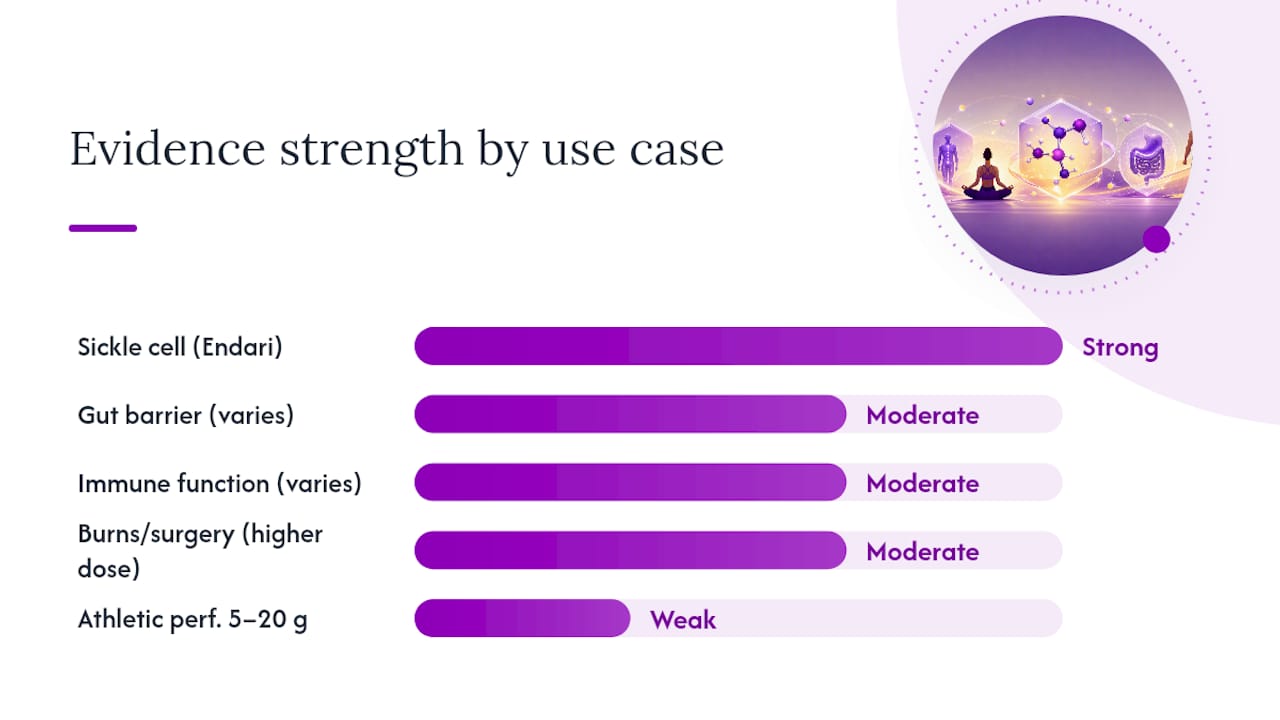
The sickle cell data stands apart because it led to actual FDA approval, the highest bar of clinical evidence a supplement-adjacent compound can clear. Endari reduces the frequency and severity of acute pain crises in patients five and older, a benefit built on controlled trial data strong enough to earn regulatory sign-off.
The picture for hospitalized patients with burns, major surgery, or critical illness is more mixed but still meaningful. Some clinical nutrition reviews report reduced infection risk and complication rates in these settings, though study heterogeneity, different doses, different patient populations, and different delivery methods makes it hard to draw one clean conclusion.
For healthy athletes chasing muscle mass or performance gains, the evidence just doesn’t hold up. Multiple reviews summarized by clinical sources conclude that glutamine supplementation doesn’t reliably boost muscle mass or performance in well-fed, healthy trainees. If you’re eating adequate protein and training normally, additional glutamine supplements rarely provide measurable benefits.
Who Actually Benefits From Taking Glutamine?
The people most likely to see a real benefit from glutamine supplementation are dealing with a body under significant physiological stress, not a body doing normal training and recovery.
Conditionally essential states where clinicians commonly consider glutamine include major burns, extensive surgery, critical illness in an ICU setting, prolonged sepsis, and certain oncology treatment contexts where chemotherapy or radiation damages the gut lining. Sickle cell disease sits in its own category entirely, since it’s the one use case with a dedicated, FDA-approved medication rather than an off-the-shelf supplement.
Healthy athletes and casual exercisers are a different story. If you’re training hard but eating sufficient protein and calories, and you’re not recovering from surgery, illness, or a major injury, you’re unlikely to notice a meaningful difference from adding glutamine to your routine. The Cleveland Clinic’s guidance is direct about this: adequate diet already covers most people’s needs.
Pro Tip: If you’re wondering whether your situation qualifies as “conditionally essential,” think in terms of clinical settings, not workout intensity. A hospital admission, a scheduled major surgery, or a cancer treatment plan is a reasonable trigger to ask your doctor about glutamine. A tough training block generally is not.
What Foods Contain Glutamine, and Should You Just Eat More Protein?
For the vast majority of people, the smartest path to adequate glutamine is a diet-first strategy built around total protein intake, not a targeted glutamine supplement.
High-protein foods across the board supply meaningful amounts of glutamine, since it’s abundant in muscle tissue and dairy proteins. Meat, poultry, fish, eggs, dairy products, and legumes all contribute. The key point clinicians emphasize is that hitting your overall protein target matters more than chasing glutamine specifically, since your body pulls this particular amino acid from a wide pool of dietary protein sources rather than needing it delivered in isolation.

| Food category | Role in a diet-first strategy |
|---|---|
| Meat and poultry | Reliable, complete protein source contributing to overall amino acid pool |
| Dairy (milk, yogurt, cottage cheese) | Convenient, protein-dense option often used around workouts |
| Eggs | Complete protein with high bioavailability |
| Legumes (beans, lentils) | Plant-based protein option, useful alongside grains for completeness |
| Fish and seafood | Protein source with additional benefits from omega-3 fatty acids |
If you’re consistently falling short on total protein or calories, particularly during heavy training blocks, the fix is usually improving your overall diet before reaching for a specialty amino acid. Reviewing high-protein snack options or what to eat around workouts solves this problem for most people more effectively than an isolated supplement ever will. Supplementation becomes worth discussing with a clinician only when diet alone can’t meet elevated demand, which is exactly the conditionally essential scenario described above.
How Much Glutamine Do Studies Use, and When Should You Take It?
Dosing in the research varies a lot depending on what’s being studied, which is part of why it’s hard to give one universal recommendation.
Exercise and gut-permeability studies commonly use daily doses somewhere in the 5 to 20 gram range, often split across the day. Clinical settings treating burns, critical illness, or surgical recovery frequently use higher doses, sometimes delivered intravenously under direct medical supervision rather than as an oral powder. Endari, the FDA-approved sickle cell treatment, follows a weight-based prescription dosing schedule set by a physician, which is a completely different protocol from anything you’d find on a consumer supplement label.
- Free-form L-glutamine powder is the most common consumer product and mixes easily into water, shakes, or juice.
- Capsules offer the same compound with less flexibility on dose but more convenience for travel.
- Some recovery formulas combine glutamine with other amino acids like BCAAs, though evidence for these combinations specifically is thinner than for glutamine alone.
- Endari remains prescription-only and isn’t interchangeable with over-the-counter products.
Timing evidence is genuinely limited. Some preclinical work supports taking glutamine before exercise for gut-protective effects, while other research points toward post-exercise timing for recovery-related outcomes, but human trials are too inconsistent in design to endorse one universal protocol. That variability in timing and dosing across studies is likely a major reason trial results look so inconsistent in the first place. If you’re curious how glutamine timing fits alongside other supplements, pre-workout timing strategies cover the broader landscape.
Pro Tip: When you’re reading a supplement label, check whether the product lists glutamine as the sole active ingredient or buried in a proprietary blend. If it’s blended, you often can’t tell how much glutamine you’re actually getting, which makes it hard to compare against the doses used in actual research.
Is Glutamine Safe, and Who Should Avoid It?
Oral glutamine at the doses studied in most trials has a generally favorable safety profile, with side effects in trials and case series typically limited to mild gastrointestinal symptoms like bloating or nausea.
The more serious caution involves cancer. Glutamine fuels rapidly dividing cells, which is exactly why it helps gut and immune cells recover from stress, but that same property means it can theoretically also fuel rapidly dividing cancer cells. This is why glutamine supplementation in cancer patients requires direct clinician oversight rather than casual self-supplementation, even though some oncology treatment contexts do involve glutamine use under medical guidance to protect gut lining during chemotherapy.
People with severe kidney or liver disease also need clinician oversight before supplementing, since impaired organs handle nitrogen metabolism differently, and glutamine is directly involved in nitrogen transport throughout the body. Pregnant women should discuss any amino acid supplement with their doctor before starting one, given the limited safety data specific to pregnancy. And if you’re dealing with persistent gastrointestinal symptoms, don’t reach for glutamine as a self-diagnosis tool. Medical experts are clear that glutamine “may support enterocyte health but should not delay evaluation” for conditions like inflammatory bowel disease, celiac disease, or an underlying infection. A supplement is never a substitute for a real diagnosis when your gut symptoms won’t go away.
If you’re taking other supplements or medications alongside glutamine, mention it to your doctor or pharmacist, particularly if you’re managing a chronic condition, since interaction data for amino acid supplements is generally thinner than for pharmaceutical drugs.
Should You Try Glutamine? A Decision Checklist
Before adding glutamine to your routine, it helps to run through a short, honest checklist rather than just following supplement marketing.
- Review your current diet and total protein intake. If you’re not consistently hitting adequate protein, fix that first before adding a single amino acid.
- Identify whether you fall into a clinical risk category. Major surgery, burns, critical illness, prolonged sepsis, certain cancer treatments, or sickle cell disease all change the calculus significantly.
- Consult a clinician before starting, especially if you have cancer, kidney disease, liver disease, or are pregnant. These aren’t situations for self-experimentation.
- Set a defined trial length and specific markers to track, rather than supplementing indefinitely without evaluation.
- Never use glutamine to self-treat persistent or serious GI symptoms. Get those checked by a doctor instead of assuming a supplement will resolve them.
Pro Tip: Track something concrete during any trial period, whether it’s frequency of GI discomfort, infection rates if you’re in a high-risk category, or straightforward recovery markers like soreness duration. Vague “I feel better” impressions are the easiest way to convince yourself a supplement is working when it isn’t.
Why the Gap Between Glutamine’s Reputation and Its Evidence Matters
The most frustrating thing about glutamine, from where I sit, is watching a genuinely important clinical compound get flattened into “gut health powder” marketing copy. Endari earned FDA approval through real trial data for a serious genetic blood disorder. That’s a big deal. It gets diluted every time a supplement label implies the same rigor applies to a scoop of powder marketed for post-workout soreness.
The honest position is that glutamine’s biology is fascinating and well understood, while its clinical benefit for healthy, well-fed people training normally is thin at best. That’s not a reason to dismiss it. It’s a reason to be specific about who it’s actually for. Dietexerciseshop sells fitness apparel and educational resources because we believe in evidence-based training and recovery habits, but we’re not going to pretend a supplement review is a substitute for your doctor’s judgment on a real clinical question. If your gut symptoms persist, or you’re facing surgery, illness, or a cancer diagnosis, that conversation belongs with a clinician, not a product label. For everyone else, the highest-leverage move remains what it’s always been: eat enough protein, train consistently, and recover deliberately.
Gear Up for the Recovery Habits That Actually Matter
While you’re sorting out what’s proven and what’s marketing hype, the daily habits around training, protein intake, and recovery consistency are still where most people leave the most gains on the table. Dietexerciseshop built its apparel line around exactly that mindset: gear that keeps the message in front of you every time you get dressed for the gym.
The TRUST THE PROCESS T-Shirt is a straightforward reminder that consistency, not a single supplement, drives long-term results, and the MEAL PREP & MUSCLE REPS Hoodie ties together the two habits that actually move the needle: eating with intention and showing up for your training. Neither one replaces a clinician’s advice about glutamine or anything else, but both make a solid daily nudge toward the fundamentals this article keeps circling back to. Browse the full hoodie collection or check out the t-shirt lineup to find a piece that fits your routine, and place an order today to get it in rotation before your next training block starts.
Sources
- FDA approves new treatment for sickle cell disease
- PubMed: glutamine becomes conditionally essential in stress
- Glutamine - Cleveland Clinic
- Glutamine Supplementation and Exercise: A Narrative Review of Biochemical Mechanisms and Timing Strategies
- PMC article on glutamine and intestinal/immune outcomes
These sources cover the clinical spectrum from FDA regulatory decisions to hospital-based reviews, but none of them replace a conversation with your own doctor about your specific health situation.
FAQ
What happens if you take glutamine every day?
For most healthy adults, daily glutamine at studied doses appears to be well tolerated, with mild GI symptoms being the most commonly reported side effect. It doesn’t reliably produce noticeable changes in muscle mass or performance for people already eating adequate protein.
What foods are high in glutamine?
Meat, poultry, fish, eggs, dairy products, and legumes all contribute meaningful glutamine as part of their overall protein content. Hitting your total daily protein target matters more than targeting glutamine-rich foods specifically.
Who needs to take glutamine?
People in conditionally essential states, such as major burns, extensive surgery, critical illness, prolonged sepsis, or certain cancer treatment contexts, are the clearest candidates, along with sickle cell disease patients using the FDA-approved Endari formulation. Healthy, well-fed athletes generally don’t need it.
When should you take glutamine?
Evidence on timing is limited and inconsistent; some studies suggest pre-exercise dosing for gut-protective effects while others favor post-exercise timing for recovery, but no single protocol is well established. Clinical uses like Endari follow a physician-directed dosing schedule rather than a workout-based timing strategy.