

200–300 Calorie Muscle Gain Meal Plan for Lifters, Easy Weekly Prep
For most lifters, a muscle gain meal plan is a small calorie surplus of roughly 200 to 300 calories a day, paired with 1.6 to 2.2 g of protein per kg of bodyweight, spread across repeatable meals. Add three meals and one or two snacks you can eat on autopilot for weeks, and you have the entire foundation. Everything else, timing, supplements, food choices, is refinement.
TL;DR:
- A muscle gain plan typically involves a small daily calorie surplus of 200 to 300 calories combined with 1.6 to 2.2 grams of protein per kilogram of body weight.
- Protein intake should be spread evenly across three to four meals, with typical targets around 40 grams per meal for most lifters, to maximize muscle synthesis.
- Track weight progress over two-week averages and adjust calories by 200 if weight stagnates or increase if gaining too fast without strength gains.
- Prioritize whole foods like chicken, fish, rice, and vegetables, but include liquid calories like smoothies and supplements such as creatine and protein powder as needed.
- Consistent training with progressive overload and adequate recovery are crucial, as nutrition alone cannot optimize muscle growth.
Table of Contents
- How Do You Set Calories and Macros for Muscle Gain?
- How Much Protein Do You Need to Build Muscle?
- What Does a Sample Muscle-Building Meal Plan Look Like?
- How Do You Meal Prep to Hit Your Calories Reliably?
- When Should You Eat Around Your Workouts?
- How Do You Know When to Adjust Your Calories?
- Who’s Behind This Muscle-Building Guide?
- An Editorial Note on Realistic Muscle Gain
- Ready for a Fully Mapped-Out Muscle Gain Plan?
- Where This Plan’s Numbers Come From
- Sources
- FAQ
How Do You Set Calories and Macros for Muscle Gain?
Start by estimating maintenance calories based on your activity level, then add 200 to 300 calories on top. That smaller surplus limits fat gain while still giving your body the raw material to build tissue, a more forgiving approach than the old “eat everything” bulking mentality.
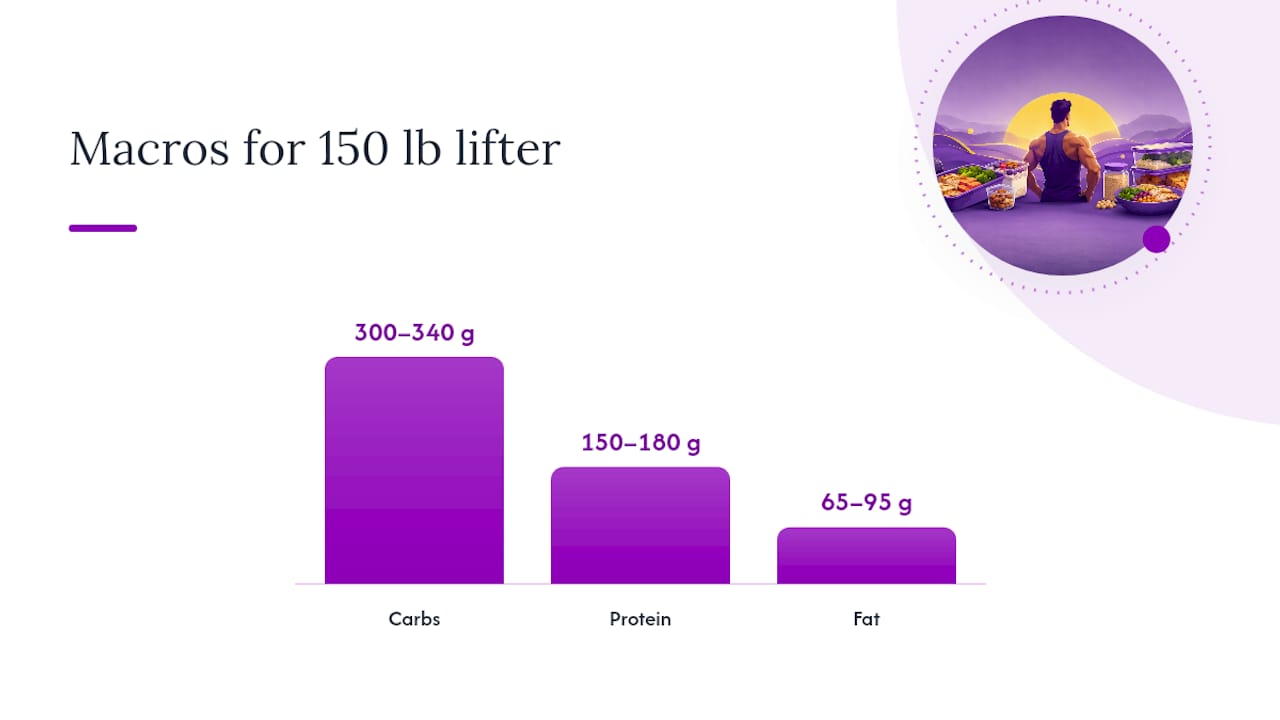
Once you have a calorie target, split it into macros. Protein comes first because it drives repair and growth. Carbs fuel the actual training sessions. Fat should sit at 20 to 35% of total calories to support hormones and keep you satisfied between meals.
Here’s what that looks like in grams for two common body weights:
- A 150 lb lifter eating 2,700 calories: about 150 to 180g protein, 300 to 340g carbs, 65 to 95g fat.
- A 180 lb lifter eating a typical muscle gain calorie level would start with protein, carbs, and fats adjusted according to the general guidelines for muscle growth.
These are starting points, not fixed rules. Adjust carbs and fat around your protein target once you see how your body responds over a couple of weeks.
How Much Protein Do You Need to Build Muscle?
The USADA recommends 1.6 to 2.2 g of protein per kg of bodyweight daily, or roughly 0.7 to 1.0 g per pound, to support muscle repair and growth. Most lifters do well landing at 1.6 to 2.0 g/kg. Going higher rarely hurts, but it also rarely helps once you’re already in that range.
Protein target: A 170 lb (77 kg) lifter aiming for protein near the supported range needs to split protein intake evenly across meals.
That breaks down into food you can actually picture on a plate:
- One chicken breast (6 oz) delivers about 40g.
- A cup of Greek yogurt provides about 20 to 25g.
- A standard whey shake covers 24 to 30g.
- Two whole eggs plus egg whites land around 20g.
Total daily protein matters more than perfect timing, but the International Society of Sports Nutrition’s guidance on spreading protein across three to four meals supports muscle protein synthesis more reliably than stuffing it all into one meal.
What Does a Sample Muscle-Building Meal Plan Look Like?
Here’s a full day for a 175 lb lifter targeting a 2,900 calorie surplus day:
- Breakfast: Three eggs plus two whites, one cup oats, one banana, one tablespoon peanut butter.
- Lunch: Six ounces grilled chicken, one and a half cups rice, roasted vegetables, one tablespoon olive oil.
- Snack: Greek yogurt with berries and a handful of granola.
- Dinner: Six ounces lean beef or salmon, one large sweet potato, steamed broccoli.
- Post-workout: Whey shake with milk and a rice cake.
That single day covers protein, carbohydrates, and fat amounts that align with a typical muscle gain plan above maintenance calories.
For the week, repeat two or three protein sources and one or two carb bases so grocery shopping and cooking stay simple:
- Chicken and beef or salmon rotate as the main proteins.
- Rice and potatoes rotate as the main carbs.
- Vegetables rotate based on what’s fresh or on sale.
Plant-forward swap: replace chicken with tofu, tempeh, or a lentil and rice bowl, and lean on a plant-based protein blend to close any protein gap. Gluten-free lifters can swap oats for certified gluten-free oats or rice-based cereal without losing any nutrition value.
Grocery list for the week: eggs, oats, chicken, beef or salmon, rice, sweet potatoes, mixed vegetables, Greek yogurt, whey or plant protein powder, peanut butter, and berries. Check out high-protein snack ideas if you need backup options between meals.
How Do You Meal Prep to Hit Your Calories Reliably?
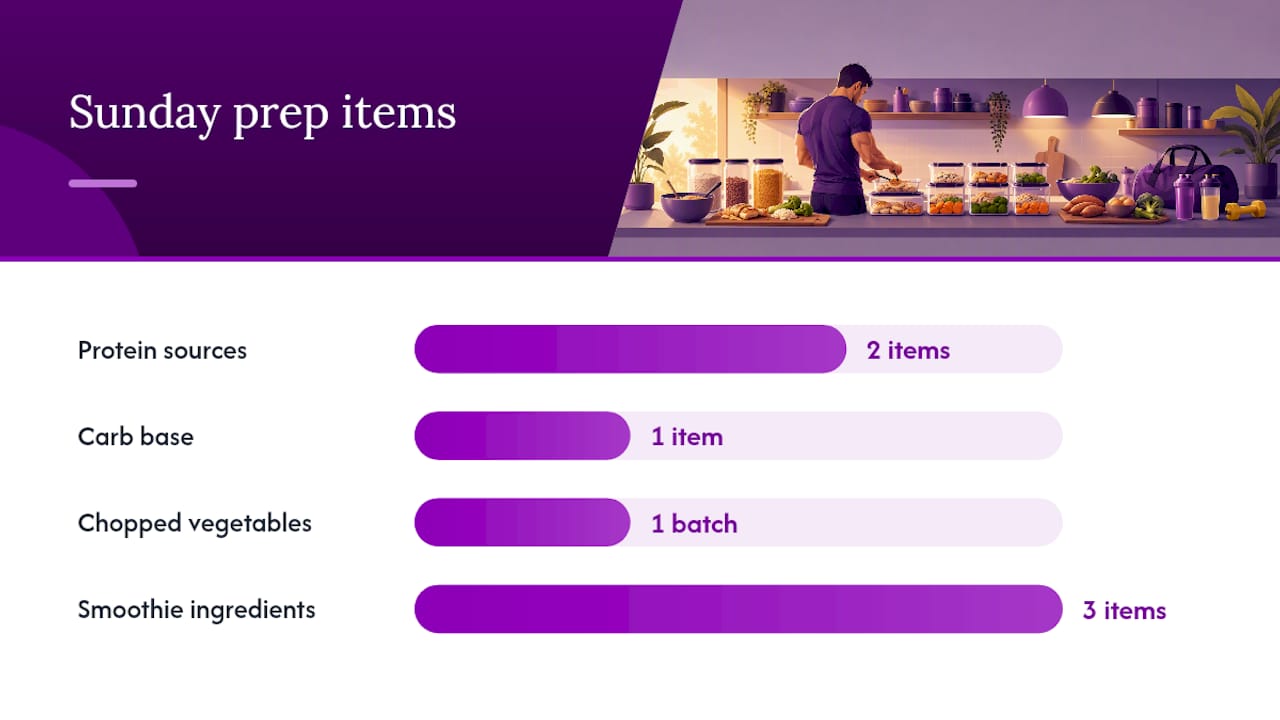
Pick one day, usually Sunday, and cook two protein sources, one carb base, and a big batch of chopped vegetables. Portion everything into containers so lunch and dinner take five minutes, not thirty. Prep smoothie bags in advance too: fruit, spinach, and protein powder sealed and frozen, ready to blend.
When appetite is the problem rather than motivation, liquid calories close the gap faster than another plate of chicken. A smoothie packed with milk, oats, and nut butter can add 500 calories without making you feel stuffed the way solid food does.
Quick calorie add-ons worth keeping on hand:
- A tablespoon of olive oil over rice or vegetables adds 120 calories with zero extra volume.
- Nut butter on toast or in oats adds 190 calories per two tablespoons.
- Extra starch (an added half cup of rice) is cheap and easy to prepare in bulk.
For a deeper batch-cook system, the bulking meal prep guide walks through a full weekly rotation, and the weekly meal-prep system covers storage containers and reheating without drying out your protein.
Pro Tip: Cook rice and potatoes in bulk once, then split them between sweet and savory meals during the week; a boring carb base is what makes fast reheating possible.
When Should You Eat Around Your Workouts?
Eating a protein and carbohydrate meal one to two hours before and after training gives your muscles a practical edge for performance and repair, though your total daily protein intake still matters more than exact timing. A simple pre-workout option: rice with chicken. Post-workout: a shake with milk and fruit, or a full meal if your schedule allows it.
Two supplements have real evidence behind them:
- Creatine monohydrate is recommended in doses shown effective in research and is one of the most researched supplements for supporting strength and lean mass gains when paired with resistance training.
- Protein powder fills gaps when whole food falls short, not as a replacement for it.
Whole foods should cover the bulk of your intake. Check the protein powder guide or the broader bodybuilding supplement guide before adding anything else to your stack.
How Do You Know When to Adjust Your Calories?
Track your weight daily but judge progress by the two-week average, not any single day’s number, since water and food volume swing your weight far more than fat or muscle does.
- If you’re gaining 0.5 to 1 lb per week (adjust toward the lower end if you’re lighter, higher end if you’re heavier), stay the course.
- If the scale hasn’t moved in two weeks, add about 200 calories.
- If you’re gaining faster than 1 lb per week with no strength gains, cut about 200 calories.
- Track strength progress and recovery, not just the scale. Stalled lifts or poor sleep often show a problem before your weight does.
Progressive overload in your training is what turns those extra calories into muscle rather than fat; without it, a surplus mostly just adds body fat.
Who’s Behind This Muscle-Building Guide?
This guide comes from Mark, a contributor at Dietexerciseshop covering nutrition and training for muscle gain. An online store built around helping people improve diet and exercise through practical products: eBooks, courses, supplements, and gear. For readers who want a fully templated plan, the store’s eBook lineup, including MUSCLE GAIN SECRETS, POWER MASS BLUEPRINT, and THE 300 BODY, expands on everything covered here.
An Editorial Note on Realistic Muscle Gain
Aggressive bulking still gets glorified online, but a small, sustainable surplus beats a fast one for almost everyone chasing lean muscle rather than just a bigger number on the scale. Nutrition only pays off when training and recovery, including consistent sleep, stay just as consistent as the meals. If you have a medical condition or unusual dietary needs, a registered dietitian can tailor this further than any general plan can.
— Mark
Ready for a Fully Mapped-Out Muscle Gain Plan?
Following the sample day and weekly pattern above will get you real results, but if you want the guesswork removed entirely, eBooks hand you the exact meal plans and programming instead of making you build them yourself. MUSCLE GAIN SECRETS lays out templated meal plans and muscle-gain programming for lifters who want structure without the trial and error. POWER MASS BLUEPRINT pairs meal plans with progressive training templates for anyone chasing a structured mass-building program. THE 300 BODY blends nutrition with conditioning work for lifters who want muscle and performance together.

Try the sample plan in this guide for a week first. If it clicks and you want the next level of detail, start with the MUSCLE GAIN SECRETS eBook and build from there with the POWER MASS BLUEPRINT or THE 300 BODY once you know what your body responds to.
Where This Plan’s Numbers Come From
This plan draws on USADA’s protein guidance, the Dietary Guidelines for Americans, and peer-reviewed creatine research. Read the primary sources for deeper detail.
Sources
- USADA — When to consume protein for muscle growth
- PMC article on resistance training and nutrition
- Dietary Guidelines for Americans 2020–2025
- PubMed — Creatine and strength/muscle gains
FAQ
Can you still build muscle while taking metformin?
Yes. Metformin doesn’t block muscle growth, though some people report mild appetite changes, so tracking intake closely matters more if you’re on it.
What is the best diet for gaining muscle?
The best approach is a small calorie surplus (200 to 300 calories) with 1.6 to 2.2 g/kg protein daily, built around whole foods you’ll actually eat consistently.
What age makes it hardest to build muscle?
Muscle building gets harder past your mid-30s as natural anabolic hormone levels decline gradually, though consistent resistance training and adequate protein still produce real gains at almost any age.
What is the 3-3-3 rule for meal prep?
Definitions vary, but one common version means prepping three proteins, three carb bases, and three vegetables at the start of the week to mix and match into meals without repeating the exact same plate.
How much protein do I actually need per meal?
Aim for 30 to 50g of protein per meal, spread across three to four meals daily, which lines up with research supporting even distribution for muscle protein synthesis.