

Easy Protein Pancakes Recipe for a High-Protein Breakfast
The best protein pancake recipe for most people is a simple mix of oat flour, protein powder, eggs, and Greek yogurt — fluffy, filling, and ready in about 20 minutes with a high amount of protein per serving. If you need something even faster, a 3-ingredient version using one ripe banana, two eggs, and a scoop of protein powder takes under 10 minutes and still delivers a substantial amount of protein.
EatingWell notes that a high-protein breakfast increases satiety because protein digests more slowly than simple carbohydrates, which helps prevent mid-morning hunger. That’s the whole case for making these instead of regular pancakes.
Key Takeaways
The most reliable protein pancake recipe combines oat flour, one scoop of whey protein powder, eggs, and Greek yogurt for roughly 30–35 grams of protein per serving in about 20 minutes.
| Point | Details |
|---|---|
| Best base recipe | Oat flour + whey + eggs + Greek yogurt gives ~32 g protein per serving in 20 minutes. |
| Quick 3-ingredient option | Banana + 2 eggs + 1 scoop protein powder delivers ~25 g protein in under 10 minutes. |
| Powder-to-liquid rule | Plant-based powders need 2–3 extra tablespoons of milk; whey works at the base ratio. |
| Make-ahead storage | Freeze in single layers with parchment; reheat in a toaster or skillet for best texture. |
| Dietexerciseshop | The MEAL PREP & MUSCLE REPS Hoodie and nutrition eBooks support the meal-prep habit these pancakes fit into. |
Table of Contents
- What makes a great protein pancake recipe?
- What does each ingredient do, and can you swap it?
- How do you mix and cook these without ruining the texture?
- How does your protein powder choice change the texture?
- Quick protein pancake variations worth trying
- How do you calculate protein per serving?
- How to store and reheat protein pancakes for meal prep
- Troubleshooting common protein pancake problems
- Why does a high-protein breakfast actually work?
- An editorial perspective on what actually works
- Gear and resources that go with the meal-prep habit
- Sources
- FAQ
What makes a great protein pancake recipe?
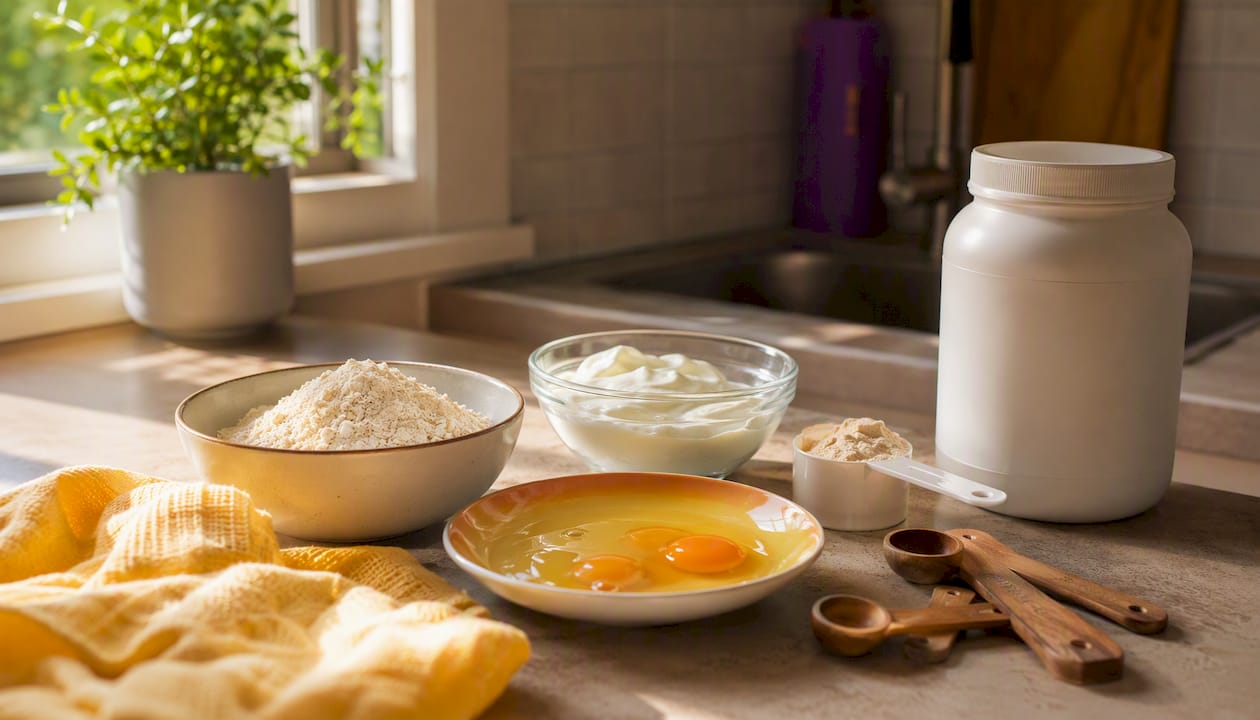
The foundation is a 1:1 ratio of protein powder to oat flour, plus a binder (eggs or egg whites) and a moisture source (Greek yogurt, cottage cheese, or milk). That combination gives you structure, tenderness, and enough protein to actually matter at breakfast.
Full ingredient list (serves 2)
- ½ cup (50 g) oat flour (or rolled oats blended fine)
- ½ cup (45 g) vanilla or unflavored whey protein powder (1 scoop)
- 2 large eggs
- ½ cup (120 g) plain Greek yogurt (whole-milk preferred)
- ¼ cup (60 ml) milk of choice
- 1 tsp baking powder
- ½ tsp vanilla extract
- Pinch of salt
- Cooking spray or a small pat of butter for the pan
For a larger batch (4 servings): double every ingredient. The batter holds in the fridge for up to 24 hours.
Step-by-step method
- Whisk the dry ingredients (oat flour, protein powder, baking powder, salt) in a medium bowl.
- In a separate bowl, beat the eggs, then stir in the Greek yogurt, milk, and vanilla until smooth.
- Pour the wet ingredients into the dry and fold until just combined. A few lumps are fine; overmixing tightens the batter.
- Let the batter rest for 3–5 minutes. Protein powder absorbs liquid quickly, so the batter will thicken slightly.
- Heat a non-stick skillet or griddle over medium-low heat. Lightly grease it.
- Pour about ¼ cup of batter per pancake. Cook until bubbles form across the surface and the edges look set, roughly 2–3 minutes.
- Flip once and cook another 60–90 seconds. Do not press down.
- Serve immediately or keep warm in a 200°F oven on a baking sheet.
Prep time: 5 minutes. Cook time: 15 minutes. Total: 20 minutes.
Nutrition per serving (2 pancakes, using whey protein and whole-milk Greek yogurt)
| Nutrient | Per serving |
|---|---|
| Calories | ~340 kcal |
| Protein | ~32 g |
| Carbohydrates | ~28 g |
| Fat | ~9 g |
| Fiber | ~3 g |
What does each ingredient do, and can you swap it?
Protein powder lacks gluten and cannot replicate the structural role flour plays in a standard pancake. That’s why every reliable high-protein pancake recipe pairs powder with at least one binder and one flour or starch.
Oat flour provides structure and a mild flavor. Swap it for almond flour (use the same amount; expect a slightly denser, nuttier result) or all-purpose flour if gluten isn’t a concern. For a fully gluten-free pancake, certified gluten-free oat flour works directly.
Eggs are the primary binder. Two whole eggs give richness and lift. You can replace one whole egg with two egg whites for a leaner pancake, though the texture gets slightly less custardy.
Greek yogurt adds moisture, tang, and protein without thinning the batter. Cottage cheese (blended smooth) works as a 1:1 swap and supplies fat and structure that keeps pancakes tender. For dairy-free, unsweetened coconut yogurt is the closest substitute; expect a slightly softer pancake.
Milk adjusts consistency. Almond milk is thinner, so start with 3 tablespoons and add more as needed.
Baking powder is the leavening agent. One teaspoon per cup of dry ingredients is the standard ratio; don’t skip it or the pancakes will be flat.
Quick substitution reference
| Swap | Effect on texture | Adjustment needed |
|---|---|---|
| Almond flour for oat flour | Denser, nuttier | None |
| Cottage cheese for Greek yogurt | Slightly fluffier, less tang | Blend smooth first |
| Egg whites only (4) for 2 whole eggs | Lighter, less rich | Add 1 tsp oil |
| Plant-based milk for dairy milk | Slightly thinner | Reduce by 1 Tbsp |
| Coconut yogurt for Greek yogurt | Softer, dairy-free | None |
How do you mix and cook these without ruining the texture?
Mixing order matters more than most recipes admit. Combining dry and wet ingredients separately before folding them together prevents overmixing, which is the fastest route to a rubbery pancake.
Blender vs. bowl: A blender is worth using when your protein powder is coarse or when you’re starting with whole rolled oats instead of oat flour. Blending emulsifies the powder into wet ingredients and grinds oats into a fine flour in one step, which cuts grittiness significantly. For a bowl method, sift the protein powder in with the dry ingredients to break up clumps before adding any liquid.
Cooking steps in detail
- Test the pan temperature with a small drop of water. It should sizzle and evaporate in about 2 seconds. Too fast means the heat is too high.
- Pour a test pancake (about 2 tablespoons of batter) first. If it browns in under 90 seconds, lower the heat.
- Cook at medium-low heat throughout. Protein pancakes brown faster than regular ones because of the sugars in the powder; high heat burns the outside before the center sets.
- Flip only when bubbles cover the surface and the edges look dry. Flipping too early causes tearing.
- After flipping, press nothing. Let the second side cook undisturbed.
Pro Tip: Beat two egg whites to soft peaks and fold them into the finished batter just before cooking. This adds air and produces noticeably fluffier pancakes, especially with plant-based protein powder, which tends to weigh the batter down.
To keep a batch warm without overcooking, place finished pancakes on a wire rack set over a baking sheet in a 200°F oven. Stacking them on a plate traps steam and makes them soggy.
How does your protein powder choice change the texture?
The type of powder you use is the single biggest variable in how these pancakes turn out. Whey protein generally creates softer pancakes, while plant-based powders absorb more liquid and can produce a denser, sometimes gritty texture unless you adjust the ratios.
Whey protein (concentrate or isolate) is the most forgiving option. It blends smoothly, doesn’t over-absorb liquid, and produces a tender crumb. Vanilla-flavored whey also reduces the need for added sweetener. For guidance on choosing a quality whey, the protein powder for muscle gain guide at Dietexerciseshop covers the key differences between isolate and concentrate.
Plant-based powders (pea, rice, hemp blends) absorb significantly more liquid. If you swap whey for a plant powder in this recipe, add an extra 2–3 tablespoons of milk and consider adding one extra egg white for structure. Blending the batter rather than hand-mixing helps considerably.
Collagen peptides don’t behave like either. They dissolve easily and add no bulk, so they can’t replace protein powder as the main protein source in a recipe. Use collagen as a supplement (one tablespoon stirred into the wet ingredients) alongside another powder or a high-protein dairy ingredient.
Pro Tip: Sift protein powder into your dry ingredients or blend it into the wet ingredients before combining. Protein powder that sits in clumps in the batter creates chalky pockets in the finished pancake.
Quick protein pancake variations worth trying
These short variants cover the most common situations: no flour in the house, low-carb goals, or a preference for no protein powder at all.
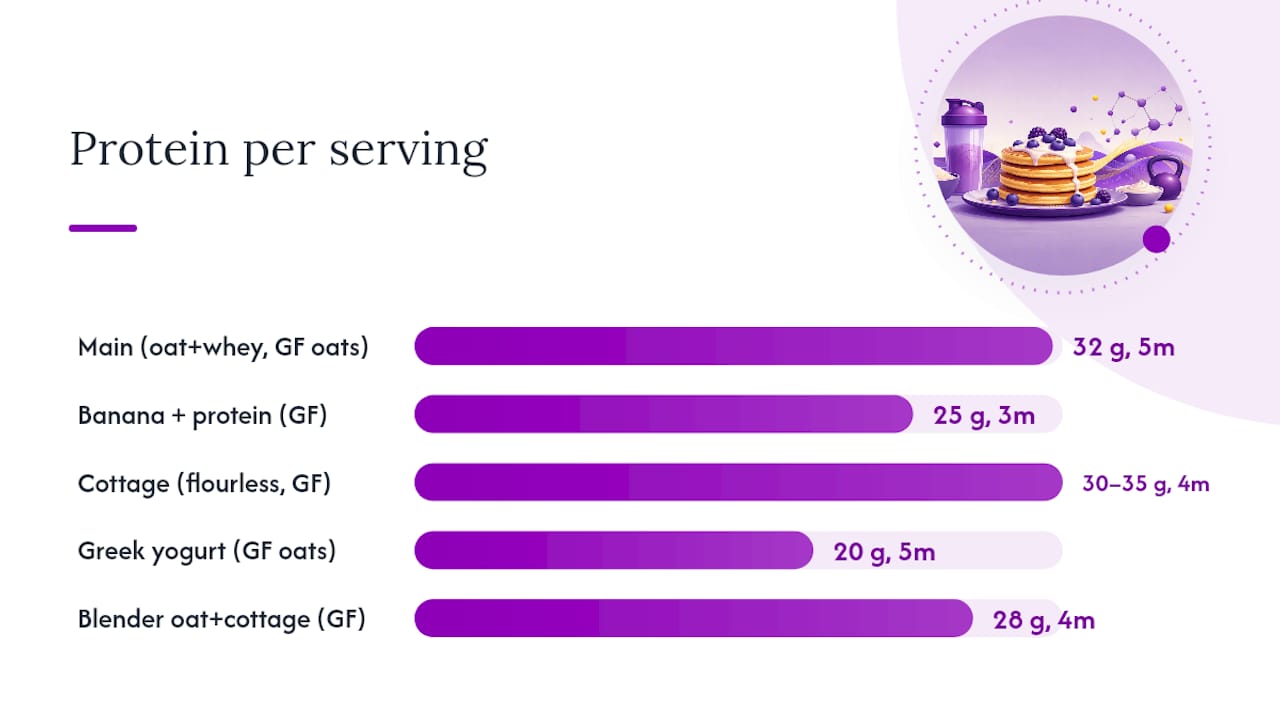
- 3-ingredient banana pancakes: Mash one ripe banana, add two eggs and one scoop of protein powder, stir, and cook. Expect thin, crepe-like pancakes with a naturally sweet flavor. Protein: roughly 25 g per batch. Gluten-free by default.
- Flourless cottage cheese pancakes: Blend ½ cup cottage cheese, two eggs, and one scoop of protein powder until smooth. Cook on medium-low. These are fluffier with no chalky aftertaste and work well for low-carb eating. Protein: roughly 30–35 g per serving.
- Greek yogurt and egg pancakes: Combine ½ cup Greek yogurt, two eggs, ¼ cup oat flour, and 1 tsp baking powder. The yogurt adds tenderness and moisture without protein powder. Protein: roughly 20 g per serving.
- Blender oat pancakes: Add ½ cup rolled oats, two eggs, ½ cup cottage cheese, one banana, and a scoop of protein powder to a blender. Blend 30 seconds and cook immediately. Consistently recommended for convenience and texture across top recipe sources. Dairy-free with coconut yogurt swap.
Variant comparison
| Variant | Approx. protein per serving | Prep time | Gluten-free? |
|---|---|---|---|
| Main recipe (oat flour + whey) | ~32 g | 5 min | With GF oats |
| Banana + egg + protein powder | ~25 g | 3 min | Yes |
| Cottage cheese + egg (flourless) | ~30–35 g | 4 min | Yes |
| Greek yogurt + egg + oat flour | ~20 g | 5 min | With GF oats |
| Blender oat + cottage cheese | ~28 g | 4 min | With GF oats |
How do you calculate protein per serving?
The simplest approach is to add up the protein contribution of each ingredient before cooking. For the main recipe (serves 2), the math looks like this:
- 1 scoop whey protein powder: ~24 g protein
- 2 large eggs: ~12 g protein
- ½ cup Greek yogurt: ~10 g protein
- ½ cup oat flour: ~7 g protein
- ¼ cup milk: ~2 g protein
Total for the batch: ~55 g protein, or roughly 27–28 g per serving. The nutrition table in the recipe card above shows ~32 g because whole-milk Greek yogurt and a full scoop of a higher-protein whey isolate push the number up. The range across tested recipes using cottage cheese or Greek yogurt runs 16–40 grams of protein per serving depending on portion size and added powder.
Macro comparison across variants
| Recipe | Calories | Protein | Carbs | Fat |
|---|---|---|---|---|
| Main (oat flour + whey) | ~340 kcal | ~32 g | ~28 g | ~9 g |
| Cottage cheese flourless | ~280 kcal | ~33 g | ~8 g | ~10 g |
| Banana + egg + powder | ~260 kcal | ~25 g | ~22 g | ~7 g |
To push protein higher without adding a full extra scoop of powder, stir in two tablespoons of cottage cheese or an extra egg white.
A high-protein breakfast supports satiety throughout the morning because protein digests more slowly than simple carbohydrates, keeping hunger signals quieter for longer. Aiming for 20–40 grams of protein at breakfast is a practical target for most active adults, with the higher end of that range suiting those focused on muscle gain or extended morning activity.
How to store and reheat protein pancakes for meal prep
Protein pancakes are one of the better breakfasts to batch-cook. They hold their texture well in the fridge and freeze without becoming gummy.
Refrigerator: Stack cooled pancakes with a small square of parchment paper between each one, then store in an airtight container. They keep well for up to 4 days. The parchment prevents sticking and makes it easy to grab one or two at a time.
Freezer: Lay cooled pancakes in a single layer on a baking sheet and freeze for 1 hour. Once solid, transfer to a zip-top freezer bag with parchment between layers. They keep for up to 3 months. Freezing them flat first prevents them from fusing into a solid block.
Reheating options:
- Toaster: 1–2 cycles on a medium setting. Produces the crispest edges.
- Skillet: Medium-low heat, 60–90 seconds per side with no added fat. Best for restoring a fresh-cooked texture.
- Microwave: 45–60 seconds on high, covered with a damp paper towel to prevent drying. Fastest, but the edges soften.
Pro Tip: Make a double or triple batch on Sunday. Freeze in portions of 2–3 pancakes per bag so you can pull exactly one serving without thawing the whole batch. Pair with a high-protein meal prep system to keep your whole week on track.
Troubleshooting common protein pancake problems
- Dense or rubbery: Usually from overmixing or too much protein powder relative to flour. Fold the batter gently and stick to a 1:1 powder-to-oat-flour ratio. Adding one extra egg white also helps.
- Chalky or grainy texture: The powder didn’t fully incorporate. Sift it into the dry ingredients or blend the entire batter. Plant-based powders are the most common culprit.
- Batter too thick to pour: Protein powder keeps absorbing liquid after mixing. Add milk one tablespoon at a time until the batter pours like thick cream.
- Pancakes fall apart when flipping: The batter needs more binder. Add one egg or one tablespoon of nut butter. Also, wait until bubbles fully cover the surface before flipping.
- Burns outside, raw inside: Heat is too high. Drop to medium-low and cook longer. Test with a small 2-tablespoon pancake first to calibrate your stove.
- Flat with no rise: Check the baking powder. It loses potency after about 6 months. Replace it and add a pinch of baking soda if the batter contains an acidic ingredient like yogurt.
Adjust one variable at a time. Changing the heat, the liquid, and the flip timing simultaneously makes it impossible to know what actually fixed the problem.
Why does a high-protein breakfast actually work?
Protein slows gastric emptying, which means food stays in your stomach longer and hunger signals take more time to return. That’s the short physiological answer. The practical result is that a breakfast with 25–35 grams of protein tends to keep you full until lunch without the mid-morning energy crash that follows a carb-heavy meal.
For most active adults, 20–40 grams of protein at breakfast is a reasonable target. Those focused on muscle gain or training twice a day can aim toward the higher end. Protein pancakes made with whey, cottage cheese, or Greek yogurt hit that range without requiring a protein shake alongside them, which makes them a genuinely practical breakfast rather than a supplement delivery vehicle dressed up as food.
For readers who want to pair these pancakes with a post-workout meal plan, the best post-workout recovery foods guide covers what to eat around training to maximize the protein you’re already getting at breakfast.
An editorial perspective on what actually works
The main recipe in this article is the one worth making first. The oat flour, whey, and Greek yogurt combination is the most forgiving for new cooks and produces the most consistent texture across different stoves and pan types. The banana-egg-powder version is genuinely useful for busy mornings, but the texture is closer to a crepe than a pancake. That surprises people who expect something fluffy.
What most recipe guides understate is how much the protein powder brand matters. Two vanilla whey powders from different brands can behave completely differently in batter because of differences in sweetener type, lecithin content, and particle size. If a recipe that worked once suddenly produces gummy pancakes, the powder changed, not your technique.
The make-ahead angle is where these pancakes really earn their place in a weekly routine. A batch of 8–10 pancakes on Sunday takes about 30 minutes and covers four breakfasts. That’s a better return on kitchen time than almost any other high-protein breakfast option.
Gear and resources that go with the meal-prep habit
If you’re building a consistent meal-prep routine around high-protein breakfasts, the mindset matters as much as the recipe. The MEAL PREP & MUSCLE REPS Hoodie from Dietexerciseshop is made for exactly this kind of Sunday-session energy, and the TRUST THE PROCESS T-Shirt is a solid reminder that consistency beats perfection every week.
For readers who want to go deeper on nutrition strategy, the eBooks collection at Dietexerciseshop includes guides on meal prep, energy, and building healthy habits that pair naturally with a high-protein breakfast routine. Browse the full range and find the resource that fits where you are right now.
Sources
- EatingWell — High-protein breakfast / protein pancakes guidance
- WellnessMama — oat protein pancake and technique notes
- Love & Lemons — protein pancake notes on powders and blender use
- The Kitchn — Fluffy protein pancakes (no protein powder)
- Low Carb with Jennifer — cottage cheese / yogurt technique and high-protein results
FAQ
How do you make a simple protein pancake?
Mix ½ cup oat flour, one scoop of protein powder, two eggs, ½ cup Greek yogurt, and ¼ cup milk. Cook on medium-low heat for 2–3 minutes per side. The whole process takes about 20 minutes.
Are protein pancakes actually healthy?
Yes, when made with whole ingredients like oat flour, eggs, and Greek yogurt or cottage cheese. They deliver 25–35 grams of protein per serving, which supports satiety and muscle repair, with fewer refined carbohydrates than standard pancakes.
How do you make 3-ingredient protein pancakes?
Mash one ripe banana, add two eggs and one scoop of protein powder, stir until combined, and cook on medium-low heat. The batch yields roughly 25 grams of protein and takes under 10 minutes.
How do you make 2-ingredient protein pancakes?
Blend one ripe banana with two eggs until smooth and cook like standard pancakes. This version is naturally gluten-free and low in added sugar, though protein per serving is lower without added powder or yogurt.