

Where to Store Protein Powder So It Stays Fresh
Keep protein powder sealed in its original container, in a cool, dry, dark spot below about 70°F, and always scoop with a dry spoon. That single habit prevents the two things that ruin a tub fastest: moisture and heat. Proper protein powder storage isn’t complicated, but it does have a few non-negotiable rules.
Here’s the fast checklist:
- Temperature: Store around 70°F (21°C) or cooler. A pantry shelf beats a countertop next to the stove.
- Humidity: Keep it away from steam, sinks, and anywhere moisture collects.
- Light: Dark cabinets protect nutrients better than an open shelf under a window.
- Container: Original tub or an airtight, opaque container with the lid snapped tight after every use.
- Scoop: Always dry. A wet scoop introduces moisture that clumps powder and invites mold.
Pro Tip: If you buy the large bulk tubs, portion out two or three weeks’ worth into a smaller airtight container and leave the rest sealed. Don’t toss the silica gel packet, either. Move it to whichever container holds the bulk of your supply.
For reference, the FDA’s food-dating guidance, shelf-life research from NCBI, and Dietexerciseshop’s own supplement lineup all point to the same conclusion: powder stored correctly holds up far longer than most people assume.
Key Takeaways
Protein powder stays fresh longest when it’s sealed, kept below roughly 70°F, and protected from light and humidity, since heat and moisture are what actually cause spoilage.
| Point | Details |
|---|---|
| Store cool and dark | Keep powder in a pantry or cabinet away from stoves, fridges, and windows. |
| Skip the fridge | Refrigeration causes condensation, which leads to clumping and mold risk. |
| Watch the calendar loosely | Unopened tubs last one to two years; opened tubs are best used within six to twelve months. |
| Trust your senses | Rancid smell, discoloration, hard clumps, or mold mean it’s time to toss it. |
| Portion bulk buys | Split large tubs into smaller airtight containers to limit air exposure. |
Table of Contents
- Best Places for Protein Powder Storage in Your Home
- Should You Transfer Protein Powder Into a New Container?
- How Long Does Protein Powder Last, Opened and Unopened?
- Signs Your Protein Powder Has Gone Bad
- Storage Mistakes That Quietly Ruin a Tub
- What Food-Safety Experts Actually Say About Expiration Dates
- Keep Your Fitness Routine as Consistent as Your Storage Habits
- Why Most Storage Advice Undersells the Container Question
- Sources
- FAQ
Best Places for Protein Powder Storage in Your Home
A cabinet or pantry shelf, away from appliances that generate heat, is the right call. That’s not a guess. Whey protein concentrate can stay chemically stable for 12 to 18 months when kept near 70°F with moderate humidity, which is exactly the range a normal kitchen cabinet or bedroom closet delivers without any effort on your part.
Good spots:
- A pantry shelf, away from the oven
- A closet or cabinet in a climate-controlled room
- A cupboard on an interior wall, away from exterior heat
Bad spots:
- Above the refrigerator, where heat radiates upward
- Next to the stove or in a cabinet above it
- On a windowsill or countertop that gets direct sun
Heat and light speed up oxidation, the same chemical process that turns cooking oil rancid. Research on protein storage backs this up: studies on oxidation and Maillard browning show that elevated temperatures degrade both flavor and protein quality over time. Moisture is the other enemy, since it clumps the powder and creates the damp environment mold needs to grow.
Should You Transfer Protein Powder Into a New Container?
Keep it in the original packaging whenever you can. Manufacturers design those tubs and pouches to be opaque and reasonably airtight, and that combination already does most of the protective work for you. Transfer protein powder into a new container only when the original packaging is damaged, doesn’t reseal well, or you’re portioning out a bulk order.
If you do transfer it, follow a few rules:
- Use food-grade plastic or glass with a lid that seals completely, not a snap-top container with gaps.
- Choose opaque containers, since clear glass jars let light degrade the powder over time.
- Label the container with the original best-by date and the date you opened it.
- Move the silica packet into whichever container holds the largest share of the powder.
- Keep the scoop dry, or store it outside the container entirely if your kitchen runs humid.
Pro Tip: For bulk purchases, split the tub into a month’s supply in one airtight container and vacuum-seal or use an oxygen-absorbing packet for the rest. It’s the same logic people use for freezing flour, just applied to your protein stash. If you’re stocking up, browse Dietexerciseshop’s supplement selection for portion-friendly sizes.
How Long Does Protein Powder Last, Opened and Unopened?
Most dry protein powders carry a shelf life of one to two years unopened, thanks partly to additives like lecithin and maltodextrin that help stabilize the formula. Once you break the seal, that clock speeds up. Expect a properly stored, opened tub to stay good for roughly six to twelve months, though the exact number depends on the protein type and how well you’ve followed basic storage habits.
Not every powder ages the same way:
- Whey concentrate contains more fat than isolate, which makes it slightly more prone to oxidation over long storage.
- Whey isolate and hydrolyzed whey tend to hold up a bit longer thanks to lower fat content.
- Plant-based proteins (pea, rice, hemp) vary widely by brand and can be more sensitive to humidity because of how they’re processed.
The temperature factor: Accelerated shelf-life testing found that powders stored at 95°F and above degrade noticeably faster than those kept near room temperature. A tub left in a hot garage for a summer will not perform like one kept in a climate-controlled kitchen, even if both carry the same printed date.
Signs Your Protein Powder Has Gone Bad
Trust your nose before you trust the date on the label. If the powder smells rancid, sour, or noticeably “off” compared to when you opened it, that’s reason enough to stop using it.
Run through this checklist before you scoop:
- Smell: Rancid, sour, or musty odors mean the fats have oxidized.
- Color: Any darkening, yellowing, or uneven discoloration is a red flag.
- Texture: Hard, wet clumps (not the soft clumps that break apart easily) suggest moisture got in.
- Mold: Any visible spotting, fuzz, or unusual growth means the tub goes straight in the trash.
- Taste: A bitter or chemical aftertaste after mixing is often the first sign, even before smell or texture change.
One thing worth knowing: quality loss isn’t always obvious. A tub can lose some of its amino acid potency from oxidation without smelling bad yet, according to research on protein oxidation during storage. That’s another reason the temperature and humidity rules matter more than most people assume, even when a tub still looks and smells fine.
Storage Mistakes That Quietly Ruin a Tub
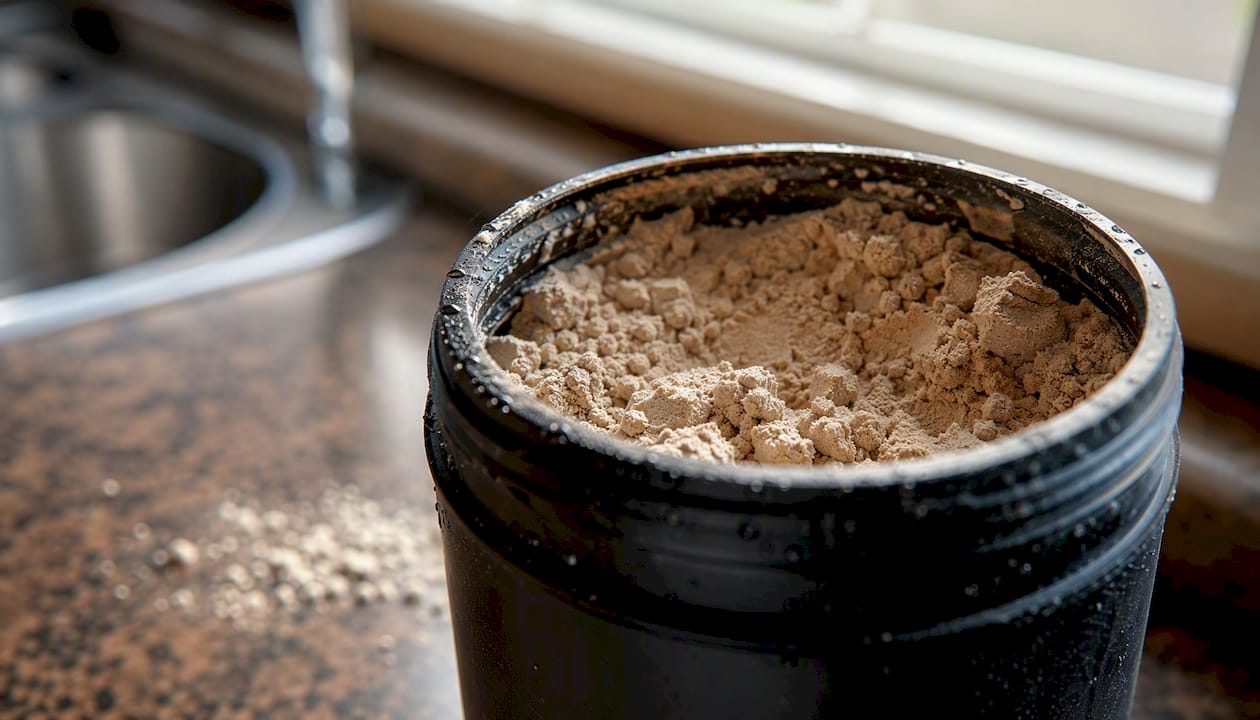
The most common mistake is refrigerating or freezing opened powder. Cold storage sounds protective, but pulling a cold tub into a warm, humid kitchen creates condensation, and that moisture is what triggers clumping and mold risk in the first place.
Other habits worth breaking:
- Storing the tub in a cabinet above the fridge or stove, where heat rises.
- Scooping with a wet spoon after mixing a shake.
- Leaving the lid loosely closed between uses.
- Transferring powder to a new jar and forgetting to move the silica packet along with it.
- Dipping a used scoop back into the tub after it’s touched liquid, which introduces bacteria.
Fix these and a tub will comfortably outlast its typical window with no extra effort.
What Food-Safety Experts Actually Say About Expiration Dates
Date labels on protein powder almost always signal quality, not an absolute safety cutoff. The USDA’s own food product dating guidance confirms that “best by” language exists to set quality expectations, not to warn of danger past a specific day. Infant formula is the one major exception, where dating does carry safety weight.
Manufacturers use “best by” dates primarily to indicate peak quality and to manage retail rotation, not because the product becomes unsafe on that date, according to the USDA’s food-dating explainer.
Healthline’s review of protein powder shelf life reaches a similar conclusion: the real risk with old powder is mild GI upset or an unpleasant taste from fat oxidation, not acute illness, as long as there’s no visible mold or rancid smell. The practical takeaway is simple. Check the tub with your senses first. Let the printed date guide your expectations, not dictate them outright.
If you want a deeper look at how protein type affects performance and shelf stability, the role of protein in muscle building covers how different formulations hold up over time.
Keep Your Fitness Routine as Consistent as Your Storage Habits
Storing protein powder correctly is a small habit that protects a real investment, especially if you’re buying in bulk to save money. The same discipline that keeps your tub fresh, sealed containers, dry scoops, a set place to keep it, tends to show up in people who stick with their nutrition and training goals long term. If you’re working on building that kind of consistency, The Consistency Code eBook breaks down how to turn small daily habits into routines that actually hold. And if your current tub is past saving, Dietexerciseshop’s supplement collection has replacement options sized for how much you actually use in a month, so you’re not stuck storing a giant tub for a year.
Why Most Storage Advice Undersells the Container Question
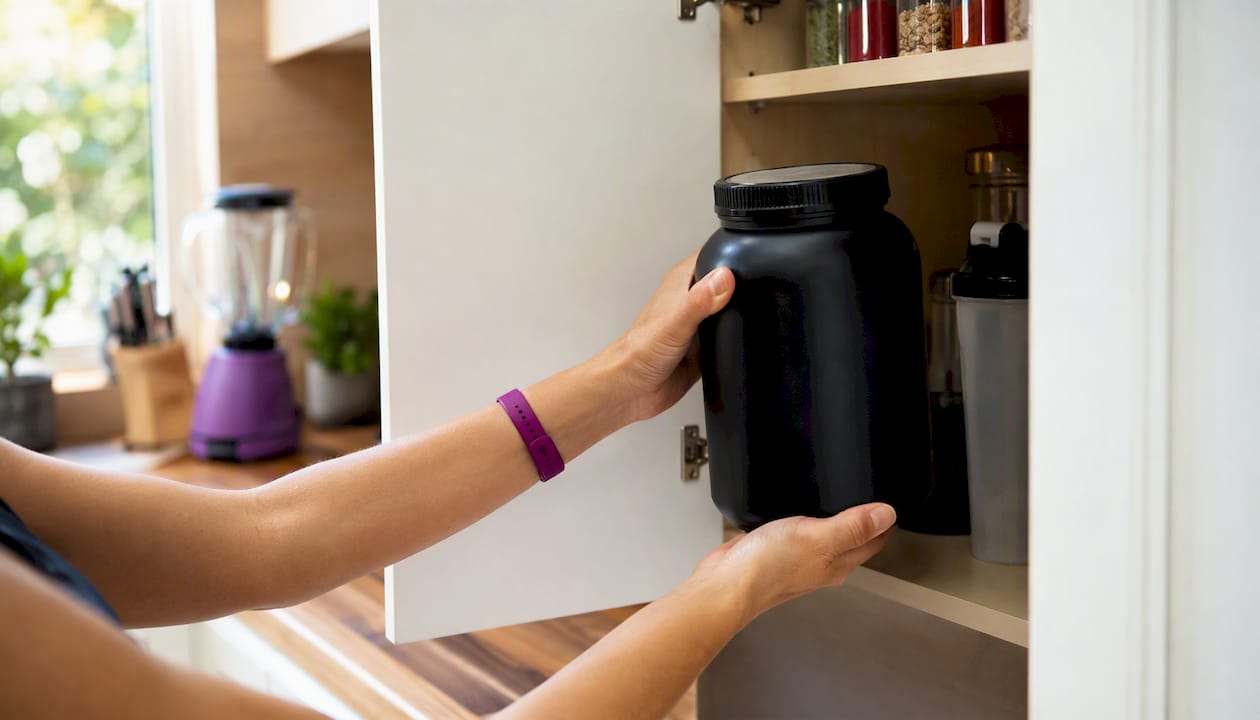
The advice to “keep it cool and dry” gets repeated everywhere, and it’s correct, but it undersells how much the container itself matters. People fixate on temperature and forget that a loose lid on a perfectly cool shelf still lets humidity creep in every time the kitchen gets steamy from cooking or a shower down the hall.
The bigger blind spot is refrigeration. A lot of people assume cold storage is automatically safer, the same logic that applies to eggs or meat, and apply it to a dry powder where it does the opposite of what they intend. Condensation from temperature swings is arguably a bigger threat to protein powder than sitting in a warm cabinet for an extra month within reason.
If there’s one priority to take from all this, it’s portioning. Buying in bulk to save money only pays off if you’re not opening and closing one giant tub for four months straight, exposing it to air and moisture dozens of times. Split it up front. Keep most of it sealed and untouched. That one workflow change does more for freshness than obsessing over the exact temperature of your pantry.
This article is general information, not a substitute for advice from a qualified doctor. Consult a qualified healthcare professional about your own circumstances before acting on anything here.
Sources
- Does protein powder expire? - Healthline
- Everything You Need to Know for Proper Protein Powder Storage – Gainful
- PMC article on food protein stability - NCBI
- Does protein powder expire? - Verywell Fit
FAQ
What’s the best way to store protein powder?
Keep it sealed in its original container, in a cool, dry, dark place below about 70°F, and always use a dry scoop to prevent moisture from getting in.
Are you supposed to keep protein powder in the fridge?
No. Refrigerating or freezing opened protein powder causes condensation when the container moves between temperatures, and that moisture leads to clumping and mold risk.
Why do some experts caution against protein powder?
Concerns usually center on ingredient quality, added sugars, or heavy metal content in certain products rather than the powder itself being unsafe. Choosing a reputable brand and storing it properly addresses most practical risks.
How long can you keep protein powder before it goes bad?
Unopened tubs typically last one to two years, while opened tubs stored properly remain usable for about six to twelve months, depending on the protein type and storage conditions.
Is expired protein powder safe to use?
Often yes, since the date mainly reflects quality rather than safety, but check for rancid smell, discoloration, mold, or hard clumps before using any powder past its best-by date.