
Macro-Friendly Recipes: High-Protein Meals You Can Build Fast
A macro-friendly recipe is one whose protein, carbs and fat are easy to calculate and fit your daily targets. In practice that means a lean protein anchor, a measured carb, a measured fat and plenty of vegetables. Below you will find seven recipe blueprints, the portion data behind them, and the tracking mistakes that quietly throw off your numbers.
TL;DR
- Build every meal from a lean protein anchor (chicken, shrimp, pork tenderloin, cottage cheese, tofu, eggs), a measured carb and a measured fat.
- Weigh ingredients the same way every time and note whether the weight is raw or cooked. This is the biggest source of tracking error.
- Macro-friendly does not mean fat-free or carb-free. Keep all three macronutrients and favor unsaturated fats.
- Cook components separately in batches, so one base meal can be adjusted to different targets.
- Recipes support training, they do not replace it.
Table of Contents
- What makes a recipe macro-friendly
- The protein anchors worth building around
- Seven macro-friendly recipe blueprints
- Macro-friendly meal prep that holds up all week
- How to track macros without fooling yourself
- Perspective: why we favor boring-but-flexible meals
- Make the kitchen part fun
- Snacks and shakes that fill the gaps
- FAQ
- Sources
What makes a recipe macro-friendly
There is no official definition, so it helps to pick your own filter. One reasonable benchmark comes from Diet Doctor’s recipe collection, which treats a high-protein main as at least 30 g of protein with protein providing at least 25% of the meal’s calories. It also sorts recipes into breakfasts with at least 25 g of protein and meals ready in 20 minutes or less. Treat these as editorial filters, not medical requirements and not a promise of weight loss.
The other half of the definition is quality. WHO’s healthy diet guidance says a balanced pattern keeps all three macronutrients: protein for building blocks, carbohydrates mainly from whole grains, vegetables, fruit and pulses, and fat, which remains essential. WHO also favors unsaturated fats such as those in fish, avocado, nuts and plant oils, and recommends keeping saturated fat to no more than 10% of energy and trans fat to no more than 1%. A fried, heavily processed dish can hit 40 g of protein and still be a poor choice. Numbers first, quality second, both always.
One caveat on targets. WHO says protein at 10 to 15% of energy generally covers basic needs, roughly 50 to 75 g for a healthy-weight adult eating about 2,000 calories, and that people aiming to build muscle may need higher, individualized targets. If you are unsure where yours sit, our guide on how to calculate macros for your fitness goals walks through the steps. If you have a medical condition, kidney disease in particular, or are pregnant, ask your doctor or a registered dietitian before raising protein.

The protein anchors worth building around
Most good high-protein, low-fat recipes lean on the same short list of ingredients. EatingWell’s dietitian-reviewed list names low-fat cottage cheese, shrimp, pork tenderloin, skinless chicken breast, Greek yogurt, beans, edamame, tofu, eggs, quinoa, turkey breast and tuna. Its stated servings give you real numbers to plan with:
| Ingredient | Serving (as stated) | Protein | Fat |
|---|---|---|---|
| Low-fat cottage cheese | 1/2 cup | 13 g | under 3 g |
| Shrimp | 3 oz, raw | 17 g | under 1 g |
| Pork tenderloin | 4 oz, raw | 24 g | 2 g |
| Skinless chicken breast | 4 oz, raw | 25 g | 3 g |
Notice the word “raw”. That detail matters more than most recipe sites admit, and we come back to it in the tracking section.
Seven macro-friendly recipe blueprints
We give these as blueprints rather than rigid recipes. Each has a protein anchor, a carb slot, a fat slot and a vegetable slot, so you can scale the carb and fat to your own targets. Protein figures below come only from the table above; weigh and log the rest of your ingredients yourself.
1. Lemon-garlic shrimp stir-fry
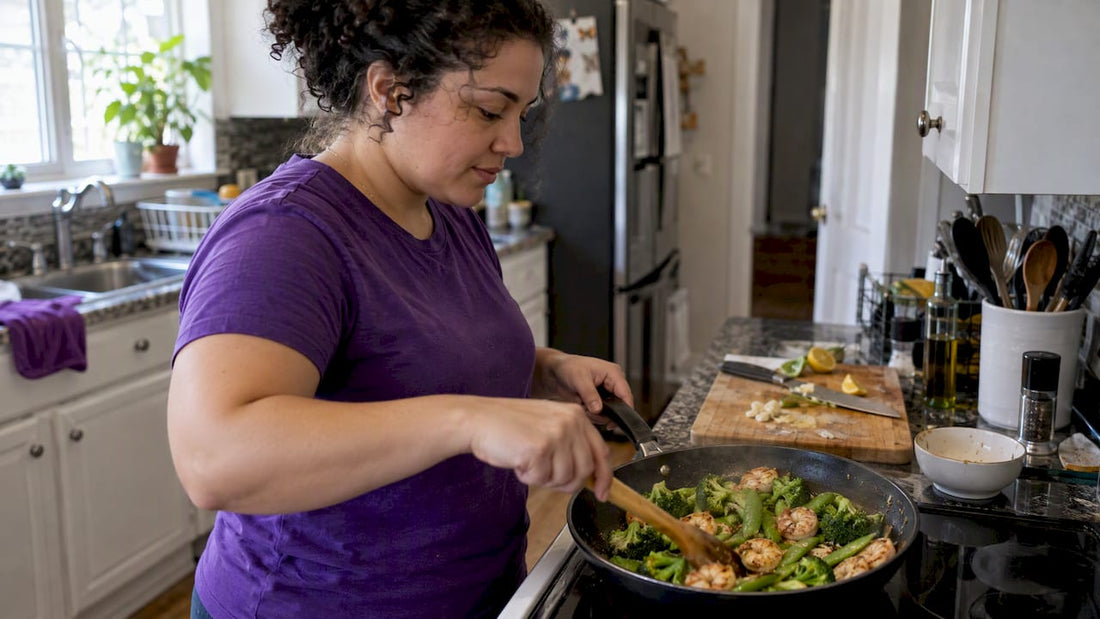
Sauté 3 to 5 oz of raw shrimp (a 3 oz raw serving carries 17 g protein and under 1 g fat) with garlic, lemon, broccoli and snap peas in a teaspoon of olive oil. Serve over measured rice or cauliflower rice. Dietitian Mandy Enright points out that shrimp keeps well frozen and thaws quickly, which makes this a 15-minute dinner on a bad day.
2. Sheet-pan chicken and vegetables
Toss 4 to 6 oz of raw skinless chicken breast (25 g protein and 3 g fat per 4 oz raw) with peppers, zucchini and red onion. Use spices and a measured tablespoon of oil. Add a baked potato or a scoop of quinoa as the carb. Roast everything on one tray at the same time.
3. Pork tenderloin and roasted sweet potato
Pork tenderloin gives 24 g protein and 2 g fat per 4 oz raw. Sear and finish in the oven, slice thin, and serve with sweet potato and green beans. It is one of the leanest red-meat options, and it reheats better than chicken breast, which tends to dry out.
4. Cottage cheese protein pancakes
Blend cottage cheese with eggs and oats, then cook in a nonstick pan. Enright recommends cottage cheese in sweet and savory uses, including pancake batter, bowls, smoothies and eggs. A half cup brings 13 g of protein before the eggs. If you want a tested version, see our protein pancakes recipe, or browse more high-protein breakfast ideas for mornings when you need 20 to 30 g.
5. Tuna and white bean bowl
Flake canned tuna over white beans, cucumber, tomato and arugula with lemon and a measured spoon of olive oil. Beans and tuna each carry protein, and the beans add fiber. It needs no cooking, so it works at a desk.
6. Tofu and edamame rice bowl
Press and pan-crisp tofu, then pile it with edamame, shredded cabbage and carrots over rice. A soy-ginger sauce keeps it interesting. This one is fully plant-based and shows that a high-protein pattern does not require meat.
7. Turkey chili with beans
Brown lean ground turkey, then simmer with canned tomatoes, kidney beans and spices. Portion it into containers. Chili is forgiving: you can add more beans for carbs or more turkey for protein without wrecking the dish.

Macro-friendly meal prep that holds up all week
Meal prep is where macro-friendly eating either becomes easy or falls apart. EatingWell’s collection shows how varied the formats can be: chicken pasta, white chicken chili, cod, shrimp stir-fries, lentil soup, tuna bowls, wraps and protein smoothies. The useful ways to organize them are meal occasion, prep time, protein source, dietary pattern and whether the recipe batches well.
Our approach is to cook components, not finished meals:
- Cook one or two proteins in bulk (a tray of chicken, a pot of lentils).
- Cook one or two carbs (rice, potatoes, quinoa).
- Roast or wash a large batch of vegetables.
- Keep sauces and fats separate and measured at assembly.
Because the pieces stay separate, a 180 lb lifter and a smaller person trying to lose weight can eat from the same pot and still land on different macros. Our weekly high-protein meal prep system lays out the routine, healthy meal prep ideas for weight loss covers cutting phases, and bulking meal prep ideas cover the opposite. If you cook for a household, this guide to healthy family batch cooking shows how to plan around the food you already have so less goes to waste. It is written for a UK audience, but the planning logic travels well.
How to track macros without fooling yourself
The recipe is rarely the problem. The logging is. Two points from USDA documentation are worth knowing.
Portion state. The USDA nutrient database documentation explains that values are generally reported per 100 g or 100 ml, while recipe ingredients may be recorded in household measures. Cooked rice weighs far more than dry rice, and cooked chicken weighs less than raw. Pick one convention, weigh rice, pasta, meat, oils and nut butters consistently, and log whether the weight is raw or cooked. Do not swap a cooked weight into an entry built on raw data.
Blank is not zero. The same documentation distinguishes true zero values from missing data. If an app entry has an empty field for fat or fiber, your total can look artificially low. When a recipe seems too good to be true, check for missing fields.
Two more habits help. Weigh cooking oil rather than guessing, since a tablespoon is where many “lean” recipes quietly add calories. And log sauces, because they are the most commonly forgotten ingredient.
Perspective: why we favor boring-but-flexible meals
We sell fitness gear, books and courses, and we talk to people every week who have a beautiful macro plan and no energy to follow it by Wednesday. Our view is simple: the best macro recipe is the one you will cook again. That is why we push modular meals, a short list of proteins you like, and swaps instead of perfect recipes.
The research backs the flexible approach. ACSM’s 2026 overview of more than 137 studies and over 30,000 participants, summarized in its resistance training position stand, stresses individualization and consistency over rigid prescriptions. Its updated guidelines add that bands, bodyweight and home routines can produce meaningful benefits, and that programs work best when built around goals, enjoyment and safety. Food should follow the same logic. No recipe builds muscle on its own: it feeds the training you actually do. Keep your kitchen equipment-light, your swaps easy, and your plan enjoyable enough to repeat.
— Mark
Make the kitchen part fun
Staying motivated is half the macro battle. Our store is a one-stop shop for fun, motivational fitness items, from apparel to exercise equipment, eBooks and courses, and it works as a gift source too. If you want a lighter way to engage kids or yourself with the idea of protein-rich eating, the Get Fit With Protein and Smoothies coloring pages are a playful place to start. For everything else, browse the full Dietexerciseshop catalog, and check our one-week meal prep eBook guide for ready plans and grocery lists.

Snacks and shakes that fill the gaps
Most people miss their protein target between meals, not at them. Greek yogurt, cottage cheese with fruit, hard-boiled eggs and edamame are all on the dietitian-reviewed list above and need no cooking. Our rundown of high-protein snacks covers options for around workouts, and the pre-workout snack list helps you time carbs. If you use powder, our protein powder recipes include counts and tips on heat.
FAQ
Does macro-friendly mean low carb?
No. It means your carbs, protein and fat fit your own targets. WHO guidance recommends that carbohydrates commonly come from whole grains, vegetables, fruit and pulses, so carbs have a place in nearly every plan. Your goal and training load decide how many.
How much protein should a macro-friendly meal have?
There is no single rule. Diet Doctor uses at least 30 g for a high-protein lunch or dinner and at least 25 g for breakfast as its filters. WHO notes that basic needs are often met at 10 to 15% of energy, and that people building muscle may need higher, individualized amounts. A dietitian can help you set yours.
Should I weigh food raw or cooked?
Either works if you stay consistent and log it correctly. Raw weights match many database entries, such as the raw chicken and shrimp servings above. Cooked weights are handy for batch-cooked rice or pasta, but you must pick an entry that is also cooked.
Can I eat macro-friendly on a budget?
Yes. Eggs, beans, lentils, canned tuna, tofu and frozen shrimp or chicken are all on the lean-protein lists above, and frozen options keep well. Batch cooking components also cuts waste, which saves money.
Sources
- Healthy diet, WHO fact sheet
- 20 Best High-Protein, Low-Fat Foods, EatingWell
- Low-Fat, High Protein Recipes, EatingWell
- Protein-packed recipes for weight loss, Diet Doctor
- Child Nutrition Database Documentation, USDA
- ACSM position stand on resistance training
- ACSM updated resistance training guidelines